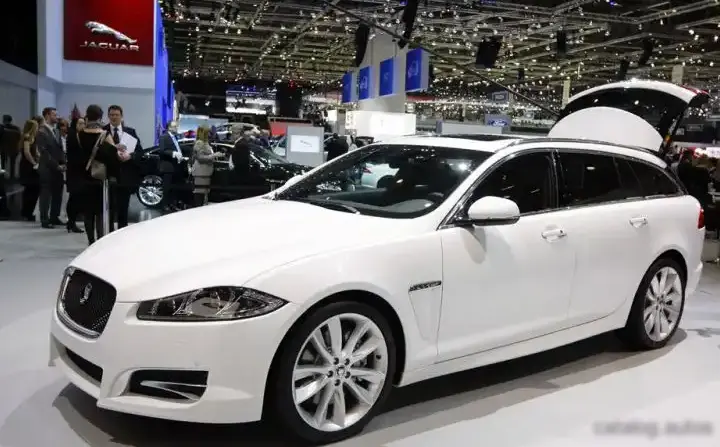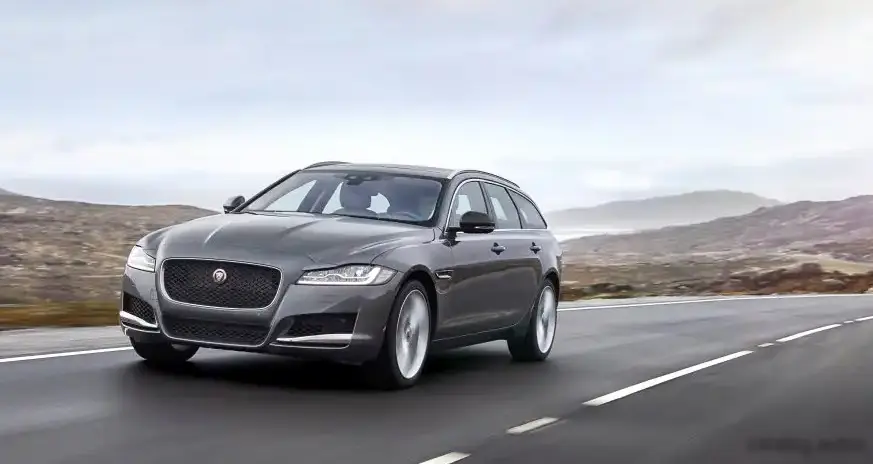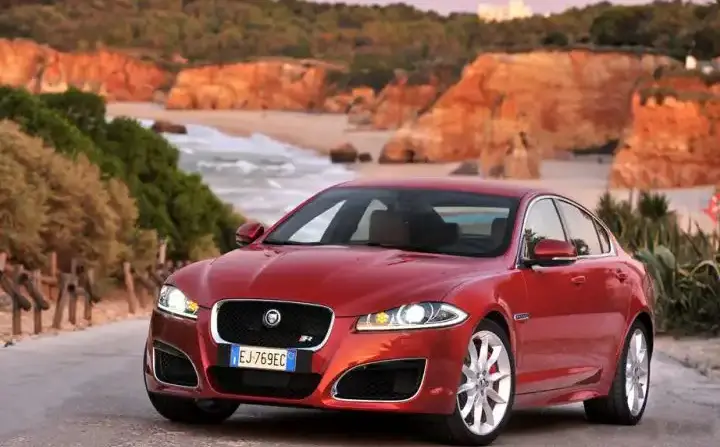
The Jaguar XF (X250) facelift, produced from 2011 to 2015, represented a significant mid-cycle refresh of Jaguar’s mid-size luxury sedan. Among the engine options available, the 3.0d V6 with 275 horsepower paired with an eight-speed automatic transmission was a popular choice, particularly in European and Asian markets. This variant aimed to balance performance, refinement, and fuel efficiency within the XF lineup, offering a compelling alternative to its petrol-powered siblings and the lower-output diesel options. It served as a premium offering, positioned above the 2.2d models but below the flagship XFR and XJ models.
Technical Specifications
| Brand | Jaguar |
| Model | XF |
| Generation | XF (X250, facelift 2011) |
| Type (Engine) | 3.0d V6 (275 Hp) Automatic |
| Start of production | 2011 |
| End of production | 2015 |
| Powertrain Architecture | Internal Combustion engine |
| Body type | Sedan |
| Seats | 5 |
| Doors | 4 |
| Fuel consumption (urban) | 7.5 l/100 km (31.4 US mpg) |
| Fuel consumption (extra urban) | 5 l/100 km (47 US mpg) |
| Fuel consumption (combined) | 6 l/100 km (39.2 US mpg) |
| CO2 emissions | 159 g/km |
| Fuel Type | Diesel |
| Acceleration 0 – 100 km/h | 6.4 sec |
| Acceleration 0 – 62 mph | 6.4 sec |
| Acceleration 0 – 60 mph | 6.1 sec |
| Maximum speed | 250 km/h (155.34 mph) |
| Weight-to-power ratio | 6.4 kg/Hp |
| Weight-to-torque ratio | 3 kg/Nm |
| Power | 275 Hp @ 4000 rpm |
| Torque | 600 Nm @ 2000 rpm (442.54 lb.-ft. @ 2000 rpm) |
| Engine layout | Front, Longitudinal |
| Engine Model/Code | 306DT |
| Engine displacement | 2993 cm3 (182.64 cu. in.) |
| Number of cylinders | 6 |
| Engine configuration | V-engine |
| Fuel injection system | Diesel Commonrail |
| Engine aspiration | Turbocharger, Intercooler |
| Engine oil capacity | 6.6 l (6.97 US qt | 5.81 UK qt) |
| Coolant capacity | 12.53 l (13.24 US qt | 11.02 UK qt) |
| Kerb Weight | 1770 kg (3902.18 lbs.) |
| Max. weight | 2360 kg (5202.91 lbs.) |
| Max load | 590 kg (1300.73 lbs.) |
| Trunk (boot) space – minimum | 540 l (19.07 cu. ft.) |
| Trunk (boot) space – maximum | 963 l (34.01 cu. ft.) |
| Fuel tank capacity | 70.1 l (18.52 US gal | 15.42 UK gal) |
| Length | 4961 mm (195.31 in.) |
| Width | 1939 mm (76.34 in.) |
| Width including mirrors | 2077 mm (81.77 in.) |
| Height | 1468 mm (57.8 in.) |
| Wheelbase | 2909 mm (114.53 in.) |
| Front track | 1559 mm (61.38 in.) |
| Rear (Back) track | 1605 mm (63.19 in.) |
| Minimum turning circle | 11.5 m (37.73 ft.) |
| Drivetrain Architecture | Rear wheel drive |
| Number of gears | 8 |
| Gearbox type | Automatic transmission |
| Front brakes | Ventilated discs |
| Rear brakes | Ventilated discs |
| Assisting systems | ABS (Anti-lock braking system) |
| Steering type | Steering rack and pinion |
INTRODUCTION
The 2011 facelift of the Jaguar XF brought a more assertive front end, revised interior trim, and updated engine options. The 3.0d V6 Automatic variant was a key component of this refresh, designed to appeal to buyers seeking a blend of luxury, performance, and efficiency. Built on the X250 platform (shared with the XJ), the XF aimed to modernize Jaguar’s image and compete directly with established German rivals like the BMW 5 Series and Mercedes-Benz E-Class. This particular engine and transmission combination was especially popular in Europe, where diesel engines held a larger market share, and also found a niche audience in Asia.
Powertrain & Engine Architecture
At the heart of the XF 3.0d was Jaguar’s 306DT engine, a 3.0-liter V6 diesel. This engine utilized a common-rail direct injection system, delivering fuel at extremely high pressure for optimized combustion. The engine featured a single turbocharger with an intercooler, boosting power and torque. The 306DT produced 275 horsepower at 4000 rpm and a substantial 600 Nm (442.54 lb-ft) of torque at just 2000 rpm. This torque output was a defining characteristic, providing strong acceleration in everyday driving situations. The engine also incorporated variable geometry turbocharger (VGT) technology to optimize boost across the rev range. The eight-speed automatic transmission, sourced from ZF, was a crucial element of the powertrain. Its close gear ratios allowed the engine to operate efficiently and deliver smooth, responsive shifts. The transmission featured a ‘Sport’ mode for more aggressive shifting and manual control via steering wheel-mounted paddles.
Driving Characteristics
The XF 3.0d Automatic offered a refined and comfortable driving experience. The abundance of torque meant that strong acceleration was readily available, making overtaking effortless. While not as overtly sporty as the XFR, the 3.0d provided ample performance for most drivers. The eight-speed automatic transmission contributed to a relaxed highway cruising experience, with low engine speeds at higher velocities. Compared to the 2.2d models, the 3.0d offered a noticeable improvement in performance, with quicker acceleration and a more authoritative feel. However, it wasn’t quite as engaging as the six-speed manual versions, which provided a more direct connection to the engine. The automatic transmission, while smooth, did introduce a slight degree of efficiency loss compared to the manual.
Equipment & Trim Levels
The XF 3.0d Automatic typically came well-equipped, reflecting its position as a premium model. Standard features included leather upholstery, dual-zone climate control, a touchscreen infotainment system, and parking sensors. Higher trim levels offered upgrades such as premium audio systems (Meridian), heated and ventilated seats, adaptive cruise control, and a panoramic sunroof. Interior trim options included various wood veneers and aluminum finishes. Exterior options included different wheel designs and metallic paint colors. The XF’s ‘JaguarDrive’ selector, a rotary gear selector that rises into position when the engine is started, was a distinctive feature of the interior.
Chassis & Braking
The XF’s chassis featured a sophisticated suspension setup, designed to balance comfort and handling. The front suspension utilized double wishbones, while the rear suspension employed a multi-link design. The 3.0d variant typically featured ventilated disc brakes on all four wheels, providing ample stopping power. Anti-lock braking system (ABS) and electronic stability control (ESC) were standard safety features. The XF’s steering was precise and well-weighted, offering a good level of feedback to the driver. The suspension was tuned to provide a comfortable ride, absorbing bumps and imperfections in the road surface effectively.
Market Reception & Comparison
The Jaguar XF 3.0d Automatic was generally well-received by automotive critics. It was praised for its refined engine, comfortable ride, and luxurious interior. Fuel economy was considered competitive for its class, offering a good balance between performance and efficiency. Compared to the 2.2d models, the 3.0d was seen as a worthwhile upgrade for drivers who prioritized performance. However, some critics noted that the XF’s infotainment system was not as intuitive or user-friendly as those offered by its German rivals. Reliability was generally good, although some owners reported issues with the electronic systems.
Legacy
The Jaguar XF 3.0d Automatic has proven to be a relatively reliable and durable vehicle in the used car market. The 306DT engine is known for its robustness, and the ZF eight-speed automatic transmission is widely regarded as one of the best in the industry. However, as with any used car, potential buyers should be aware of potential maintenance costs, particularly for components such as the turbocharger and fuel injectors. Today, the XF 3.0d offers a compelling value proposition for buyers seeking a luxurious and capable sedan at a reasonable price point. Its blend of performance, refinement, and fuel efficiency continues to make it an attractive option in the used car market.