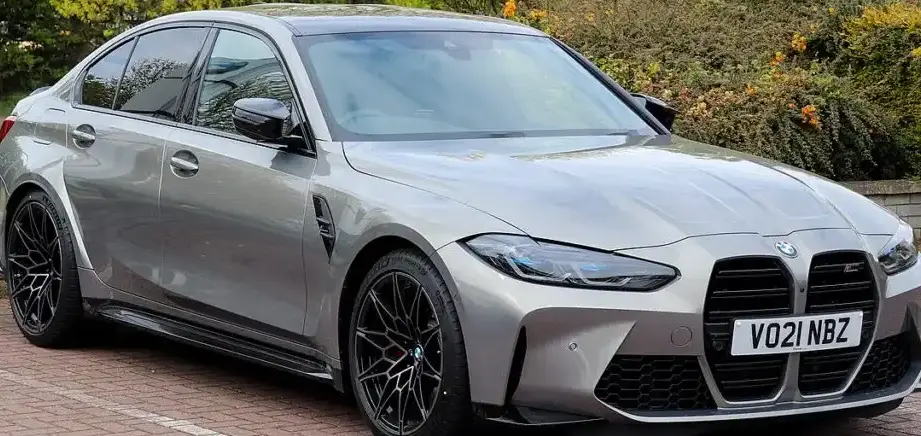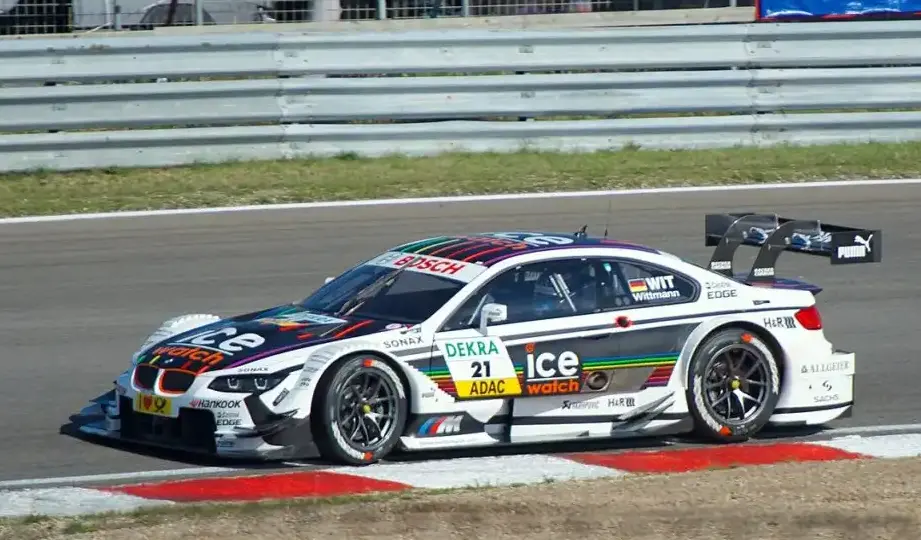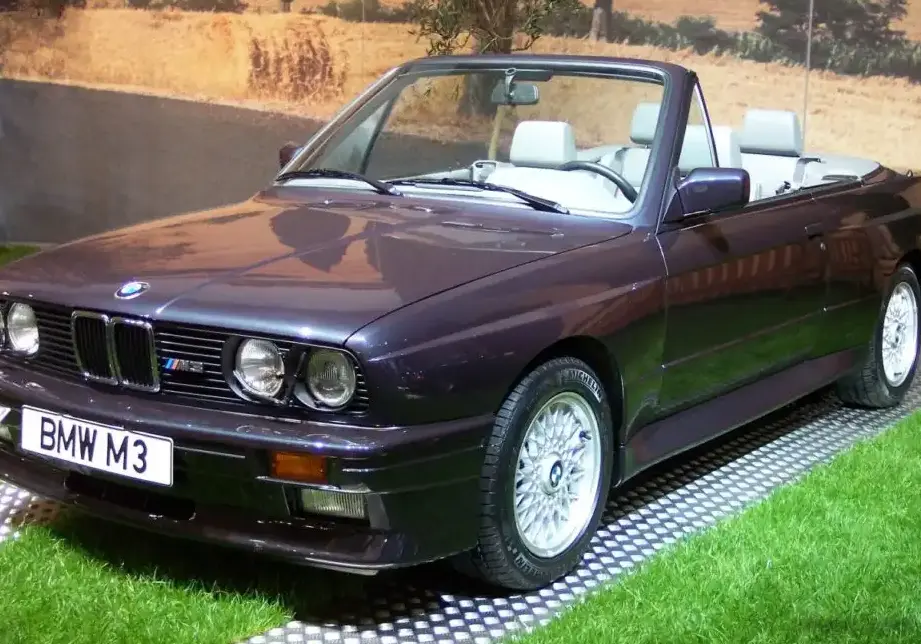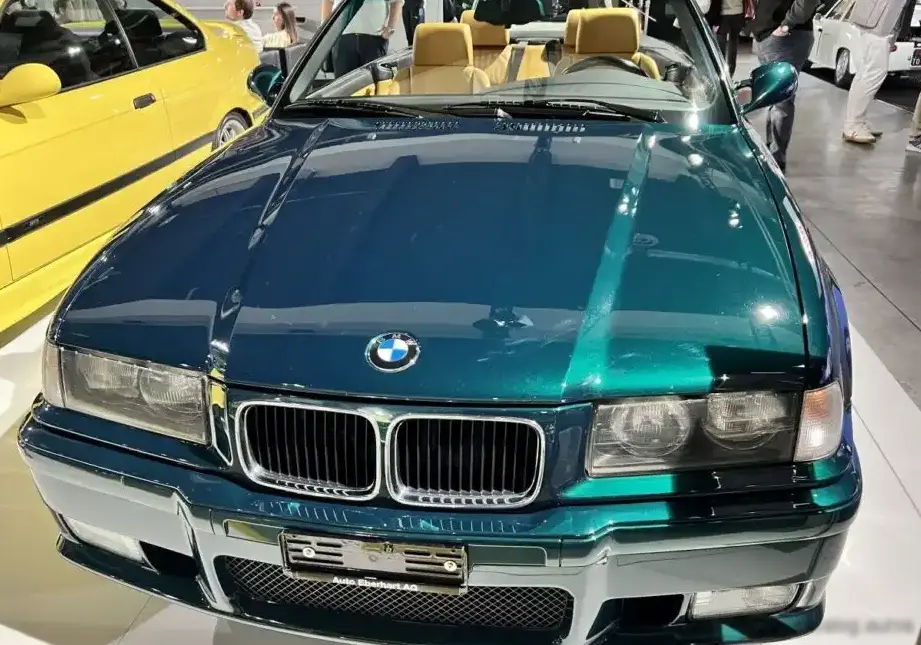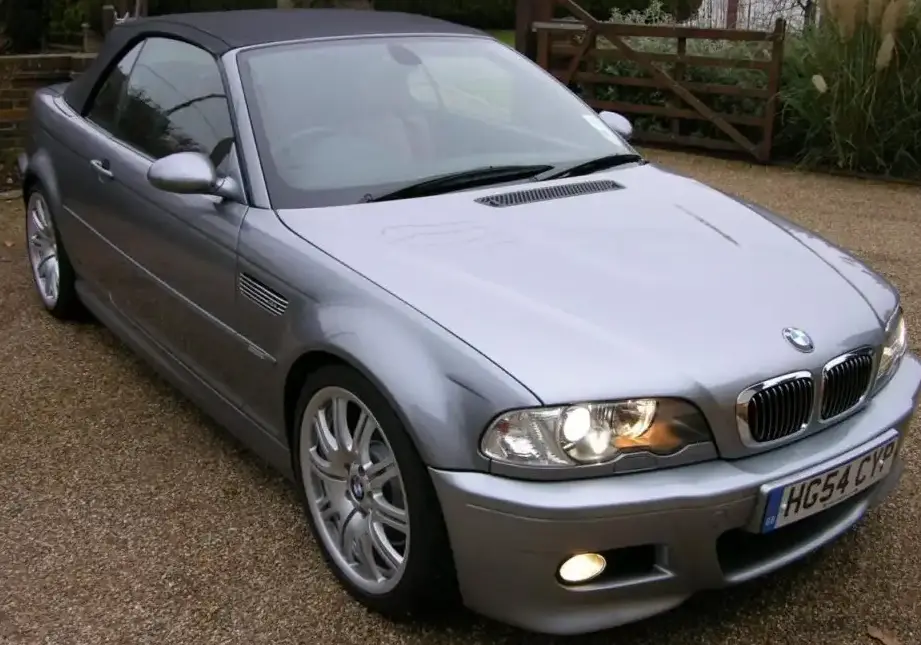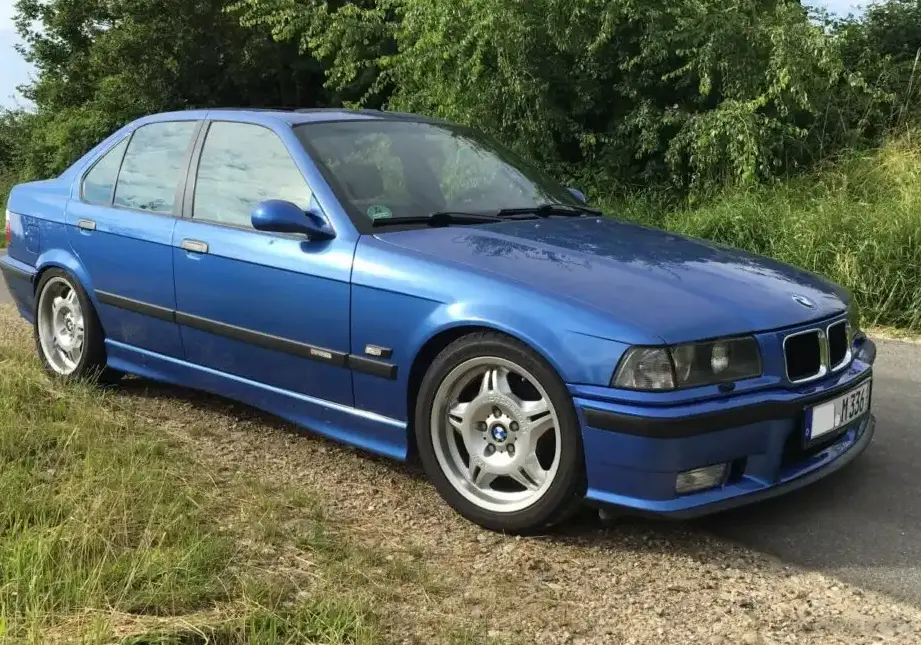
The BMW M3 (E36) 3.2, produced between 1995 and 1998, represents a pivotal evolution of BMW’s high-performance lineage. Positioned as the flagship variant of the E36 M3 generation, it marked a significant departure from the earlier 3.0-liter and 3.1-liter engines, offering substantially increased power and torque. This model was primarily sold in Europe and North America, becoming a benchmark for enthusiast drivers seeking a balanced blend of track capability and everyday usability. The E36 M3, in general, built upon the success of the E30 M3, aiming to deliver a more refined and powerful driving experience while maintaining the core principles of a driver-focused sports sedan.
Technical Specifications
| Brand | BMW |
| Model | M3 |
| Generation | M3 (E36) |
| Type (Engine) | 3.2 (321 Hp) |
| Start of production | 1995 |
| End of production | 1998 |
| Powertrain Architecture | Internal Combustion engine |
| Body type | Sedan |
| Seats | 5 |
| Doors | 4 |
| Fuel consumption (economy) – urban (NEDC) | 16.9 l/100 km (13.9 US mpg, 16.7 UK mpg, 5.9 km/l) |
| Fuel consumption (economy) – extra urban (NEDC) | 7.5 l/100 km (31.4 US mpg, 37.7 UK mpg, 13.3 km/l) |
| Fuel consumption (economy) – combined (NEDC) | 11 l/100 km (21.4 US mpg, 25.7 UK mpg, 9.1 km/l) |
| CO2 emissions (NEDC) | 275 g/km |
| Fuel Type | Petrol (Gasoline) |
| Acceleration 0 – 100 km/h | 5.5 sec |
| Acceleration 0 – 62 mph | 5.5 sec |
| Acceleration 0 – 60 mph | 5.2 sec |
| Maximum speed | 250 km/h (155.34 mph) – Electronically limited |
| Emission standard | Euro 2 |
| Weight-to-power ratio | 4.5 kg/Hp, 219.9 Hp/tonne |
| Weight-to-torque ratio | 4.2 kg/Nm, 239.7 Nm/tonne |
| Power | 321 Hp @ 7400 rpm |
| Power per litre | 100.3 Hp/l |
| Torque | 350 Nm @ 3250 rpm (258.15 lb.-ft. @ 3250 rpm) |
| Engine layout | Front, Longitudinal |
| Engine Model/Code | S50B32 |
| Engine displacement | 3201 cm3 (195.34 cu. in.) |
| Number of cylinders | 6 |
| Engine configuration | Inline |
| Cylinder Bore | 86.4 mm (3.4 in.) |
| Piston Stroke | 91 mm (3.58 in.) |
| Compression ratio | 11.3:1 |
| Number of valves per cylinder | 4 |
| Fuel injection system | Multi-port manifold injection |
| Engine aspiration | Naturally aspirated engine |
| Valvetrain | DOHC, Double-VANOS |
| Engine oil capacity | 5.5 l (5.81 US qt | 4.84 UK qt) |
| Coolant | 10.75 l (11.36 US qt | 9.46 UK qt) |
| Kerb Weight | 1460 kg (3218.75 lbs.) |
| Max. weight | 1950 kg (4299.01 lbs.) |
| Max load | 490 kg (1080.27 lbs.) |
| Fuel tank capacity | 62 l (16.38 US gal | 13.64 UK gal) |
| Max. roof load | 75 kg (165.35 lbs.) |
| Length | 4433 mm (174.53 in.) |
| Width | 1696 mm (66.77 in.) |
| Height | 1365 mm (53.74 in.) |
| Wheelbase | 2710 mm (106.69 in.) |
| Front track | 1422 mm (55.98 in.) |
| Rear (Back) track | 1438 mm (56.61 in.) |
| Drag coefficient (Cd) | 0.32 |
| Drivetrain Architecture | Rear wheel drive |
| Number of gears and type of gearbox | 6 gears, manual transmission |
| Front suspension | Spring Strut, Transverse stabilizer |
| Rear suspension | Independent multi-link suspension, Transverse stabilizer |
| Front brakes | Ventilated discs |
| Rear brakes | Ventilated discs |
| Assisting systems | ABS (Anti-lock braking system) |
| Steering type | Steering rack and pinion |
| Power steering | Hydraulic Steering |
| Tires size | Front wheel tires: 225/45 R17 Rear wheel tires: 245/40 R17 |
| Wheel rims size | Front wheel rims: 7.5J x 17 Rear wheel rims: 8.5J x 17 |
Powertrain & Engine Architecture
The heart of the E36 M3 3.2 is the S50B32 engine, a 3.2-liter inline-six cylinder powerplant. This engine is a derivative of the S50B30 found in earlier E36 M3s, but with a significantly increased bore size (86.4mm vs. 84mm) bringing displacement to 3201cc. The S50B32 utilizes individual throttle bodies, a high-compression ratio of 11.3:1, and BMW’s Double-VANOS variable valve timing system on both the intake and exhaust camshafts. This combination allows for a broad torque curve and a responsive throttle. Fuel delivery is managed by a Bosch Motronic MS4.1 engine management system with multi-port fuel injection. The engine’s robust construction and sophisticated technology contribute to its high specific output of over 100 horsepower per liter. The standard transmission for the 3.2 was a Getrag 285 6-speed manual gearbox, known for its precise shifts and durability. While an automatic transmission was offered, it was less common and generally considered less desirable by enthusiasts.
Driving Characteristics
The 3.2-liter M3 delivers a markedly different driving experience compared to its 3.0 and 3.1-liter predecessors. The increased displacement and refined engine management system result in a substantial boost in both horsepower and torque. Acceleration to 60 mph is achieved in approximately 5.2 seconds, and the electronically limited top speed of 155 mph provides ample performance for both road and track use. The 6-speed manual transmission allows for precise control over the engine’s powerband, while the well-tuned suspension provides excellent handling and stability. The chassis is well-balanced, offering a communicative and engaging driving experience. Compared to the earlier M3s, the 3.2 feels more refined and powerful, making it a more capable all-around performer.
Equipment & Trim Levels
The E36 M3 3.2 was generally well-equipped, even in its base form. Standard features included sport seats, a leather-wrapped steering wheel, power windows and locks, and an upgraded sound system. Optional extras included a sunroof, heated seats, navigation system, and various cosmetic enhancements. Interior trim options included cloth or leather upholstery in a range of colors. The M3 also featured unique exterior styling cues, such as wider wheel arches, a more aggressive front bumper, and a rear spoiler. The overall interior design was functional and driver-focused, with a clear and concise instrument cluster.
Chassis & Braking
The E36 M3 3.2 features a reinforced chassis and a sport-tuned suspension designed to maximize handling performance. The front suspension utilizes MacPherson struts with a transverse stabilizer bar, while the rear suspension employs an independent multi-link setup, also with a stabilizer bar. Braking duties are handled by ventilated disc brakes on all four wheels, providing ample stopping power. An Anti-lock Braking System (ABS) is standard. The suspension geometry and damping rates were carefully calibrated to provide a balance between comfort and control. The wider track width compared to standard E36 models contributes to improved stability and cornering grip.
Market Reception & Comparison
The E36 M3 3.2 was widely praised by automotive critics for its performance, handling, and overall refinement. It was often compared favorably to other high-performance sports sedans of the era, such as the Porsche 911 and the Mercedes-Benz C36 AMG. While the 3.2 offered a significant performance upgrade over the earlier E36 M3 variants, it also came with a higher price tag. Fuel economy, while respectable for a high-performance car, was not a strong point, with combined fuel consumption around 21.4 US mpg. The 3.0 and 3.1-liter M3s offered a more affordable entry point into the M3 ownership experience, while the 3.2 represented the pinnacle of E36 M3 performance.
Legacy
The E36 M3 3.2 has become a highly sought-after classic among BMW enthusiasts. Its robust engine, engaging driving dynamics, and relatively simple mechanical design contribute to its enduring appeal. While maintenance costs can be higher than for more mainstream vehicles, the S50B32 engine is generally considered reliable when properly maintained. Well-maintained examples command premium prices in the used car market, reflecting their status as a modern classic. The E36 M3 3.2 remains a benchmark for driver-focused sports sedans, and its influence can still be felt in BMW’s current lineup.