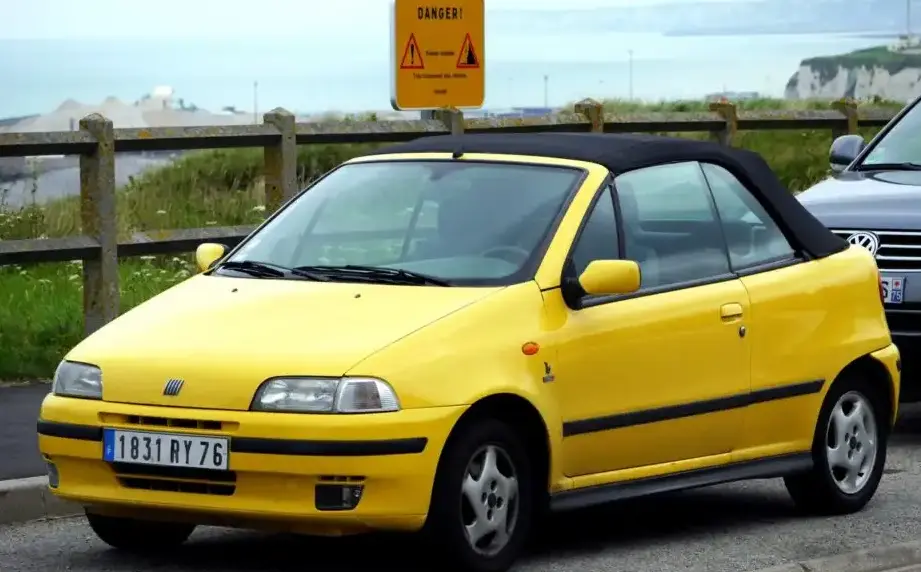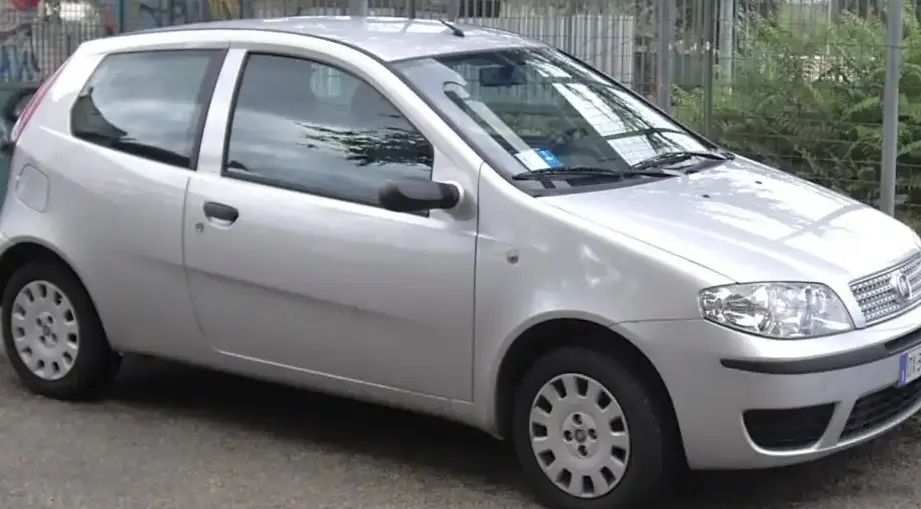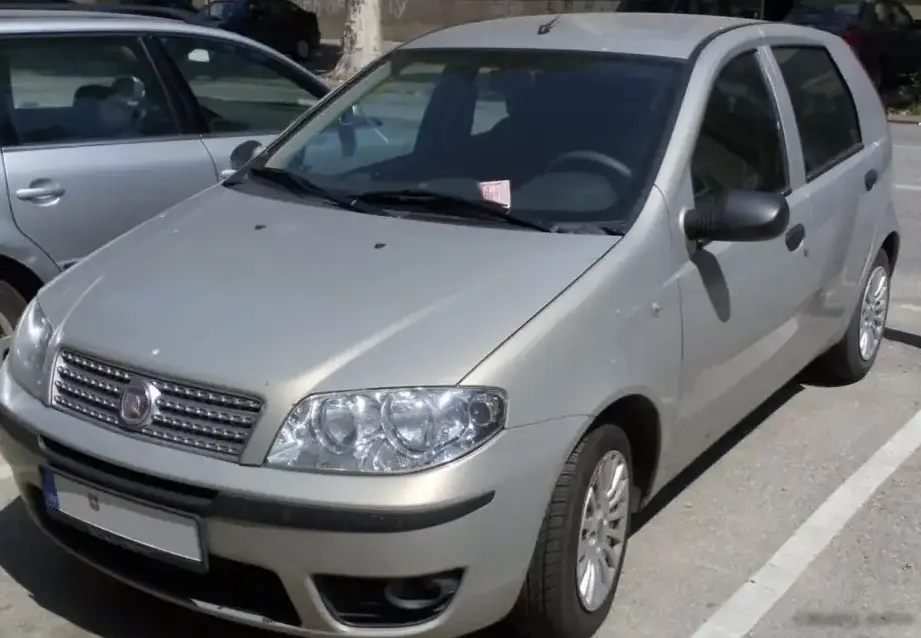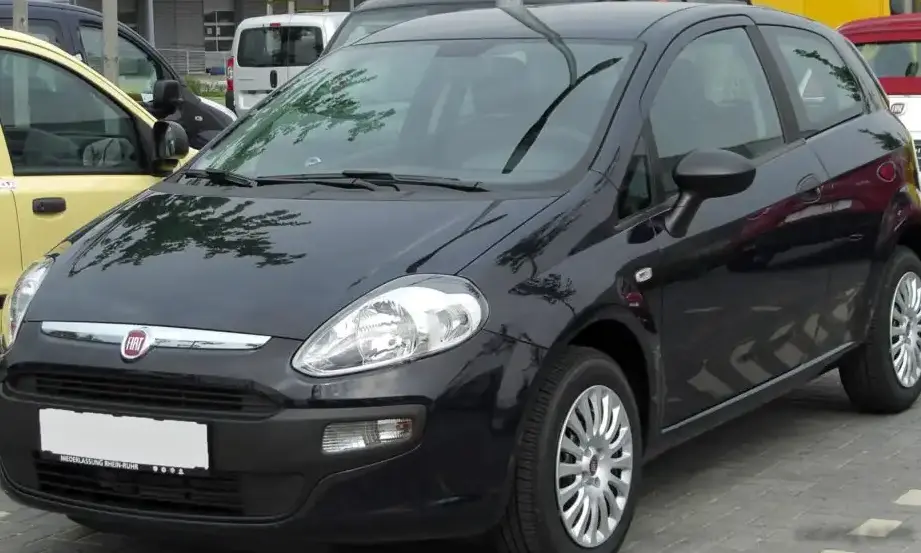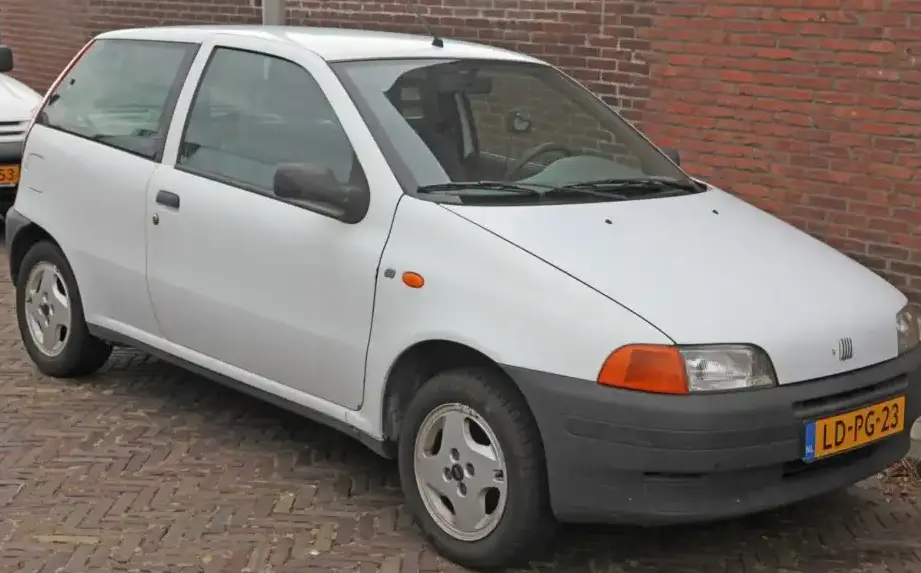
The Fiat Punto I (176) 60 1.2, producing 58 horsepower, was a foundational model within the first generation Punto range, produced from 1993 to 1995. Positioned as the entry-level offering, it aimed to provide affordable and economical transportation within the European market. The Punto, launched as a replacement for the Fiat Uno, represented a significant step forward in terms of design, safety, and interior space for the Italian automaker. This particular variant, with its modest engine and manual transmission, was intended for buyers prioritizing fuel efficiency and low running costs over outright performance. It played a crucial role in establishing the Punto as a popular choice in the supermini segment.
Technical Specifications
| Brand | Fiat |
| Model | Punto |
| Generation | Punto I (176) |
| Type (Engine) | 60 1.2 (58 Hp) |
| Start of production | 1993 |
| End of production | 1995 |
| Powertrain Architecture | Internal Combustion engine |
| Body type | Hatchback |
| Seats | 5 |
| Doors | 3-5 |
| Fuel consumption (urban) | 9.1 l/100 km (25.8 US mpg, 31 UK mpg, 11 km/l) |
| Fuel consumption (extra urban) | 5.4 l/100 km (43.6 US mpg, 52.3 UK mpg, 18.5 km/l) |
| Fuel consumption (combined) | 6.8 l/100 km (34.6 US mpg, 41.5 UK mpg, 14.7 km/l) |
| Fuel Type | Petrol (Gasoline) |
| Acceleration 0 – 100 km/h | 14.5 sec |
| Acceleration 0 – 62 mph | 14.5 sec |
| Acceleration 0 – 60 mph | 13.8 sec |
| Maximum speed | 160 km/h (99.42 mph) |
| Weight-to-power ratio | 14.9 kg/Hp, 66.9 Hp/tonne |
| Weight-to-torque ratio | 9 kg/Nm, 110.7 Nm/tonne |
| Power | 58 Hp @ 5500 rpm |
| Power per litre | 46.7 Hp/l |
| Torque | 96 Nm @ 3000 rpm (70.81 lb.-ft. @ 3000 rpm) |
| Engine layout | Front, Transverse |
| Engine Model/Code | 176A7000 |
| Engine displacement | 1242 cm3 (75.79 cu. in.) |
| Number of cylinders | 4 |
| Engine configuration | Inline |
| Cylinder Bore | 70.8 mm (2.79 in.) |
| Piston Stroke | 78.9 mm (3.11 in.) |
| Compression ratio | 9.6:1 |
| Number of valves per cylinder | 2 |
| Fuel injection system | Multi-port manifold injection |
| Engine aspiration | Naturally aspirated engine |
| Valvetrain | OHC |
| Engine oil capacity | 3.8 l (4.02 US qt | 3.34 UK qt) |
| Coolant capacity | 4.5 l (4.76 US qt | 3.96 UK qt) |
| Kerb Weight | 867 kg (1911.41 lbs.) |
| Max. weight | 1325 kg (2921.12 lbs.) |
| Max load | 458 kg (1009.72 lbs.) |
| Trunk (boot) space – minimum | 275 l (9.71 cu. ft.) |
| Trunk (boot) space – maximum | 1080 l (38.14 cu. ft.) |
| Fuel tank capacity | 47 l (12.42 US gal | 10.34 UK gal) |
| Length | 3760 mm (148.03 in.) |
| Width | 1625 mm (63.98 in.) |
| Height | 1460 mm (57.48 in.) |
| Wheelbase | 2450 mm (96.46 in.) |
| Front track | 1395 mm (54.92 in.) |
| Rear track | 1377 mm (54.21 in.) |
| Drag coefficient (Cd) | 0.31 |
| Minimum turning circle | 10.2 m (33.46 ft.) |
| Drivetrain Architecture | Front wheel drive |
| Number of gears | 5 gears, manual transmission |
| Front suspension | Wishbone |
| Rear suspension | Trailing arm |
| Front brakes | Disc |
| Rear brakes | Drum |
| Assisting systems | ABS (Anti-lock braking system) |
| Steering type | Steering rack and pinion |
| Tires size | 155/70 R13 |
Powertrain & Engine Architecture
The heart of the Punto 60 1.2 was the 176A7000 engine, a 1.2-liter inline-four cylinder petrol engine. This engine was a relatively simple design, featuring a single overhead camshaft (OHC) operating two valves per cylinder. Fuel delivery was handled by a multi-port fuel injection system, a step up from the carburetors used in older Fiat models. The engine produced 58 horsepower at 5500 rpm and 96 Nm (70.81 lb-ft) of torque at 3000 rpm. The engine’s relatively low compression ratio of 9.6:1 allowed it to run on lower octane fuel, common in many European markets. The engine was transversely mounted, driving the front wheels. The five-speed manual transmission was a standard feature, offering a reasonable spread of gears for both urban and highway driving. The transmission was chosen for its cost-effectiveness and reliability, rather than sporting performance.
Driving Characteristics
The Punto 60 1.2 was not designed for speed. Acceleration from 0 to 100 km/h (0-62 mph) took around 14.5 seconds, and top speed was limited to 160 km/h (99 mph). The engine felt somewhat strained at higher speeds, and overtaking required careful planning. However, within city limits, the Punto proved to be a nimble and easy-to-drive vehicle. The gear ratios were well-suited to urban driving, providing adequate acceleration from low speeds. Compared to higher-spec Punto models with larger engines (like the 1.4 or 1.6-liter variants), the 60 1.2 felt significantly slower. The manual transmission allowed for a degree of driver control, but the engine’s limited power meant that frequent gear changes were necessary to maintain momentum.
Equipment & Trim Levels
As the entry-level Punto, the 60 1.2 typically came with a basic level of equipment. Standard features included front disc brakes, rear drum brakes, and an anti-lock braking system (ABS) which was becoming increasingly common in this class of vehicle. The interior was functional and utilitarian, with cloth upholstery and a simple dashboard layout. Power steering was not always standard, and air conditioning was typically an optional extra. Higher trim levels offered features like electric windows, central locking, and a more sophisticated audio system. The Punto 60 1.2 was often seen as a blank canvas for buyers who wanted to add optional extras to personalize their vehicle.
Chassis & Braking
The Punto I utilized a relatively simple chassis design. Front suspension consisted of independent wishbones, while the rear suspension employed a trailing arm setup. This configuration provided a reasonable balance between ride comfort and handling. The steering was a rack and pinion system, offering precise and responsive control. The braking system featured disc brakes on the front wheels and drum brakes on the rear. While adequate for everyday driving, the braking performance was not particularly strong, especially when the vehicle was fully loaded. The Punto’s relatively light weight (around 867 kg or 1911 lbs) helped to mitigate the limitations of the braking system.
Market Reception & Comparison
The Fiat Punto 60 1.2 was generally well-received by critics as an affordable and practical supermini. Its fuel economy was a major selling point, and its compact size made it easy to maneuver in crowded city streets. However, its lack of power was often criticized. Compared to rivals like the Peugeot 205 and Renault Clio, the Punto 60 1.2 offered a similar level of practicality but lacked the sporting appeal of some of its competitors. The 1.4-liter Punto offered a noticeable performance improvement, but at a higher price point. The 1.2 was often chosen by drivers who prioritized economy and reliability over performance.
Legacy
The 176 series Punto, and specifically the 60 1.2 variant, established the Punto as a successful model for Fiat. The engine itself, while not particularly powerful, proved to be relatively reliable and durable. Today, these early Puntos are becoming increasingly rare, and well-maintained examples are sought after by classic car enthusiasts. The 60 1.2’s simplicity and affordability make it a relatively easy vehicle to maintain, and spare parts are still readily available. It represents a significant moment in Fiat’s history, marking a transition towards more modern and sophisticated small cars.