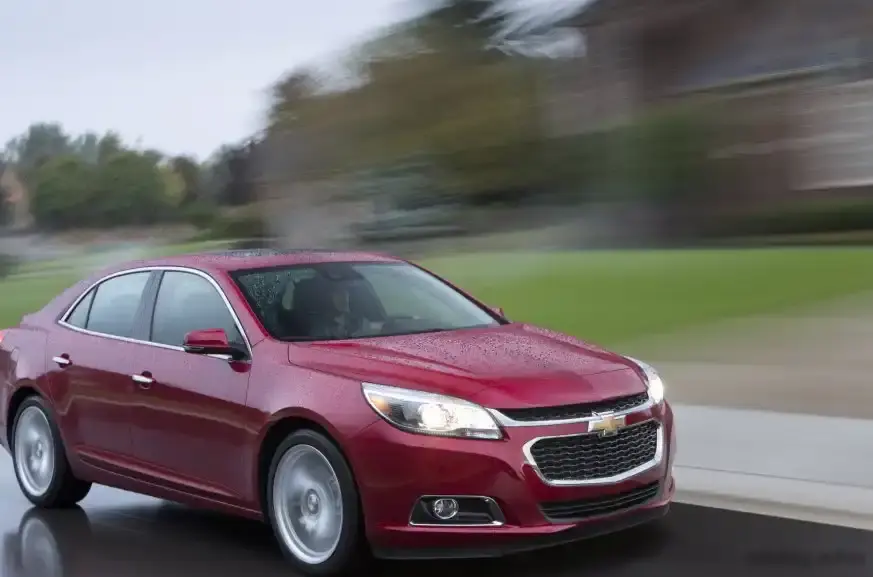
The Chevrolet Malibu VIII, specifically the facelifted model produced from 2014 to 2016, represented a significant step forward for Chevrolet’s mid-size sedan. Among the engine options available, the 2.0 Turbo variant, producing 259 horsepower and paired with a six-speed automatic transmission, occupied a premium position in the lineup. This configuration aimed to deliver a more engaging driving experience and appeal to buyers seeking a blend of performance and refinement. It was positioned as the sportier alternative to the base 1.5L and 1.8L engine options, offering a substantial power increase without the cost associated with larger displacement engines. The Malibu VIII, built on the GM Epsilon II platform, was designed to compete directly with established rivals like the Toyota Camry, Honda Accord, and Ford Fusion in the highly competitive North American market.
Technical Specifications
| Brand | Chevrolet |
| Model | Malibu |
| Generation | Malibu VIII (facelift 2014) |
| Type (Engine) | 2.0 Turbo (259 Hp) Automatic |
| Start of production | 2014 |
| End of production | 2016 |
| Powertrain Architecture | Internal Combustion engine |
| Body type | Sedan |
| Seats | 5 |
| Doors | 4 |
| Fuel consumption (urban) | 11.2 l/100 km (21 US mpg) |
| Fuel consumption (extra urban) | 7.8 l/100 km (30.2 US mpg) |
| Fuel Type | Petrol (Gasoline) |
| Weight-to-power ratio | 6.4 kg/Hp |
| Weight-to-torque ratio | 4.1 kg/Nm |
| Power | 259 Hp @ 5500 rpm |
| Power per litre | 129.6 Hp/l |
| Torque | 400 Nm @ 3000-4000 rpm (295.02 lb.-ft. @ 3000-4000 rpm) |
| Maximum engine speed | 7000 rpm |
| Engine layout | Front, Transverse |
| Engine Model/Code | LTG |
| Engine displacement | 1998 cm3 (121.93 cu. in.) |
| Number of cylinders | 4 |
| Engine configuration | Inline |
| Cylinder Bore | 86 mm (3.39 in.) |
| Piston Stroke | 86 mm (3.39 in.) |
| Compression ratio | 9.5:1 |
| Number of valves per cylinder | 4 |
| Fuel injection system | Direct injection |
| Engine aspiration | Turbocharger, Intercooler |
| Valvetrain | DOHC, CVVT |
| Engine oil capacity | 4.7 l (4.97 US qt | 4.14 UK qt) |
| Coolant | 7.4 l (7.82 US qt | 6.51 UK qt) |
| Kerb Weight | 1649 kg (3635.42 lbs.) |
| Trunk (boot) space – minimum | 462 l (16.32 cu. ft.) |
| Fuel tank capacity | 70 l (18.49 US gal | 15.4 UK gal) |
| Length | 4865 mm (191.54 in.) |
| Width | 1854 mm (72.99 in.) |
| Height | 1462 mm (57.56 in.) |
| Wheelbase | 2738 mm (107.8 in.) |
| Front track | 1579 mm (62.17 in.) |
| Rear (Back) track | 1575 mm (62.01 in.) |
| Drag coefficient (Cd) | 0.30 |
| Minimum turning circle (turning diameter) | 11.4 m (37.4 ft.) |
| Drivetrain Architecture | Front wheel drive |
| Number of gears and type of gearbox | 6 gears, automatic transmission |
| Front suspension | Independent type McPherson |
| Rear suspension | Independent multi-link suspension |
| Front brakes | Ventilated discs |
| Rear brakes | Disc |
| Tires size | 215/60 R16; 225/55 R17; 235/50 R18; 245/45 R19 |
| Wheel rims size | 7.5J x 16; 8.0J x 17; 8.0J x 18; 19J x 19 |
Powertrain & Engine Architecture
The heart of the 2014-2016 Chevrolet Malibu 2.0 Turbo was the LUH engine, internally designated as the LTG. This 1.998-liter inline-four cylinder engine utilized direct injection and a single twin-scroll turbocharger to achieve its impressive output. The direct injection system, coupled with the turbocharger, allowed for precise fuel delivery and increased air intake, resulting in enhanced power and efficiency. The engine featured a double overhead camshaft (DOHC) valvetrain with continuously variable valve timing (CVVT) on both intake and exhaust valves, optimizing engine performance across the rev range. The six-speed automatic transmission, a GM 6T40 unit, was specifically tuned to handle the increased torque output of the 2.0L engine. It featured a wide gear ratio spread designed to balance acceleration and fuel economy.
Driving Characteristics
The 2.0 Turbo Malibu offered a noticeably more spirited driving experience compared to its lower-powered siblings. The 259 horsepower and 295 lb-ft of torque provided ample acceleration for both city driving and highway merging. The six-speed automatic transmission generally shifted smoothly, although some reviewers noted a slight hesitation during kickdown. The turbocharger did exhibit some lag at lower RPMs, but power delivery became strong and linear as the engine climbed into its boost range. While not a true sports sedan, the 2.0 Turbo Malibu provided a level of performance that was competitive within its segment. The suspension was tuned for comfort, but still offered reasonable handling characteristics. Compared to the 1.5L and 1.8L models, the 2.0 Turbo felt more confident and capable during spirited driving.
Equipment & Trim Levels
The 2.0 Turbo trim typically came standard with features such as alloy wheels (ranging from 17 to 19 inches depending on the package), a premium audio system, Chevrolet’s MyLink infotainment system with a touchscreen display, and keyless entry. Higher trim levels, such as the LTZ, added features like leather upholstery, heated front seats, a sunroof, and advanced safety technologies like blind-spot monitoring and rear cross-traffic alert. Optional extras included a navigation system, a Bose premium sound system, and a power-adjustable passenger seat. Interior upholstery was typically cloth on the base 2.0T, with leather available on higher trims. The dashboard layout was generally consistent across all Malibu VIII models, featuring a dual-cockpit design with a focus on driver and passenger comfort.
Chassis & Braking
The Malibu VIII utilized a front-wheel-drive layout with an independent McPherson strut suspension in the front and an independent multi-link suspension in the rear. This suspension setup aimed to provide a comfortable ride while maintaining reasonable handling. The 2.0 Turbo models generally featured larger diameter brakes compared to the base models, with ventilated discs up front and solid discs in the rear. Anti-lock brakes (ABS) were standard equipment. Stabilizer bars were included both front and rear to reduce body roll during cornering. The steering system employed a rack-and-pinion setup, providing responsive and accurate steering feel.
Market Reception & Comparison
The 2.0 Turbo Malibu received generally positive reviews from automotive critics. It was praised for its strong engine performance, comfortable ride, and spacious interior. However, some reviewers criticized the somewhat bland styling and the occasionally hesitant automatic transmission. Compared to the 1.5L and 1.8L models, the 2.0 Turbo offered significantly better acceleration and overall driving enjoyment. Fuel economy was slightly lower than the base engines, but still remained competitive within the mid-size sedan segment. Reliability reports were generally favorable, although some owners reported minor issues with the turbocharger and fuel injection system.
Legacy
The 2.0 Turbo engine in the Malibu VIII proved to be a relatively reliable powertrain when properly maintained. The LTG engine became a staple in several other GM vehicles, demonstrating its versatility and durability. On the used car market, the 2014-2016 Malibu 2.0 Turbo models tend to command a slightly higher price than the base engine variants, reflecting their increased performance and desirability. While not a collector’s item, these models represent a solid choice for buyers seeking a well-equipped and reasonably priced mid-size sedan with a bit more pep in its step. Regular maintenance, including oil changes and turbocharger inspections, is crucial for ensuring the long-term reliability of this powertrain.