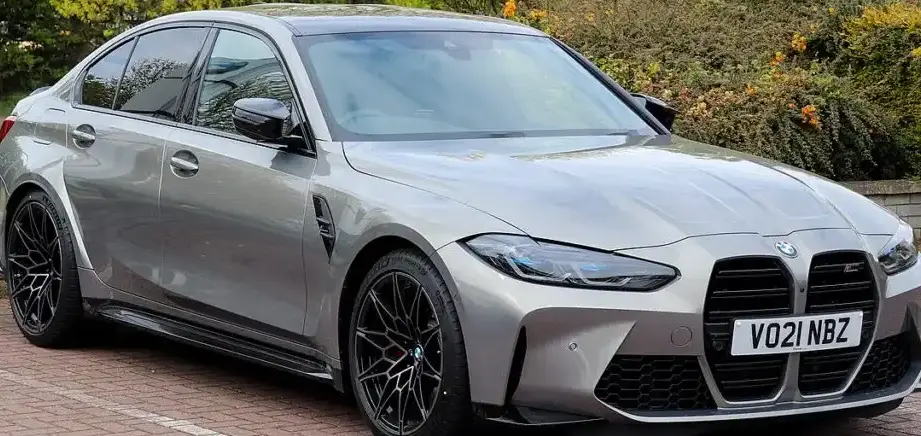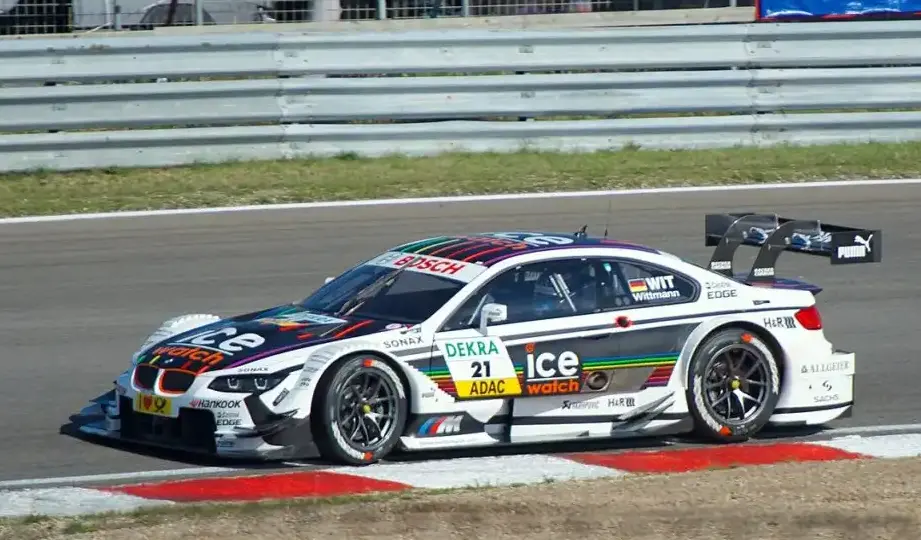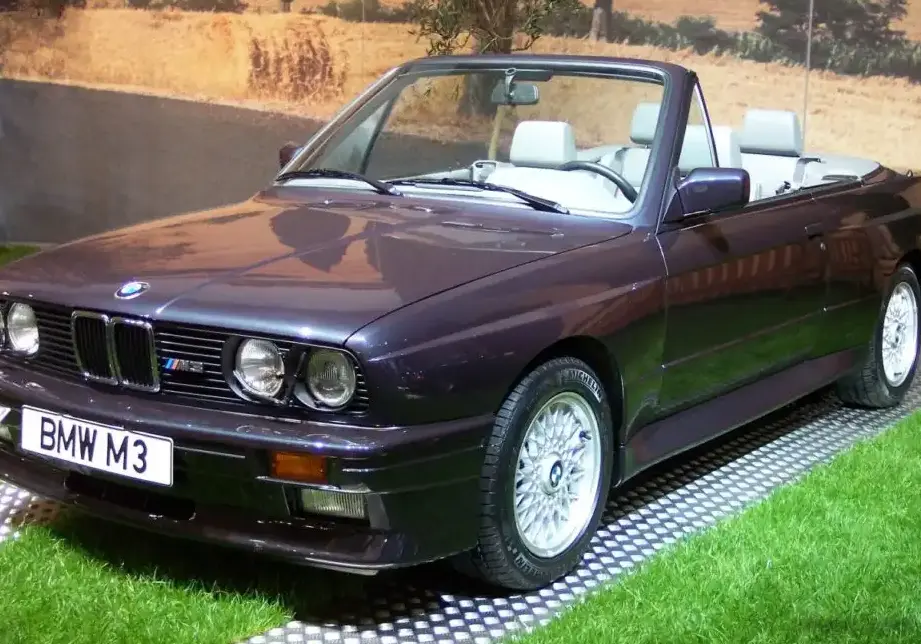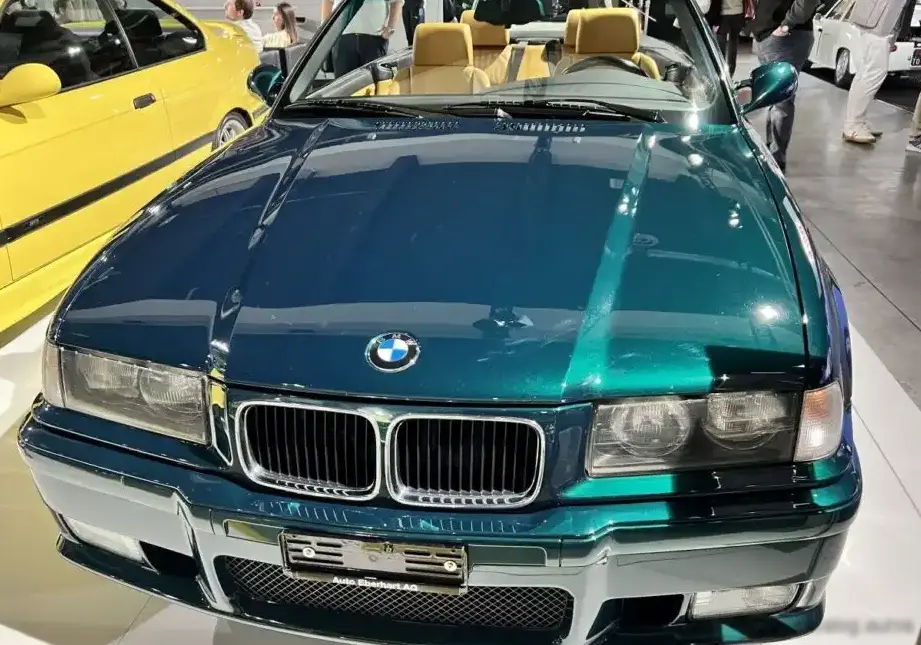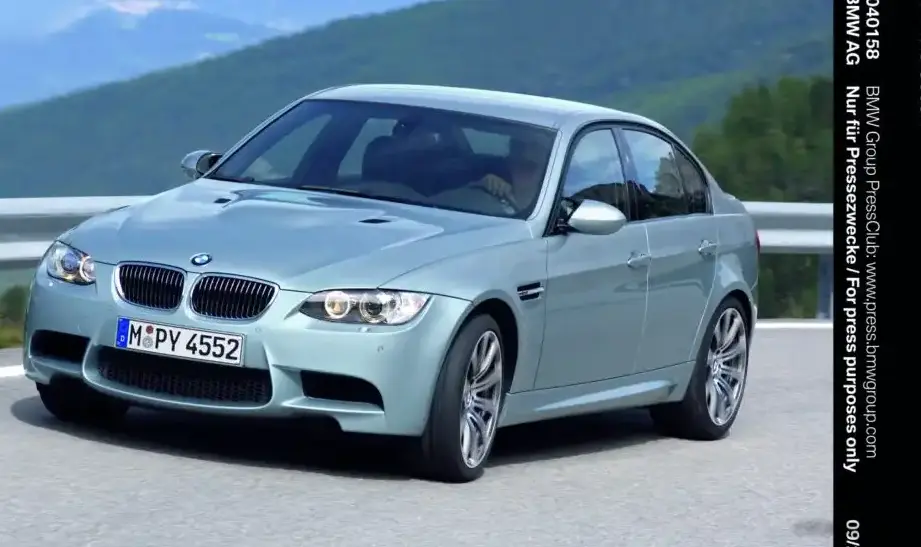
The BMW M3 (E90) 4.0 V8, produced from March 2008 to August 2008, represents a pivotal moment in the M3 lineage. This generation, internally designated E90, marked a departure from the inline-six engines traditionally associated with the M3, embracing a high-revving, naturally aspirated 4.0-liter V8 engine. Positioned as the performance flagship of the 3 Series (E90) range, the V8 M3 aimed to deliver a more visceral and engaging driving experience than its predecessors, appealing to enthusiasts seeking a blend of track capability and everyday usability. It was built on the E9x platform, sharing its underpinnings with the standard 3 Series but significantly enhanced for performance.
Technical Specifications
| Brand | BMW |
| Model | M3 |
| Generation | M3 (E90) |
| Type (Engine) | 4.0 V8 (420 Hp) |
| Start of production | March, 2008 |
| End of production | August, 2008 |
| Powertrain Architecture | Internal Combustion engine |
| Body type | Sedan |
| Seats | 5 |
| Doors | 4 |
| Fuel consumption (economy) – urban (NEDC) | 17.9 l/100 km (13.1 US mpg, 15.8 UK mpg, 5.6 km/l) |
| Fuel consumption (economy) – extra urban (NEDC) | 9.2 l/100 km (25.6 US mpg, 30.7 UK mpg, 10.9 km/l) |
| Fuel consumption (economy) – combined (NEDC) | 12.4 l/100 km (19 US mpg, 22.8 UK mpg, 8.1 km/l) |
| CO2 emissions (NEDC) | 295 g/km |
| Fuel Type | Petrol (Gasoline) |
| Acceleration 0 – 100 km/h | 4.9 sec |
| Acceleration 0 – 62 mph | 4.9 sec |
| Acceleration 0 – 60 mph | 4.7 sec |
| Acceleration 0 – 200 km/h | 16.2 sec |
| Maximum speed | 250 km/h (155.34 mph), Electronically limited |
| Emission standard | Euro 4 |
| Weight-to-power ratio | 3.8 kg/Hp, 261.7 Hp/tonne |
| Weight-to-torque ratio | 4 kg/Nm, 249.2 Nm/tonne |
| Power | 420 Hp @ 8300 rpm |
| Power per litre | 105 Hp/l |
| Torque | 400 Nm @ 3900 rpm (295.02 lb.-ft. @ 3900 rpm) |
| Maximum engine speed | 8400 rpm |
| Engine layout | Front, Longitudinal |
| Engine Model/Code | S65B40A |
| Engine displacement | 3999 cm3 (244.03 cu. in.) |
| Number of cylinders | 8 |
| Engine configuration | V-engine |
| Cylinder Bore | 92 mm (3.62 in.) |
| Piston Stroke | 75.2 mm (2.96 in.) |
| Compression ratio | 12:1 |
| Number of valves per cylinder | 4 |
| Fuel injection system | Multi-port manifold injection |
| Engine aspiration | Naturally aspirated engine |
| Valvetrain | Double-VANOS |
| Engine oil capacity | 8.8 l (9.3 US qt | 7.74 UK qt) |
| Coolant | 11.4 l (12.05 US qt | 10.03 UK qt) |
| Kerb Weight | 1605 kg (3538.42 lbs.) |
| Max. weight | 2150 kg (4739.94 lbs.) |
| Max load | 545 kg (1201.52 lbs.) |
| Trunk (boot) space – minimum | 450 l (15.89 cu. ft.) |
| Fuel tank capacity | 63 l (16.64 US gal | 13.86 UK gal) |
| Max. roof load | 75 kg (165.35 lbs.) |
| Length | 4580 mm (180.31 in.) |
| Width | 1817 mm (71.54 in.) |
| Width including mirrors | 2005 mm (78.94 in.) |
| Height | 1447 mm (56.97 in.) |
| Wheelbase | 2761 mm (108.7 in.) |
| Front track | 1540 mm (60.63 in.) |
| Rear (Back) track | 1539 mm (60.59 in.) |
| Front overhang | 805 mm (31.69 in.) |
| Rear overhang | 1014 mm (39.92 in.) |
| Drag coefficient (Cd) | 0.31 |
| Minimum turning circle (turning diameter) | 11.7 m (38.39 ft.) |
| Drivetrain Architecture | The Internal combustion engine (ICE) drives the rear wheels of the vehicle. |
| Drive wheel | Rear wheel drive |
| Number of gears and type of gearbox | 6 gears, manual transmission |
| Front suspension | Spring Strut, Transverse stabilizer |
| Rear suspension | Independent multi-link spring suspension with stabilizer |
| Front brakes | Ventilated discs, 360×30 mm |
| Rear brakes | Ventilated discs, 350×24 mm |
| Assisting systems | ABS (Anti-lock braking system) |
| Steering type | Steering rack and pinion |
| Power steering | Hydraulic Steering |
| Tires size | Front wheel tires: 245/40 R18; 245/35 R19 Rear wheel tires: 265/40 R18; 265/35 R19 |
| Wheel rims size | Front wheel rims: 8.5J x 18; 8.5J x 19 Rear wheel rims: 9.5J x 18; 9.5J x 19 |
Powertrain & Engine Architecture
The heart of the E90 M3 is the S65B40A 4.0-liter naturally aspirated V8 engine. This engine, a significant departure from the inline-sixes that had defined previous M3s, was designed to deliver high-revving performance and a distinctive exhaust note. It features individual throttle bodies, a high 12:1 compression ratio, and BMW’s Double-VANOS variable valve timing system on both intake and exhaust camshafts. The engine utilizes multi-port fuel injection. The S65 engine produced 420 horsepower at 8,300 rpm and 295 lb-ft of torque at 3,900 rpm. The standard transmission was a 6-speed manual, offering precise shifts and a direct connection to the engine. While an automatic transmission was not offered in the US market for this generation, a 7-speed Dual Clutch Transmission (DCT) was available in other markets.
Driving Characteristics
The E90 M3 with the manual transmission delivers a thrilling driving experience. The engine’s powerband is broad, but it truly comes alive above 4,000 rpm, surging towards its 8,400 rpm redline. The steering is precise and communicative, providing excellent feedback to the driver. The chassis is well-balanced, offering a comfortable ride on the street and exceptional handling on the track. The 6-speed manual gearbox is known for its short throws and precise engagement. Compared to potential future iterations with automatic transmissions, the manual version offers a more engaging and driver-focused experience, prioritizing control and feel.
Equipment & Trim Levels
The M3 came generously equipped, even as a base model. Standard features included leather upholstery, power-adjustable front seats with memory, a premium sound system, automatic climate control, and xenon headlights. Optional extras included a carbon fiber roof (reducing weight), upgraded audio systems, navigation, and various interior trim options. The Competition Package, introduced later in the production run, added stiffer springs, dampers, and anti-roll bars, along with a revised electronic stability control system and unique interior trim.
Chassis & Braking
The E90 M3 features a reinforced chassis and suspension compared to the standard 3 Series. The front suspension utilizes aluminum components and a transverse stabilizer bar, while the rear suspension employs an independent multi-link design with a stabilizer bar. Brakes are large and powerful, with ventilated discs at all four corners. The front brakes measure 360x30mm, while the rear brakes are 350x24mm. ABS (Anti-lock braking system) is standard. The M3’s suspension tuning prioritizes handling and stability, providing a firm but controlled ride.
Market Reception & Comparison
The E90 M3 was widely praised by automotive critics for its performance, handling, and engine. The V8 engine was lauded for its responsiveness and sound. However, some critics noted the car’s relatively high weight and fuel consumption. Compared to the previous E46 M3, the E90 offered more power and a more refined interior, but it also weighed more and was more complex. The E90 M3 competed with other high-performance sports sedans, such as the Porsche 911, Audi RS4, and Mercedes-Benz C63 AMG.
Legacy
The E90 M3 V8 remains a highly sought-after vehicle among enthusiasts. The S65 engine is known for its durability and tunability, making it a popular choice for modifications. While maintenance costs can be higher than those of earlier M3 generations due to the engine’s complexity, the E90 M3 offers a unique and rewarding driving experience. The car’s combination of performance, handling, and everyday usability has cemented its place as a modern classic. On the used car market, well-maintained examples command premium prices, reflecting the car’s enduring appeal.