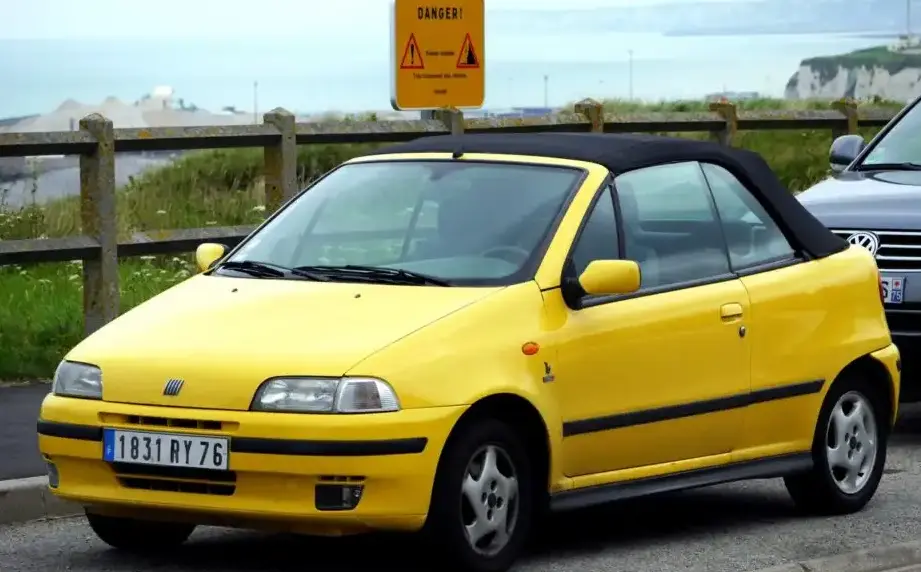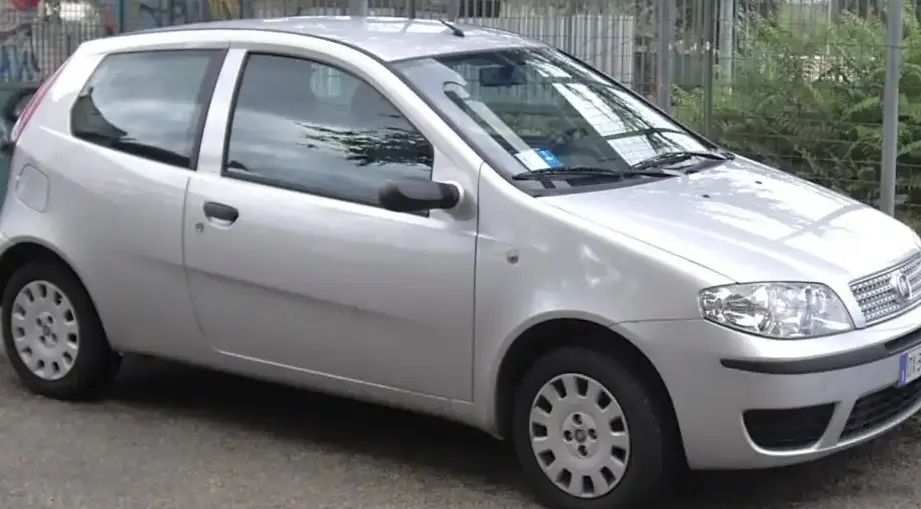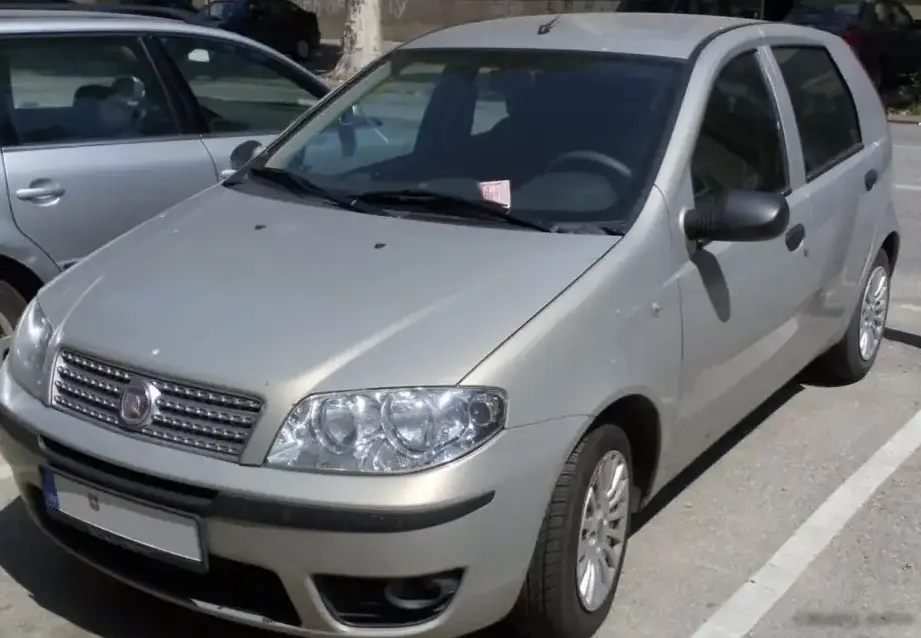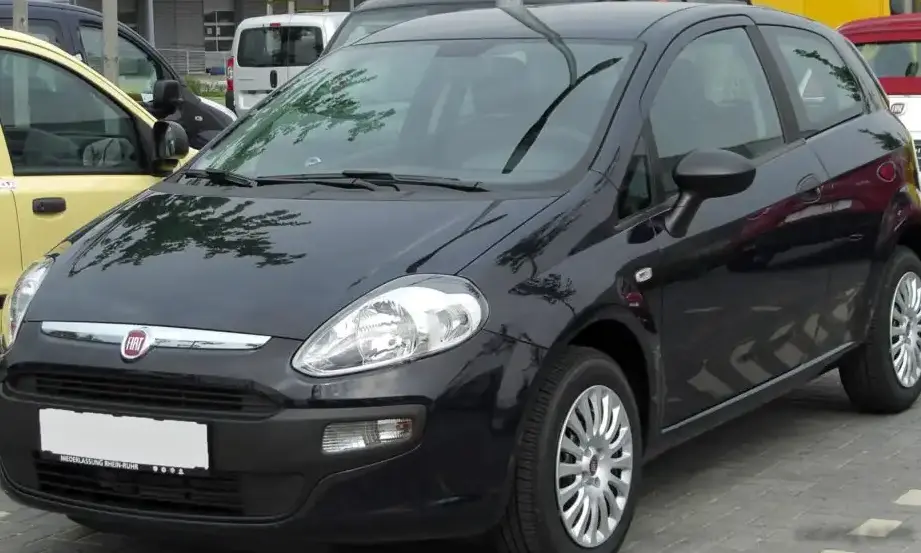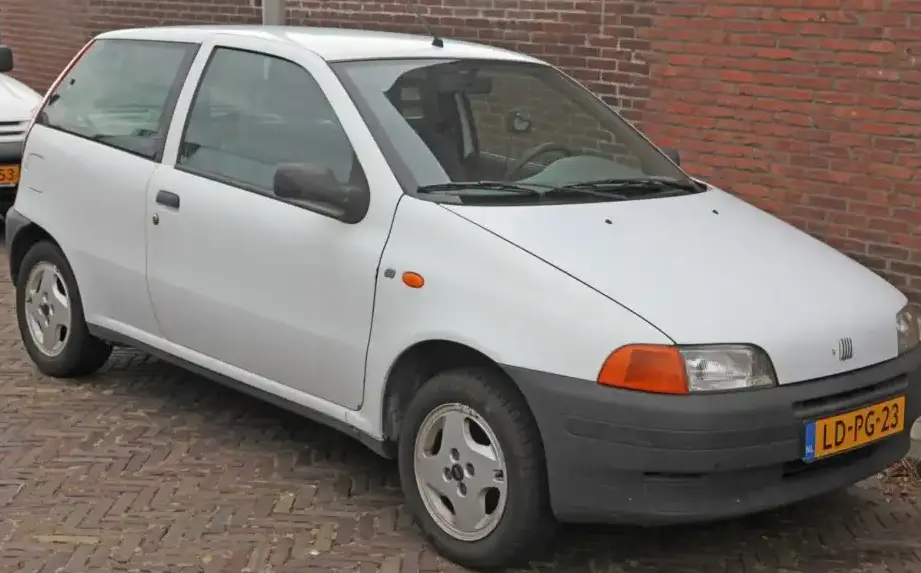
The Fiat Punto I (176) 60 1.2, produced between 1995 and 1997, represented the entry point into the first generation Punto range (Project 176). Positioned as an affordable and practical supermini, it was a key model for Fiat in the European market, offering a cost-effective alternative to rivals like the Peugeot 205, Renault Clio, and Volkswagen Polo. The Punto I, built on the Fiat Tipo-derived 176 platform, aimed to modernize Fiat’s small car offerings and provide a spacious and versatile vehicle for everyday use. This 60 horsepower variant, paired exclusively with an automatic transmission in many markets, catered to buyers prioritizing ease of driving over outright performance.
Technical Specifications
| Brand | Fiat |
| Model | Punto |
| Generation | Punto I (176) |
| Type (Engine) | 60 1.2 (60 Hp) |
| Start of production | 1995 |
| End of production | 1997 |
| Powertrain Architecture | Internal Combustion engine |
| Body type | Hatchback |
| Seats | 5 |
| Doors | 3-5 |
| Fuel consumption (urban) | 9.1 l/100 km (25.8 US mpg, 31 UK mpg, 11 km/l) |
| Fuel consumption (extra urban) | 5.4 l/100 km (43.6 US mpg, 52.3 UK mpg, 18.5 km/l) |
| Fuel consumption (combined) | 6.8 l/100 km (34.6 US mpg, 41.5 UK mpg, 14.7 km/l) |
| Fuel Type | Petrol (Gasoline) |
| Acceleration 0 – 100 km/h | 14.5 sec |
| Acceleration 0 – 62 mph | 14.5 sec |
| Acceleration 0 – 60 mph | 13.8 sec |
| Maximum speed | 160 km/h (99.42 mph) |
| Weight-to-power ratio | 14.4 kg/Hp |
| Weight-to-torque ratio | 8.8 kg/Nm |
| Power | 60 Hp @ 5500 rpm |
| Power per litre | 48.3 Hp/l |
| Torque | 98 Nm @ 3000 rpm (72.28 lb.-ft. @ 3000 rpm) |
| Engine layout | Front, Transverse |
| Engine Model/Code | 176 B1.000 |
| Engine displacement | 1242 cm3 (75.79 cu. in.) |
| Number of cylinders | 4 |
| Engine configuration | Inline |
| Cylinder Bore | 70.8 mm (2.79 in.) |
| Piston Stroke | 78.9 mm (3.11 in.) |
| Compression ratio | 9.6:1 |
| Number of valves per cylinder | 2 |
| Fuel injection system | Single-point injection |
| Engine aspiration | Naturally aspirated engine |
| Valvetrain | OHC |
| Engine oil capacity | 3.8 l (4.02 US qt | 3.34 UK qt) |
| Coolant capacity | 4.5 l (4.76 US qt | 3.96 UK qt) |
| Kerb Weight | 865 kg (1907 lbs.) |
| Max. weight | 1325 kg (2921.12 lbs.) |
| Max load | 460 kg (1014.13 lbs.) |
| Trunk (boot) space – minimum | 275 l (9.71 cu. ft.) |
| Trunk (boot) space – maximum | 1080 l (38.14 cu. ft.) |
| Fuel tank capacity | 47 l (12.42 US gal | 10.34 UK gal) |
| Length | 3760 mm (148.03 in.) |
| Width | 1625 mm (63.98 in.) |
| Height | 1460 mm (57.48 in.) |
| Wheelbase | 2450 mm (96.46 in.) |
| Front track | 1395 mm (54.92 in.) |
| Rear track | 1377 mm (54.21 in.) |
| Drag coefficient (Cd) | 0.31 |
| Minimum turning circle | 10.2 m (33.46 ft.) |
| Drivetrain | Front wheel drive |
| Front suspension | Wishbone |
| Rear suspension | Trailing arm |
| Front brakes | Disc |
| Rear brakes | Drum |
| Assisting systems | ABS (Anti-lock braking system) |
| Steering type | Steering rack and pinion |
| Tires size | 155/70 R13 |
| Wheel rims size | 13 |
INTRODUCTION
The Fiat Punto I 60 1.2, launched in 1995, was a crucial part of Fiat’s strategy to replace the aging Uno. It represented a significant step forward in terms of design, safety, and interior space. The 1.2-liter engine, designated the 176 B1.000, was a mainstay of the Punto range, and the 60 horsepower version, often coupled with a two-speed automatic transmission in certain markets, was aimed at buyers seeking a comfortable and economical city car. This variant occupied the base trim level, offering a no-frills but functional package.
Powertrain & Engine Architecture
The heart of the Punto 60 1.2 is the 1242cc inline-four cylinder engine, bearing the Fiat engine code 176 B1.000. This engine utilizes a single-point fuel injection system, a relatively simple setup for the time, prioritizing cost-effectiveness over performance. The engine features an overhead camshaft (OHC) valvetrain with two valves per cylinder. The 60 horsepower output is achieved at 5500 rpm, while peak torque of 98 Nm (72.28 lb-ft) arrives at 3000 rpm. The automatic transmission, typically a two-speed unit, was designed for smooth, if not particularly rapid, acceleration. This transmission was chosen for its simplicity and ease of use, appealing to drivers who preferred convenience over sporty driving dynamics. The engine’s relatively low compression ratio of 9.6:1 contributed to its ability to run on lower octane fuel, common in many European markets.
Driving Characteristics
The Punto 60 1.2 automatic was not designed for spirited driving. Acceleration was leisurely, with a 0-60 mph time of around 13.8 seconds and a top speed of 99.42 mph. The two-speed automatic transmission, while providing smooth shifts, limited the car’s overall performance. The gear ratios were optimized for fuel economy and low-speed drivability rather than outright speed. Compared to the manual transmission versions of the 1.2, the automatic suffered a noticeable performance penalty. Higher-spec Puntos, equipped with the 1.6-liter engine, offered significantly more power and a more engaging driving experience. However, the 60 1.2 automatic excelled in urban environments, providing a comfortable and easy-to-drive experience for city commutes.
Equipment & Trim Levels
The Punto 60 1.2 typically came with a basic level of equipment. Standard features generally included power steering, central locking, and a basic stereo system. Interior upholstery was typically cloth, with a simple dashboard layout. Optional extras included electric windows, a sunroof, and upgraded stereo systems. The trim level was deliberately kept basic to maintain affordability. The focus was on providing a functional and reliable vehicle rather than luxury features. Safety features were also relatively basic for the time, with ABS becoming increasingly common but not always standard.
Chassis & Braking
The Punto I utilized a front-wheel-drive layout with a wishbone suspension at the front and a trailing arm suspension at the rear. The front brakes were disc brakes, while the rear brakes were drum brakes – a common configuration for cars in this price range. The suspension setup prioritized comfort and ride quality over sporty handling. The Punto 60 1.2’s relatively light weight (865 kg / 1907 lbs) helped to mitigate the effects of the modest engine power. ABS (Anti-lock braking system) was often included as an option, enhancing braking performance and safety.
Market Reception & Comparison
The Punto 60 1.2 automatic was generally well-received as an affordable and practical city car. Critics praised its spacious interior and comfortable ride. However, the performance of the automatic transmission was often criticized as being sluggish. Compared to other trims in the Punto lineup, the 60 1.2 automatic offered the lowest performance but the highest fuel economy. The manual transmission versions of the 1.2 offered a more engaging driving experience, while the 1.6-liter models provided significantly more power. The Punto’s main competitors, such as the Peugeot 205 and Renault Clio, offered similar levels of practicality and affordability.
Legacy
The Fiat Punto I 60 1.2, while not a performance icon, proved to be a reliable and durable vehicle. The 176 B1.000 engine, despite its simplicity, is known for its longevity when properly maintained. In the used car market today, these Puntos are often sought after as affordable and economical transportation. While finding well-maintained examples can be challenging, they remain a viable option for budget-conscious buyers. The Punto I laid the foundation for the Punto’s continued success as one of Fiat’s most popular models, and the 60 1.2 variant played a significant role in establishing the Punto as a mainstream contender in the European supermini segment.