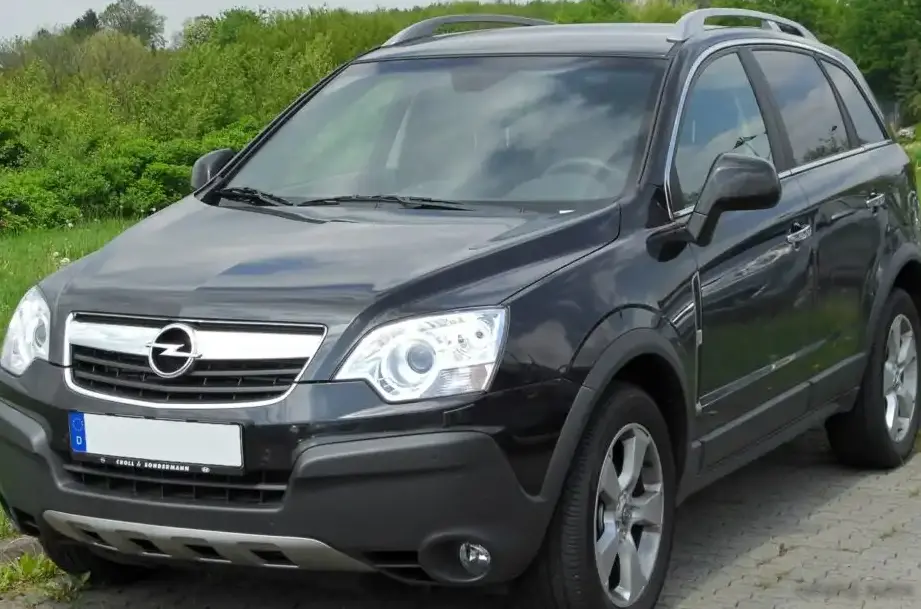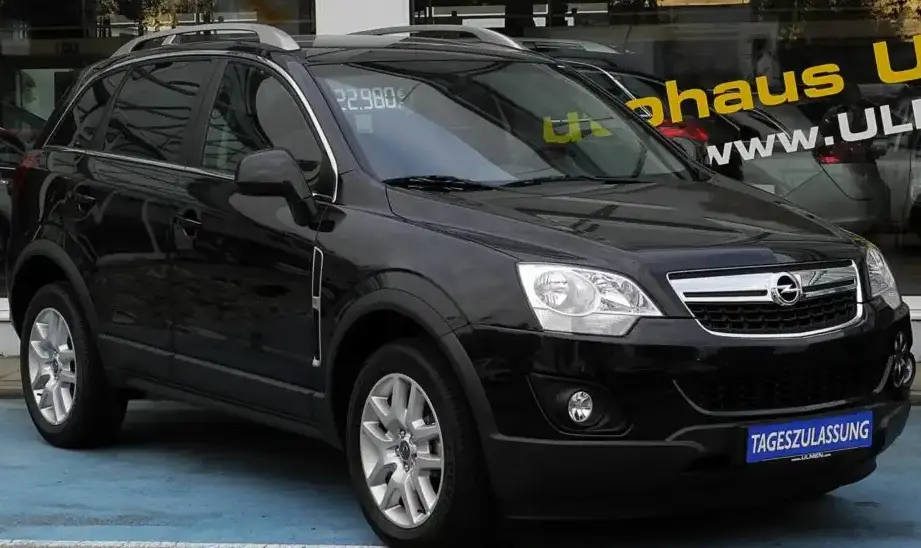
The Opel Antara (facelift, introduced in 2010) 2.2 CDTI with 184 horsepower and all-wheel drive represents a significant iteration of Opel’s compact SUV offering. Produced from 2010 through 2016, this variant occupied a mid-range position within the Antara lineup, bridging the gap between the base models and potentially more luxurious or performance-oriented trims (depending on regional availability). The facelift brought styling updates and, crucially, the introduction of Opel’s EcoFlex technology, including a Start/Stop system, aimed at improving fuel efficiency. The Antara itself was Opel’s entry into the growing compact SUV segment, competing with vehicles like the Nissan Qashqai and Hyundai ix35 in the European market.
Technical Specifications
| Brand | Opel |
| Model | Antara |
| Generation | Antara (facelift 2010) |
| Type (Engine) | 2.2 CDTI (184 Hp) AWD Ecotec start/stop |
| Start of production | 2010 |
| End of production | 2016 |
| Powertrain Architecture | Internal Combustion engine |
| Body type | SUV |
| Seats | 5 |
| Doors | 5 |
| Fuel consumption (urban) | 7.9 l/100 km (29.8 US mpg, 35.8 UK mpg, 12.7 km/l) |
| Fuel consumption (extra urban) | 5.6 l/100 km (42 US mpg, 50.4 UK mpg, 17.9 km/l) |
| Fuel consumption (combined) | 6.4 l/100 km (36.8 US mpg, 44.1 UK mpg, 15.6 km/l) |
| CO2 emissions | 170 g/km |
| Fuel Type | Diesel |
| Acceleration 0 – 100 km/h | 9.7 sec |
| Acceleration 0 – 62 mph | 9.7 sec |
| Acceleration 0 – 60 mph | 9.2 sec |
| Maximum speed | 200 km/h (124.27 mph) |
| Emission standard | Euro 5 |
| Power | 184 Hp @ 3800 rpm |
| Power per litre | 82.5 Hp/l |
| Torque | 400 Nm @ 2000 rpm (295.02 lb.-ft. @ 2000 rpm) |
| Engine layout | Front, Transverse |
| Engine Model/Code | A22DMH |
| Engine displacement | 2231 cm3 (136.14 cu. in.) |
| Number of cylinders | 4 |
| Engine configuration | Inline |
| Cylinder Bore | 86 mm (3.39 in.) |
| Piston Stroke | 96 mm (3.78 in.) |
| Compression ratio | 16.3:1 |
| Fuel injection system | Diesel Commonrail |
| Engine aspiration | Turbocharger, Intercooler |
| Engine oil capacity | 5.4 l (5.71 US qt | 4.75 UK qt) |
| Coolant | 7.5 l (7.93 US qt | 6.6 UK qt) |
| Trunk (boot) space – minimum | 402 l (14.2 cu. ft.) |
| Trunk (boot) space – maximum | 1391 l (49.12 cu. ft.) |
| Fuel tank capacity | 65 l (17.17 US gal | 14.3 UK gal) |
| Length | 4596 mm (180.94 in.) |
| Width | 1850 mm (72.83 in.) |
| Height | 1761 mm (69.33 in.) |
| Wheelbase | 2707 mm (106.57 in.) |
| Front track | 1569 mm (61.77 in.) |
| Rear (Back) track | 1576 mm (62.05 in.) |
| Minimum turning circle | 12.25 m (40.19 ft.) |
| Drive wheel | All wheel drive (4×4) |
| Number of gears | 6 gears, manual transmission |
| Assisting systems | ABS (Anti-lock braking system) |
| Steering type | Steering rack and pinion |
Powertrain & Engine Architecture
The heart of the Antara 2.2 CDTI is the A22DMH engine, a 2.2-liter inline-four cylinder diesel. This engine utilizes a common rail direct injection system, delivering fuel at extremely high pressure for optimized combustion. A turbocharger with an intercooler is employed to boost power output and improve torque across a wider rev range. The 184 horsepower peak is achieved at 3800 rpm, while the substantial 400 Nm (295 lb-ft) of torque is available from just 2000 rpm, providing strong pulling power. The engine features a compression ratio of 16.3:1, typical for modern diesel engines. The six-speed manual transmission was standard for this variant, offering a balance between fuel efficiency and driver control. The all-wheel-drive system is typically a part-time system, engaging the rear wheels when traction is needed, enhancing stability in adverse conditions.
Driving Characteristics
The 2.2 CDTI with the manual transmission provides a reasonably engaging driving experience for an SUV. While not a sports car, the ample torque makes overtaking and hill climbing effortless. The six-speed gearbox is well-matched to the engine’s characteristics, allowing for comfortable cruising on the highway. The gear ratios are tuned for fuel efficiency, meaning the engine doesn’t feel overly stressed at typical motorway speeds. Compared to potential lower-powered versions of the Antara, this 184 hp variant offers a noticeable performance improvement. It also provides a more refined driving experience than the higher-output petrol engines, which often prioritize outright power over low-end torque. The all-wheel-drive system adds confidence on slippery surfaces, but it does add some weight, slightly impacting handling agility.
Equipment & Trim Levels
The Antara 2.2 CDTI typically came equipped with a respectable level of standard features. These generally included air conditioning, electric windows and mirrors, a CD/radio system, and alloy wheels. Safety features such as ABS, traction control, and multiple airbags were also standard. Higher trim levels, if available, could add features like leather upholstery, a sunroof, parking sensors, and a more advanced infotainment system. The interior design was functional and relatively modern for its time, with a focus on practicality and durability. The dashboard layout is straightforward, with easy-to-use controls.
Chassis & Braking
The Antara’s chassis is based on a monocoque construction, providing a good balance of strength and weight. The suspension consists of MacPherson struts at the front and a multi-link setup at the rear. This configuration delivers a comfortable ride quality, absorbing bumps and imperfections in the road surface effectively. Braking duties are handled by disc brakes on all four wheels, providing adequate stopping power. The Antara’s braking system is assisted by ABS (Anti-lock Braking System) and Electronic Brakeforce Distribution (EBD) to enhance safety and stability during emergency braking maneuvers.
Market Reception & Comparison
The Opel Antara 2.2 CDTI was generally well-received by automotive critics as a competent and practical SUV. The diesel engine was praised for its fuel efficiency and strong torque output. However, some reviewers noted that the interior materials weren’t as premium as those found in some of its competitors. Compared to the petrol-powered Antara variants, the 2.2 CDTI offered significantly better fuel economy and a more relaxed driving experience. Against rivals like the Nissan Qashqai and Hyundai ix35, the Antara held its own in terms of practicality, comfort, and value for money. The Start/Stop system, introduced with the facelift, further enhanced its appeal to environmentally conscious buyers.
Legacy
The Opel Antara, and specifically the 2.2 CDTI variant, has proven to be a relatively reliable vehicle in the used car market. The A22DMH engine is known for its durability, provided it has been properly maintained. Common issues can include diesel particulate filter (DPF) problems if the vehicle has been primarily used for short journeys, and potential wear and tear on the turbocharger. However, these are typical concerns for modern diesel engines. Today, the Antara 2.2 CDTI represents a reasonably affordable and practical SUV option for buyers seeking a comfortable and fuel-efficient vehicle with all-wheel-drive capability. Its blend of practicality, affordability, and decent performance has ensured its continued presence on roads throughout Europe.