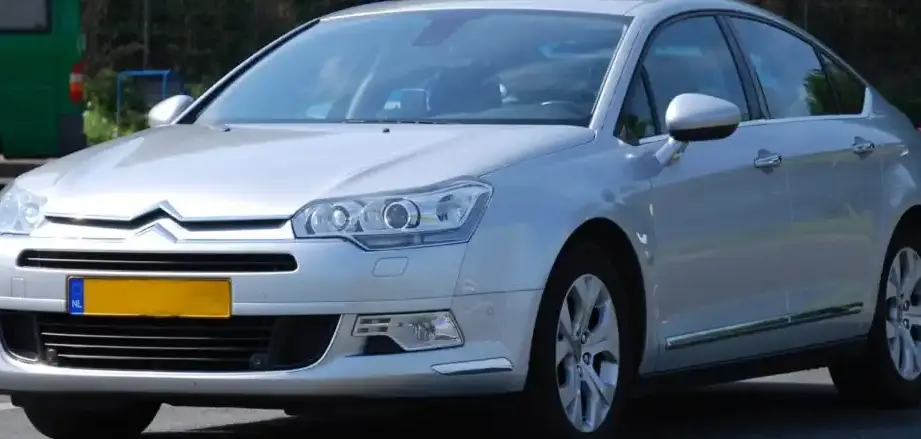
The Citroën C5 II, specifically the 3.0 V6 24V (211 hp) automatic variant produced between 2008 and 2010, represented the flagship engine option for the second generation of Citroën’s large family car. Positioned as the premium trim level, it offered a blend of comfort, performance, and technology aimed at buyers seeking a refined driving experience. This model was part of the X7 platform, also known as the 1HX0/A3 platform, shared with the Peugeot 607. The C5 II aimed to elevate Citroën’s image, moving away from its more utilitarian past towards a more sophisticated and competitive position in the European executive car segment.
Technical Specifications
| Brand | Citroen |
| Model | C5 |
| Generation | C5 II (Phase I, 2008) |
| Type (Engine) | 3.0 V6 24V (211 Hp) Automatic |
| Start of production | 2008 |
| End of production | 2010 |
| Powertrain Architecture | Internal Combustion engine |
| Body type | Sedan |
| Seats | 5 |
| Doors | 4 |
| Fuel consumption (urban) | 15.6 l/100 km (15.1 US mpg, 18.1 UK mpg, 6.4 km/l) |
| Fuel consumption (extra urban) | 7.5 l/100 km (31.4 US mpg, 37.7 UK mpg, 13.3 km/l) |
| Fuel consumption (combined) | 10.5 l/100 km (22.4 US mpg, 26.9 UK mpg, 9.5 km/l) |
| CO2 emissions | 248 g/km |
| Fuel Type | Petrol (Gasoline) |
| Acceleration 0 – 100 km/h | 9.2 sec |
| Acceleration 0 – 62 mph | 9.2 sec |
| Acceleration 0 – 60 mph | 8.7 sec |
| Maximum speed | 224 km/h (139.19 mph) |
| Emission standard | Euro 4 |
| Weight-to-power ratio | 8.2 kg/Hp, 122.3 Hp/tonne |
| Weight-to-torque ratio | 5.9 kg/Nm, 168.1 Nm/tonne |
| Power | 211 Hp @ 6000 rpm |
| Power per litre | 71.6 Hp/l |
| Torque | 290 Nm @ 3750 rpm (213.89 lb.-ft. @ 3750 rpm) |
| Engine layout | Front, Transverse |
| Engine Model/Code | XFU ES9A |
| Engine displacement | 2946 cm3 (179.78 cu. in.) |
| Number of cylinders | 6 |
| Engine configuration | V-engine |
| Cylinder Bore | 87 mm (3.43 in.) |
| Piston Stroke | 82.6 mm (3.25 in.) |
| Compression ratio | 10.9:1 |
| Number of valves per cylinder | 4 |
| Fuel injection system | Multi-port manifold injection |
| Engine aspiration | Naturally aspirated engine |
| Engine oil capacity | 5.2 l (5.49 US qt | 4.58 UK qt) |
| Coolant | 12 l (12.68 US qt | 10.56 UK qt) |
| Kerb Weight | 1725 kg (3802.97 lbs.) |
| Max. weight | 2230 kg (4916.31 lbs.) |
| Max load | 505 kg (1113.33 lbs.) |
| Trunk (boot) space – minimum | 439 l (15.5 cu. ft.) |
| Fuel tank capacity | 71 l (18.76 US gal | 15.62 UK gal) |
| Max. roof load | 80 kg (176.37 lbs.) |
| Permitted trailer load with brakes (12%) | 1400 kg (3086.47 lbs.) |
| Permitted trailer load without brakes | 750 kg (1653.47 lbs.) |
| Permitted towbar download | 66 kg (145.51 lbs.) |
| Length | 4779 mm (188.15 in.) |
| Width | 1860 mm (73.23 in.) |
| Width including mirrors | 2096 mm (82.52 in.) |
| Height | 1451-1458 mm (57.13 – 57.4 in.) |
| Wheelbase | 2815 mm (110.83 in.) |
| Front track | 1586 mm (62.44 in.) |
| Rear (Back) track | 1557 mm (61.3 in.) |
| Front overhang | 1054 mm (41.5 in.) |
| Rear overhang | 910 mm (35.83 in.) |
| Minimum turning circle | 11.7 m (38.39 ft.) |
| Drivetrain Architecture | Front wheel drive |
| Number of gears and type of gearbox | 6 gears, automatic transmission |
| Front suspension | Double wishbone |
| Rear suspension | Independent multi-link suspension |
| Front brakes | Ventilated discs |
| Rear brakes | Disc |
| Assisting systems | ABS (Anti-lock braking system) |
| Steering type | Steering rack and pinion |
| Power steering | Hydraulic Steering |
| Tires size | 245/45 R18 |
| Wheel rims size | 18 |
Powertrain & Engine Architecture
The heart of this C5 variant was the ES9A engine code, a 3.0-liter naturally aspirated V6 petrol engine. This engine, part of the PSA Group’s (Peugeot Société Anonyme) V6 family, featured a 60-degree V-angle and a cast iron block with aluminum cylinder heads. It employed multi-point fuel injection and four valves per cylinder, contributing to its relatively high output for its displacement. The engine’s 211 horsepower at 6,000 rpm and 290 Nm (213.89 lb-ft) of torque at 3,750 rpm provided brisk acceleration. The automatic transmission was a six-speed unit, designed to provide smooth shifts and enhance the overall driving experience. While not a cutting-edge transmission in terms of efficiency compared to later designs, it was well-suited to the engine’s characteristics.
Driving Characteristics
The 3.0 V6 automatic C5 offered a distinctly different driving experience compared to the lower-powered, four-cylinder versions or the diesel variants. The V6 provided ample power for effortless cruising and confident overtaking. The automatic transmission, while smooth, wasn’t particularly sporty; gear changes were geared towards comfort rather than performance. The gear ratios were optimized for relaxed highway driving, but could feel slightly less responsive in more demanding situations. Compared to a manual transmission equipped C5, the automatic version sacrificed some driver engagement but gained in ease of use, particularly in urban environments. The weight distribution, typical of a front-wheel-drive car, was noticeable during spirited cornering, though the sophisticated suspension helped to mitigate understeer.
Equipment & Trim Levels
The 3.0 V6 automatic trim typically included a high level of standard equipment. This often encompassed leather upholstery, automatic climate control, a premium audio system, and alloy wheels. Optional extras included features like a navigation system, parking sensors, and a panoramic sunroof. The interior design focused on comfort and ergonomics, with supportive seats and a well-laid-out dashboard. The C5 II was also known for its innovative hydropneumatic suspension system, which provided a remarkably smooth and comfortable ride, even on uneven surfaces. This suspension was standard on the V6 models.
Chassis & Braking
The C5 II’s chassis was designed to prioritize ride comfort. The front suspension utilized a double wishbone setup, while the rear employed an independent multi-link system. This configuration, combined with the hydropneumatic suspension, effectively isolated passengers from road imperfections. Braking duties were handled by ventilated discs at the front and solid discs at the rear, equipped with ABS (Anti-lock Braking System). The braking performance was adequate for the car’s weight and power, but not particularly outstanding. The steering was hydraulic power-assisted, providing a reasonably direct feel.
Market Reception & Comparison
The 3.0 V6 C5 was generally well-received by automotive critics, who praised its comfortable ride, refined engine, and spacious interior. However, its fuel consumption was often cited as a drawback, particularly compared to the more economical diesel alternatives. Compared to rivals like the Ford Mondeo, Volkswagen Passat, and Audi A6, the C5 offered a unique blend of French flair and comfort. The V6 engine provided a performance advantage over many of the base-engine competitors, but at the cost of increased fuel bills. Reliability was generally good, although the complex hydropneumatic suspension system could require occasional maintenance.
Legacy
The Citroën C5 II 3.0 V6 automatic, while not a high-volume seller, remains a desirable used car for those seeking a comfortable and refined grand tourer. The ES9A V6 engine is known for its durability, provided it has been properly maintained. The hydropneumatic suspension, while potentially requiring more specialized maintenance, is highly valued for its exceptional ride quality. Today, these cars can be found at relatively affordable prices, making them an attractive option for buyers looking for a distinctive and comfortable alternative to more mainstream executive cars. The C5 II, in its V6 guise, represents a high point in Citroën’s commitment to comfort and innovation.