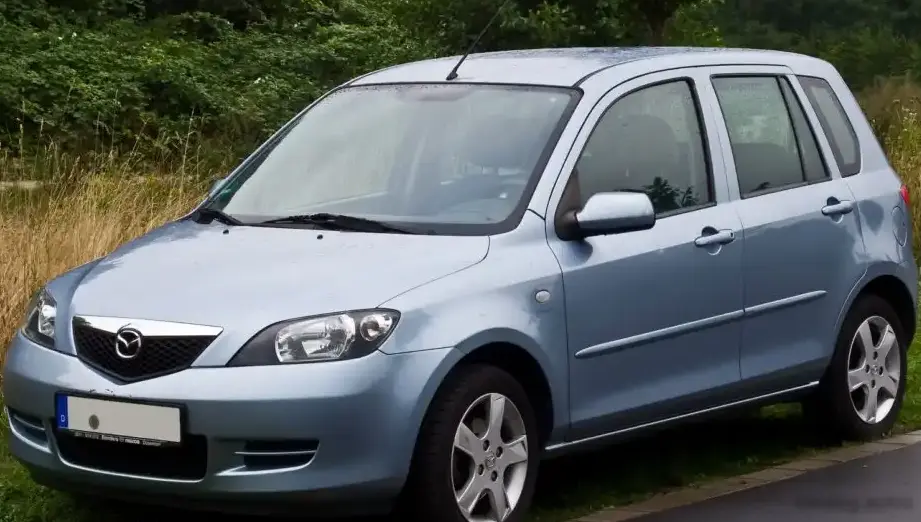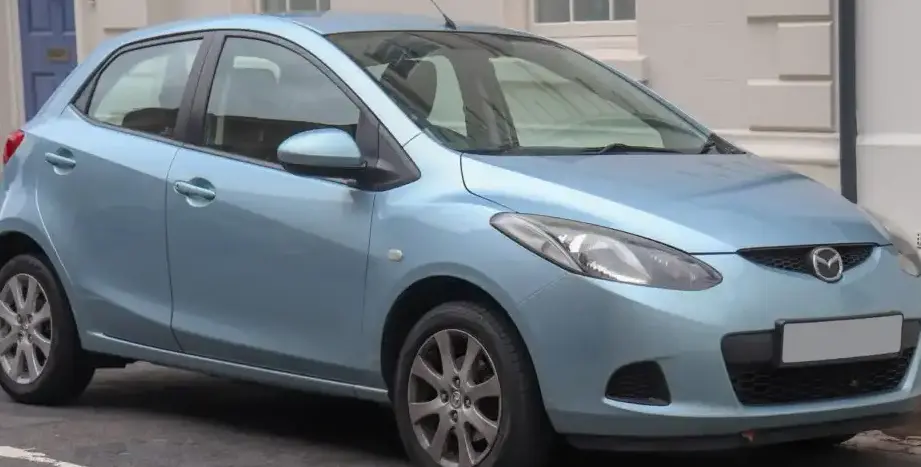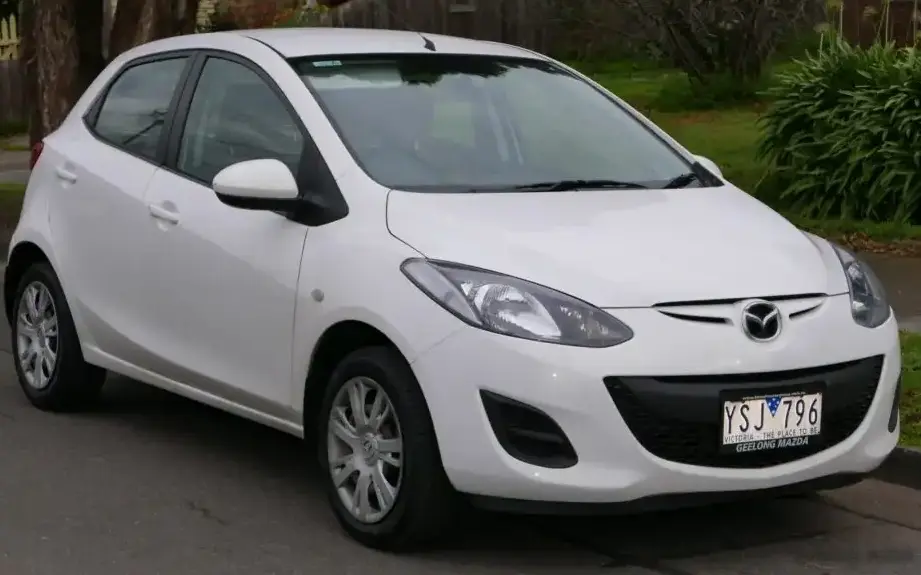
The Mazda 2 II (DE) facelift, specifically the 1.5i variant producing 102 horsepower, was a key model in Mazda’s European and Asian lineup from 2010 to 2014. Positioned as an entry-level offering within the DE generation (launched in 2007), this version aimed to provide affordable and efficient transportation, appealing to first-time buyers and those seeking a compact city car. The facelift brought styling updates and minor mechanical refinements to the already successful second-generation Mazda2. This particular configuration, with its 1.5-liter engine and five-speed manual transmission, represented a balance between fuel economy and acceptable performance for everyday driving.
Technical Specifications
| Brand | Mazda |
| Model | 2 |
| Generation | 2 II (DE, facelift 2010) |
| Type (Engine) | 1.5i (102 Hp) |
| Start of production | 2010 |
| End of production | 2014 |
| Powertrain Architecture | Internal Combustion engine |
| Body type | Hatchback |
| Seats | 5 |
| Doors | 5 |
| Fuel consumption (urban) | 7.6 l/100 km (30.9 US mpg, 37.2 UK mpg, 13.2 km/l) |
| Fuel consumption (extra urban) | 4.8 l/100 km (49 US mpg, 58.9 UK mpg, 20.8 km/l) |
| Fuel consumption (combined) | 5.8 l/100 km (40.6 US mpg, 48.7 UK mpg, 17.2 km/l) |
| CO2 emissions | 135 g/km |
| Fuel Type | Petrol (Gasoline) |
| Acceleration 0 – 100 km/h | 10.7 sec |
| Acceleration 0 – 62 mph | 10.7 sec |
| Acceleration 0 – 60 mph | 10.2 sec |
| Maximum speed | 188 km/h (116.82 mph) |
| Emission standard | Euro 5 |
| Weight-to-power ratio | 9.5 kg/Hp, 105.2 Hp/tonne |
| Weight-to-torque ratio | 7.3 kg/Nm, 137.1 Nm/tonne |
| Power | 102 Hp @ 6000 rpm |
| Power per litre | 68.1 Hp/l |
| Torque | 133 Nm @ 4000 rpm (98.1 lb.-ft. @ 4000 rpm) |
| Engine layout | Front, Transverse |
| Engine displacement | 1498 cm3 (91.41 cu. in.) |
| Number of cylinders | 4 |
| Engine configuration | Inline |
| Cylinder Bore | 78 mm (3.07 in.) |
| Piston Stroke | 78.4 mm (3.09 in.) |
| Compression ratio | 10:1 |
| Number of valves per cylinder | 4 |
| Fuel injection system | Multi-port manifold injection |
| Engine aspiration | Naturally aspirated engine |
| Valvetrain | DOHC |
| Engine oil capacity | 3.9 l (4.12 US qt | 3.43 UK qt) |
| Coolant | 5.1 l (5.39 US qt | 4.49 UK qt) |
| Kerb Weight | 970 kg (2138.48 lbs.) |
| Max. weight | 1490 kg (3284.89 lbs.) |
| Max load | 520 kg (1146.4 lbs.) |
| Trunk (boot) space – minimum | 250 l (8.83 cu. ft.) |
| Trunk (boot) space – maximum | 787 l (27.79 cu. ft.) |
| Fuel tank capacity | 43 l (11.36 US gal | 9.46 UK gal) |
| Permitted trailer load with brakes (12%) | 900 kg (1984.16 lbs.) |
| Permitted trailer load without brakes | 500 kg (1102.31 lbs.) |
| Length | 3920 mm (154.33 in.) |
| Width | 1695 mm (66.73 in.) |
| Width including mirrors | 1958 mm (77.09 in.) |
| Height | 1475 mm (58.07 in.) |
| Wheelbase | 2490 mm (98.03 in.) |
| Front track | 1475 mm (58.07 in.) |
| Rear (Back) track | 1465 mm (57.68 in.) |
| Ride height (ground clearance) | 150 mm (5.91 in.) |
| Drag coefficient (Cd) | 0.31 |
| Minimum turning circle (turning diameter) | 9.8 m (32.15 ft.) |
| Drivetrain Architecture | The Internal combustion engine (ICE) drives the front wheels of the vehicle. |
| Drive wheel | Front wheel drive |
| Number of gears and type of gearbox | 5 gears, manual transmission |
| Front brakes | Ventilated discs |
| Rear brakes | Drum |
| Assisting systems | ABS (Anti-lock braking system) |
| Steering type | Steering rack and pinion |
| Power steering | Electric Steering |
| Tires size | 195/45 R16 |
| Wheel rims size | 16 |
Powertrain & Engine Architecture
The heart of the 1.5i variant was the Mazda ZY-VE engine, a 1.5-liter inline-four cylinder gasoline engine. This engine, internally designated as having various sub-codes depending on the specific market, was a naturally aspirated unit utilizing a multi-port fuel injection system. The engine featured a double overhead camshaft (DOHC) valvetrain with four valves per cylinder, contributing to its relatively efficient operation. The 10:1 compression ratio was typical for this class of engine at the time, balancing performance and fuel economy. The five-speed manual transmission was the standard offering, providing a direct and engaging driving experience. While an automatic transmission was available in some markets, the 1.5i was most commonly found with the manual gearbox.
Driving Characteristics
The 102 horsepower and 133 Nm (98 lb-ft) of torque delivered by the 1.5i engine provided adequate, though not exhilarating, performance. Acceleration from 0-60 mph took around 10.2 seconds, making it suitable for urban and suburban driving. The five-speed manual transmission allowed drivers to keep the engine in its optimal power band, but it wasn’t a particularly sporty setup. Compared to the higher-output 1.6-liter engine offered in some Mazda 2 variants, the 1.5i felt noticeably less powerful, especially when fully loaded or tackling steep inclines. However, the lighter engine weight contributed to nimble handling and a relatively responsive feel. The gear ratios were tuned for fuel efficiency, prioritizing economy over outright acceleration.
Equipment & Trim Levels
The 1.5i typically served as the base trim level for the Mazda 2 II facelift. Standard equipment generally included air conditioning, power steering, electric front windows, and a basic audio system with CD player. Safety features such as ABS and front airbags were also standard. Higher trim levels, such as the Sport or Luxury models, added features like alloy wheels, a more sophisticated audio system, climate control, and additional safety equipment. Interior upholstery was typically cloth, with a functional and durable design. Optional extras included metallic paint, fog lights, and a sunroof.
Chassis & Braking
The Mazda 2 II utilized a front-wheel-drive platform with a MacPherson strut front suspension and a torsion beam rear suspension. This setup provided a good balance between ride comfort and handling. The front brakes were ventilated discs, offering adequate stopping power, while the rear brakes were drums, a cost-saving measure common in this segment. Electric power steering provided light and easy steering, making it ideal for maneuvering in tight city streets. The relatively lightweight construction of the vehicle contributed to its agility and responsiveness.
Market Reception & Comparison
The Mazda 2 II 1.5i was generally well-received by automotive critics as a practical and affordable city car. Its fuel efficiency and nimble handling were praised, but its lack of outright power was often noted. Compared to rivals like the Toyota Yaris, Volkswagen Polo, and Ford Fiesta, the Mazda 2 offered a more engaging driving experience and a stylish design. The 1.5i variant was often seen as a sensible choice for budget-conscious buyers, while those seeking more performance typically opted for the higher-output engine options. Fuel economy was a strong point, consistently achieving around 40-48 mpg in real-world driving conditions.
Legacy
The Mazda 2 II 1.5i has proven to be a reliable and durable vehicle, with many examples still on the road today. The ZY-VE engine is known for its longevity, provided it receives regular maintenance. Common issues are relatively minor, often related to wear and tear on components like the clutch, suspension bushings, and exhaust system. In the used car market, the 1.5i variant represents a good value proposition, offering affordable transportation with a reputation for reliability. Its compact size, fuel efficiency, and engaging driving dynamics continue to appeal to a wide range of buyers.