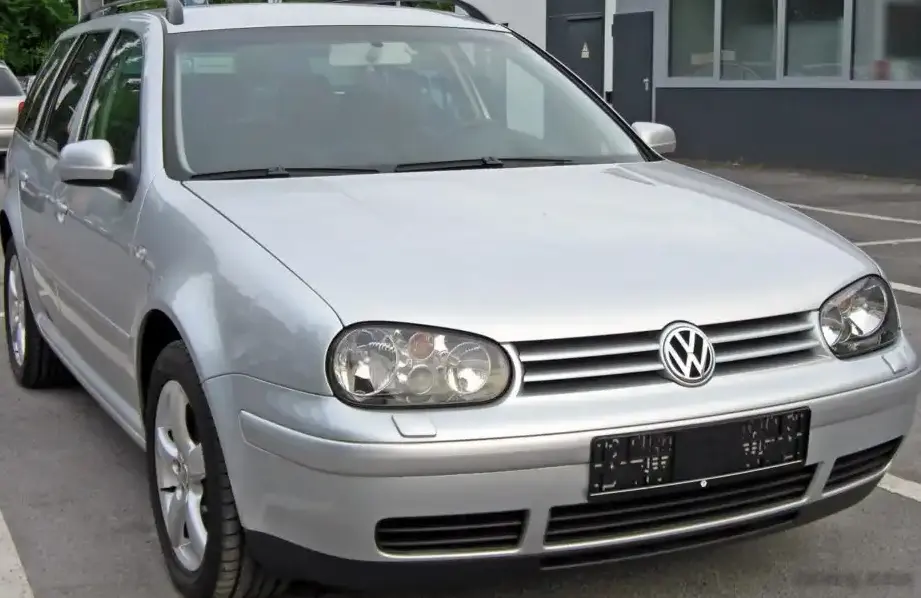
The Volkswagen Golf IV Variant 1.4 16V, produced from April 1999 to June 2006, represents an entry-level offering within the fourth generation (Mk IV) Golf lineup. Positioned as the base engine and transmission combination for the Variant (estate) body style, it aimed to provide affordable practicality and fuel efficiency. This model was primarily sold in Europe, where the station wagon body style remained highly popular, offering a compelling alternative to hatchbacks for families and those needing increased cargo capacity. It was a key part of the 1HX0/A3 platform family, sharing components with other Volkswagen Group vehicles like the Bora, New Beetle, and Audi A3.
Technical Specifications
| Brand | Volkswagen |
| Model | Golf |
| Generation | Golf IV Variant |
| Type (Engine) | 1.4 16V (75 Hp) |
| Start of production | April, 1999 |
| End of production | June, 2006 |
| Powertrain Architecture | Internal Combustion engine |
| Body type | Station wagon (estate) |
| Seats | 5 |
| Doors | 5 |
| Fuel consumption (urban) | 9 l/100 km (26.1 US mpg, 31.4 UK mpg, 11.1 km/l) |
| Fuel consumption (extra urban) | 5.7 l/100 km (41.3 US mpg, 49.6 UK mpg, 17.5 km/l) |
| Fuel consumption (combined) | 6.5 l/100 km (36.2 US mpg, 43.5 UK mpg, 15.4 km/l) |
| Fuel Type | Petrol (Gasoline) |
| Acceleration 0 – 100 km/h | 15 sec |
| Acceleration 0 – 62 mph | 15 sec |
| Acceleration 0 – 60 mph | 14.3 sec |
| Maximum speed | 171 km/h (106.25 mph) |
| Weight-to-power ratio | 15.9 kg/Hp, 63 Hp/tonne |
| Weight-to-torque ratio | 9.4 kg/Nm, 105.9 Nm/tonne |
| Power | 75 Hp @ 5000 rpm |
| Power per litre | 54 Hp/l |
| Torque | 126 Nm @ 3800 rpm (92.93 lb.-ft. @ 3800 rpm) |
| Engine layout | Front, Transverse |
| Engine Model/Code | AKQ, AHW |
| Engine displacement | 1390 cm3 (84.82 cu. in.) |
| Number of cylinders | 4 |
| Engine configuration | Inline |
| Cylinder Bore | 76.5 mm (3.01 in.) |
| Piston Stroke | 75.6 mm (2.98 in.) |
| Compression ratio | 10:1 |
| Number of valves per cylinder | 4 |
| Fuel injection system | Multi-port manifold injection |
| Engine aspiration | Naturally aspirated engine |
| Valvetrain | OHC |
| Engine oil capacity | 3.2 l (3.38 US qt | 2.82 UK qt) |
| Coolant | 6 l (6.34 US qt | 5.28 UK qt) |
| Kerb Weight | 1190 kg (2623.5 lbs.) |
| Max. weight | 1735 kg (3825.02 lbs.) |
| Max load | 545 kg (1201.52 lbs.) |
| Trunk (boot) space – minimum | 460 l (16.24 cu. ft.) |
| Trunk (boot) space – maximum | 1470 l (51.91 cu. ft.) |
| Fuel tank capacity | 55 l (14.53 US gal | 12.1 UK gal) |
| Length | 4397 mm (173.11 in.) |
| Width | 1735 mm (68.31 in.) |
| Height | 1473 mm (57.99 in.) |
| Wheelbase | 2515 mm (99.02 in.) |
| Front track | 1513 mm (59.57 in.) |
| Rear (Back) track | 1494 mm (58.82 in.) |
| Drivetrain Architecture | The Internal combustion engine (ICE) drives the front wheels of the vehicle. |
| Drive wheel | Front wheel drive |
| Number of gears and type of gearbox | 5 gears, manual transmission |
| Front suspension | Coil spring |
| Rear suspension | Suspension with traction connecting levers |
| Front brakes | Ventilated discs |
| Rear brakes | Disc |
| Assisting systems | ABS (Anti-lock braking system) |
| Steering type | Steering rack and pinion |
| Power steering | Hydraulic Steering |
| Tires size | 195/65 R15 |
| Wheel rims size | 15 |
Powertrain & Engine Architecture
The Golf IV Variant 1.4 16V utilized the AKQ or AHW engine code, both representing variations of the EA888 family of inline-four cylinder engines. These engines featured a cast iron block with an aluminum cylinder head, incorporating a single overhead camshaft (OHC) design operating four valves per cylinder. Fuel delivery was managed by a multi-port fuel injection system, providing adequate, though not exceptional, atomization. The 1.4-liter engine produced 75 horsepower at 5000 rpm and 93 lb-ft of torque at 3800 rpm. The engine’s relatively low compression ratio of 10:1 was typical for the era and allowed for compatibility with lower octane fuels. The standard transmission was a five-speed manual, though a four-speed automatic transmission was also available, albeit less common. The automatic transmission, while offering convenience, noticeably impacted acceleration and fuel economy.
Driving Characteristics
The 1.4 16V Golf IV Variant, particularly when paired with the five-speed manual transmission, offered a reasonably engaging driving experience for its class. However, with only 75 horsepower propelling over 2600 pounds, acceleration was far from brisk. 0-60 mph took approximately 14.3 seconds, and top speed was limited to around 106 mph. The automatic transmission further diminished performance, adding to the 0-60 time. The engine felt strained when fully loaded or climbing hills, requiring frequent downshifts to maintain momentum. The gear ratios in the manual transmission were well-spaced, allowing the driver to keep the engine within its optimal power band. Handling was typical of a front-wheel-drive Golf, with predictable cornering and decent steering feel.
Equipment & Trim Levels
The 1.4 16V Variant typically represented the entry point into the Golf IV Variant range. Standard equipment included power steering, ABS brakes, front airbags, and a basic stereo system. Interior upholstery was typically cloth, and the dashboard featured a functional, if somewhat utilitarian, design. Optional extras included air conditioning, alloy wheels, a sunroof, and upgraded audio systems. Higher trim levels, such as the Comfort or Trendline, added features like electric windows, central locking, and more refined interior trim. The base 1.4 model prioritized affordability over luxury.
Chassis & Braking
The Golf IV Variant’s chassis featured independent front suspension with coil springs and a torsion beam rear suspension. This setup provided a comfortable ride quality, although it wasn’t particularly sporty. Brakes consisted of ventilated discs on the front wheels and solid discs on the rear. ABS was standard, enhancing braking performance and stability. The suspension was tuned for everyday driving, prioritizing comfort over handling precision. Stabilizer bars were fitted front and rear, helping to reduce body roll during cornering.
Market Reception & Comparison
The 1.4 16V Golf IV Variant was generally well-received as an affordable and practical family car. Critics acknowledged its fuel efficiency and spacious interior, but often criticized its lack of power. Compared to the more popular 1.8-liter and TDI diesel variants, the 1.4 felt underpowered, especially when fully loaded. The 1.8-liter engine offered a significant performance boost, while the TDI models provided superior fuel economy and torque. However, the 1.4 16V offered a lower purchase price and insurance costs, making it an attractive option for budget-conscious buyers.
Legacy
The AKQ and AHW engines, while not known for exceptional durability, proved to be reasonably reliable with proper maintenance. Common issues included oil leaks, faulty sensors, and occasional timing belt failures. Today, the Golf IV Variant 1.4 16V can be found on the used car market at very affordable prices. It represents a practical and economical choice for those seeking a reliable and spacious estate car. However, potential buyers should be aware of the engine’s limitations and ensure that the vehicle has been well-maintained. Its simplicity and relatively low running costs continue to make it a popular choice for first-time car owners and those needing a dependable workhorse.