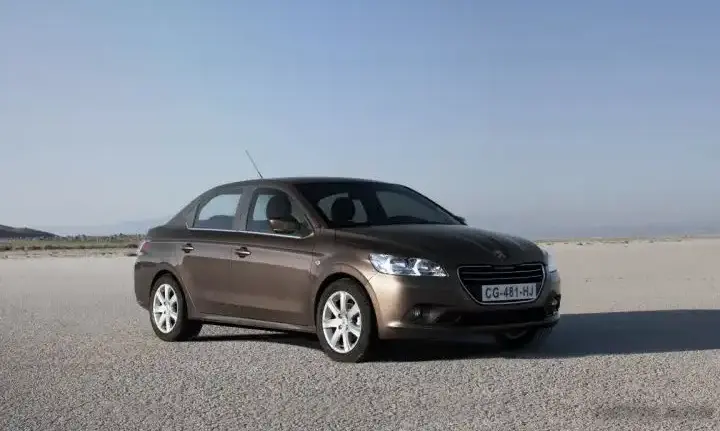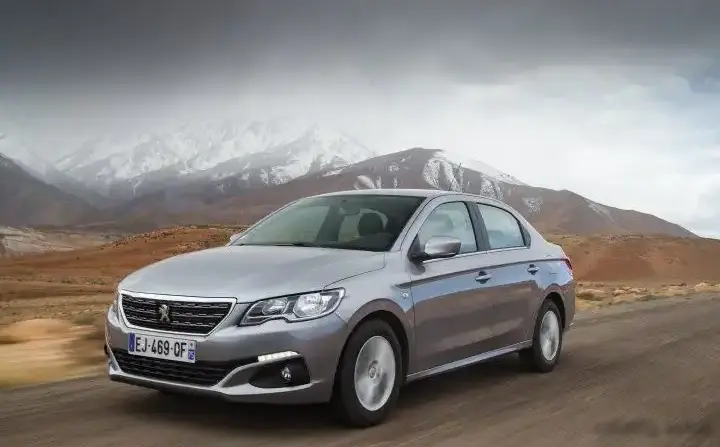
The Peugeot 301, specifically the facelifted version introduced in 2017 with the 1.2 PureTech 82 horsepower engine, represents a significant entry point into the Peugeot sedan lineup, particularly in markets outside of Europe where compact sedans retain considerable popularity. Produced from 2017 onwards, this variant was primarily aimed at buyers seeking an affordable, fuel-efficient, and practical vehicle. It slots into the 301 range as the base engine option, offering a more economical alternative to the more powerful, and typically better-equipped, versions. The 301 itself is built on the PF1 platform, shared with the Citroën C-Elysée, and was designed with emerging markets in mind, offering a robust and simple design.
Technical Specifications
| Brand | Peugeot |
| Model | 301 |
| Generation | 301 (facelift 2017) |
| Type (Engine) | 1.2 PureTech (82 Hp) |
| Start of production | 2017 |
| Powertrain Architecture | Internal Combustion engine |
| Body type | Sedan |
| Seats | 5 |
| Doors | 4 |
| Fuel consumption (urban) | 6 l/100 km (39.2 US mpg, 47.1 UK mpg, 16.7 km/l) |
| Fuel consumption (extra urban) | 4.3 l/100 km (54.7 US mpg, 65.7 UK mpg, 23.3 km/l) |
| Fuel consumption (combined) | 4.9 l/100 km (48 US mpg, 57.6 UK mpg, 20.4 km/l) |
| CO2 emissions | 114 g/km |
| Fuel Type | Petrol (Gasoline) |
| Acceleration 0 – 100 km/h | 14.5 sec |
| Acceleration 0 – 62 mph | 14.5 sec |
| Acceleration 0 – 60 mph | 13.8 sec |
| Maximum speed | 169 km/h (105.01 mph) |
| Emission standard | Euro 6 |
| Weight-to-power ratio | 12 kg/Hp, 83.7 Hp/tonne |
| Weight-to-torque ratio | 8.4 kg/Nm, 119.4 Nm/tonne |
| Power | 82 Hp @ 5750 rpm |
| Power per litre | 68.4 Hp/l |
| Torque | 117 Nm @ 2750 rpm (86.29 lb.-ft. @ 2750 rpm) |
| Engine layout | Front, Transverse |
| Engine Model/Code | HMR EB2FA |
| Engine displacement | 1199 cm3 (73.17 cu. in.) |
| Number of cylinders | 3 |
| Engine configuration | Inline |
| Number of valves per cylinder | 4 |
| Fuel injection system | Direct injection |
| Engine oil capacity | 3.25 l (3.43 US qt, 2.86 UK qt) |
| Kerb Weight | 980 kg (2160.53 lbs.) |
| Max. weight | 1470 kg (3240.8 lbs.) |
| Max load | 490 kg (1080.27 lbs.) |
| Trunk (boot) space – minimum | 506 l (17.87 cu. ft.) |
| Trunk (boot) space – maximum | 1332 l (47.04 cu. ft.) |
| Fuel tank capacity | 50 l (13.21 US gal, 11 UK gal) |
| Permitted trailer load with brakes (12%) | 450 kg (992.08 lbs.) |
| Length | 4445 mm (175 in.) |
| Width | 1748 mm (68.82 in.) |
| Width including mirrors | 1953 mm (76.89 in.) |
| Height | 1466 mm (57.72 in.) |
| Wheelbase | 2652 mm (104.41 in.) |
| Front track | 1501 mm (59.09 in.) |
| Rear (Back) track | 1478 mm (58.19 in.) |
| Front overhang | 819 mm (32.24 in.) |
| Rear overhang | 974 mm (38.35 in.) |
| Ride height (ground clearance) | 142 mm (5.59 in.) |
| Drivetrain Architecture | Front wheel drive |
| Number of gears and type of gearbox | 5 gears, manual transmission |
| Assisting systems | ABS (Anti-lock braking system) |
| Steering type | Steering rack and pinion |
| Tires size | 185/65 R15; 195/55 R16 |
| Wheel rims size | 15; 16 |
Powertrain & Engine Architecture
The heart of this 301 variant is the 1.2-liter PureTech engine, specifically the HMR EB2FA code. This is a three-cylinder, naturally aspirated gasoline engine featuring direct fuel injection. The PureTech engines were a significant development for PSA (Peugeot Société Anonyme) group, aiming to deliver improved fuel efficiency and reduced emissions. The engine utilizes a relatively high compression ratio for a gasoline engine, contributing to its efficiency. The 82 horsepower output is achieved at 5750 rpm, while peak torque of 117 Nm (86.29 lb-ft) arrives at 2750 rpm. The engine is paired with a 5-speed manual transmission, which was the standard offering for this trim level. While an automatic transmission was available on other 301 models, it wasn’t offered with the base 82 hp engine.
Driving Characteristics
The 1.2 PureTech 82 hp engine in the 301 provides adequate, but not exhilarating, performance. Acceleration from 0-100 km/h takes around 14.5 seconds, making it suitable for urban and suburban driving but less ideal for frequent highway overtaking. The 5-speed manual transmission is well-matched to the engine’s characteristics, offering a reasonable spread of gears. The gear ratios are tuned for fuel economy rather than outright performance. Compared to higher-output versions of the 301, such as those with the 1.6L engine, this variant feels noticeably slower. However, it offers a more refined driving experience than older, larger-displacement engines with similar power outputs. The lightweight nature of the 301 helps mitigate the effects of the relatively low horsepower.
Equipment & Trim Levels
The 1.2 PureTech 82 hp version of the 301 typically represents the entry-level trim. Standard equipment generally includes power steering, central locking, electric front windows, and an ABS anti-lock braking system. Air conditioning was often an optional extra, as were features like alloy wheels, a touchscreen infotainment system, and rear parking sensors. Interior upholstery is typically cloth, and the dashboard features a functional, if somewhat basic, design. The focus is on providing essential features at an affordable price point.
Chassis & Braking
The 301 utilizes a conventional front-wheel-drive chassis with MacPherson strut front suspension and a torsion beam rear axle. Braking is typically accomplished with disc brakes on the front wheels and drum brakes on the rear, a cost-saving measure common in this segment. The steering is a rack-and-pinion system, providing adequate feel and responsiveness. Stabilizer bars are present, but are relatively modest in size, reflecting the car’s focus on comfort and affordability rather than sporty handling.
Market Reception & Comparison
The Peugeot 301 1.2 PureTech 82 hp was generally well-received as a value-for-money proposition. Critics praised its fuel efficiency and affordability, but noted its modest performance. Compared to other trims in the 301 lineup, this variant offered the lowest running costs but also the least amount of power and equipment. In markets where it competed with vehicles like the Renault Logan and Dacia Sandero, it offered a more refined interior and a slightly more sophisticated driving experience, albeit at a slightly higher price point.
Legacy
The 1.2 PureTech engine has proven to be a relatively reliable powertrain, although some early versions experienced issues with the timing chain. The 301, as a whole, has established a reputation for being a durable and practical vehicle, particularly in emerging markets. On the used car market, this variant represents an affordable entry point into Peugeot ownership, offering a good balance of fuel efficiency and reliability. However, potential buyers should be aware of the potential timing chain issues and ensure that the vehicle has been properly maintained.