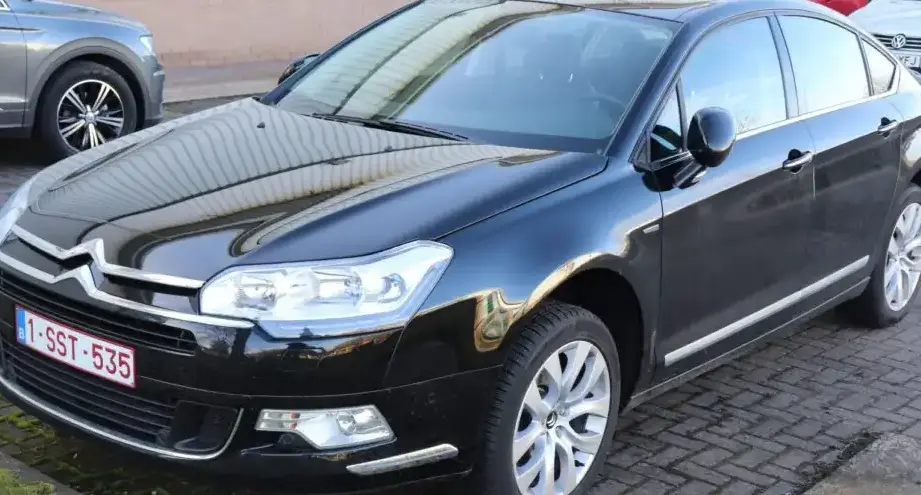
The Citroën C5 II (Phase II), specifically the 1.6 HDi variant producing 114 horsepower, was a key model in Citroën’s mid-size sedan lineup from 2012 to 2015. Positioned as a fuel-efficient and comfortable option, it occupied a middle ground within the C5 range, offering a balance between performance and economy. This iteration of the C5, built on the PSA Group’s Platform 2, aimed to provide a refined driving experience with a focus on passenger comfort and advanced technology for its time. The Phase II update brought styling revisions and improvements to the interior, solidifying the C5’s position as a competitor to vehicles like the Ford Mondeo, Volkswagen Passat, and Peugeot 508 in the European market.
Technical Specifications
| Brand | Citroen |
| Model | C5 |
| Generation | C5 II (Phase II, 2012) |
| Type (Engine) | 1.6 HDi (114 Hp) |
| Start of production | 2012 |
| End of production | 2015 |
| Powertrain Architecture | Internal Combustion engine |
| Body type | Sedan |
| Seats | 5 |
| Doors | 4 |
| Fuel consumption (urban) | 6 l/100 km (39.2 US mpg, 47.1 UK mpg, 16.7 km/l) |
| Fuel consumption (extra urban) | 4.4 l/100 km (53.5 US mpg, 64.2 UK mpg, 22.7 km/l) |
| Fuel consumption (combined) | 5 l/100 km (47 US mpg, 56.5 UK mpg, 20 km/l) |
| CO2 emissions | 129 g/km |
| Fuel Type | Diesel |
| Acceleration 0 – 100 km/h | 11.6 sec |
| Acceleration 0 – 62 mph | 11.6 sec |
| Acceleration 0 – 60 mph | 11 sec |
| Maximum speed | 190 km/h (118.06 mph) |
| Emission standard | Euro 5 |
| Weight-to-power ratio | 13.2 kg/Hp, 75.7 Hp/tonne |
| Weight-to-torque ratio | 6.3 kg/Nm, 159.4 Nm/tonne |
| Power | 114 Hp @ 3600 rpm |
| Power per litre | 73.1 Hp/l |
| Torque | 240 Nm @ 1750 rpm (177.01 lb.-ft. @ 1750 rpm) |
| Engine layout | Front, Transverse |
| Engine Model/Code | 9HR DV6C |
| Engine displacement | 1560 cm3 (95.2 cu. in.) |
| Number of cylinders | 4 |
| Engine configuration | Inline |
| Cylinder Bore | 75 mm (2.95 in.) |
| Piston Stroke | 88.3 mm (3.48 in.) |
| Compression ratio | 16:1 |
| Number of valves per cylinder | 2 |
| Fuel injection system | Diesel Commonrail |
| Engine aspiration | Turbocharger, Intercooler |
| Engine oil capacity | 3.7 l (3.91 US qt | 3.26 UK qt) |
| Kerb Weight | 1506 kg (3320.16 lbs.) |
| Max. weight | 2041 kg (4499.63 lbs.) |
| Max load | 535 kg (1179.47 lbs.) |
| Trunk (boot) space – minimum | 439 l (15.5 cu. ft.) |
| Fuel tank capacity | 71 l (18.76 US gal | 15.62 UK gal) |
| Max. roof load | 80 kg (176.37 lbs.) |
| Permitted trailer load with brakes (12%) | 1340 kg (2954.19 lbs.) |
| Permitted trailer load without brakes | 750 kg (1653.47 lbs.) |
| Length | 4779 mm (188.15 in.) |
| Width | 1860 mm (73.23 in.) |
| Width including mirrors | 2096 mm (82.52 in.) |
| Height | 1451-1458 mm (57.13 – 57.4 in.) |
| Wheelbase | 2815 mm (110.83 in.) |
| Front track | 1586 mm (62.44 in.) |
| Rear (Back) track | 1557 mm (61.3 in.) |
| Front overhang | 1054 mm (41.5 in.) |
| Rear overhang | 910 mm (35.83 in.) |
| Minimum turning circle (turning diameter) | 11.7 m (38.39 ft.) |
| Drivetrain Architecture | The Internal combustion engine (ICE) drives the front wheels of the vehicle. |
| Drive wheel | Front wheel drive |
| Number of gears and type of gearbox | 5 gears, manual transmission |
| Front suspension | Independent multi-link suspension |
| Rear suspension | Independent multi-link suspension |
| Front brakes | Ventilated discs |
| Rear brakes | Disc |
| Assisting systems | ABS (Anti-lock braking system) |
| Steering type | Steering rack and pinion |
| Power steering | Electric Steering |
| Tires size | 225/55 R17 |
| Wheel rims size | 17 |
Powertrain & Engine Architecture
The heart of this C5 variant is the 9HR DV6C 1.6-liter four-cylinder diesel engine. This engine is a member of the DV6 family, widely used across PSA Group vehicles. It features a common rail direct injection system, delivering fuel at high pressure for efficient combustion. A turbocharger with an intercooler is employed to boost power output and improve torque. The engine’s 16:1 compression ratio is typical for diesel engines, contributing to its thermal efficiency. The 114 horsepower peak is achieved at 3600 rpm, while the 240 Nm (177 lb-ft) of torque is available from as low as 1750 rpm, providing good low-end responsiveness. The engine is transversely mounted at the front of the vehicle. The C5 II 1.6 HDi typically came equipped with a five-speed manual transmission, although an optional six-speed automatic was available in some markets. The manual gearbox was chosen for its simplicity and efficiency, while the automatic offered enhanced convenience.
Driving Characteristics
The 1.6 HDi engine, paired with the five-speed manual transmission, provided adequate performance for everyday driving. Acceleration from 0 to 100 km/h (0-62 mph) took around 11.6 seconds, and top speed was rated at 190 km/h (118 mph). While not a particularly sporty setup, the engine’s strong low-end torque made it well-suited for overtaking and navigating city traffic. The gear ratios were tuned for fuel efficiency, meaning the engine could feel somewhat strained at higher speeds or when carrying a full load. Compared to the more powerful 2.0 HDi variants, the 1.6 HDi offered a more economical driving experience but lacked the same level of outright performance. The suspension, tuned for comfort, provided a smooth ride, absorbing bumps and imperfections in the road surface effectively.
Equipment & Trim Levels
The C5 II 1.6 HDi typically came with a reasonable level of standard equipment. This included air conditioning, power windows, central locking, and an audio system with USB connectivity. Higher trim levels added features such as alloy wheels, automatic headlights and wipers, a multi-function steering wheel, and a more advanced infotainment system. Interior upholstery was typically cloth, with leather options available on higher-spec models. Safety features included ABS, electronic brakeforce distribution, and multiple airbags. Optional extras included a panoramic sunroof, navigation system, and parking sensors.
Chassis & Braking
The C5 II featured independent multi-link suspension on both the front and rear axles, providing a comfortable and controlled ride. The front suspension utilized coil springs and anti-roll bar, while the rear suspension also employed coil springs and a torsion beam. The braking system consisted of ventilated discs on the front wheels and solid discs on the rear. ABS (Anti-lock Braking System) was standard, enhancing braking performance and stability. The steering was a power-assisted rack and pinion system, offering precise and responsive handling.
Market Reception & Comparison
The Citroën C5 II 1.6 HDi was generally well-received by critics for its fuel efficiency, comfortable ride, and spacious interior. However, some reviewers noted that the engine could feel underpowered, particularly when fully loaded or driving on steep inclines. Compared to the 2.0 HDi variants, the 1.6 HDi offered better fuel economy but less performance. It also provided a more affordable entry point into the C5 range. The C5’s main competitors, such as the Ford Mondeo and Volkswagen Passat, offered a wider range of engine options and trim levels, but the C5 distinguished itself with its unique hydropneumatic suspension (on some models) and focus on passenger comfort.
Legacy
The 1.6 HDi engine proved to be a reliable and durable unit when properly maintained. However, like all diesel engines, it is susceptible to issues related to the diesel particulate filter (DPF) if not driven on longer journeys regularly. The C5 II 1.6 HDi remains a popular choice in the used car market, particularly for those seeking a fuel-efficient and comfortable family sedan. Its relatively simple mechanicals and readily available parts make it a relatively affordable vehicle to maintain. While not a performance icon, the C5 II 1.6 HDi represents a practical and well-rounded option for those prioritizing economy and comfort.