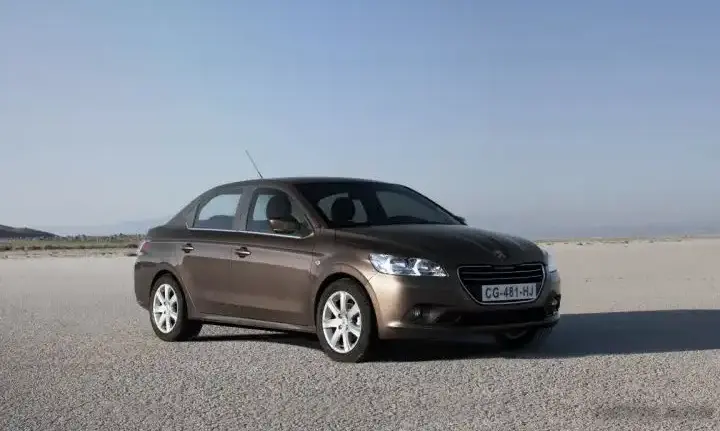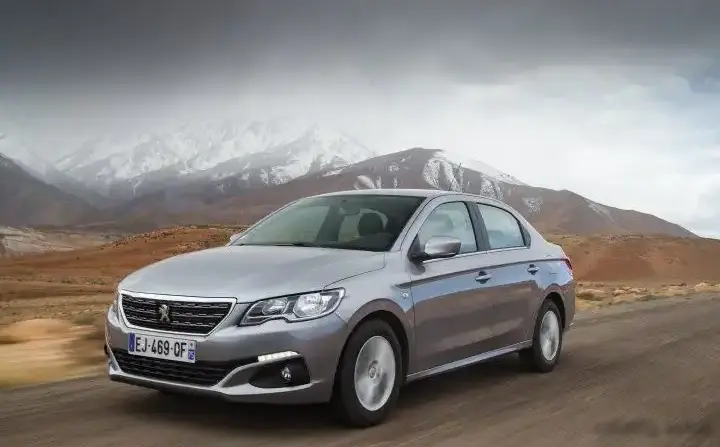
The Peugeot 301, specifically the facelifted version introduced in 2017, represents Peugeot’s entry into the compact sedan market, primarily targeted towards developing nations and budget-conscious buyers. Production of this variant, equipped with the 1.5 BlueHDi 102 horsepower engine, began in 2018. It’s positioned as a practical and fuel-efficient option within the 301 range, offering a balance between affordability and modern diesel technology. The 301, along with its platform-sharing sibling the Citroën C-Elysée, was designed to provide a comfortable and reliable vehicle at a competitive price point, particularly in regions where larger, more expensive Peugeot models were less accessible.
Technical Specifications
| Brand | Peugeot |
| Model | 301 |
| Generation | 301 (facelift 2017) |
| Type (Engine) | 1.5 BlueHDi (102 Hp) |
| Start of production | 2018 |
| Powertrain Architecture | Internal Combustion engine |
| Body type | Sedan |
| Seats | 5 |
| Doors | 4 |
| Fuel consumption (urban) | 4.8 l/100 km (49 US mpg, 58.9 UK mpg, 20.8 km/l) |
| Fuel consumption (extra urban) | 3.4 l/100 km (69.2 US mpg, 83.1 UK mpg, 29.4 km/l) |
| Fuel consumption (combined) | 3.9 l/100 km (60.3 US mpg, 72.4 UK mpg, 25.6 km/l) |
| CO2 emissions | 103 g/km |
| Fuel Type | Diesel |
| Maximum speed | 189 km/h (117.44 mph) |
| Emission standard | Euro 6 |
| Power | 102 Hp @ 3500 rpm |
| Power per litre | 68 Hp/l |
| Engine layout | Front, Transverse |
| Engine Model/Code | YHY DV5RD |
| Engine displacement | 1499 cm3 (91.47 cu. in.) |
| Number of cylinders | 4 |
| Engine configuration | Inline |
| Number of valves per cylinder | 4 |
| Fuel injection system | Diesel Commonrail |
| Engine aspiration | Turbocharger, Intercooler |
| Engine oil capacity | 4 l (4.23 US qt, 3.52 UK qt) |
| Trunk (boot) space (minimum) | 506 l (17.87 cu. ft.) |
| Trunk (boot) space (maximum) | 1332 l (47.04 cu. ft.) |
| Length | 4445 mm (175 in.) |
| Width with mirrors folded | 1748 mm (68.82 in.) |
| Width including mirrors | 1953 mm (76.89 in.) |
| Height | 1466 mm (57.72 in.) |
| Wheelbase | 2652 mm (104.41 in.) |
| Drivetrain Architecture | Front wheel drive, Internal Combustion Engine |
| Number of gears and type of gearbox | 6 gears, manual transmission |
Powertrain & Engine Architecture
The heart of this 301 variant is the 1.5-liter BlueHDi diesel engine, designated YHY DV5RD. This engine is part of Peugeot’s BlueHDi range, designed to meet stringent Euro 6 emissions standards. It features a common-rail direct injection system, delivering fuel at extremely high pressure for optimized combustion. A turbocharger with an intercooler is employed to boost power output and improve efficiency. The engine utilizes a four-valve-per-cylinder configuration, enhancing breathing and contributing to its 102 horsepower at 3500 rpm. The engine’s relatively small displacement, combined with the turbocharging, results in a power-to-weight ratio suitable for everyday driving. The 6-speed manual transmission is the only transmission option available with this engine, providing a good balance between fuel economy and driver control.
Driving Characteristics
The 1.5 BlueHDi 102 hp engine in the Peugeot 301 delivers adequate performance for typical urban and highway driving. While not a particularly sporty setup, it provides sufficient torque for comfortable cruising and overtaking. The 6-speed manual transmission allows drivers to keep the engine in its optimal power band. Compared to higher-output versions of the 301, this variant offers a more economical driving experience, but at the expense of outright acceleration. The gear ratios are tuned for fuel efficiency, meaning the engine may feel slightly strained when accelerating quickly or climbing steep hills. The overall driving experience is geared towards practicality and comfort rather than dynamic performance.
Equipment & Trim Levels
The 1.5 BlueHDi 102 hp variant of the Peugeot 301 typically came with a reasonable level of standard equipment, though specifics varied depending on the market. Generally, it included features such as air conditioning, power steering, electric front windows, and a basic audio system with USB connectivity. Safety features typically included ABS brakes, front airbags, and seatbelt pretensioners. Higher trim levels offered additional features like alloy wheels, rear parking sensors, a touchscreen infotainment system, and automatic headlights. Interior upholstery was usually cloth, with a functional and durable design. The dashboard layout was straightforward and easy to use, prioritizing practicality over luxury.
Chassis & Braking
The Peugeot 301 utilizes a conventional front-wheel-drive chassis with MacPherson strut suspension at the front and a torsion beam axle at the rear. This setup provides a comfortable ride quality, suitable for a variety of road conditions. The braking system typically consists of disc brakes at the front and drum brakes at the rear, offering adequate stopping power for the vehicle’s weight and performance. The steering is hydraulically assisted, providing a light and responsive feel. Stabilizer bars are included to reduce body roll during cornering, enhancing handling stability.
Market Reception & Comparison
The Peugeot 301 1.5 BlueHDi 102 hp was generally well-received by critics as a practical and affordable compact sedan. Its fuel efficiency was a major selling point, particularly in markets where diesel fuel is readily available and relatively inexpensive. Compared to other trims in the 301 lineup, this variant offered the best balance between performance and economy. While the higher-powered gasoline engines provided more spirited acceleration, they also consumed more fuel. The 1.5 BlueHDi was often seen as the most sensible choice for drivers prioritizing fuel costs and long-term reliability. Its main competitors included other budget-friendly compact sedans such as the Renault Symbol and the Dacia Logan.
Legacy
The 1.5 BlueHDi engine has proven to be a relatively reliable powertrain, with many examples still in service today. The engine’s robust construction and relatively simple design contribute to its longevity. However, like all diesel engines, it’s important to adhere to recommended maintenance schedules, including regular oil changes and filter replacements. The Peugeot 301, in general, has established a reputation as a dependable and affordable vehicle, particularly in emerging markets. On the used car market, the 1.5 BlueHDi variant remains a popular choice for buyers seeking a fuel-efficient and practical sedan. Its combination of affordability, reliability, and modern diesel technology ensures its continued relevance in the years to come.