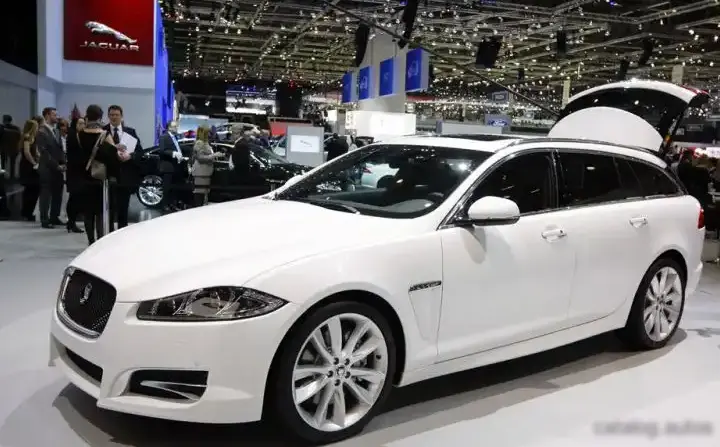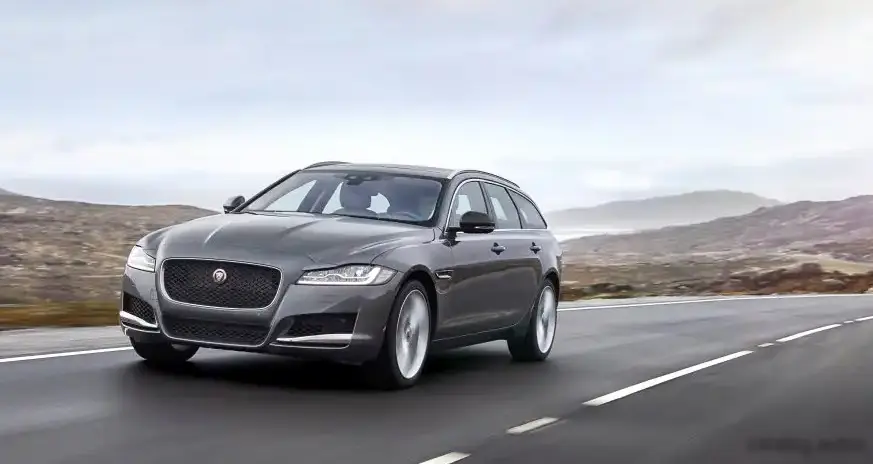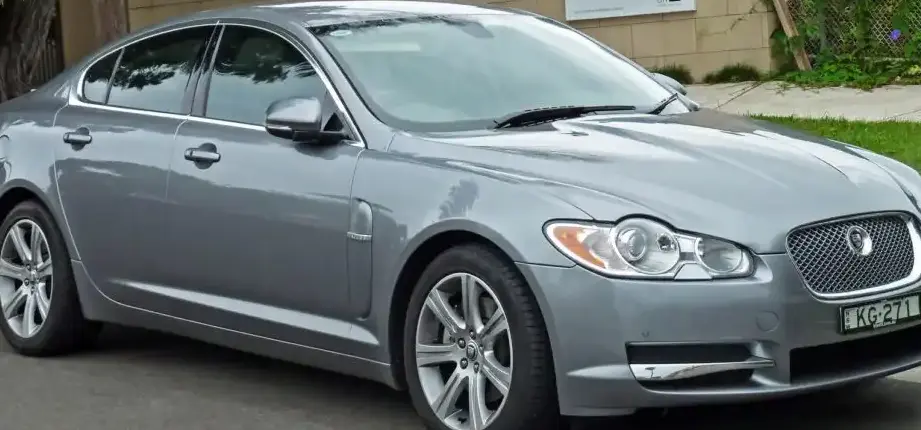
The Jaguar XF (X250) S 3.0d V6 Automatic, produced from 2009 to 2011, represented a significant step forward for Jaguar, blending luxury, performance, and technology into a compelling package. Positioned as a mid-range offering within the XF lineup, it slotted between the entry-level 2.7d models and the higher-performance SV8 variants. This model aimed to deliver a refined driving experience with strong diesel torque, appealing to buyers seeking a sophisticated and efficient grand tourer. It was Jaguar’s attempt to compete directly with established German rivals like the BMW 5 Series and Mercedes-Benz E-Class.
Technical Specifications
| Brand | Jaguar |
| Model | XF |
| Generation | XF (X250) |
| Type (Engine) | S 3.0d V6 (275 Hp) Automatic |
| Start of production | 2009 |
| End of production | 2011 |
| Powertrain Architecture | Internal Combustion engine |
| Body type | Sedan |
| Seats | 5 |
| Doors | 4 |
| Fuel consumption (economy) – urban (NEDC) | 9.5 l/100 km (24.8 US mpg, 29.7 UK mpg, 10.5 km/l) |
| Fuel consumption (economy) – extra urban (NEDC) | 5.5 l/100 km (42.8 US mpg, 51.4 UK mpg, 18.2 km/l) |
| Fuel consumption (economy) – combined (NEDC) | 6.8 l/100 km (34.6 US mpg, 41.5 UK mpg, 14.7 km/l) |
| CO2 emissions (NEDC) | 179 g/km |
| Fuel Type | Diesel |
| Acceleration 0 – 100 km/h | 6.4 sec |
| Acceleration 0 – 62 mph | 6.4 sec |
| Acceleration 0 – 60 mph | 6.1 sec |
| Maximum speed | 250 km/h (155.34 mph), Electronically limited |
| Emission standard | Euro 5 |
| Weight-to-power ratio | 6.6 kg/Hp, 151.1 Hp/tonne |
| Weight-to-torque ratio | 3 kg/Nm, 329.7 Nm/tonne |
| Power | 275 Hp @ 4000 rpm |
| Power per litre | 91.9 Hp/l |
| Torque | 600 Nm @ 2000 rpm (442.54 lb.-ft. @ 2000 rpm) |
| Engine layout | Front, Longitudinal |
| Engine Model/Code | AJTDV6, 306DT |
| Engine displacement | 2993 cm3 (182.64 cu. in.) |
| Number of cylinders | 6 |
| Engine configuration | V-engine |
| Cylinder Bore | 84 mm (3.31 in.) |
| Piston Stroke | 90 mm (3.54 in.) |
| Compression ratio | 16:1 |
| Number of valves per cylinder | 4 |
| Fuel injection system | Diesel Commonrail |
| Engine aspiration | BiTurbo, Intercooler |
| Valvetrain | DOHC |
| Engine oil capacity | 6.6 l (6.97 US qt | 5.81 UK qt) |
| Coolant | 12.5 l (13.21 US qt | 11 UK qt) |
| Kerb Weight | 1820 kg (4012.41 lbs.) |
| Max. weight | 2360 kg (5202.91 lbs.) |
| Max load | 540 kg (1190.5 lbs.) |
| Trunk (boot) space – minimum | 540 l (19.07 cu. ft.) |
| Trunk (boot) space – maximum | 963 l (34.01 cu. ft.) |
| Fuel tank capacity | 69.5 l (18.36 US gal | 15.29 UK gal) |
| Permitted trailer load with brakes (12%) | 1850 kg (4078.55 lbs.) |
| Permitted trailer load without brakes | 750 kg (1653.47 lbs.) |
| Permitted towbar download | 75 kg (165.35 lbs.) |
| Length | 4961 mm (195.31 in.) |
| Width | 1877 mm (73.9 in.) |
| Width including mirrors | 2053 mm (80.83 in.) |
| Height | 1460 mm (57.48 in.) |
| Wheelbase | 2909 mm (114.53 in.) |
| Front track | 1559 mm (61.38 in.) |
| Rear (Back) track | 1605 mm (63.19 in.) |
| Drag coefficient (Cd) | 0.29 |
| Minimum turning circle (turning diameter) | 11.48 m (37.66 ft.) |
| Drivetrain Architecture | The Internal combustion engine (ICE) drives the rear wheels of the vehicle. |
| Drive wheel | Rear wheel drive |
| Number of gears and type of gearbox | 6 gears, automatic transmission |
| Front suspension | Coil spring, Double wishbone, Transverse stabilizer |
| Rear suspension | Independent multi-link spring suspension with stabilizer |
| Front brakes | Ventilated discs |
| Rear brakes | Ventilated discs |
| Assisting systems | ABS (Anti-lock braking system) |
| Steering type | Steering rack and pinion |
| Power steering | Hydraulic Steering |
| Tires size | 245/45 R18; 245/40 R19; 255/35 R20 |
| Wheel rims size | 8.5J x 18; 8.5J x 19; 8.5J x 20 |
INTRODUCTION
The Jaguar XF (X250) S 3.0d V6 Automatic, launched in 2009, was a key component of Jaguar’s revitalization strategy. Built on the XF platform (internally designated X250), it represented a departure from the traditional Jaguar styling cues, embracing a more contemporary and sporty aesthetic. This generation XF aimed to attract a younger demographic while retaining the brand’s reputation for luxury and refinement. The ‘S’ designation indicated a sportier trim level, offering enhanced styling and features compared to the base models. The 3.0d V6 engine, coupled with a six-speed automatic transmission, provided a balance of performance and fuel efficiency, making it a popular choice in the European market and gaining traction in other regions.
Powertrain & Engine Architecture
At the heart of the XF S 3.0d was the AJTDV6 engine, a 3.0-liter (2993 cc) V6 diesel. This engine, developed in collaboration with PSA Peugeot Citroën, utilized a sophisticated common-rail direct injection system and a bi-turbocharger setup. The twin turbochargers, a smaller one for low-end response and a larger one for high-end power, worked in concert to deliver a broad torque curve. The engine code 306DT is commonly associated with this variant. The engine featured a double overhead camshaft (DOHC) valvetrain with four valves per cylinder, optimizing gas flow and contributing to its power output. The six-speed automatic transmission, sourced from ZF, was known for its smooth shifting and responsiveness. It was programmed to prioritize comfort and refinement, but also offered a sport mode for more aggressive gear changes.
Driving Characteristics
The XF S 3.0d V6 Automatic offered a compelling driving experience. The 600 Nm (442.54 lb-ft) of torque available from just 2000 rpm provided effortless acceleration and strong mid-range punch. While not as overtly sporty as some of its rivals, the XF S delivered a refined and comfortable ride, thanks to its well-tuned suspension. The automatic transmission, while smooth, wasn’t the quickest shifting compared to some contemporary dual-clutch transmissions. However, it suited the car’s grand touring character well. Compared to the higher-output SV8 models, the 3.0d offered a more accessible and fuel-efficient driving experience. Against the lower-powered 2.7d variants, the 3.0d provided a significant performance upgrade, making it the preferred choice for drivers prioritizing power and responsiveness.
Equipment & Trim Levels
The ‘S’ trim level of the XF 3.0d Automatic came standard with a generous array of features. Interior appointments included leather upholstery, power-adjustable front seats with memory function, and a premium audio system. Standard exterior features included alloy wheels (typically 18 or 19-inch), a sport body kit, and xenon headlights. Optional extras included a panoramic sunroof, heated seats, rear-seat entertainment, and advanced parking assistance systems. The dashboard featured Jaguar’s signature rotary gear selector and a user-friendly infotainment system. The interior design emphasized luxury and craftsmanship, with high-quality materials and attention to detail.
Chassis & Braking
The XF S 3.0d V6 Automatic featured a robust chassis designed to deliver a balance of comfort and handling. The front suspension utilized a coil spring, double wishbone configuration with a transverse stabilizer bar, while the rear suspension employed an independent multi-link setup, also with a stabilizer bar. This configuration provided excellent ride quality and controlled body roll. Braking duties were handled by ventilated discs on all four wheels, providing ample stopping power. An Anti-lock Braking System (ABS) was standard, enhancing safety and stability. The steering system was a hydraulic rack and pinion setup, offering precise and responsive steering feel.
Market Reception & Comparison
The Jaguar XF S 3.0d Automatic was generally well-received by automotive critics. It was praised for its stylish design, luxurious interior, and strong diesel engine. Reviewers noted the comfortable ride and refined driving experience, but some criticized the slightly sluggish automatic transmission. Compared to its German rivals, the XF offered a unique blend of British luxury and performance. Fuel economy was a strong point, with combined figures around 34.6 US mpg, making it a competitive option in the executive sedan segment. Reliability was generally good, although some owners reported minor electrical issues.
Legacy
The Jaguar XF (X250) S 3.0d V6 Automatic has proven to be a relatively reliable and durable vehicle. The AJTDV6 engine, while complex, is generally considered robust when properly maintained. Today, these cars can be found on the used car market at attractive prices. They represent a compelling value proposition for buyers seeking a luxurious and capable grand tourer. Common maintenance items include regular oil changes, filter replacements, and occasional attention to the turbochargers. The XF S 3.0d remains a stylish and sophisticated choice for those who appreciate British automotive engineering.