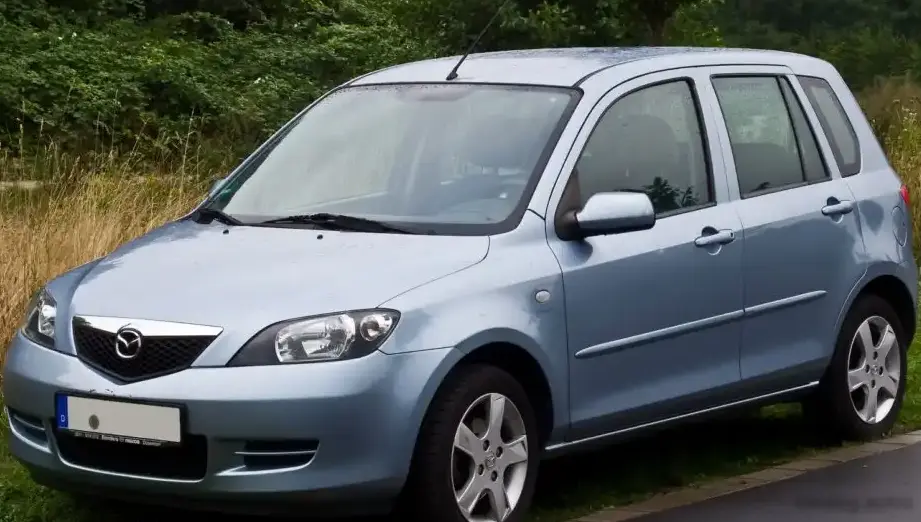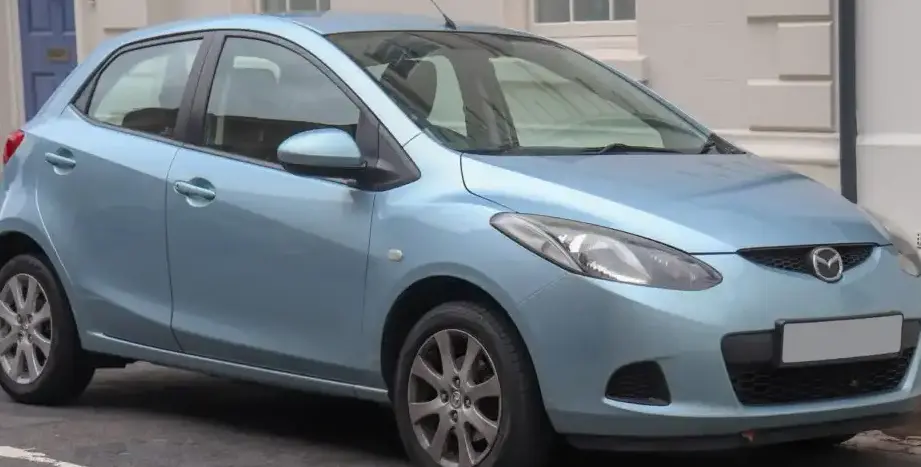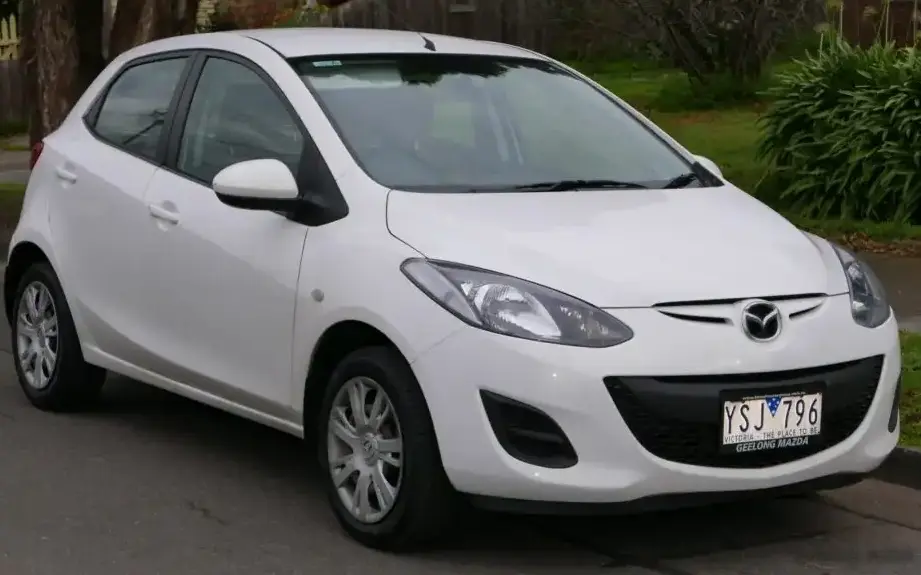
The Mazda 2 II (DE) 1.6 CD, specifically the facelifted model produced from 2010 to 2014, represented Mazda’s entry into the European subcompact diesel market. This variant, powered by a 1.6-liter common-rail diesel engine producing 95 horsepower, was positioned as a fuel-efficient and practical option within the broader Mazda2 lineup. It aimed to appeal to buyers seeking low running costs and a manageable city car, while offering a slightly more refined driving experience than the base gasoline models. The DE generation Mazda2, built on the DY platform shared with the Ford Fiesta, was a significant step forward for Mazda in terms of build quality and design, and the 1.6 CD variant played a key role in its success in Europe.
Technical Specifications
| Brand | Mazda |
| Model | 2 |
| Generation | 2 II (DE, facelift 2010) |
| Type (Engine) | 1.6 CD (95 Hp) |
| Start of production | 2010 |
| End of production | 2014 |
| Powertrain Architecture | Internal Combustion engine |
| Body type | Hatchback |
| Seats | 5 |
| Doors | 5 |
| Fuel consumption (urban) | 5 l/100 km (47 US mpg, 56.5 UK mpg, 20 km/l) |
| Fuel consumption (extra urban) | 3.7 l/100 km (63.6 US mpg, 76.3 UK mpg, 27 km/l) |
| Fuel consumption (combined) | 4.2 l/100 km (56 US mpg, 67.3 UK mpg, 23.8 km/l) |
| CO2 emissions | 110 g/km |
| Fuel Type | Diesel |
| Acceleration 0 – 100 km/h | 11.5 sec |
| Acceleration 0 – 62 mph | 11.5 sec |
| Acceleration 0 – 60 mph | 10.9 sec |
| Maximum speed | 175 km/h (108.74 mph) |
| Emission standard | Euro 5 |
| Weight-to-power ratio | 10.8 kg/Hp, 92.7 Hp/tonne |
| Weight-to-torque ratio | 5 kg/Nm, 200 Nm/tonne |
| Power | 95 Hp @ 3800 rpm |
| Power per litre | 60.9 Hp/l |
| Torque | 205 Nm @ 1750-3000 rpm (151.2 lb.-ft. @ 1750-3000 rpm) |
| Engine layout | Front, Transverse |
| Engine Model/Code | Y655, Y661 |
| Engine displacement | 1560 cm3 (95.2 cu. in.) |
| Number of cylinders | 4 |
| Engine configuration | Inline |
| Cylinder Bore | 75 mm (2.95 in.) |
| Piston Stroke | 88.3 mm (3.48 in.) |
| Compression ratio | 16:1 |
| Number of valves per cylinder | 2 |
| Fuel injection system | Diesel Commonrail |
| Engine aspiration | Turbocharger, Intercooler |
| Valvetrain | DOHC |
| Engine oil capacity | 3.9 l (4.12 US qt | 3.43 UK qt) |
| Coolant | 6.2 l (6.55 US qt | 5.46 UK qt) |
| Kerb Weight | 1025 kg (2259.74 lbs.) |
| Max. weight | 1540 kg (3395.12 lbs.) |
| Max load | 515 kg (1135.38 lbs.) |
| Trunk (boot) space – minimum | 250 l (8.83 cu. ft.) |
| Trunk (boot) space – maximum | 787 l (27.79 cu. ft.) |
| Fuel tank capacity | 43 l (11.36 US gal | 9.46 UK gal) |
| Length | 3920 mm (154.33 in.) |
| Width | 1695 mm (66.73 in.) |
| Width including mirrors | 1958 mm (77.09 in.) |
| Height | 1475 mm (58.07 in.) |
| Wheelbase | 2490 mm (98.03 in.) |
| Front track | 1485 mm (58.46 in.) |
| Rear (Back) track | 1475 mm (58.07 in.) |
| Ride height (ground clearance) | 150 mm (5.91 in.) |
| Drag coefficient (Cd) | 0.31 |
| Minimum turning circle | 9.8 m (32.15 ft.) |
| Drivetrain Architecture | ICE, Front wheel drive |
| Drive wheel | Front wheel drive |
| Number of gears | 5 |
| Gearbox type | Manual transmission |
| Front brakes | Ventilated discs |
| Rear brakes | Drum |
| Assisting systems | ABS (Anti-lock braking system) |
| Steering type | Steering rack and pinion |
| Power steering | Electric Steering |
| Tires size | 185/55 R15 |
| Wheel rims size | 15 |
INTRODUCTION
The Mazda 2 II (DE) 1.6 CD, facelifted in 2010, was a key component of Mazda’s European strategy. The facelift brought subtle styling revisions, improved interior materials, and refinements to the engine and chassis. This variant was designed to appeal to a broad audience, particularly those prioritizing fuel economy and practicality in a small package. It slotted into the Mazda2 range below the more powerful petrol variants and offered a diesel alternative to competitors like the Ford Fiesta, Volkswagen Polo, and Renault Clio. Production continued until 2014, with the model eventually superseded by the third-generation Mazda2.
Powertrain & Engine Architecture
At the heart of the 1.6 CD variant lies the Mazda Y655/Y661 engine, a 1.6-liter inline-four cylinder diesel. This engine utilized a common-rail direct injection system, delivering fuel at extremely high pressure for improved combustion efficiency and reduced emissions. The Y655/Y661 engine featured a turbocharger with an intercooler, boosting power output to 95 horsepower and 205 Nm (151.2 lb-ft) of torque. The engine also incorporated a diesel particulate filter (DPF) to meet stringent Euro 5 emission standards. The 5-speed manual transmission was the standard offering, chosen for its balance of fuel efficiency and usability. The engine’s DOHC valvetrain and 16:1 compression ratio contributed to its efficiency and responsiveness.
Driving Characteristics
The 1.6 CD variant of the Mazda2 offered a comfortable and refined driving experience, particularly for urban commutes. While not a performance-oriented model, the 95 horsepower and 205 Nm of torque provided adequate power for everyday driving. The turbocharger helped to deliver a useful surge of power from around 1750 rpm, making overtaking on country roads manageable. The 5-speed manual transmission was well-matched to the engine’s characteristics, with gear ratios optimized for fuel efficiency. Compared to the higher-output petrol versions, the 1.6 CD felt less eager to rev, but offered significantly better fuel economy. The manual transmission provided a more engaging driving experience than the optional automatic, which was available in some markets but often criticized for its sluggishness.
Equipment & Trim Levels
The 1.6 CD trim level typically included air conditioning, power steering, electric front windows, and a basic audio system with CD player. Safety features such as ABS, front airbags, and seatbelt pretensioners were standard. Higher trim levels, such as ‘Sport’ or ‘Comfort’, added features like alloy wheels, remote central locking, a multi-function steering wheel, and upgraded interior trim. Optional extras included a sunroof, parking sensors, and a more advanced audio system with Bluetooth connectivity. Interior upholstery was typically cloth, with a dark color scheme. The dashboard layout was functional and user-friendly, with clearly labeled controls.
Chassis & Braking
The Mazda2 II (DE) featured a MacPherson strut front suspension and a torsion beam rear suspension. This setup provided a good balance of ride comfort and handling. The front brakes were ventilated discs, offering good stopping power, while the rear brakes were drums, a cost-saving measure common in this segment. The electric power steering provided light and precise steering feel, making it easy to maneuver in tight spaces. The chassis was relatively lightweight, contributing to the car’s agility and fuel efficiency. Stabilizer bars were fitted to both the front and rear axles to reduce body roll during cornering.
Market Reception & Comparison
The Mazda2 1.6 CD was generally well-received by automotive critics, who praised its fuel efficiency, comfortable ride, and refined interior. However, some reviewers noted that the engine could be a little noisy under hard acceleration. Compared to its rivals, the Mazda2 offered a more premium feel and a more engaging driving experience than many competitors. The Volkswagen Polo and Ford Fiesta were often cited as key competitors, offering similar levels of practicality and fuel economy. The Mazda2’s diesel variant typically achieved better fuel economy than the equivalent petrol models, but at a slightly higher purchase price.
Legacy
The Mazda2 II (DE) 1.6 CD has proven to be a reliable and durable vehicle, with many examples still on the road today. The Y655/Y661 diesel engine is generally considered to be robust, although regular maintenance, including oil changes and DPF regeneration, is essential. Common issues include wear and tear on suspension components and occasional problems with the turbocharger. In the used car market, the 1.6 CD variant remains a popular choice for buyers seeking a fuel-efficient and affordable small car. Its reputation for reliability and low running costs has helped to maintain its value over time.