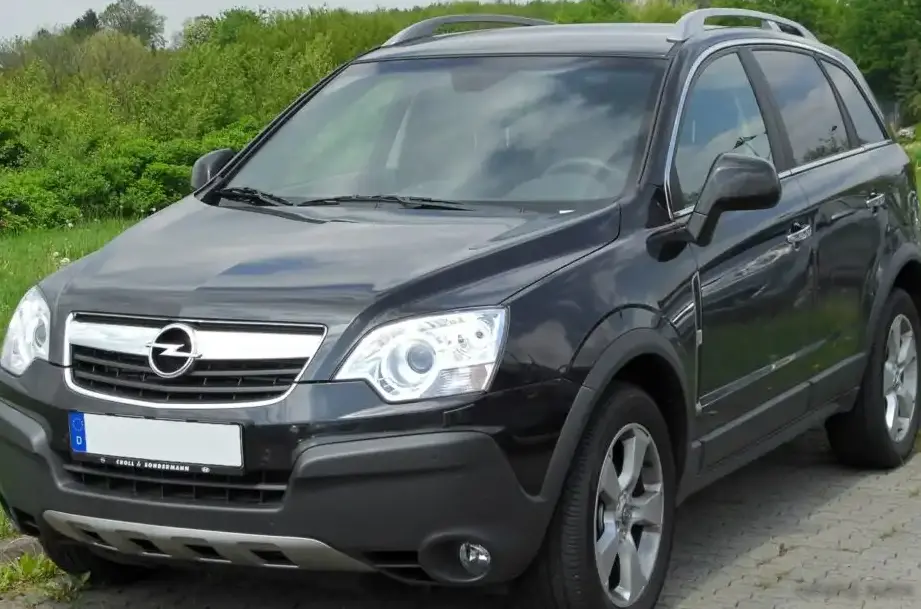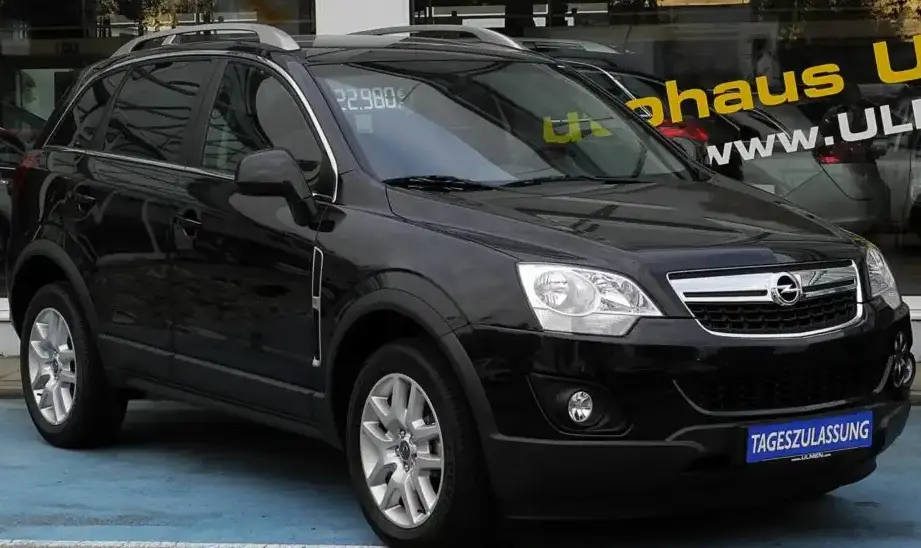
The Opel Antara, particularly the facelifted version introduced in 2010, represented Opel’s entry into the increasingly popular compact SUV segment in Europe. Produced from 2010 through 2016, the Antara aimed to provide a practical and stylish option for families and individuals seeking a versatile vehicle. This article focuses specifically on the 2.4-liter 16-valve (167 hp) variant equipped with a six-speed automatic transmission, a configuration positioned as a mid-range offering within the Antara lineup. It served as a step up from the base 2.2-liter diesel, offering petrol power and the convenience of an automatic gearbox, while remaining more accessible than the higher-specification trims.
Technical Specifications
| Brand | Opel |
| Model | Antara |
| Generation | Antara (facelift 2010) |
| Type (Engine) | 2.4 16V (167 Hp) Automatic |
| Start of production | 2010 |
| End of production | 2016 |
| Powertrain Architecture | Internal Combustion engine |
| Body type | SUV |
| Seats | 5 |
| Doors | 5 |
| Fuel consumption (urban) | 12 l/100 km (19.6 US mpg, 23.5 UK mpg, 8.3 km/l) |
| Fuel consumption (extra urban) | 7 l/100 km (33.6 US mpg, 40.4 UK mpg, 14.3 km/l) |
| Fuel consumption (combined) | 8.8 l/100 km (26.7 US mpg, 32.1 UK mpg, 11.4 km/l) |
| CO2 emissions | 206 g/km |
| Fuel Type | Petrol (Gasoline) |
| Emission standard | Euro 5 |
| Weight-to-power ratio | 10.8 kg/Hp, 92.5 Hp/tonne |
| Weight-to-torque ratio | 7.8 kg/Nm, 127.4 Nm/tonne |
| Power | 167 Hp @ 5600 rpm |
| Power per litre | 70.1 Hp/l |
| Torque | 230 Nm @ 4600 rpm (169.64 lb.-ft. @ 4600 rpm) |
| Engine layout | Front, Transverse |
| Engine Model/Code | A24XE, A24XF |
| Engine displacement | 2384 cm3 (145.48 cu. in.) |
| Number of cylinders | 4 |
| Engine configuration | Inline |
| Compression ratio | 10.4:1 |
| Number of valves per cylinder | 4 |
| Fuel injection system | Multi-port manifold injection |
| Engine aspiration | Naturally aspirated engine |
| Engine oil capacity | 4.7 l (4.97 US qt | 4.14 UK qt) |
| Coolant capacity | 9 l (9.51 US qt | 7.92 UK qt) |
| Kerb Weight | 1805 kg (3979.34 lbs.) |
| Max. weight | 2272 kg (5008.9 lbs.) |
| Max load | 467 kg (1029.56 lbs.) |
| Trunk (boot) space – minimum | 420 l (14.83 cu. ft.) |
| Trunk (boot) space – maximum | 1420 l (50.15 cu. ft.) |
| Fuel tank capacity | 65 l (17.17 US gal | 14.3 UK gal) |
| Length | 4596 mm (180.94 in.) |
| Width | 1850 mm (72.83 in.) |
| Height | 1717 mm (67.6 in.) |
| Wheelbase | 2707 mm (106.57 in.) |
| Front track | 1596 mm (62.83 in.) |
| Rear (Back) track | 1576 mm (62.05 in.) |
| Minimum turning circle | 12.25 m (40.19 ft.) |
| Drivetrain Architecture | Front wheel drive |
| Number of gears | 6 |
| Gearbox type | Automatic transmission |
| Assisting systems | ABS (Anti-lock braking system) |
| Steering type | Steering rack and pinion |
INTRODUCTION
The 2010 Opel Antara facelift brought a refreshed look and some mechanical updates to the model. The 2.4-liter engine and six-speed automatic transmission combination was a key part of the range, offering a balance between performance and ease of driving. Positioned within the Antara lineup, this variant aimed to appeal to buyers who preferred a petrol engine and the convenience of an automatic gearbox over the more fuel-efficient diesel options or the engagement of a manual transmission. It was a popular choice for those prioritizing comfort and usability in everyday driving situations.
Powertrain & Engine Architecture
The heart of this Antara variant is the A24XE or A24XF 2.4-liter inline-four cylinder engine. This engine is a naturally aspirated unit featuring multi-port fuel injection and a dual overhead camshaft (DOHC) valvetrain with four valves per cylinder. The engine’s design prioritized smooth power delivery and reliability over outright performance. The A24XE/A24XF engine is known for its relatively simple construction, contributing to its generally good reliability record. The six-speed automatic transmission, sourced from Aisin, was chosen for its smooth shifting characteristics and responsiveness. This transmission features adaptive shift patterns, adjusting to the driver’s style and road conditions. Gear ratios were tuned for a balance of acceleration and fuel efficiency, with a focus on providing comfortable cruising at highway speeds.
Driving Characteristics
The 2.4-liter Antara Automatic delivers a comfortable and predictable driving experience. With 167 horsepower and 230 Nm (169.64 lb-ft) of torque, acceleration is adequate for everyday driving, but it’s not particularly sporty. The automatic transmission contributes to a relaxed driving style, handling most situations with ease. Compared to the manual transmission versions, the automatic offers less driver involvement but greater convenience, especially in urban traffic. Against the more powerful engines available in the Antara range, such as the 2.0 CDTI diesel, the 2.4-liter petrol feels less responsive, particularly when overtaking. However, the petrol engine offers a smoother and quieter operation, and a more linear power delivery.
Equipment & Trim Levels
The 2.4-liter Automatic Antara typically came equipped with a reasonable level of standard features. These included air conditioning, power windows, power mirrors, a CD/radio system, and alloy wheels. Higher trim levels added features such as leather upholstery, heated front seats, a sunroof, and a more advanced infotainment system. Safety features like ABS, electronic stability control, and multiple airbags were standard across the range. Optional extras included parking sensors, a navigation system, and upgraded audio systems.
Chassis & Braking
The Antara’s chassis utilizes a MacPherson strut front suspension and a multi-link rear suspension, providing a comfortable ride quality. The suspension was tuned to prioritize comfort over sporty handling. Braking duties are handled by disc brakes on the front wheels and drum brakes on the rear wheels in many configurations, although some higher-spec models featured rear discs. The Antara’s steering is a rack-and-pinion system, offering reasonable precision and feedback. Stabilizer bars are fitted to both the front and rear axles to reduce body roll during cornering.
Market Reception & Comparison
The Opel Antara 2.4 Automatic received mixed reviews from automotive critics. While praised for its comfortable ride and spacious interior, it was often criticized for its relatively modest performance and fuel economy compared to its diesel counterparts. The petrol engine was seen as a good option for drivers who preferred the smoothness and refinement of a gasoline engine, but the higher running costs and lower fuel efficiency were drawbacks. Compared to competitors like the Nissan Qashqai and Kia Sportage, the Antara offered a competitive package in terms of price and features, but it often lagged behind in terms of performance and fuel economy.
Legacy
The Opel Antara, including the 2.4-liter Automatic variant, has proven to be a relatively reliable vehicle in the used car market. The A24XE/A24XF engine is known for its durability, and the Aisin automatic transmission is also generally considered to be robust. Common issues include wear and tear on suspension components and occasional problems with electrical systems. Today, the Antara represents an affordable and practical option for buyers seeking a used SUV. While it may not offer the latest technology or the highest levels of performance, it provides a comfortable and reliable mode of transportation for families and individuals alike. Its simplicity and relatively low maintenance costs make it an attractive option for those seeking a dependable used vehicle.