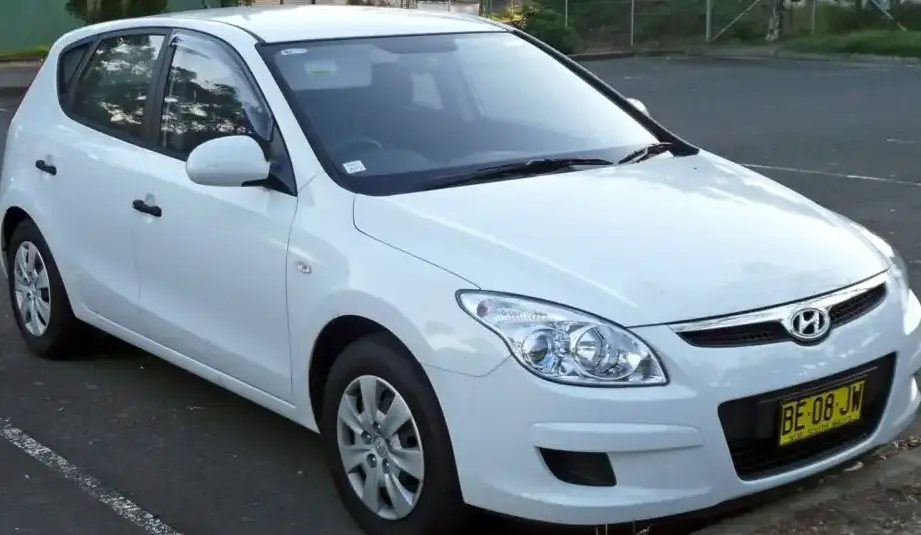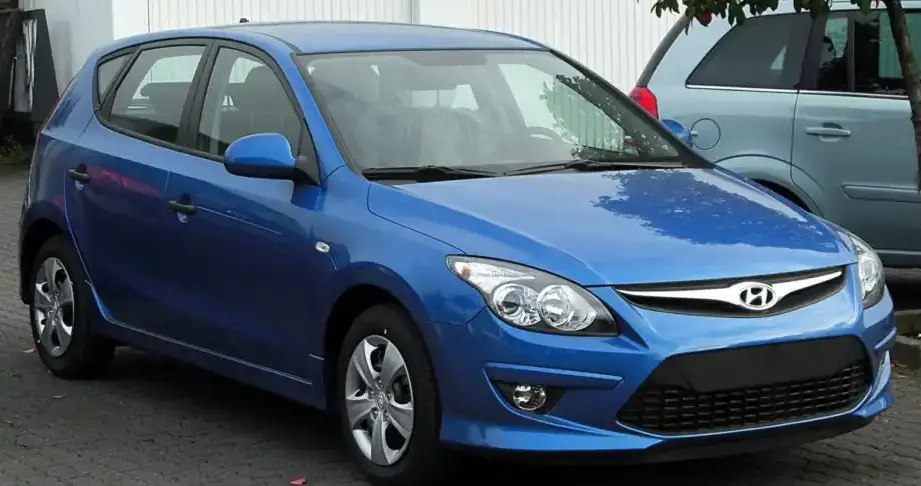
The Hyundai i30 (first generation, facelifted in 2010) 1.4-liter model, producing 109 horsepower, represented an entry point into the i30 range for European and other international markets. Introduced as part of the 2010 refresh of the FD series i30, this variant aimed to provide affordable and efficient transportation within the competitive compact hatchback segment. Production of this specific configuration ran from 2010 to 2012. It was positioned as a more economical alternative to the higher-powered 1.6-liter gasoline and diesel options, targeting buyers prioritizing fuel economy and lower purchase price over outright performance. The i30, as a whole, was Hyundai’s first car to be conceived, designed, and tested entirely in Europe, reflecting a commitment to tailoring vehicles to European tastes and driving conditions.
Technical Specifications
| Brand | Hyundai |
| Model | i30 |
| Generation | i30 I (facelift 2010) |
| Type (Engine) | 1.4 (109 Hp) |
| Start of production | 2010 |
| End of production | 2012 |
| Powertrain Architecture | Internal Combustion engine |
| Body type | Hatchback |
| Seats | 5 |
| Doors | 5 |
| Fuel consumption (urban) | 7.5 l/100 km (31.4 US mpg) |
| Fuel consumption (extra urban) | 5.3 l/100 km (44.4 US mpg) |
| Fuel consumption (combined) | 6.1 l/100 km (38.6 US mpg) |
| CO2 emissions | 142 g/km |
| Fuel Type | Petrol (Gasoline) |
| Acceleration 0 – 100 km/h | 12.6 sec |
| Acceleration 0 – 62 mph | 12.6 sec |
| Acceleration 0 – 60 mph | 12 sec |
| Maximum speed | 187 km/h (116.2 mph) |
| Emission standard | Euro 5 |
| Weight-to-power ratio | 10.9 kg/Hp |
| Weight-to-torque ratio | 8.7 kg/Nm |
| Power | 109 Hp @ 6200 rpm |
| Torque | 137 Nm @ 5000 rpm (101.05 lb.-ft. @ 5000 rpm) |
| Engine layout | Front, Transverse |
| Engine Model/Code | G4FA |
| Engine displacement | 1396 cm3 (85.19 cu. in.) |
| Number of cylinders | 4 |
| Engine configuration | Inline |
| Cylinder Bore | 77 mm (3.03 in.) |
| Piston Stroke | 75 mm (2.95 in.) |
| Compression ratio | 10.5:1 |
| Number of valves per cylinder | 4 |
| Fuel injection system | Multi-port manifold injection |
| Engine aspiration | Naturally aspirated engine |
| Valvetrain | DOHC |
| Engine oil capacity | 3.3 l (3.49 US qt | 2.9 UK qt) |
| Kerb Weight | 1193 kg (2630.11 lbs.) |
| Max. weight | 1720 kg (3791.95 lbs.) |
| Max load | 527 kg (1161.84 lbs.) |
| Trunk (boot) space – minimum | 340 l (12.01 cu. ft.) |
| Trunk (boot) space – maximum | 1250 l (44.14 cu. ft.) |
| Fuel tank capacity | 53 l (14 US gal | 11.66 UK gal) |
| Permitted trailer load with brakes (12%) | 1200 kg (2645.55 lbs.) |
| Permitted trailer load without brakes | 550 kg (1212.54 lbs.) |
| Length | 4280 mm (168.5 in.) |
| Width | 1775 mm (69.88 in.) |
| Height | 1480 mm (58.27 in.) |
| Wheelbase | 2650 mm (104.33 in.) |
| Front track | 1546 mm (60.87 in.) |
| Rear (Back) track | 1544 mm (60.79 in.) |
| Drag coefficient (Cd) | 0.33 |
| Minimum turning circle | 10.2 m (33.46 ft.) |
| Drivetrain Architecture | Front wheel drive |
| Number of gears and type of gearbox | 5 gears, manual transmission |
| Front brakes | Ventilated discs |
| Rear brakes | Disc |
| Assisting systems | ABS (Anti-lock braking system) |
| Steering type | Steering rack and pinion |
| Tires size | 185/65 R15 H |
| Wheel rims size | 15 |
INTRODUCTION
The 1.4-liter i30, introduced with the 2010 facelift, was a key component of Hyundai’s strategy to gain market share in Europe. The facelift brought revised styling, improved interior materials, and enhancements to the suspension. This variant was built on the i30’s FD platform (also shared with the Kia Cee’d), and aimed to offer a balance of practicality, affordability, and Hyundai’s then-improving build quality. It served as the base model, providing essential features while keeping the price point competitive. The 1.4 engine was chosen for its fuel efficiency and suitability for urban driving, making it a popular choice for commuters and those seeking a cost-effective hatchback.
Powertrain & Engine Architecture
The heart of this i30 variant is the Hyundai G4FA engine, a 1.4-liter inline-four cylinder gasoline engine. This engine utilizes a multi-point fuel injection system, delivering fuel directly into the intake ports. The G4FA features a double overhead camshaft (DOHC) valvetrain, operating 16 valves (four per cylinder) to optimize airflow and combustion efficiency. The engine’s 109 horsepower output at 6200 rpm and 137 Nm (101 lb-ft) of torque at 5000 rpm are modest, but sufficient for everyday driving. The engine’s design prioritized fuel economy and reduced emissions, aligning with European market demands. The 5-speed manual transmission was standard, offering a relatively conventional gear ratio spread designed for both city and highway driving. While an automatic transmission was available in some markets, it wasn’t commonly paired with this specific engine due to performance considerations.
Driving Characteristics
The 1.4-liter i30’s driving experience is best described as competent and undemanding. Acceleration from 0-60 mph takes around 12 seconds, and top speed is around 116 mph. This isn’t a sporty car; the focus is on smooth, predictable handling and reasonable fuel economy. The 5-speed manual transmission is light and easy to use, but the engine requires frequent downshifts when overtaking or climbing hills. Compared to the 1.6-liter gasoline or diesel versions, the 1.4 feels noticeably less powerful. The 1.6 offered a more responsive driving experience, while the diesel variants provided superior torque and fuel efficiency. However, the 1.4’s lighter weight and less stressed engine contribute to a comfortable ride quality, particularly on uneven road surfaces.
Equipment & Trim Levels
The 1.4-liter i30 typically came with a base level of equipment, focusing on essential features. Standard equipment generally included air conditioning, power steering, electric front windows, a basic audio system with USB connectivity, and ABS brakes. Safety features such as front and side airbags were also standard. Higher trim levels, such as Comfort or Style, added features like alloy wheels, rear electric windows, a more advanced audio system, and climate control. Interior upholstery was typically cloth, with a functional but not luxurious design. Optional extras included a sunroof, parking sensors, and upgraded audio systems.
Chassis & Braking
The i30’s chassis utilizes a MacPherson strut front suspension and a coupled torsion beam rear suspension. This setup provides a good balance of ride comfort and handling stability. The front brakes are ventilated discs, offering adequate stopping power, while the rear brakes are solid discs. The steering is a rack and pinion system, providing precise and responsive control. The 1.4-liter model typically came equipped with 15-inch steel wheels or optional 16-inch alloy wheels. The suspension tuning was geared towards comfort, prioritizing a smooth ride over sporty handling. Stabilizer bars were included both front and rear to reduce body roll during cornering.
Market Reception & Comparison
The Hyundai i30 1.4 received generally positive reviews for its value for money, fuel efficiency, and comfortable ride. Critics praised Hyundai’s improvements in build quality and design. However, the engine’s lack of power was a common criticism, particularly when compared to rivals like the Volkswagen Golf, Ford Focus, and Opel Astra. In terms of fuel economy, the 1.4-liter i30 performed competitively, achieving around 38.6 US mpg on the combined cycle. Reliability was generally good, with few reported issues with the engine or transmission. The 1.6-liter i30 offered a more engaging driving experience, but at a higher price point. The diesel variants provided superior fuel economy, but were more expensive to purchase and maintain.
Legacy
The Hyundai i30 1.4-liter (2010-2012) remains a relatively affordable and reliable used car option. The G4FA engine is known for its durability, and routine maintenance is relatively inexpensive. While not a performance standout, it provides a practical and economical solution for everyday transportation. Parts availability is generally good, and the i30’s simple design makes it relatively easy to repair. Today, these models are often found with higher mileage, but well-maintained examples can still offer years of reliable service. The i30’s success in the European market helped establish Hyundai as a credible competitor in the compact hatchback segment, paving the way for future models and further improvements in quality and design.