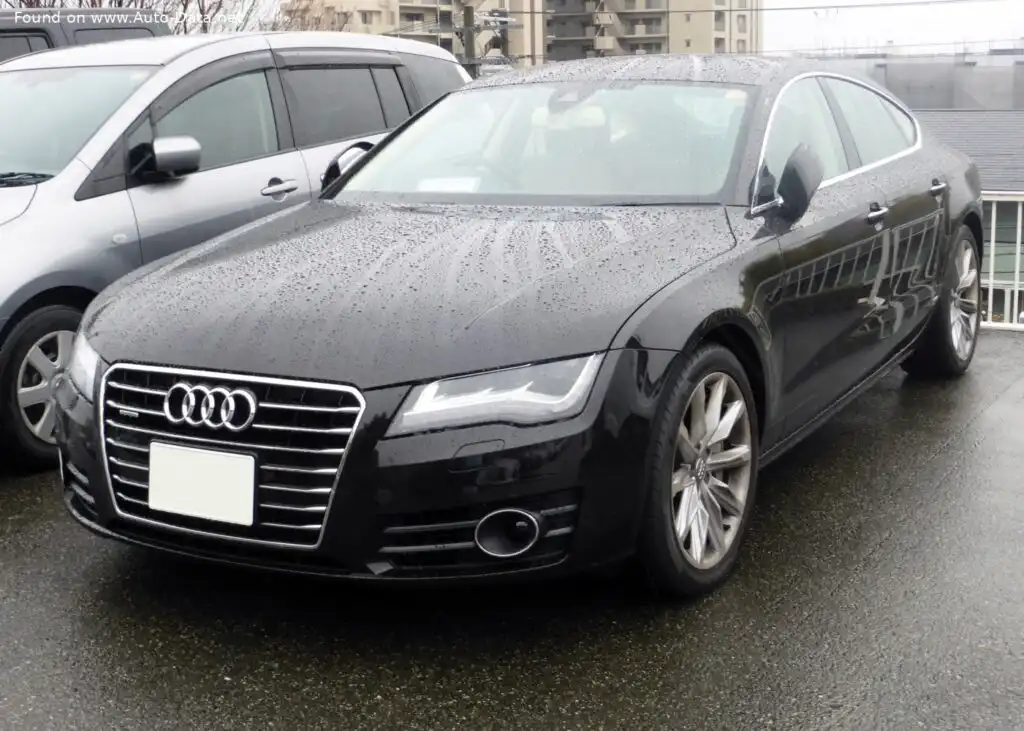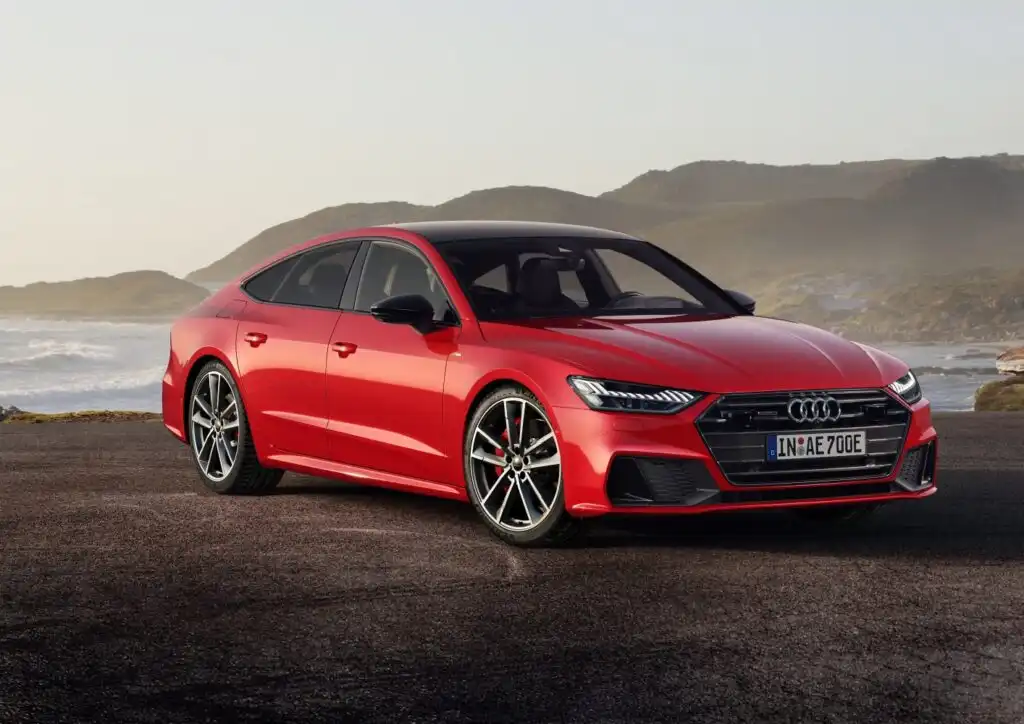
The Audi A7 Sportback (C8) 45 TFSI quattro ultra S tronic represents a compelling blend of performance, luxury, and efficiency within the Audi A7 lineup. Produced from 2018 to 2020, this variant occupied a key position as a mid-range offering, bridging the gap between the entry-level models and the higher-performance S7 and RS 7. It’s built on the Volkswagen Group’s MLB Evo platform (1HX0/A3), shared with other Audi, Porsche, and Volkswagen models, emphasizing a focus on lightweight construction and advanced technology. This specific configuration – the 2.0-liter turbocharged four-cylinder engine paired with the seven-speed S tronic dual-clutch transmission and Audi’s quattro ultra all-wheel-drive system – aimed to deliver a refined driving experience with respectable power and fuel economy.
Technical Specifications
| Brand | Audi |
| Model | A7 |
| Generation | A7 Sportback (C8) |
| Type (Engine) | 45 TFSI (245 Hp) quattro ultra S tronic |
| Start of production | 2018 |
| End of production | 2020 |
| Powertrain Architecture | Internal Combustion engine |
| Body type | Liftback |
| Seats | 5 |
| Doors | 5 |
| Combined fuel consumption (WLTP) | 8.2-8.5 l/100 km (28.7 – 27.7 US mpg, 34.4 – 33.2 UK mpg, 12.2 – 11.8 km/l) |
| CO2 emissions (WLTP) | 185-194 g/km |
| Fuel consumption (urban) | 8.1-8.4 l/100 km (29 – 28 US mpg, 34.9 – 33.6 UK mpg, 12.3 – 11.9 km/l) |
| Fuel consumption (extra urban) | 5.4-5.7 l/100 km (43.6 – 41.3 US mpg, 52.3 – 49.6 UK mpg, 18.5 – 17.5 km/l) |
| Fuel consumption (combined) | 6.4-6.8 l/100 km (36.8 – 34.6 US mpg, 44.1 – 41.5 UK mpg, 15.6 – 14.7 km/l) |
| CO2 emissions | 145-154 g/km |
| Fuel Type | Petrol (Gasoline) |
| Acceleration 0 – 100 km/h | 6.2 sec |
| Acceleration 0 – 62 mph | 6.2 sec |
| Acceleration 0 – 60 mph | 5.9 sec |
| Maximum speed | 250 km/h (155.34 mph) |
| Emission standard | Euro 6d – TEMP |
| Weight-to-power ratio | 7.1 kg/Hp, 140 Hp/tonne |
| Weight-to-torque ratio | 4.7 kg/Nm, 211.4 Nm/tonne |
| Power | 245 Hp @ 5000-6500 rpm |
| Power per litre | 123.5 Hp/l |
| Torque | 370 Nm @ 1600-4300 rpm (272.9 lb.-ft. @ 1600-4300 rpm) |
| Engine layout | Front, Longitudinal |
| Engine Model/Code | DKNA, DLHA |
| Engine displacement | 1984 cm3 (121.07 cu. in.) |
| Number of cylinders | 4 |
| Engine configuration | Inline |
| Number of valves per cylinder | 4 |
| Fuel injection system | Direct injection |
| Engine aspiration | Turbocharger, Intercooler |
| Engine oil capacity | 5.2 l (5.49 US qt | 4.58 UK qt) |
| Kerb Weight | 1750 kg (3858.09 lbs.) |
| Max. weight | 2375 kg (5235.98 lbs.) |
| Max load | 625 kg (1377.89 lbs.) |
| Trunk (boot) space – minimum | 535 l (18.89 cu. ft.) |
| Fuel tank capacity | 63 l (16.64 US gal | 13.86 UK gal) |
| Max. roof load | 90 kg (198.42 lbs.) |
| Permitted trailer load with brakes (8%) | 2000 kg (4409.25 lbs.) |
| Permitted trailer load with brakes (12%) | 2000 kg (4409.25 lbs.) |
| Permitted trailer load without brakes | 750 kg (1653.47 lbs.) |
| Permitted towbar download | 95 kg (209.44 lbs.) |
| Length | 4969 mm (195.63 in.) |
| Width | 1908 mm (75.12 in.) |
| Width including mirrors | 2118 mm (83.39 in.) |
| Height | 1422 mm (55.98 in.) |
| Wheelbase | 2926 mm (115.2 in.) |
| Front track | 1651 mm (65 in.) |
| Rear track | 1637 mm (64.45 in.) |
| Front overhang | 927 mm (36.5 in.) |
| Rear overhang | 1116 mm (43.94 in.) |
| Drivetrain Architecture | The Internal combustion engine (ICE) drives the front wheels permanently, and the rear wheels are driven through an electrically or mechanically operated clutch if necessary. |
| Drive wheel | All wheel drive (4×4) |
| Number of gears and type of gearbox | 7 gears, automatic transmission S tronic |
| Front suspension | Independent multi-link suspension |
| Rear suspension | Independent multi-link suspension |
| Front brakes | Ventilated discs |
| Rear brakes | Disc |
| Assisting systems | ABS (Anti-lock braking system) |
| Steering type | Steering rack and pinion |
| Power steering | Electric Steering |
| Tires size | 225/55 R18 |
| Wheel rims size | 8 J x 18 |
Powertrain & Engine Architecture
At the heart of the A7 45 TFSI lies the EA888 2.0-liter inline-four cylinder engine, specifically coded DKNA or DLHA depending on the exact production year and market. This engine utilizes direct fuel injection and a single twin-scroll turbocharger with an intercooler to deliver a balance of power and efficiency. The engine’s aluminum block and head contribute to its relatively lightweight design. The S tronic seven-speed dual-clutch transmission provides rapid and smooth gear changes, enhancing both acceleration and fuel economy. Audi’s quattro ultra system is a sophisticated all-wheel-drive system that primarily operates in front-wheel drive to conserve fuel, engaging the rear axle electronically when traction demands it. This on-demand system contributes to the car’s efficiency without sacrificing all-weather capability.
Driving Characteristics
The 245 hp and 272.9 lb-ft of torque offered by the 45 TFSI powertrain provide brisk acceleration, with a 0-60 mph time of around 5.9 seconds. While not as overtly sporty as the higher-output S7, the A7 45 TFSI delivers ample power for everyday driving and highway passing. The S tronic transmission’s quick shifts and well-chosen gear ratios contribute to a responsive feel. Compared to the six-speed manual transmission available on some A7 models, the S tronic offers smoother operation and potentially slightly improved fuel economy. The quattro ultra system provides confident handling in various conditions, although purists might note a slight difference in feel compared to the more traditional, mechanically locking quattro systems found in higher-performance Audis.
Equipment & Trim Levels
The A7 45 TFSI typically came standard with a generous array of features, including Audi’s Virtual Cockpit digital instrument cluster, a 10.1-inch touchscreen infotainment system with MMI Navigation plus, leather upholstery, three-zone automatic climate control, and LED headlights. Optional extras included features like a Bang & Olufsen sound system, adaptive cruise control, a head-up display, and various driver-assistance systems. Trim levels often varied by market, but generally, the 45 TFSI could be upgraded with packages adding features like sport seats, upgraded interior trim, and larger wheels.
Chassis & Braking
The A7 Sportback (C8) features an independent multi-link suspension at both the front and rear axles, providing a comfortable and controlled ride. The suspension is tuned to prioritize comfort and refinement, but still offers good body control in corners. Brakes consist of ventilated discs at the front and solid discs at the rear. The electronic stability control (ESC) system is standard, providing an added layer of safety. The steering is an electromechanical power steering system, offering precise and responsive feel.
Market Reception & Comparison
The A7 45 TFSI was generally well-received by automotive critics, who praised its stylish design, luxurious interior, and refined driving experience. The 2.0-liter engine was considered a good compromise between performance and fuel economy, although some reviewers noted that it lacked the outright punch of the larger engines available in the A7 lineup. Compared to the A7 55 TFSI (with its 3.0-liter V6), the 45 TFSI offered lower running costs but less exhilarating performance. The 45 TFSI also provided a more affordable entry point into the A7 range, making it an attractive option for buyers who prioritized value and efficiency.
Legacy
The Audi A7 Sportback (C8) 45 TFSI quattro ultra S tronic has proven to be a relatively reliable vehicle, with the EA888 engine generally considered robust. Common maintenance items include regular oil changes, spark plug replacements, and inspection of the turbocharger and cooling system. On the used car market, these models represent a good value proposition, offering a blend of luxury, technology, and performance at a competitive price point. The quattro ultra system, while efficient, has seen some reports of clutch pack wear in higher-mileage examples, so careful inspection is recommended when purchasing a used vehicle.