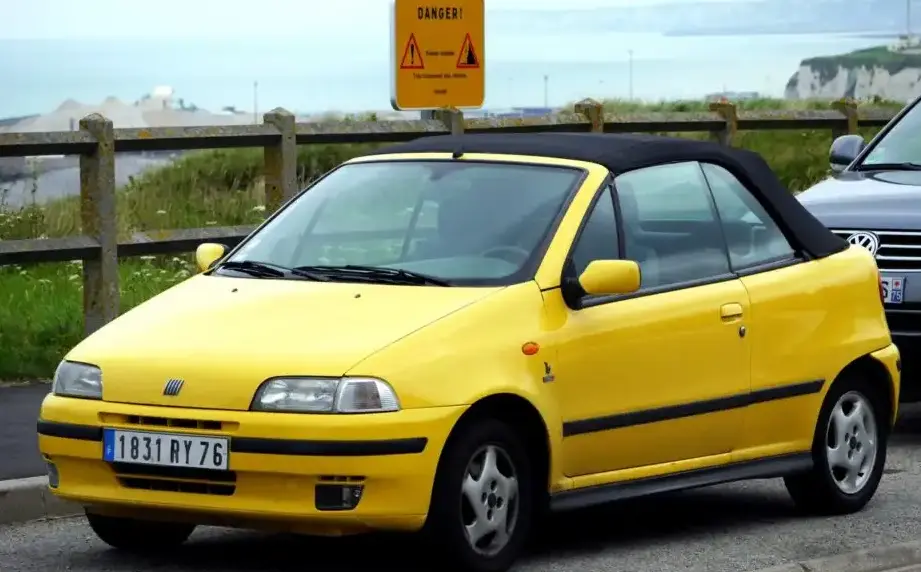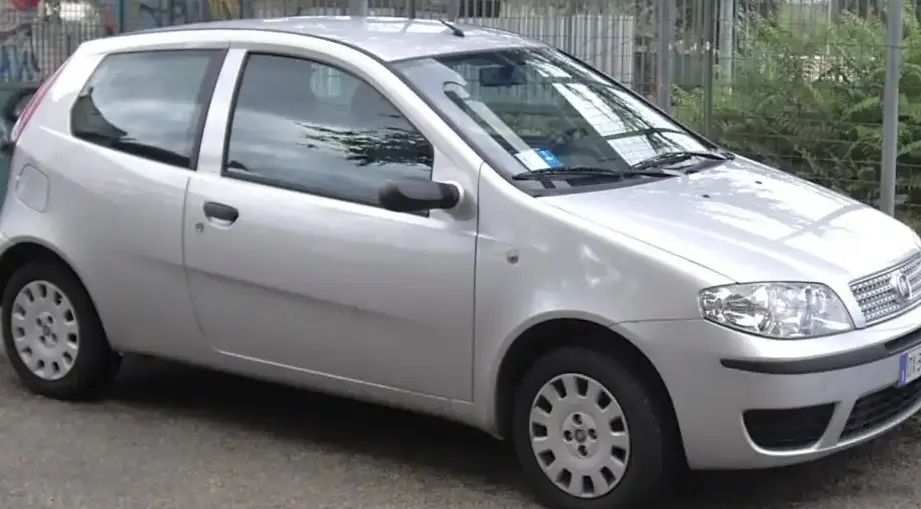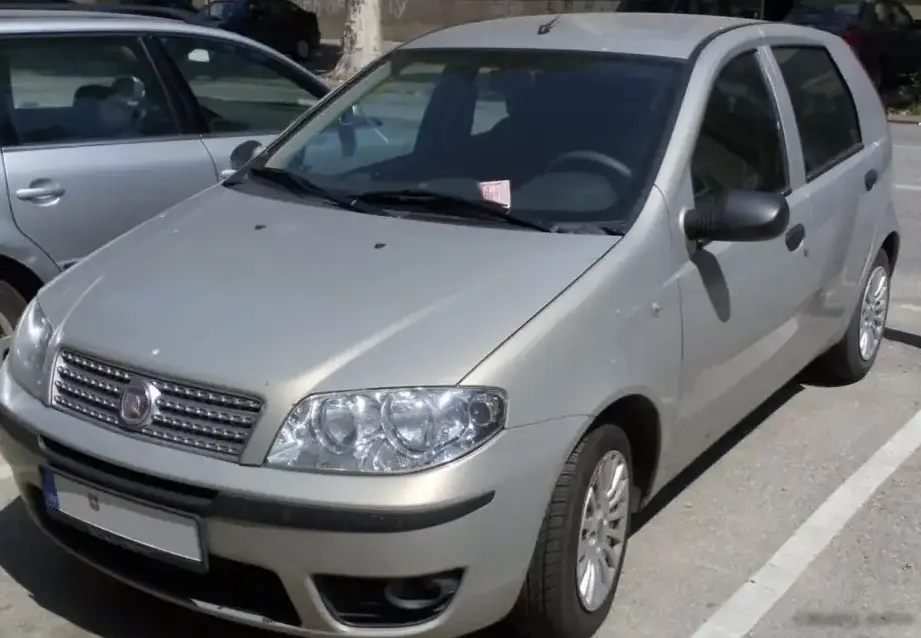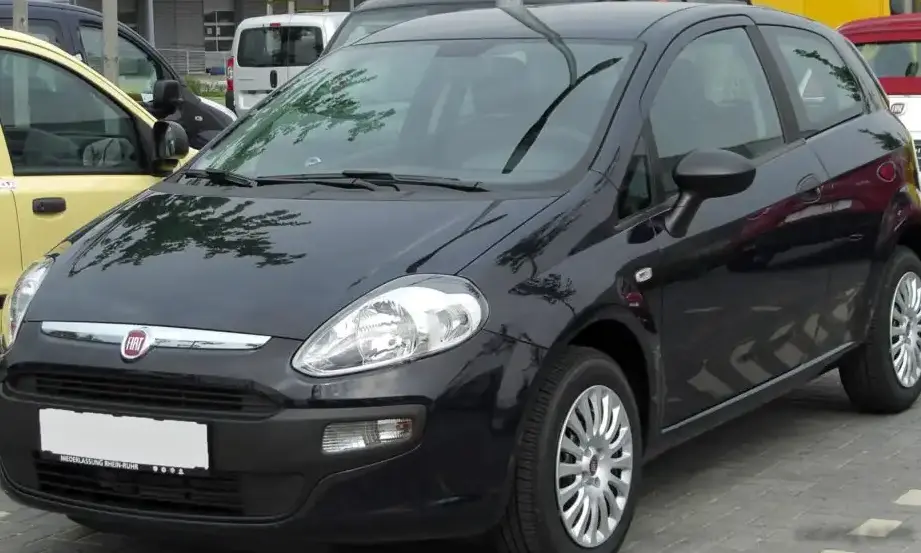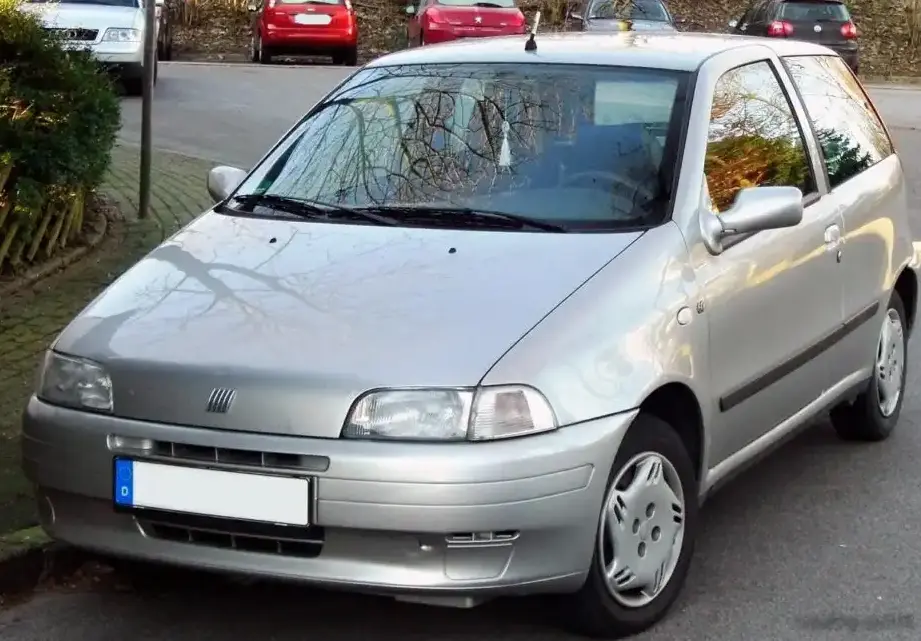
The Fiat Punto I 75 1.2, produced from 1997 to 1999, represented an entry-level offering within the refreshed (facelift) first generation Punto range (Project 176). Following the initial launch of the Punto in 1993, the 1997 facelift brought subtle styling revisions and improvements to the interior. This 75 1.2 variant, delivering 73 horsepower, was aimed at buyers seeking an economical and practical city car. It occupied the lower end of the Punto lineup, positioned below the more powerful 1.6-liter and sporting variants, and served as a direct competitor to vehicles like the Renault Clio and Peugeot 206 in the European small car segment.
Technical Specifications
| Brand | Fiat |
| Model | Punto |
| Generation | Punto I (176, facelift 1997) |
| Type (Engine) | 75 1.2 (73 Hp) |
| Start of production | 1997 |
| End of production | 1999 |
| Powertrain Architecture | Internal Combustion engine |
| Body type | Hatchback |
| Seats | 5 |
| Doors | 3-5 |
| Fuel consumption (urban) | 9.5 l/100 km (24.8 US mpg, 29.7 UK mpg, 10.5 km/l) |
| Fuel consumption (extra urban) | 5.6 l/100 km (42 US mpg, 50.4 UK mpg, 17.9 km/l) |
| Fuel consumption (combined) | 7 l/100 km (33.6 US mpg, 40.4 UK mpg, 14.3 km/l) |
| Fuel Type | Petrol (Gasoline) |
| Acceleration 0 – 100 km/h | 12 sec |
| Acceleration 0 – 62 mph | 12 sec |
| Acceleration 0 – 60 mph | 11.4 sec |
| Maximum speed | 170 km/h (105.63 mph) |
| Weight-to-power ratio | 12.1 kg/Hp |
| Weight-to-torque ratio | 8.3 kg/Nm |
| Power | 73 Hp @ 6000 rpm |
| Power per litre | 58.8 Hp/l |
| Torque | 106 Nm @ 4000 rpm (78.18 lb.-ft. @ 4000 rpm) |
| Engine layout | Front, Transverse |
| Engine Model/Code | 176A8000 |
| Engine displacement | 1242 cm3 (75.79 cu. in.) |
| Number of cylinders | 4 |
| Engine configuration | Inline |
| Cylinder Bore | 70.8 mm (2.79 in.) |
| Piston Stroke | 78.9 mm (3.11 in.) |
| Compression ratio | 9.8:1 |
| Number of valves per cylinder | 2 |
| Fuel injection system | Multi-port manifold injection |
| Engine aspiration | Naturally aspirated |
| Engine oil capacity | 3.74 l (3.95 US qt, 3.29 UK qt) |
| Coolant capacity | 4.5 l (4.76 US qt, 3.96 UK qt) |
| Kerb Weight | 880 kg (1940.07 lbs.) |
| Max. weight | 1360 kg (2998.29 lbs.) |
| Max load | 480 kg (1058.22 lbs.) |
| Trunk (boot) space – minimum | 275 l (9.71 cu. ft.) |
| Trunk (boot) space – maximum | 1080 l (38.14 cu. ft.) |
| Fuel tank capacity | 47 l (12.42 US gal, 10.34 UK gal) |
| Length | 3760 mm (148.03 in.) |
| Width | 1625 mm (63.98 in.) |
| Height | 1460 mm (57.48 in.) |
| Wheelbase | 2450 mm (96.46 in.) |
| Front track | 1395 mm (54.92 in.) |
| Rear track | 1377 mm (54.21 in.) |
| Drag coefficient (Cd) | 0.31 |
| Minimum turning circle | 10.2 m (33.46 ft.) |
| Drivetrain Architecture | Front wheel drive |
| Number of gears | 5 |
| Gearbox type | Manual transmission |
| Front suspension | Wishbone |
| Rear suspension | Trailing arm |
| Front brakes | Disc |
| Rear brakes | Drum |
| Steering type | Steering rack and pinion |
| Tires size | 165/65 R14 |
| Wheel rims size | 14 |
Powertrain & Engine Architecture
The Punto 75 1.2 utilized Fiat’s 176A8.000 engine, a 1242cc inline-four cylinder petrol engine. This engine was a relatively simple design, featuring a single overhead camshaft (SOHC) operating two valves per cylinder. Fuel delivery was managed by a multi-point fuel injection system, providing adequate, though not exceptional, performance. The engine’s 9.8:1 compression ratio was a compromise between efficiency and power output. The engine was transversely mounted, a common layout for front-wheel-drive vehicles, contributing to a compact engine bay. The 75 1.2 was exclusively offered with a five-speed manual transmission. This transmission was chosen for its affordability and efficiency, aligning with the car’s overall positioning. The gearbox ratios were geared towards maximizing fuel economy rather than outright acceleration.
Driving Characteristics
The 73 horsepower and 78 lb-ft of torque produced by the 1.2-liter engine resulted in modest, but usable, performance. Acceleration from 0-60 mph took around 11.4 seconds, and top speed was approximately 105 mph. In real-world driving, the Punto 75 1.2 felt best suited to urban environments and slower country roads. The engine required frequent gear changes to maintain momentum, particularly when overtaking. Compared to the more powerful 1.6-liter Punto, the 1.2 felt noticeably slower, but it offered a smoother and more forgiving driving experience. The five-speed manual transmission was light and easy to use, but the gear ratios were spaced to prioritize fuel efficiency over spirited driving.
Equipment & Trim Levels
The Punto 75 1.2 typically came with a basic level of equipment, reflecting its entry-level status. Standard features generally included power steering, central locking, and a basic stereo system. Interior upholstery was typically cloth, and the dashboard featured a simple, functional design. Optional extras included air conditioning, electric windows, and alloy wheels. Higher trim levels within the Punto range offered more luxurious features, such as upgraded upholstery, a sunroof, and more advanced audio systems. The 75 1.2 was often chosen by buyers who prioritized affordability and practicality over luxury and performance.
Chassis & Braking
The Punto I utilized a relatively simple chassis design. Front suspension consisted of independent wishbones, while the rear employed a trailing arm setup. This configuration provided a reasonable balance between ride comfort and handling. Braking was handled by disc brakes on the front wheels and drum brakes on the rear. This combination was adequate for the car’s weight and performance, but lacked the stopping power of more advanced braking systems. The steering was a rack and pinion system, providing precise and responsive steering feel. The 75 1.2’s relatively light weight (approximately 1940 lbs) helped to compensate for its modest power output and braking performance.
Market Reception & Comparison
The Fiat Punto 75 1.2 was generally well-received by critics as a practical and affordable city car. It was praised for its fuel efficiency, ease of driving, and compact size. However, it was also criticized for its lack of power and relatively basic interior. Compared to other trims in the Punto lineup, the 1.2 offered the best fuel economy but the slowest performance. The 1.6-liter Punto provided a significant performance boost, while the diesel variants offered even greater fuel efficiency. In the broader market, the Punto 75 1.2 competed with vehicles like the Renault Clio, Peugeot 206, and Volkswagen Polo, offering a competitive price point and a reputation for reliability.
Legacy
The 1.2-liter engine used in the Punto 75 1.2 proved to be a relatively reliable unit, with many examples still on the road today. While not known for its performance, the engine was durable and relatively inexpensive to maintain. The Punto I, in general, established Fiat as a major player in the European small car market. In the used car market, the 75 1.2 remains an affordable and practical option for buyers seeking a simple and economical city car. However, potential buyers should be aware of the car’s age and potential maintenance needs. Parts availability is generally good, but finding well-maintained examples can be challenging.