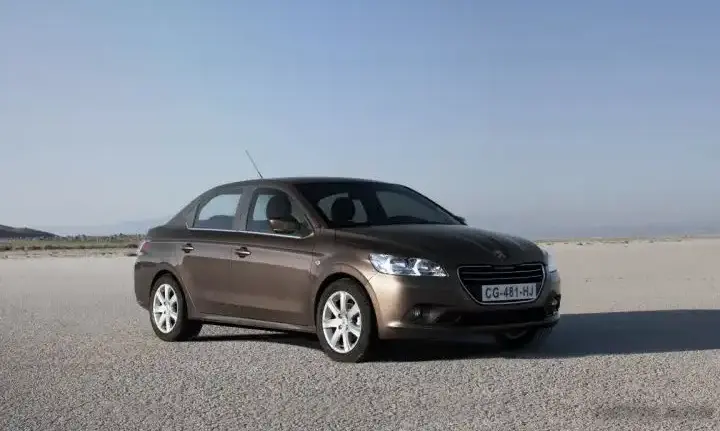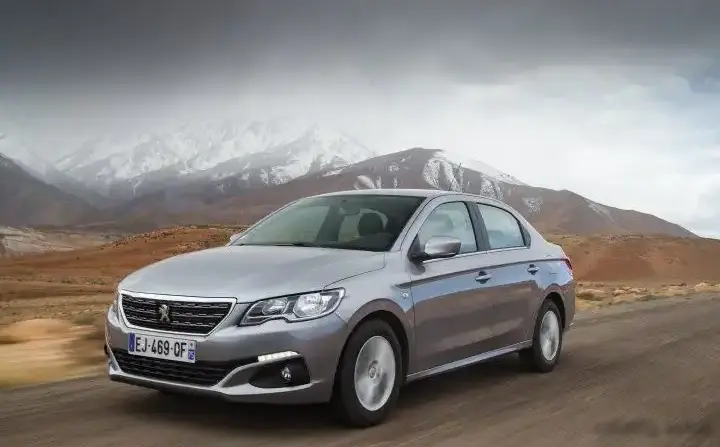
The Peugeot 301, particularly the 1.6 VTi (115 Hp) EAT6 variant introduced with the 2017 facelift, represents Peugeot’s entry into the subcompact sedan market, primarily targeted towards international markets outside of Europe. Production began in 2017, building upon the initial 301 launch and incorporating styling and technological updates. This specific configuration – the 1.6-liter gasoline engine paired with the six-speed EAT6 automatic transmission – aimed to provide a balance of affordability, comfort, and reasonable performance for buyers in regions where manual transmissions are less popular or where automatic convenience is highly valued. The 301, and this variant specifically, was designed and manufactured for markets in North Africa, the Middle East, South America, and parts of Eastern Europe, offering a practical and relatively modern sedan at a competitive price point.
Technical Specifications
| Brand | Peugeot |
| Model | 301 |
| Generation | 301 (facelift 2017) |
| Type (Engine) | 1.6 VTi (115 Hp) EAT6 |
| Start of production | 2017 |
| Powertrain Architecture | Internal Combustion engine |
| Body type | Sedan |
| Seats | 5 |
| Doors | 4 |
| Fuel consumption (urban) | 9 l/100 km (26.1 US mpg, 31.4 UK mpg, 11.1 km/l) |
| Fuel consumption (extra urban) | 5.2 l/100 km (45.2 US mpg, 54.3 UK mpg, 19.2 km/l) |
| Fuel consumption (combined) | 6.6 l/100 km (35.6 US mpg, 42.8 UK mpg, 15.2 km/l) |
| CO2 emissions | 154 g/km |
| Fuel Type | Petrol (Gasoline) |
| Acceleration 0 – 100 km/h | 12.1 sec |
| Acceleration 0 – 62 mph | 12.1 sec |
| Acceleration 0 – 60 mph | 11.5 sec |
| Maximum speed | 180 km/h (111.85 mph) |
| Emission standard | Euro 6 |
| Weight-to-power ratio | 9.7 kg/Hp, 103.1 Hp/tonne |
| Weight-to-torque ratio | 7.4 kg/Nm, 134.5 Nm/tonne |
| Power | 115 Hp @ 6050 rpm |
| Power per litre | 72.5 Hp/l |
| Torque | 150 Nm @ 4000 rpm (110.63 lb.-ft. @ 4000 rpm) |
| Engine layout | Front, Transverse |
| Engine Model/Code | NFP EC5 |
| Engine displacement | 1587 cm3 (96.84 cu. in.) |
| Number of cylinders | 4 |
| Engine configuration | Inline |
| Cylinder Bore | 78.5 mm (3.09 in.) |
| Piston Stroke | 82 mm (3.23 in.) |
| Number of valves per cylinder | 4 |
| Fuel injection system | Multi-port manifold injection |
| Engine aspiration | Naturally aspirated engine |
| Valvetrain | DOHC |
| Engine oil capacity | 3.25 l (3.43 US qt | 2.86 UK qt) |
| Kerb Weight | 1115 kg (2458.15 lbs.) |
| Max. weight | 1585 kg (3494.33 lbs.) |
| Max load | 470 kg (1036.17 lbs.) |
| Trunk (boot) space – minimum | 506 l (17.87 cu. ft.) |
| Trunk (boot) space – maximum | 1332 l (47.04 cu. ft.) |
| Fuel tank capacity | 50 l (13.21 US gal | 11 UK gal) |
| Permitted trailer load with brakes (12%) | 750 kg (1653.47 lbs.) |
| Permitted trailer load without brakes | 580 kg (1278.68 lbs.) |
| Permitted towbar download | 55 kg (121.25 lbs.) |
| Length | 4445 mm (175 in.) |
| Width | 1748 mm (68.82 in.) |
| Width including mirrors | 1953 mm (76.89 in.) |
| Height | 1466 mm (57.72 in.) |
| Wheelbase | 2652 mm (104.41 in.) |
| Front track | 1501 mm (59.09 in.) |
| Rear (Back) track | 1478 mm (58.19 in.) |
| Front overhang | 819 mm (32.24 in.) |
| Rear overhang | 974 mm (38.35 in.) |
| Ride height (ground clearance) | 165 mm (6.5 in.) |
| Drivetrain Architecture | The Internal combustion engine (ICE) drives the front wheels of the vehicle. |
| Drive wheel | Front wheel drive |
| Number of gears and type of gearbox | 6 gears, automatic transmission EAT |
| Front suspension | Independent type McPherson |
| Rear suspension | Torsion |
| Front brakes | Ventilated discs, 266 mm |
| Rear brakes | Drum |
| Assisting systems | ABS (Anti-lock braking system) |
| Steering type | Steering rack and pinion |
| Power steering | Electric Steering |
| Tires size | 185/65 R15; 195/55 R16 |
| Wheel rims size | 15; 16 |
Powertrain & Engine Architecture
The heart of this 301 variant is the NFP EC5 1.6-liter inline-four cylinder gasoline engine. This engine is a naturally aspirated unit, meaning it doesn’t employ turbocharging or supercharging. It utilizes a multi-point fuel injection system, delivering fuel directly into the intake ports. The engine features a double overhead camshaft (DOHC) valvetrain, optimizing valve timing for improved efficiency and power delivery. The 115 horsepower output is achieved at 6050 rpm, while peak torque of 150 Nm (110.63 lb-ft) arrives at 4000 rpm. Paired with this engine is the Aisin-sourced EAT6 six-speed automatic transmission. This transmission is known for its smooth shifting characteristics and relatively quick response, although it isn’t designed for particularly sporty driving. The EAT6 is a conventional torque converter automatic, prioritizing comfort and fuel efficiency over outright performance.
Driving Characteristics
The 1.6 VTi EAT6 301 offers a comfortable, if not particularly exhilarating, driving experience. The automatic transmission provides smooth gear changes, making it well-suited for city driving and relaxed highway cruising. Acceleration from 0-60 mph takes around 11.5 seconds, and 0-100 km/h in 12.1 seconds, which is adequate for everyday use but noticeably slower than versions equipped with manual transmissions or the more powerful 1.6 THP engine. The EAT6 transmission is programmed for fuel economy, meaning it will upshift quickly to maintain lower engine speeds. This can sometimes result in the engine feeling strained when attempting to accelerate quickly or climb hills. The steering is light and easy to use, but lacks significant feedback. Overall, this variant prioritizes ease of use and comfort over sporty handling.
Equipment & Trim Levels
The 301 1.6 VTi EAT6 typically came with a reasonable level of standard equipment, though specifics varied depending on the target market. Common features included air conditioning, power windows, central locking, and a basic audio system with USB connectivity. Higher trim levels added features such as alloy wheels, fog lights, a more advanced audio system with Bluetooth, and sometimes even a rear parking sensor. Interior upholstery was typically cloth, with a focus on durability rather than luxury. The dashboard layout was functional and straightforward, prioritizing ease of use. Optional extras often included a sunroof, leather upholstery, and a navigation system.
Chassis & Braking
The 301 utilizes a McPherson strut front suspension and a torsion beam rear suspension. This setup provides a comfortable ride quality, absorbing bumps and imperfections in the road effectively. However, it doesn’t offer the same level of handling precision as more sophisticated suspension designs. The braking system consists of ventilated discs on the front wheels and drum brakes on the rear. This configuration is typical for vehicles in this price segment. Anti-lock Braking System (ABS) is standard, enhancing safety during emergency braking situations. The electric power steering provides light and easy steering effort, making it convenient for maneuvering in tight spaces.
Market Reception & Comparison
The Peugeot 301 1.6 VTi EAT6 was generally well-received in its target markets as a practical and affordable sedan. Critics praised its comfortable ride, smooth automatic transmission, and reasonable fuel economy (around 35.6 US mpg combined). However, it was often criticized for its relatively slow acceleration and lack of sporty handling. Compared to other trims in the 301 lineup, the 1.6 VTi EAT6 offered a good balance between performance and fuel efficiency, making it a popular choice for buyers who prioritized comfort and convenience over outright speed. The manual transmission versions of the 1.6 VTi offered slightly better fuel economy and acceleration, while the more powerful 1.6 THP variants provided significantly more performance but at a higher price point.
Legacy
The Peugeot 301, and the 1.6 VTi EAT6 variant in particular, has proven to be a relatively reliable vehicle. The NFP EC5 engine is known for its durability, and the Aisin EAT6 transmission is generally considered to be a robust unit. However, like any vehicle, regular maintenance is crucial to ensure long-term reliability. In the used car market, the 301 1.6 VTi EAT6 represents a good value proposition for buyers seeking an affordable and practical sedan. Its comfortable ride, smooth automatic transmission, and reasonable running costs make it a sensible choice for everyday transportation. While it may not be the most exciting car to drive, it offers a dependable and economical option for those seeking a no-frills sedan.