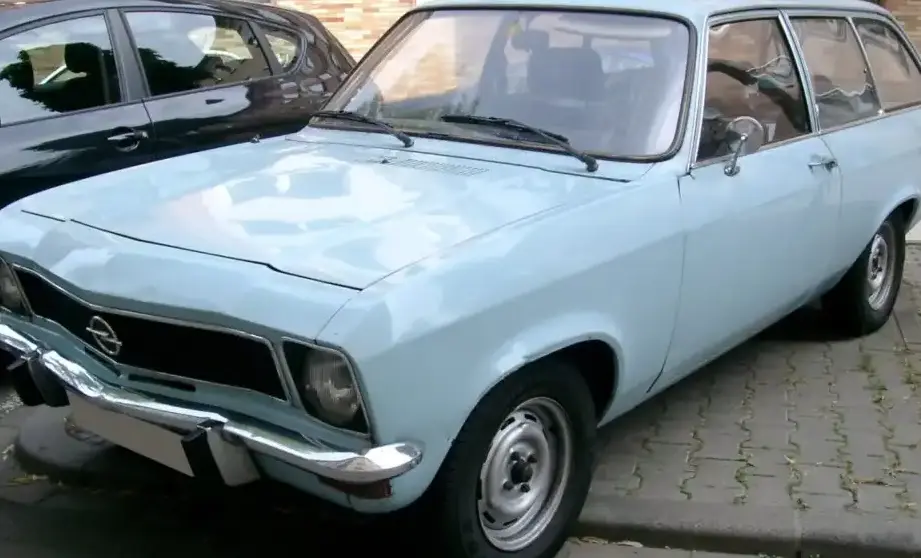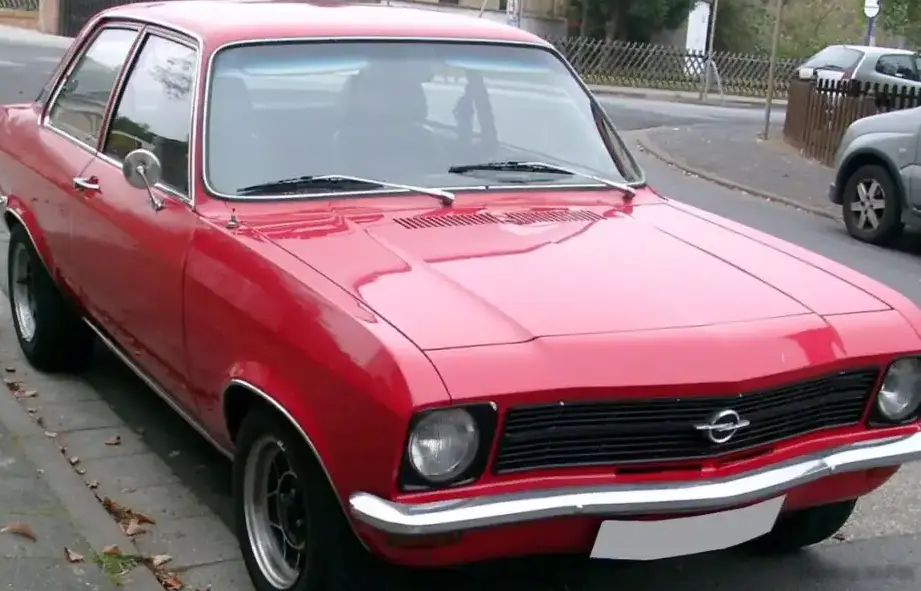
The Opel Ascona A 2-door 1.6 N (60 hp) was a compact sedan produced between January and July of 1975. It represented the entry-level offering within the Ascona A range, which was Opel’s response to increasing competition in the European mid-size car segment. Positioned below the more powerful 1.9 and 2.0-liter variants, the 1.6 N aimed for affordability and fuel economy, targeting a broader customer base. The Ascona A, launched in 1970, was a significant model for Opel, replacing the Rekord C and offering a more modern design and improved driving dynamics. This particular 2-door configuration, coupled with the 1.6-liter engine, was a popular choice for buyers seeking a practical and economical family car.
Technical Specifications
| Brand | Opel |
| Model | Ascona |
| Generation | Ascona A 2-door |
| Type (Engine) | 1.6 N (60 Hp) |
| Start of production | January, 1975 |
| End of production | July, 1975 |
| Powertrain Architecture | Internal Combustion engine |
| Body type | Sedan |
| Seats | 5 |
| Doors | 2 |
| Fuel Type | Petrol (Gasoline) |
| Acceleration 0 – 100 km/h | 19 sec |
| Acceleration 0 – 62 mph | 19 sec |
| Acceleration 0 – 60 mph | 18.1 sec |
| Maximum speed | 140 km/h (86.99 mph) |
| Weight-to-power ratio | 15.2 kg/Hp, 65.9 Hp/tonne |
| Weight-to-torque ratio | 8.7 kg/Nm, 115.4 Nm/tonne |
| Power | 60 Hp @ 5000 rpm |
| Power per litre | 37.9 Hp/l |
| Torque | 105 Nm @ 3000-3400 rpm (77.44 lb.-ft. @ 3000-3400 rpm) |
| Engine layout | Front, Longitudinal |
| Engine Model/Code | 16N |
| Engine displacement | 1584 cm3 (96.66 cu. in.) |
| Number of cylinders | 4 |
| Engine configuration | Inline |
| Cylinder Bore | 85 mm (3.35 in.) |
| Piston Stroke | 69.8 mm (2.75 in.) |
| Compression ratio | 8:1 |
| Number of valves per cylinder | 2 |
| Fuel injection system | Carburettor |
| Engine aspiration | Naturally aspirated engine |
| Valvetrain | CIH |
| Engine oil capacity | 3.8 l (4.02 US qt | 3.34 UK qt) |
| Coolant | 6.5 l (6.87 US qt | 5.72 UK qt) |
| Kerb Weight | 910 kg (2006.21 lbs.) |
| Max. weight | 1335 kg (2943.17 lbs.) |
| Max load | 425 kg (936.96 lbs.) |
| Trunk (boot) space – minimum | 307 l (10.84 cu. ft.) |
| Fuel tank capacity | 46 l (12.15 US gal | 10.12 UK gal) |
| Permitted trailer load with brakes (12%) | 1000 kg (2204.62 lbs.) |
| Permitted trailer load without brakes | 500 kg (1102.31 lbs.) |
| Length | 4124 mm (162.36 in.) |
| Width | 1626 mm (64.02 in.) |
| Height | 1385 mm (54.53 in.) |
| Wheelbase | 2430 mm (95.67 in.) |
| Front track | 1331 mm (52.4 in.) |
| Rear (Back) track | 1320 mm (51.97 in.) |
| Ride height (ground clearance) | 134 mm (5.28 in.) |
| Drag coefficient (Cd) | 0.48 |
| Minimum turning circle (turning diameter) | 9.76 m (32.02 ft.) |
| Drivetrain Architecture | The Internal combustion engine (ICE) drives the rear wheels of the vehicle. |
| Drive wheel | Rear wheel drive |
| Number of gears and type of gearbox | 4 gears, manual transmission |
| Front suspension | Double wishbone, Independent coil spring, Transverse stabilizer |
| Rear suspension | Rigid axle suspension, Transverse stabilizer, Trailing arm, Coil spring |
| Front brakes | Disc |
| Rear brakes | Drum |
| Steering type | Steering rack and pinion |
| Tires size | 155/80 R13; 165/80 R13; 185/70 R13 |
| Wheel rims size | 5J x 13; 5.5J x 13 |
Powertrain & Engine Architecture
The heart of the Ascona A 1.6 N was the 16N engine, a 1.6-liter (1584 cc) inline-four cylinder unit. This engine featured a single overhead camshaft (OHC) design, utilizing Opel’s CIH (Cylinder Head Integrated) technology. The CIH design aimed to improve breathing and efficiency. Fuel delivery was managed by a single downdraft carburetor, a common setup for the time, prioritizing simplicity and cost-effectiveness. The engine produced 60 horsepower at 5000 rpm and 105 Nm (77.44 lb-ft) of torque between 3000 and 3400 rpm. The engine was mounted longitudinally in the front of the vehicle, driving the rear wheels. The transmission was a standard four-speed manual gearbox, chosen for its affordability and suitability for the engine’s power output. An automatic transmission was not offered with this specific engine configuration.
Driving Characteristics
The 1.6 N Ascona A offered modest performance. Acceleration to 60 mph took approximately 18.1 seconds, and the top speed was around 87 mph. Compared to the 1.9 and 2.0-liter versions, the 1.6 N felt noticeably slower, particularly when accelerating or climbing hills. The four-speed manual transmission was well-matched to the engine’s characteristics, providing adequate gear spacing for everyday driving. However, the lack of overdrive meant that engine speeds were relatively high at highway speeds. The rear-wheel-drive layout provided a balanced feel, but the relatively narrow tires and basic suspension setup meant that handling was not particularly sporty. The focus was on providing a comfortable and predictable driving experience.
Equipment & Trim Levels
The 1.6 N Ascona A was typically equipped with basic amenities. Standard features included cloth upholstery, vinyl floor covering, and a simple dashboard layout. The instrument panel consisted of a speedometer, fuel gauge, and temperature gauge. Optional extras included a radio, heater, and upgraded upholstery. The trim level was generally considered the base model, with minimal frills. The interior was functional and durable, designed to withstand the rigors of daily use. The 2-door configuration offered easier access to the rear seats compared to the 4-door model, but rear passenger space was somewhat limited.
Chassis & Braking
The Ascona A featured a robust chassis with independent front suspension utilizing a double wishbone setup with coil springs and a transverse stabilizer bar. The rear suspension employed a rigid axle with trailing arms, coil springs, and a transverse stabilizer bar. This suspension configuration provided a reasonable balance between ride comfort and handling. Braking duties were handled by disc brakes at the front and drum brakes at the rear. The braking system was adequate for the car’s weight and performance, but lacked the stopping power of more modern systems. Steering was via a rack and pinion system, providing precise and responsive control.
Market Reception & Comparison
The Ascona A 1.6 N was generally well-received as an affordable and practical family car. Critics praised its fuel economy and reliability, but noted its lack of performance compared to higher-powered variants. Compared to the 1.9 and 2.0-liter models, the 1.6 N offered a lower purchase price and reduced running costs, making it an attractive option for budget-conscious buyers. However, the 1.6 N was often seen as a compromise, sacrificing performance for economy. The 1.9-liter version, while more expensive, offered a significant improvement in performance and was often preferred by drivers who valued driving enjoyment.
Legacy
The Opel Ascona A 1.6 N, while not the most powerful or exciting version of the Ascona A, remains a significant model in Opel’s history. The 16N engine proved to be a reliable and durable unit, and many examples are still on the road today. In the used car market, the 1.6 N is often sought after by enthusiasts looking for a classic Opel that is relatively affordable to maintain. Its simplicity and robust construction make it a good candidate for restoration projects. The Ascona A, as a whole, helped establish Opel as a major player in the European mid-size car segment, paving the way for future models like the Vectra.