Technical Specifications
| Brand | Jaguar |
| Model | XF |
| Generation | XF (X260) |
| Type (Engine) | 2.0 (250 Hp) AWD Automatic |
| Start of production | 2017 |
| End of production | 2018 |
| Powertrain Architecture | Internal Combustion engine |
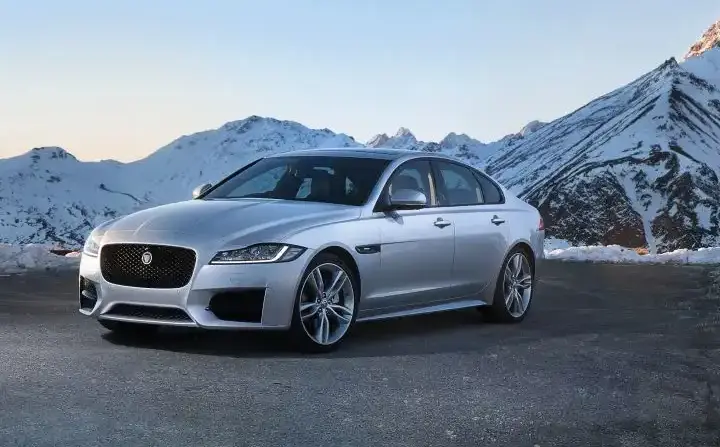
| Body type | Sedan |
| Seats | 5 |
| Doors | 4 |
| Fuel consumption (combined) | 6.9 l/100 km (34.1 US mpg, 40.9 UK mpg, 14.5 km/l) |
| CO2 emissions | 159 g/km |
| Fuel Type | Petrol (Gasoline) |
| Acceleration 0 – 100 km/h | 6.6 sec |
| Acceleration 0 – 62 mph | 6.6 sec |
| Acceleration 0 – 60 mph | 6.3 sec |
| Maximum speed | 237 km/h (147.26 mph) |
| Emission standard | Euro 6 |
| Weight-to-power ratio | 6.7 kg/Hp, 148.4 Hp/tonne |
| Weight-to-torque ratio | 4.6 kg/Nm, 216.6 Nm/tonne |
| Power | 250 Hp @ 5500 rpm |
| Power per litre | 125.2 Hp/l |
| Torque | 365 Nm @ 1200-4500 rpm (269.21 lb.-ft. @ 1200-4500 rpm) |
| Engine layout | Front, Longitudinal |
| Engine Model/Code | Ingenium / PT204 |
| Engine displacement | 1997 cm3 (121.86 cu. in.) |
| Number of cylinders | 4 |
| Engine configuration | Inline |
| Cylinder Bore | 83 mm (3.27 in.) |
| Piston Stroke | 92.4 mm (3.64 in.) |
| Compression ratio | 10.5:1 |
| Number of valves per cylinder | 4 |
| Fuel injection system | Direct injection |
| Engine aspiration | Twin-Turbo, Intercooler |
| Valvetrain | DOHC |
| Engine oil capacity | 7 l (7.4 US qt | 6.16 UK qt) |
| Kerb Weight | 1685 kg (3714.79 lbs.) |
| Trunk (boot) space – minimum | 540 l (19.07 cu. ft.) |
| Fuel tank capacity | 74 l (19.55 US gal | 16.28 UK gal) |
| Length | 4954 mm (195.04 in.) |
| Width with mirrors folded | 1880 mm (74.02 in.) |
| Width including mirrors | 2091 mm (82.32 in.) |
| Height | 1457 mm (57.36 in.) |
| Wheelbase | 2960 mm (116.54 in.) |
| Front track | 1605 mm (63.19 in.) |
| Rear (Back) track | 1594 mm (62.76 in.) |
| Drive wheel | All wheel drive (4×4) |
| Number of gears and type of gearbox | 8 gears, automatic transmission |
| Front suspension | Double wishbone |
| Rear suspension | Independent coil spring |
| Front brakes | Ventilated discs |
| Rear brakes | Ventilated discs |
| Assisting systems | ABS (Anti-lock braking system) |
| Steering type | Steering rack and pinion |
| Power steering | Electric Steering |
The Jaguar XF (X260) 2.0 (250 Hp) AWD Automatic, produced from 2017 to 2018, represents a pivotal iteration of Jaguar’s mid-size executive sedan. This variant occupied a strategic position within the X260 generation, aiming to deliver a compelling combination of performance, luxury, and all-weather capability at a more accessible price point than the range-topping models. The X260 generation itself marked a significant shift for the XF, embracing an aluminum-intensive construction to reduce weight and enhance efficiency while upholding Jaguar’s reputation for dynamic driving characteristics. It was designed to compete directly with established German rivals like the BMW 5 Series and Mercedes-Benz E-Class.
Powertrain & Engine Architecture
The core of the XF 2.0 AWD Automatic is Jaguar’s Ingenium engine family, specifically the PT204 2.0-liter turbocharged inline-four. This engine is a cornerstone of Jaguar Land Rover’s modular engine strategy, engineered for versatility and efficiency. The PT204 features direct fuel injection and a twin-scroll turbocharger, resulting in a responsive and potent driving experience. It generates 250 horsepower at 5500 rpm and 365 Nm (269.21 lb-ft) of torque between 1200 and 4500 rpm. This broad torque band provides strong acceleration in everyday driving scenarios. The engine is coupled with an eight-speed automatic transmission sourced from ZF, renowned for its smooth and rapid gear changes, further refining the driving experience. The all-wheel-drive system utilizes a multi-plate clutch to distribute torque between the front and rear axles, enhancing traction and stability, especially in challenging weather conditions.
Driving Characteristics
The 2.0-liter AWD Automatic XF provides a refined and comfortable driving experience. While not as aggressively sporty as the higher-powered variants, it delivers ample performance for the majority of drivers. The 0-60 mph acceleration time of approximately 6.3 seconds is respectable for a mid-size executive sedan. The eight-speed automatic transmission is meticulously calibrated, offering smooth and seamless gear transitions. The all-wheel-drive system instills confidence in diverse road conditions, providing enhanced grip and stability. Compared to the rear-wheel-drive models, the AWD version minimizes wheelspin during acceleration. In contrast to the supercharged V6 models, the 2.0-liter engine offers slightly less raw power, but it compensates with improved fuel economy and a lighter front-end weight, contributing to more balanced handling.
Equipment & Trim Levels
The XF 2.0 AWD Automatic generally came generously equipped, reflecting Jaguar’s commitment to luxury. Standard features typically included leather upholstery, a touchscreen infotainment system with navigation, automatic climate control, and a comprehensive suite of safety technologies such as autonomous emergency braking and lane departure warning. Optional extras encompassed a panoramic sunroof, premium audio systems, and adaptive cruise control. Trim levels varied depending on the market, generally offering escalating levels of luxury and technology. The base trim provided a comfortable and well-appointed interior, while higher trims added features like upgraded leather, wood veneer trim, and more sophisticated driver-assistance systems.
Chassis & Braking
The XF X260 boasts an aluminum-intensive chassis, contributing to its relatively low weight. The front suspension utilizes double wishbones, while the rear suspension employs an independent coil spring setup. This configuration strikes a balance between ride comfort and handling precision. The braking system features ventilated discs on all four wheels, providing substantial stopping power. Anti-lock braking system (ABS) and electronic stability control (ESC) are standard features, enhancing safety and control. The steering is electrically assisted, delivering a precise and responsive feel.
Market Reception & Comparison
The Jaguar XF 2.0 AWD Automatic was generally well-received by automotive critics. It was lauded for its refined driving experience, comfortable interior, and appealing styling. The fuel economy of around 34.1 US mpg was considered competitive within its class. However, some reviewers noted that the 2.0-liter engine lacked the outright performance of the V6 models. Compared to competitors like the BMW 5 Series and Mercedes-Benz E-Class, the XF offered a distinctive blend of British luxury and dynamic handling. Regarding reliability, the Ingenium engine has proven to be generally robust, although some owners have reported minor issues with the infotainment system.
Legacy
The Jaguar XF 2.0 AWD Automatic represents a significant advancement in Jaguar’s engineering and design capabilities. The Ingenium engine family has become a foundational element of Jaguar Land Rover’s powertrain strategy, and the X260 generation helped solidify the XF’s position as a credible contender in the executive sedan segment. In the used car market, these models present an attractive value proposition, offering a luxurious and capable vehicle at a relatively affordable price. The 2.0-liter engine’s demonstrated reliability and reasonable maintenance costs make it an appealing choice for buyers seeking a well-rounded and dependable executive sedan.