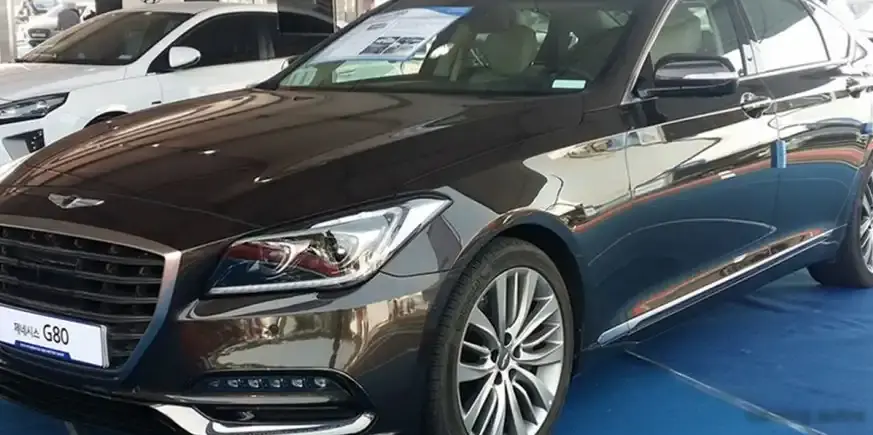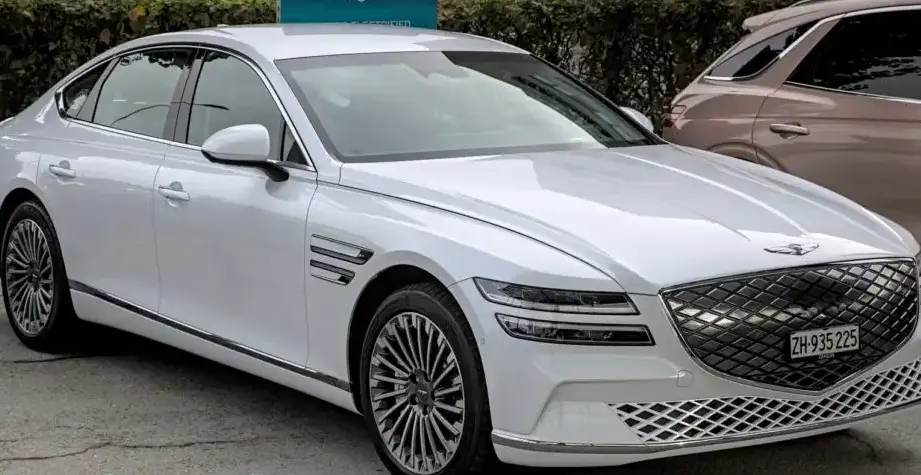
The Genesis G80 II 2.2 e-VGT, produced from April 2020 to 2023, represents an entry point into the second generation of Hyundai’s luxury brand’s mid-size executive sedan. Positioned below the 3.5L gasoline and higher-output diesel variants, this model aimed to deliver a balance of refinement, fuel efficiency, and accessible luxury within the G80 lineup. It was primarily marketed in markets where diesel engines maintain significant popularity, offering a sophisticated alternative to gasoline-powered competitors. The G80 II, built on the M2 platform (a derivative of the Hyundai-Kia modular platform), sought to elevate Genesis’s standing in the global luxury car segment.
Technical Specifications
| Brand | Genesis |
| Model | G80 |
| Generation | G80 II |
| Type (Engine) | 2.2 e-VGT (210 Hp) Automatic |
| Start of production | April, 2020 |
| End of production | 2023 |
| Powertrain Architecture | Internal Combustion engine |
| Body type | Sedan |
| Seats | 5 |
| Doors | 4 |
| Fuel consumption (urban) | 7.9-8 l/100 km (29.8 – 29.4 US mpg) |
| Fuel consumption (extra urban) | 5.5-5.7 l/100 km (42.8 – 41.3 US mpg) |
| Fuel consumption (combined) | 6.8-6.9 l/100 km (34.6 – 34.1 US mpg) |
| CO2 emissions | 130-132 g/km |
| Fuel Type | Diesel |
| Weight-to-power ratio | 8.7 kg/Hp, 115.1 Hp/tonne |
| Weight-to-torque ratio | 4.1 kg/Nm, 241.6 Nm/tonne |
| Power | 210 Hp @ 3800 rpm |
| Power per litre | 97.6 Hp/l |
| Torque | 441 Nm @ 1750-2750 rpm (325.26 lb.-ft. @ 1750-2750 rpm) |
| Engine layout | Front, Longitudinal |
| Engine Model/Code | Smartstream / D4HF |
| Engine displacement | 2151 cm3 (131.26 cu. in.) |
| Number of cylinders | 4 |
| Engine configuration | Inline |
| Fuel injection system | Diesel Commonrail |
| Engine oil capacity | 5.6 l (5.92 US qt | 4.93 UK qt) |
| Coolant capacity | 10.2 l (10.78 US qt | 8.97 UK qt) |
| Kerb Weight | 1825-1840 kg (4023.44 – 4056.51 lbs.) |
| Fuel tank capacity | 65 l (17.17 US gal | 14.3 UK gal) |
| Length | 4995 mm (196.65 in.) |
| Width | 1925 mm (75.79 in.) |
| Height | 1465 mm (57.68 in.) |
| Wheelbase | 3010 mm (118.5 in.) |
| Front track | 1627-1630 mm (64.06 – 64.17 in.) |
| Rear track | 1637-1659 mm (64.45 – 65.31 in.) |
| Front overhang | 845 mm (33.27 in.) |
| Rear overhang | 1140 mm (44.88 in.) |
| Drivetrain | Rear wheel drive |
| Number of gears | 8 |
| Gearbox type | Automatic transmission |
| Front brakes | Ventilated discs |
| Rear brakes | Ventilated discs |
| Front tires | 245/50 R18; 245/45 R19 |
| Rear tires | 245/50 R18; 275/40 R19 |
Powertrain & Engine Architecture
The G80 II 2.2 e-VGT utilizes the Smartstream D4HF engine, a 2.2-liter inline-four cylinder diesel. This engine is characterized by its aluminum cylinder head and block, contributing to weight reduction. The ‘e-VGT’ designation refers to the electronically controlled Variable Geometry Turbocharger (VGT), which optimizes boost pressure across the engine’s operating range for improved responsiveness and efficiency. Fuel is delivered via a common-rail direct injection system, operating at extremely high pressures to ensure fine atomization and complete combustion. The engine employs a 16-valve DOHC (Double Overhead Camshaft) valvetrain. The eight-speed automatic transmission, developed in-house by Hyundai-Kia, is designed for smooth and efficient gear changes. It features a torque converter and electronically controlled shift points, tailored to the engine’s characteristics.
Driving Characteristics
The 210 horsepower and 325 lb-ft of torque produced by the 2.2L diesel engine provide adequate, though not exhilarating, performance for the G80 II. Acceleration is linear and predictable, with the peak torque available from a low 1750 rpm, making it well-suited for everyday driving and highway cruising. Compared to the more powerful 3.5L gasoline engine, the 2.2L diesel offers less outright speed, but its broader torque curve makes it feel more effortless in certain situations. The eight-speed automatic transmission generally shifts smoothly, but can occasionally exhibit some hesitation during quick downshifts. The rear-wheel-drive configuration contributes to a balanced feel, although it lacks the all-weather capability of all-wheel-drive models.
Equipment & Trim Levels
The 2.2 e-VGT trim typically came standard with a generous array of features, reflecting Genesis’s commitment to luxury. Standard equipment included leather upholstery, power-adjustable front seats with heating and ventilation, a large infotainment touchscreen with navigation, a premium sound system, and a suite of advanced driver-assistance systems (ADAS) such as adaptive cruise control, lane-keeping assist, and automatic emergency braking. Optional extras included a panoramic sunroof, Nappa leather upholstery, a head-up display, and a rear-seat entertainment system. Interior trim options varied, offering a range of wood and metal accents.
Chassis & Braking
The G80 II features a multi-link suspension system at all four corners, designed to provide a comfortable ride and precise handling. The suspension is tuned to prioritize comfort over outright sportiness, absorbing bumps and imperfections in the road surface effectively. The 2.2 e-VGT models typically featured ventilated disc brakes on all four wheels, providing ample stopping power. Anti-lock braking system (ABS) and electronic stability control (ESC) were standard safety features. Steering is via a rack-and-pinion system, offering a reasonable level of feedback and responsiveness.
Market Reception & Comparison
The Genesis G80 II 2.2 e-VGT was generally well-received by automotive critics, who praised its refined interior, comfortable ride, and generous standard features. However, some reviewers noted that the 2.2L diesel engine lacked the punch of its gasoline counterparts. Fuel economy was a strong point, with the diesel engine offering significantly better mileage than the 3.5L gasoline engine. In terms of reliability, the Smartstream engine family has proven to be generally robust, although long-term data is still accumulating. Compared to competitors like the BMW 5 Series and Mercedes-Benz E-Class, the G80 II 2.2 e-VGT offered a compelling value proposition, providing a similar level of luxury and technology at a lower price point.
Legacy
The Genesis G80 II 2.2 e-VGT represents a significant step forward for the Genesis brand, demonstrating its ability to compete with established luxury carmakers. While the model was discontinued after 2023, it remains a popular choice in the used car market, particularly for buyers seeking a comfortable, fuel-efficient, and well-equipped luxury sedan. The Smartstream diesel engine, while not as common as gasoline engines in the US market, has proven to be a reliable and durable powertrain, and well-maintained examples are expected to provide many years of service. The G80 II 2.2 e-VGT helped establish Genesis as a credible alternative in the mid-size luxury segment, paving the way for future models and continued brand growth.