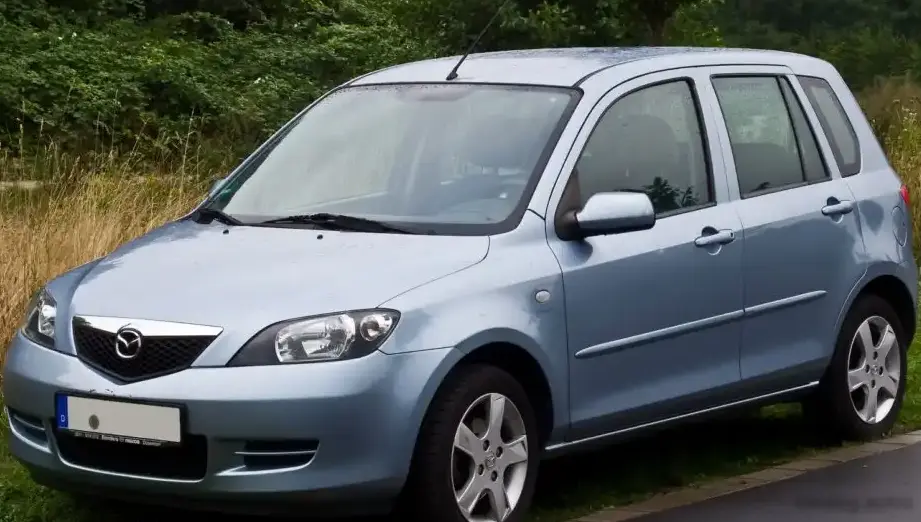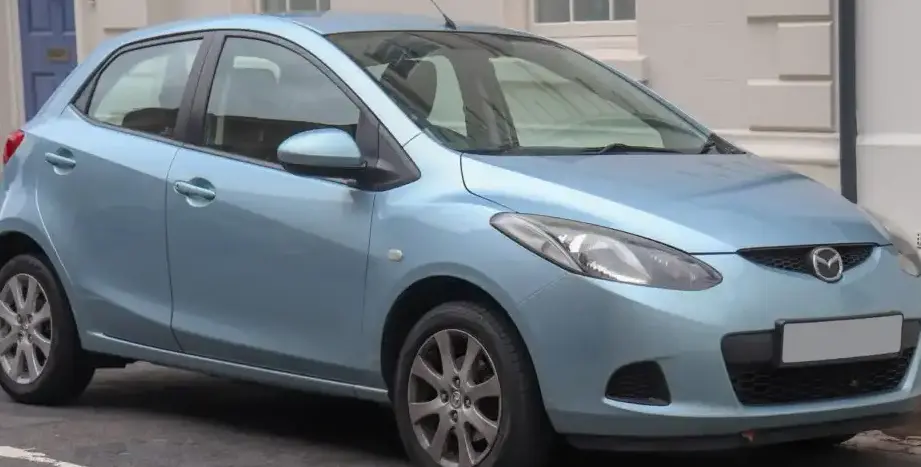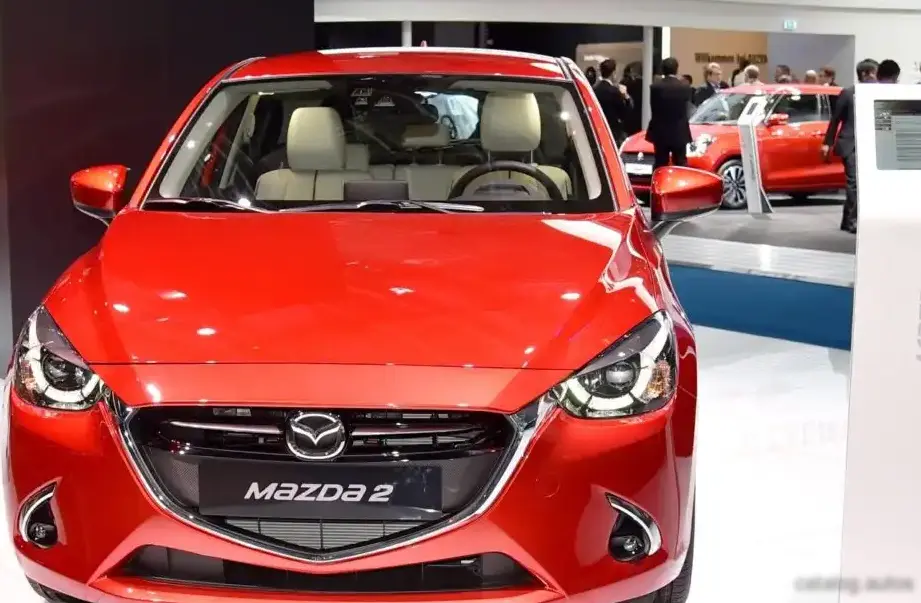
The Mazda 2 III (DJ) 1.5 SkyActiv-G, producing 115 horsepower, was a key variant in Mazda’s third-generation subcompact hatchback lineup, produced from November 2014 through 2019. Positioned as a mainstream offering within the DJ platform, it aimed to balance fuel efficiency with acceptable performance for everyday driving. This generation of the Mazda 2 represented a significant departure from its predecessors, emphasizing a more premium feel and engaging driving dynamics, particularly for a vehicle in its class. The 1.5L SkyActiv-G engine was central to Mazda’s strategy of achieving high fuel economy without sacrificing driving pleasure, and this variant was particularly popular in European and Asian markets.
Technical Specifications
| Brand | Mazda |
| Model | 2 |
| Generation | III (DJ) |
| Type (Engine) | 1.5 SkyActiv-G (115 Hp) |
| Start of production | November, 2014 |
| End of production | 2019 |
| Powertrain Architecture | Internal Combustion engine |
| Body type | Hatchback |
| Seats | 5 |
| Doors | 5 |
| Fuel consumption (urban) | 6.4 l/100 km (36.8 US mpg, 44.1 UK mpg, 15.6 km/l) |
| Fuel consumption (extra urban) | 4.1 l/100 km (57.4 US mpg, 68.9 UK mpg, 24.4 km/l) |
| Fuel consumption (combined) | 4.9 l/100 km (48 US mpg, 57.6 UK mpg, 20.4 km/l) |
| CO2 emissions | 115 g/km |
| Fuel Type | Petrol (Gasoline) |
| Acceleration 0 – 100 km/h | 8.7 sec |
| Acceleration 0 – 62 mph | 8.7 sec |
| Acceleration 0 – 60 mph | 8.3 sec |
| Maximum speed | 200 km/h (124.27 mph) |
| Emission standard | Euro 6 |
| Weight-to-power ratio | 8.5 kg/Hp, 117.9 Hp/tonne |
| Weight-to-torque ratio | 6.6 kg/Nm, 151.8 Nm/tonne |
| Power | 115 Hp @ 6000 rpm |
| Power per litre | 76.9 Hp/l |
| Torque | 148 Nm @ 4000 rpm (109.16 lb.-ft. @ 4000 rpm) |
| Engine layout | Front, Transverse |
| Engine displacement | 1496 cm3 (91.29 cu. in.) |
| Number of cylinders | 4 |
| Engine configuration | Inline |
| Cylinder Bore | 74.5 mm (2.93 in.) |
| Piston Stroke | 85.8 mm (3.38 in.) |
| Compression ratio | 14:1 |
| Number of valves per cylinder | 4 |
| Fuel injection system | Direct injection |
| Engine aspiration | Naturally aspirated engine |
| Valvetrain | DOHC |
| Engine oil capacity | 4.2 l (4.44 US qt | 3.7 UK qt) |
| Coolant | 5.4 l (5.71 US qt | 4.75 UK qt) |
| Kerb Weight | 975 kg (2149.51 lbs.) |
| Max. weight | 1510 kg (3328.98 lbs.) |
| Max load | 535 kg (1179.47 lbs.) |
| Trunk (boot) space – minimum | 280 l (9.89 cu. ft.) |
| Trunk (boot) space – maximum | 950 l (33.55 cu. ft.) |
| Fuel tank capacity | 44 l (11.62 US gal | 9.68 UK gal) |
| Permitted trailer load with brakes (12%) | 1100 kg (2425.08 lbs.) |
| Permitted trailer load without brakes | 515 kg (1135.38 lbs.) |
| Length | 4060 mm (159.84 in.) |
| Width | 1695 mm (66.73 in.) |
| Width including mirrors | 1983 mm (78.07 in.) |
| Height | 1495 mm (58.86 in.) |
| Wheelbase | 2570 mm (101.18 in.) |
| Front track | 1495 mm (58.86 in.) |
| Rear (Back) track | 1485 mm (58.46 in.) |
| Ride height (ground clearance) | 143 mm (5.63 in.) |
| Drag coefficient (Cd) | 0.29 |
| Minimum turning circle (turning diameter) | 9.8 m (32.15 ft.) |
| Drivetrain Architecture | The Internal combustion engine (ICE) drives the front wheels of the vehicle. |
| Drive wheel | Front wheel drive |
| Number of gears and type of gearbox | 6 gears, manual transmission |
| Front brakes | Ventilated discs |
| Rear brakes | Drum |
| Assisting systems | ABS (Anti-lock braking system) |
| Steering type | Steering rack and pinion |
| Power steering | Electric Steering |
| Tires size | 185/60 R16 |
| Wheel rims size | 16 |
Powertrain & Engine Architecture
The heart of this Mazda 2 variant is the 1.5-liter SkyActiv-G inline-four cylinder engine. This engine, designated as PE-VPS, is a key component of Mazda’s SkyActiv technology suite, designed to maximize combustion efficiency. It features a high compression ratio of 14:1, achieved through careful engineering and optimized combustion chamber design. Direct injection is employed to precisely control fuel delivery, further enhancing efficiency and reducing emissions. The engine utilizes a dual overhead camshaft (DOHC) valvetrain with four valves per cylinder, optimizing airflow for improved power output. The 115 hp and 148 Nm (109 lb-ft) of torque are respectable figures for a naturally aspirated engine of this displacement. The engine is transversely mounted at the front of the vehicle, driving the front wheels. The standard transmission for this variant was a six-speed manual, although a six-speed automatic transmission was also available, albeit less common.
Driving Characteristics
The 1.5L SkyActiv-G engine, paired with the six-speed manual transmission, provided a reasonably engaging driving experience. While not overtly powerful, the engine felt responsive and willing to rev. The six-speed gearbox allowed for efficient cruising at highway speeds, while still providing adequate acceleration in urban environments. The automatic transmission, while offering convenience, did slightly diminish the overall driving experience, resulting in a less direct feel and a slight reduction in fuel economy. The car’s relatively light weight (around 975 kg or 2149 lbs) helped to offset the modest power output, making it feel nimble and agile. Compared to higher-output variants, such as those with larger engines, this 1.5L version prioritized fuel efficiency and affordability over outright performance.
Equipment & Trim Levels
The 1.5 SkyActiv-G 115 hp model typically served as a mid-range trim level in many markets. Standard equipment generally included air conditioning, power windows, power door locks, a basic audio system with USB connectivity, and ABS brakes. Higher trim levels added features such as alloy wheels, a touchscreen infotainment system, Bluetooth connectivity, and automatic climate control. Interior upholstery was typically cloth, with options for upgraded materials available on higher trims. Safety features included multiple airbags and stability control. Optional extras often included a sunroof, navigation system, and parking sensors.
Chassis & Braking
The Mazda 2 DJ utilized a front-wheel-drive chassis with a MacPherson strut suspension in the front and a torsion beam suspension in the rear. This setup provided a good balance between ride comfort and handling. The front brakes were ventilated discs, providing adequate stopping power, while the rear brakes were drums, a cost-saving measure common in this segment. Electric power steering offered light and precise steering feel. The relatively compact dimensions and light weight of the vehicle contributed to its agile handling characteristics.
Market Reception & Comparison
The Mazda 2 III (DJ) 1.5 SkyActiv-G was generally well-received by automotive critics. It was praised for its stylish design, engaging driving dynamics, and fuel efficiency. Compared to competitors like the Volkswagen Polo, Ford Fiesta, and Hyundai i20, the Mazda 2 offered a more premium feel and a more enjoyable driving experience. However, some critics noted that the interior space was slightly smaller than some of its rivals. The 1.5L engine offered a good balance between performance and economy, making it a popular choice for buyers who prioritized fuel efficiency and affordability. The automatic transmission variant, while convenient, was often criticized for its slightly sluggish performance compared to the manual version.
Legacy
The 1.5 SkyActiv-G engine proved to be a reliable and durable powertrain. The SkyActiv technology, in general, has earned a reputation for longevity and efficiency. In the used car market, the Mazda 2 DJ 1.5 SkyActiv-G remains a popular choice, particularly for buyers seeking a well-built, fuel-efficient, and enjoyable-to-drive subcompact hatchback. Maintenance costs are generally reasonable, and parts availability is good. The engine’s direct injection system requires regular maintenance to prevent carbon buildup, but overall, it is considered a relatively trouble-free unit.