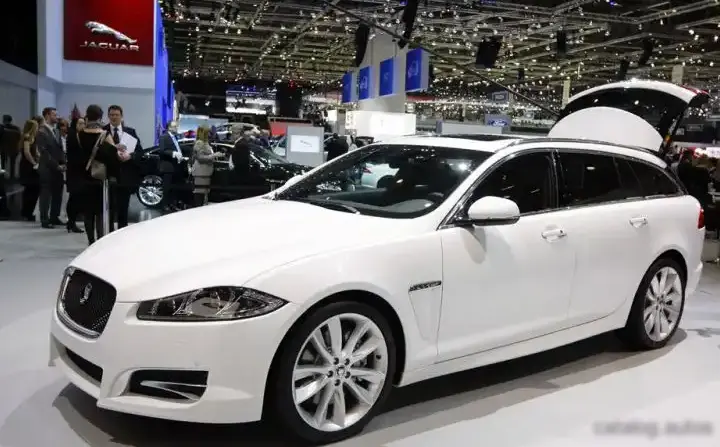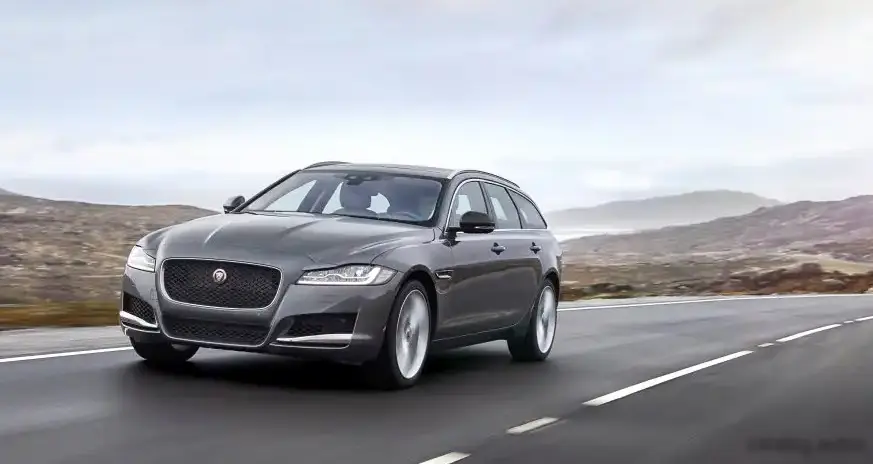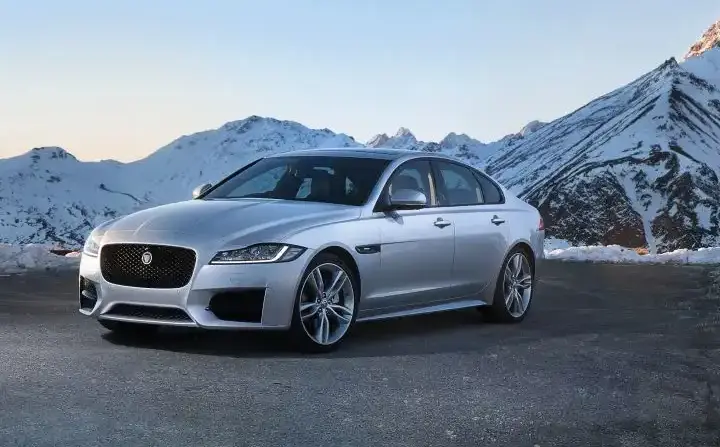
The Jaguar XF (X260) 2.0d, produced from 2015 to 2018, represented a key entry point into the second-generation XF lineup. Positioned as a more fuel-efficient alternative to the higher-powered gasoline variants, this model aimed to broaden the XF’s appeal, particularly in European markets where diesel engines held significant market share. It utilized Jaguar’s new Ingenium engine family and offered a blend of luxury, performance, and economy within the executive sedan segment. This variant was primarily rear-wheel drive, offering a traditional Jaguar driving experience, and was available with both manual and automatic transmissions, though the automatic was the more common configuration in the US market.
Technical Specifications
| Brand | Jaguar |
| Model | XF |
| Generation | XF (X260) |
| Type (Engine) | 2.0d (163 Hp) |
| Start of production | 2015 |
| End of production | 2018 |
| Powertrain Architecture | Internal Combustion engine |
| Body type | Sedan |
| Seats | 5 |
| Doors | 4 |
| Fuel consumption (urban) | 4.8 l/100 km (49 US mpg, 58.9 UK mpg, 20.8 km/l) |
| Fuel consumption (extra urban) | 3.6 l/100 km (65.3 US mpg, 78.5 UK mpg, 27.8 km/l) |
| Fuel consumption (combined) | 4 l/100 km (58.8 US mpg, 70.6 UK mpg, 25 km/l) |
| CO2 emissions | 104 g/km |
| Fuel Type | Diesel |
| Acceleration 0 – 100 km/h | 8.7 sec |
| Acceleration 0 – 62 mph | 8.7 sec |
| Acceleration 0 – 60 mph | 8.3 sec |
| Maximum speed | 229 km/h (142.29 mph) |
| Emission standard | Euro 6 |
| Weight-to-power ratio | 9.5 kg/Hp, 105.5 Hp/tonne |
| Weight-to-torque ratio | 4.1 kg/Nm, 246 Nm/tonne |
| Power | 163 Hp @ 4000 rpm |
| Power per litre | 81.5 Hp/l |
| Torque | 380 Nm @ 1750-2500 rpm (280.27 lb.-ft. @ 1750-2500 rpm) |
| Engine layout | Front, Longitudinal |
| Engine Model/Code | Ingenium / 204DTD |
| Engine displacement | 1999 cm3 (121.99 cu. in.) |
| Number of cylinders | 4 |
| Engine configuration | Inline |
| Cylinder Bore | 83 mm (3.27 in.) |
| Piston Stroke | 92.35 mm (3.64 in.) |
| Compression ratio | 15.5:1 |
| Number of valves per cylinder | 4 |
| Fuel injection system | Diesel Commonrail |
| Engine aspiration | Turbocharger, Intercooler |
| Engine oil capacity | 6.5 l (6.87 US qt | 5.72 UK qt) |
| Kerb Weight | 1545 kg (3406.14 lbs.) |
| Max. weight | 2190 kg (4828.12 lbs.) |
| Max load | 645 kg (1421.98 lbs.) |
| Trunk (boot) space – minimum | 505 l (17.83 cu. ft.) |
| Fuel tank capacity | 55 l (14.53 US gal | 12.1 UK gal) |
| Length | 4954 mm (195.04 in.) |
| Width | 1987 mm (78.23 in.) |
| Width including mirrors | 2091 mm (82.32 in.) |
| Height | 1457 mm (57.36 in.) |
| Wheelbase | 2960 mm (116.54 in.) |
| Front track | 1605 mm (63.19 in.) |
| Rear (Back) track | 1594 mm (62.76 in.) |
| Ride height (ground clearance) | 116 mm (4.57 in.) |
| Minimum turning circle | 11.61 m (38.09 ft.) |
| Drivetrain Architecture | Rear wheel drive |
| Number of gears | 6 |
| Type of gearbox | Automatic |
| Front brakes | Ventilated discs |
| Rear brakes | Ventilated discs |
Powertrain & Engine Architecture
The heart of the XF 2.0d is Jaguar’s Ingenium engine family, specifically the 204DTD code. This 2.0-liter inline-four diesel engine represents a significant departure from Jaguar’s previous reliance on Ford-sourced engines. The Ingenium engines were designed to be modular and highly efficient, with a focus on reducing friction and weight. The 204DTD features a cast aluminum block, a low-pressure exhaust gas recirculation (EGR) system, and a two-stage turbocharger. Fuel is delivered via a high-pressure common rail direct injection system, capable of multiple injections per combustion cycle for optimized efficiency and reduced emissions. The engine produces 380 Nm (280 lb-ft) of torque between 1750 and 2500 rpm, providing a broad powerband. The most common transmission pairing was an 8-speed automatic gearbox, known for its smooth shifts and responsiveness. A 6-speed manual transmission was also available, but less frequently selected.
Driving Characteristics
The 2.0d automatic XF delivers a comfortable and refined driving experience. While not overtly sporty, the engine provides adequate power for everyday driving and highway cruising. Acceleration from 0-60 mph takes around 8.3 seconds, which is respectable for a luxury sedan of this size. The automatic transmission is well-tuned, offering seamless gear changes and contributing to a relaxed driving style. Compared to the more powerful 3.0-liter V6 models, the 2.0d feels less urgent in its acceleration, but it compensates with significantly improved fuel economy. The rear-wheel-drive configuration provides a balanced feel, although it lacks the all-weather capability of all-wheel-drive variants. The gear ratios are optimized for fuel efficiency, with taller gearing in higher gears to reduce engine speed at cruising speeds.
Equipment & Trim Levels
The XF 2.0d typically came equipped with a generous level of standard features. These included leather upholstery, dual-zone climate control, an 8-inch touchscreen infotainment system, and a suite of safety features such as emergency brake assist and lane departure warning. Higher trim levels, such as the Portfolio, added features like premium leather, heated seats, a panoramic sunroof, and upgraded audio systems. Optional extras included adaptive cruise control, a head-up display, and various cosmetic enhancements. The interior design was characterized by a minimalist aesthetic, with a focus on high-quality materials and craftsmanship.
Chassis & Braking
The XF (X260) utilizes an aluminum-intensive chassis, contributing to its relatively low weight. The suspension consists of double wishbones at the front and a multi-link setup at the rear, providing a comfortable ride and good handling characteristics. The 2.0d models typically featured ventilated disc brakes on all four wheels, providing ample stopping power. Anti-lock Braking System (ABS) and Electronic Stability Control (ESC) were standard safety features. The suspension tuning was generally geared towards comfort, but it still offered a reasonably engaging driving experience. Stabilizer bars were fitted front and rear to reduce body roll during cornering.
Market Reception & Comparison
The XF 2.0d was generally well-received by automotive critics, who praised its fuel efficiency, comfortable ride, and refined interior. However, some reviewers noted that the engine lacked the outright performance of the higher-powered variants. Compared to rivals such as the BMW 520d and Audi A6 2.0 TDI, the XF 2.0d offered a competitive package in terms of price, features, and fuel economy. The Ingenium engine proved to be relatively reliable, although some early models experienced minor software glitches. Fuel economy figures of around 58.8 US mpg combined were a significant selling point for this variant.
Legacy
The Jaguar XF 2.0d (X260) represents an important step in Jaguar’s development as a modern luxury brand. The Ingenium engine family proved to be a successful platform, and it has been used in a wide range of Jaguar Land Rover vehicles. In the used car market, the XF 2.0d offers a compelling value proposition, providing a luxurious and well-equipped sedan at a relatively affordable price. While the engine may not be the most powerful in the lineup, its fuel efficiency and reliability make it a practical choice for those seeking a comfortable and refined driving experience. Proper maintenance, including regular oil changes and adherence to Jaguar’s recommended service intervals, is crucial for ensuring the long-term reliability of this powertrain.