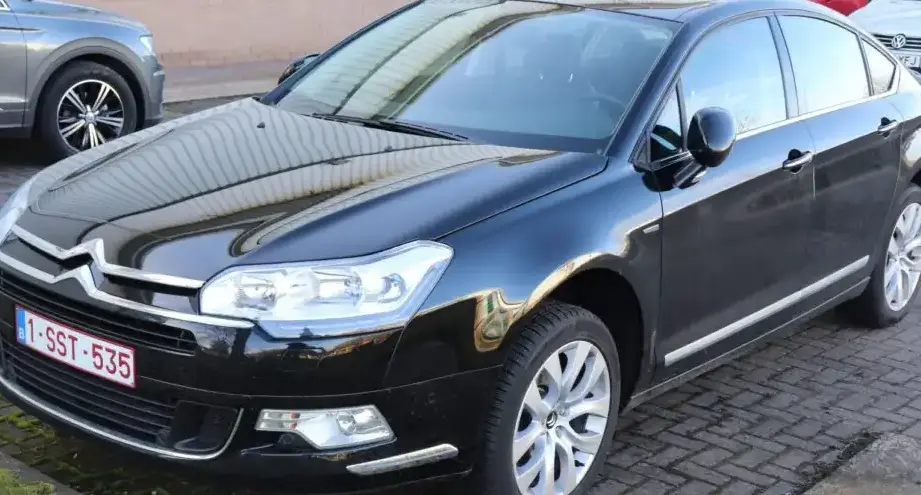
The Citroën C5 II (Phase II), specifically the 2.0 HDi 140 horsepower variant produced between 2012 and 2015, represents a refinement of the second-generation C5 large family car. Positioned as a mid-range offering within the C5 lineup, this model aimed to balance fuel efficiency, comfortable ride quality, and practicality for European buyers. It built upon the foundation of the C5 II platform (internally designated as X7), which debuted in 2007, incorporating updates to styling, technology, and engine options during the Phase II refresh. This version primarily served the European market, where large sedans and wagons were still popular choices for families and long-distance travelers.
Technical Specifications
| Brand | Citroen |
| Model | C5 |
| Generation | C5 II (Phase II, 2012) |
| Type (Engine) | 2.0 HDi (140 Hp) |
| Start of production | 2012 |
| End of production | 2015 |
| Powertrain Architecture | Internal Combustion engine |
| Body type | Sedan |
| Seats | 5 |
| Doors | 4 |
| Fuel consumption (urban) | 7.4 l/100 km (31.8 US mpg) |
| Fuel consumption (extra urban) | 4.7 l/100 km (50 US mpg) |
| Fuel consumption (combined) | 5.7 l/100 km (41.3 US mpg) |
| CO2 emissions | 149 g/km |
| Fuel Type | Diesel |
| Acceleration 0 – 100 km/h | 10.6 sec |
| Acceleration 0 – 62 mph | 10.6 sec |
| Acceleration 0 – 60 mph | 10.1 sec |
| Maximum speed | 205 km/h (127.38 mph) |
| Emission standard | Euro 5 |
| Weight-to-power ratio | 11.5 kg/Hp |
| Weight-to-torque ratio | 5 kg/Nm |
| Power | 140 Hp @ 4000 rpm |
| Torque | 320 Nm @ 2000 rpm (236.02 lb.-ft. @ 2000 rpm) |
| Engine layout | Front, Transverse |
| Engine Model/Code | RHF DW10BTED4 |
| Engine displacement | 1997 cm3 (121.86 cu. in.) |
| Number of cylinders | 4 |
| Engine configuration | Inline |
| Cylinder Bore | 85 mm (3.35 in.) |
| Piston Stroke | 88 mm (3.46 in.) |
| Compression ratio | 17.6:1 |
| Number of valves per cylinder | 4 |
| Fuel injection system | Diesel Commonrail |
| Engine aspiration | Turbocharger, Intercooler |
| Valvetrain | DOHC |
| Engine oil capacity | 5.25 l (5.55 US qt | 4.62 UK qt) |
| Kerb Weight | 1608 kg (3545.03 lbs.) |
| Max. weight | 2155 kg (4750.96 lbs.) |
| Max load | 547 kg (1205.93 lbs.) |
| Trunk (boot) space – minimum | 439 l (15.5 cu. ft.) |
| Fuel tank capacity | 71 l (18.76 US gal | 15.62 UK gal) |
| Max. roof load | 80 kg (176.37 lbs.) |
| Permitted trailer load with brakes (12%) | 1600 kg (3527.4 lbs.) |
| Permitted trailer load without brakes | 750 kg (1653.47 lbs.) |
| Length | 4779 mm (188.15 in.) |
| Width | 1860 mm (73.23 in.) |
| Width including mirrors | 2096 mm (82.52 in.) |
| Height | 1451-1458 mm (57.13 – 57.4 in.) |
| Wheelbase | 2815 mm (110.83 in.) |
| Front track | 1586 mm (62.44 in.) |
| Rear (Back) track | 1557 mm (61.3 in.) |
| Front overhang | 1054 mm (41.5 in.) |
| Rear overhang | 910 mm (35.83 in.) |
| Minimum turning circle | 11.7 m (38.39 ft.) |
| Drivetrain Architecture | Front wheel drive |
| Drive wheel | Front wheel drive |
| Number of gears and type of gearbox | 6 gears, manual transmission |
| Front suspension | Independent multi-link suspension |
| Rear suspension | Independent multi-link suspension |
| Front brakes | Ventilated discs |
| Rear brakes | Disc |
| Assisting systems | ABS (Anti-lock braking system) |
| Steering type | Steering rack and pinion |
| Power steering | Electric Steering |
| Tires size | 225/55 R17 |
| Wheel rims size | 17 |
Powertrain & Engine Architecture
The heart of this C5 variant is the DW10BTED4 engine, a 2.0-liter four-cylinder diesel engine. This engine, commonly found in PSA Group (Peugeot, Citroën) vehicles, utilizes a common rail direct injection system, delivering fuel at extremely high pressure for optimized combustion. The RHF engine code denotes a specific calibration of this engine, tuned for 140 horsepower at 4000 rpm and 320 Nm (236 lb-ft) of torque at 2000 rpm. A turbocharger with an intercooler is employed to boost power and efficiency. The engine features a double overhead camshaft (DOHC) valvetrain with four valves per cylinder, contributing to its relatively high specific output. The 6-speed manual transmission was the standard offering, providing a balance between fuel economy and driver control. While an automatic transmission was available on some C5 II models, it wasn’t commonly paired with this specific engine and power output.
Driving Characteristics
The 2.0 HDi 140 hp C5 offered a comfortable and relaxed driving experience. Acceleration was adequate for everyday driving and highway cruising, with the 0-60 mph sprint taking around 10.1 seconds. The engine’s torque peak at 2000 rpm meant that strong pulling power was readily available for overtaking maneuvers. Compared to the more powerful 2.2 HDi variants, this engine prioritized fuel economy over outright performance. The 6-speed manual transmission allowed drivers to keep the engine in its optimal power band, while the long gear ratios contributed to reduced engine noise and improved fuel efficiency on the open road. The C5’s renowned hydropneumatic suspension (depending on the specific trim level) further enhanced ride comfort, absorbing bumps and imperfections in the road surface with ease.
Equipment & Trim Levels
The 2.0 HDi 140 hp engine was typically offered in mid-range trim levels, such as the Exclusive or Dynamique. Standard equipment generally included air conditioning, power windows, central locking, a CD stereo system, and alloy wheels. Higher trim levels added features like leather upholstery, a sunroof, parking sensors, and a more advanced infotainment system. The interior design was functional and well-built, with a focus on ergonomics and comfort. The C5 II offered a spacious cabin and a generous 439-liter (15.5 cu ft) trunk, making it a practical choice for families.
Chassis & Braking
The C5 II featured an independent multi-link suspension system at both the front and rear, providing a comfortable and controlled ride. Depending on the specific model year and trim level, the C5 could be equipped with Citroën’s innovative Hydractive III+ suspension, which used electronically controlled hydraulic spheres to adjust the damping characteristics in real-time. Braking duties were handled by ventilated discs at the front and solid discs at the rear, with ABS (Anti-lock Braking System) as standard. The steering was a power-assisted rack and pinion system, offering precise and responsive handling.
Market Reception & Comparison
The Citroën C5 II 2.0 HDi 140 hp was generally well-received by automotive critics for its comfortable ride, fuel efficiency, and spacious interior. It was seen as a strong competitor to other mid-size family cars, such as the Ford Mondeo, Volkswagen Passat, and Peugeot 508. Compared to the higher-powered C5 variants, this model offered a more affordable entry point into the C5 range, while still providing a good level of equipment and refinement. Fuel economy was a key selling point, with the 2.0 HDi engine achieving up to 50 US mpg on the extra-urban cycle. Reliability was generally good, although some owners reported issues with the diesel particulate filter (DPF) and the electronic parking brake.
Legacy
The Citroën C5 II 2.0 HDi 140 hp remains a popular choice in the used car market, particularly for buyers seeking a comfortable and fuel-efficient long-distance cruiser. The DW10BTED4 engine is known for its durability and relatively low maintenance costs, although regular servicing is essential to ensure its longevity. While the C5 II has been superseded by newer models, it continues to be appreciated for its unique blend of French style, comfort, and practicality. The hydropneumatic suspension, when fitted, is a particularly sought-after feature among enthusiasts, offering a ride quality that is rarely matched by conventional suspension systems.