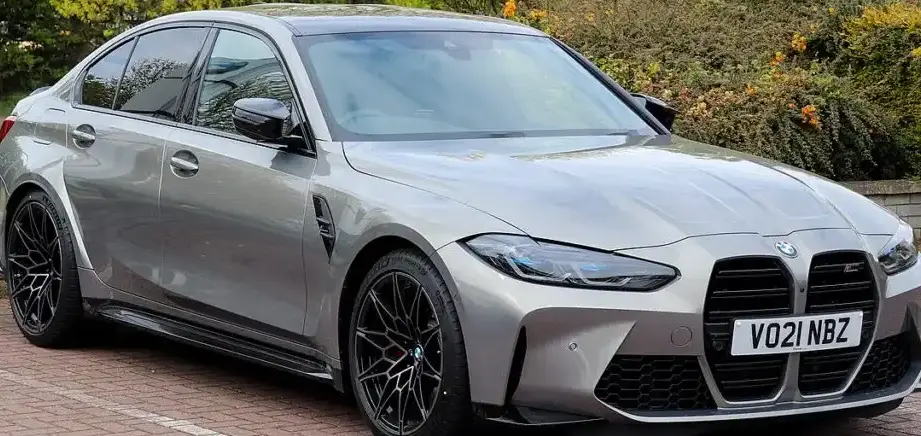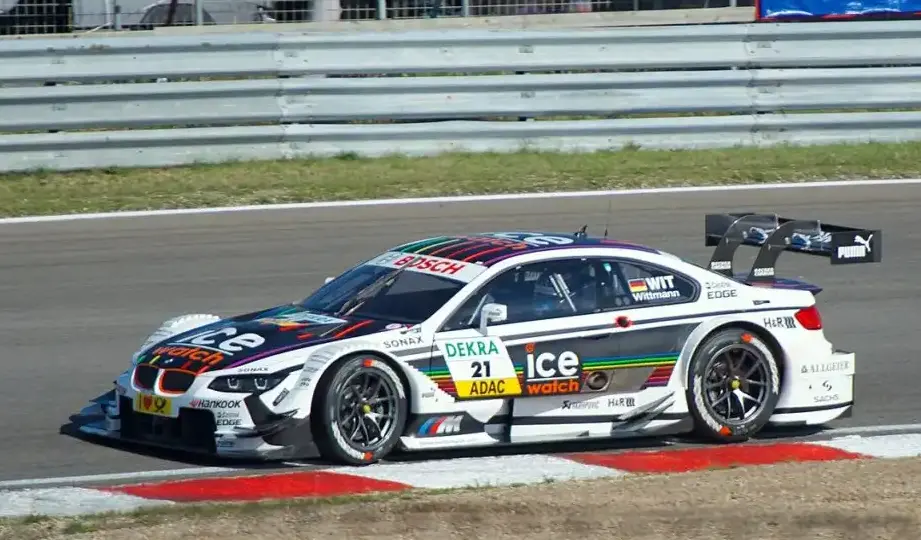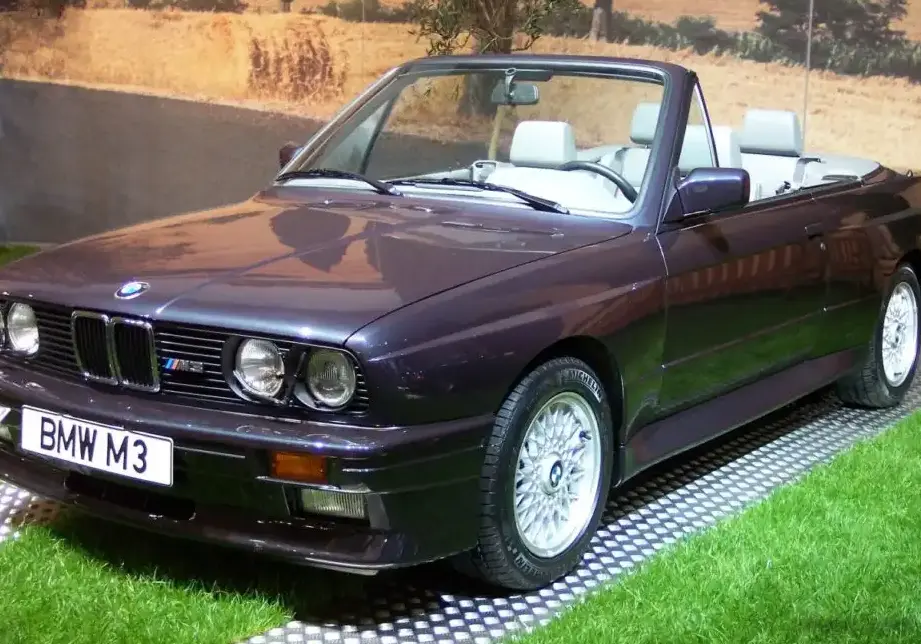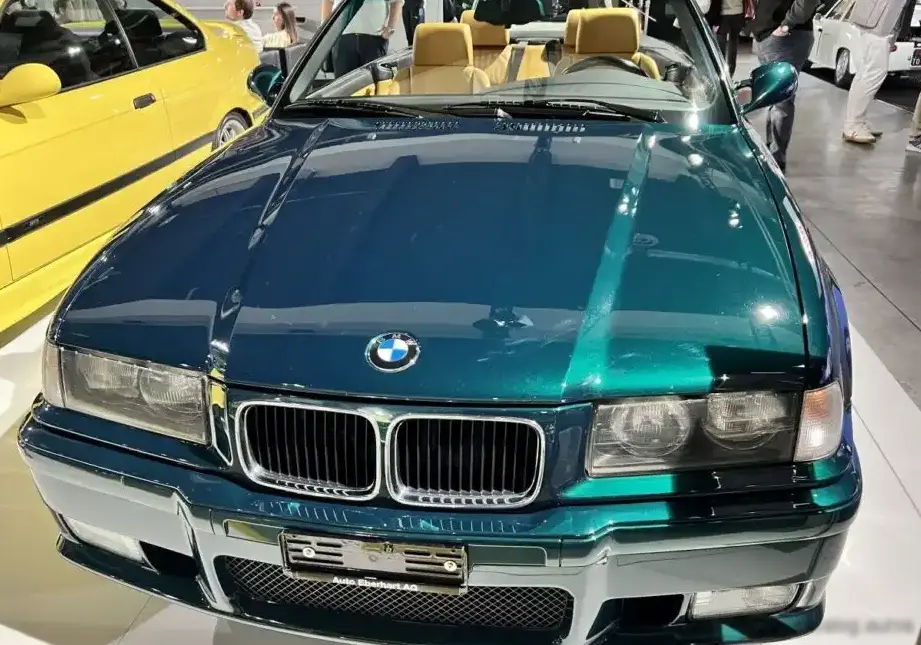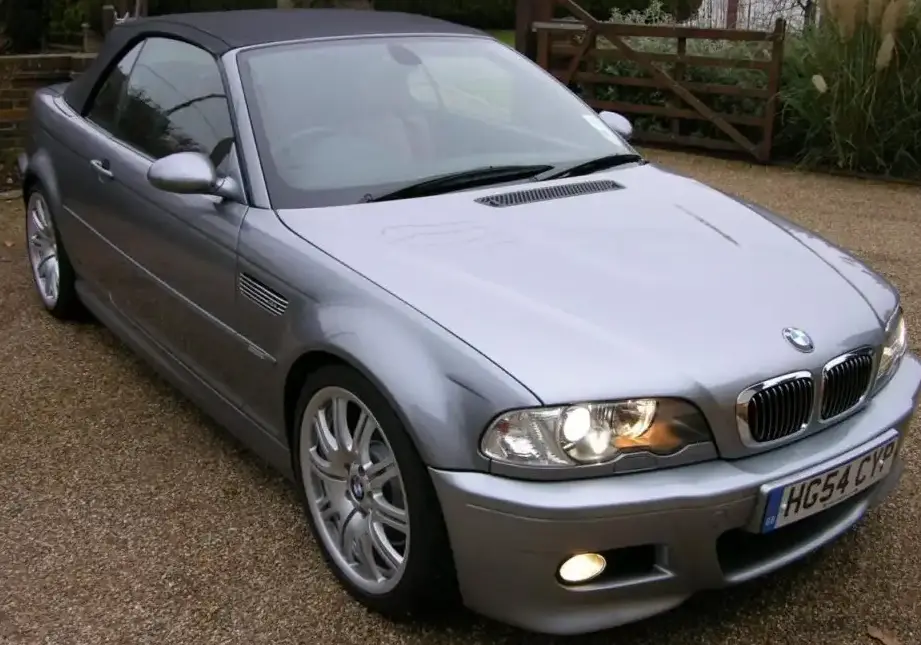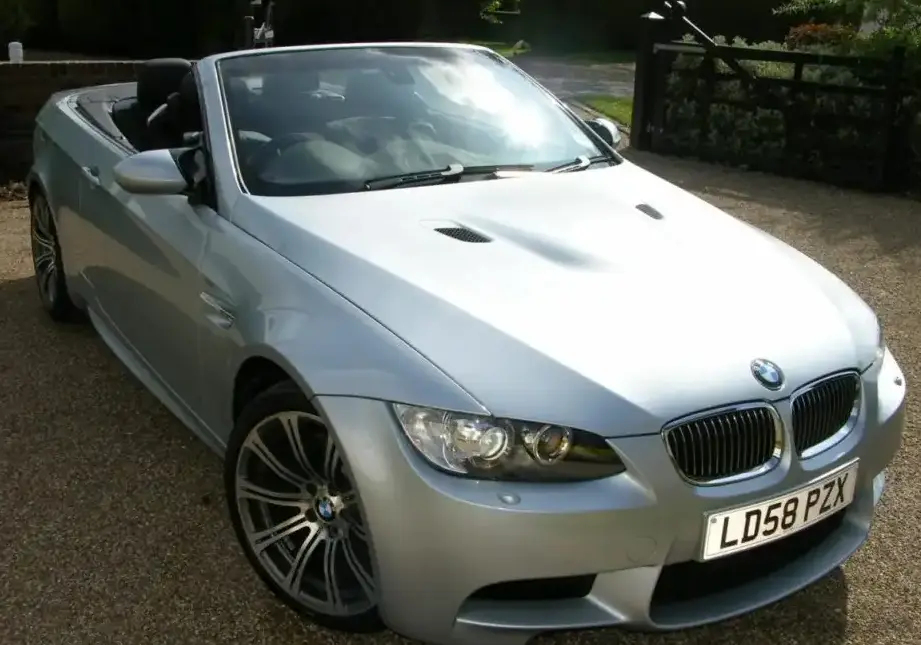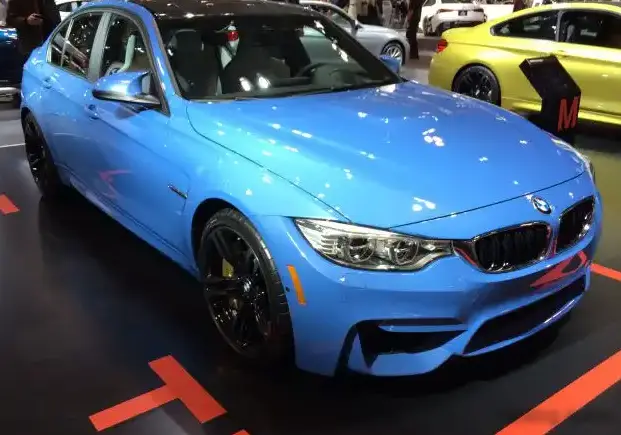
The BMW M3 Competition (F80) 3.0, produced from 2016 to 2020, represents a significant evolution of the iconic M3 lineage. Positioned as the higher-performance variant within the F80 generation, it offered a substantial power increase over the standard M3 and served as a direct competitor to the likes of the Mercedes-AMG C63 and Audi RS3. Built on the F80 platform, a revised version of the F30 3 Series, the Competition model aimed to deliver a more focused and track-capable driving experience while retaining the practicality of a four-door sedan. This variant was a key offering in the North American market, where high-performance sedans are particularly popular.
Technical Specifications
| Brand | BMW |
| Model | M3 |
| Generation | M3 (F80) |
| Type | Competition 3.0 (450 Hp) DCT |
| Start of production | 2016 |
| End of production | 2020 |
| Powertrain Architecture | Internal Combustion engine |
| Body type | Sedan |
| Seats | 5 |
| Doors | 4 |
| Fuel consumption (urban) | 11.1 l/100 km (21.2 US mpg) |
| Fuel consumption (extra urban) | 6.7 l/100 km (35.1 US mpg) |
| Fuel consumption (combined) | 8.3 l/100 km (28.3 US mpg) |
| CO2 emissions | 194 g/km |
| Fuel Type | Petrol (Gasoline) |
| Acceleration 0 – 100 km/h | 4 sec |
| Acceleration 0 – 62 mph | 4 sec |
| Acceleration 0 – 60 mph | 3.8 sec |
| Maximum speed | 250 km/h (155.34 mph) |
| Emission standard | Euro 6 |
| Weight-to-power ratio | 3.5 kg/Hp |
| Weight-to-torque ratio | 2.8 kg/Nm |
| Power | 450 Hp @ 7000 rpm |
| Power per litre | 151.1 Hp/l |
| Torque | 550 Nm @ 1850-5500 rpm (405.66 lb.-ft. @ 1850-5500 rpm) |
| Engine layout | Front, Longitudinal |
| Engine Model/Code | S55B30A |
| Engine displacement | 2979 cm3 (181.79 cu. in.) |
| Number of cylinders | 6 |
| Engine configuration | Inline |
| Cylinder Bore | 84 mm (3.31 in.) |
| Piston Stroke | 89.6 mm (3.53 in.) |
| Compression ratio | 10.2:1 |
| Number of valves per cylinder | 4 |
| Fuel injection system | Direct injection |
| Engine aspiration | Twin-power turbo, Intercooler |
| Engine oil capacity | 6.5 l (6.87 US qt | 5.72 UK qt) |
| Coolant | 13.9 l (14.69 US qt | 12.23 UK qt) |
| Kerb Weight | 1560 kg (3439.21 lbs.) |
| Max. weight | 2100 kg (4629.71 lbs.) |
| Max load | 540 kg (1190.5 lbs.) |
| Trunk (boot) space (minimum) | 480 l (16.95 cu. ft.) |
| Fuel tank capacity | 60 l (15.85 US gal | 13.2 UK gal) |
| Max. roof load | 75 kg (165.35 lbs.) |
| Length | 4671 mm (183.9 in.) |
| Width | 1877 mm (73.9 in.) |
| Width including mirrors | 2037 mm (80.2 in.) |
| Height | 1431 mm (56.34 in.) |
| Wheelbase | 2812 mm (110.71 in.) |
| Front track | 1579 mm (62.17 in.) |
| Rear (Back) track | 1604 mm (63.15 in.) |
| Front overhang | 811 mm (31.93 in.) |
| Rear overhang | 1048 mm (41.26 in.) |
| Ride height (ground clearance) | 120 mm (4.72 in.) |
| Drag coefficient (Cd) | 0.34 |
| Minimum turning circle | 12.2 m (40.03 ft.) |
| Drivetrain Architecture | Rear wheel drive |
| Number of gears and type of gearbox | 7 gears, automatic transmission DCT |
| Front suspension | Independent coil spring |
| Rear suspension | Independent multi-link suspension |
| Front brakes | Ventilated discs |
| Rear brakes | Ventilated discs |
| Assisting systems | ABS (Anti-lock braking system) |
| Steering type | Steering rack and pinion |
| Power steering | Electric Steering |
| Tires size | 265/30 ZR20 94Y; 285/30 ZR20 99Y |
| Wheel rims size | 9.0J x 20; 10.0J x 20 |
Powertrain & Engine Architecture
The heart of the M3 Competition is the S55B30A 3.0-liter inline-six engine. This engine is a heavily modified version of the N55 engine found in other BMW models. Key upgrades included a closed-deck engine block for increased strength, forged crankshaft, and reinforced connecting rods. The S55 utilizes direct injection and is equipped with twin-scroll turbochargers, one for each bank of three cylinders, providing exceptional responsiveness and minimizing turbo lag. The engine produces 450 horsepower at 7,000 rpm and 405 lb-ft of torque between 1,850 and 5,500 rpm. The Competition model’s engine output was a 30 hp increase over the standard F80 M3. Paired with the engine is a 7-speed M Double Clutch Transmission (DCT) with Drivelogic. This dual-clutch transmission offers incredibly fast and precise gear changes, contributing to the car’s impressive acceleration.
Driving Characteristics
The M3 Competition with the DCT transmission delivers a distinctly engaging driving experience. The DCT provides near-instantaneous shifts, particularly in Sport+ mode, allowing for rapid acceleration. While the standard M3 offered a more raw and connected feel with its manual transmission, the Competition’s DCT prioritizes performance and ease of use. The increased power output is readily apparent, providing stronger acceleration throughout the rev range. The car feels planted and stable, even when pushed hard, thanks to its sophisticated suspension and rear-wheel-drive layout. The DCT’s programming allows for both smooth, comfortable cruising and aggressive, track-focused driving. The gear ratios are optimized for both acceleration and high-speed stability.
Equipment & Trim Levels
The M3 Competition came standard with a comprehensive list of features, including leather upholstery, power-adjustable heated front seats, a premium sound system, and a navigation system. Carbon fiber interior trim was standard, emphasizing the car’s performance focus. Optional extras included a head-up display, adaptive M suspension, and a variety of exterior carbon fiber enhancements. The Competition package also included M Sport brakes with larger rotors and calipers for improved stopping power. Interior color options were plentiful, allowing buyers to personalize their vehicles.
Chassis & Braking
The F80 M3 utilizes a lightweight chassis construction, incorporating aluminum components in the front axle, suspension, and body structure. The suspension features independent coil springs in the front and an independent multi-link setup in the rear. The Competition model benefited from a slightly stiffer suspension tuning compared to the standard M3, further enhancing handling precision. Braking duties are handled by ventilated discs at all four corners. As mentioned, the optional M Sport brakes offered even greater stopping power. The electronic power steering system provides precise and responsive steering feel.
Market Reception & Comparison
The M3 Competition was widely praised by automotive journalists for its exceptional performance and refined driving experience. Critics noted the significant improvement in power and responsiveness compared to the standard M3. While some purists lamented the loss of the manual transmission option, the DCT was generally regarded as a highly capable and engaging alternative. Compared to the Mercedes-AMG C63, the M3 Competition offered a more balanced and precise driving experience, while the C63 prioritized raw power and a more visceral feel. Fuel economy, while not a primary concern for buyers in this segment, was respectable for a high-performance vehicle, averaging around 28.3 US mpg in combined driving.
Legacy
The F80 M3 Competition has established itself as a highly desirable and collectible vehicle. The S55 engine, while known for its performance, has demonstrated generally good reliability, although preventative maintenance, particularly regarding oil changes and cooling system upkeep, is crucial. The DCT transmission has also proven to be durable, but requires periodic servicing. On the used car market, well-maintained examples of the M3 Competition command a premium price, reflecting their performance capabilities and iconic status. The F80 generation, and particularly the Competition variant, represents a high point in BMW M car development, blending performance, luxury, and everyday usability in a compelling package.