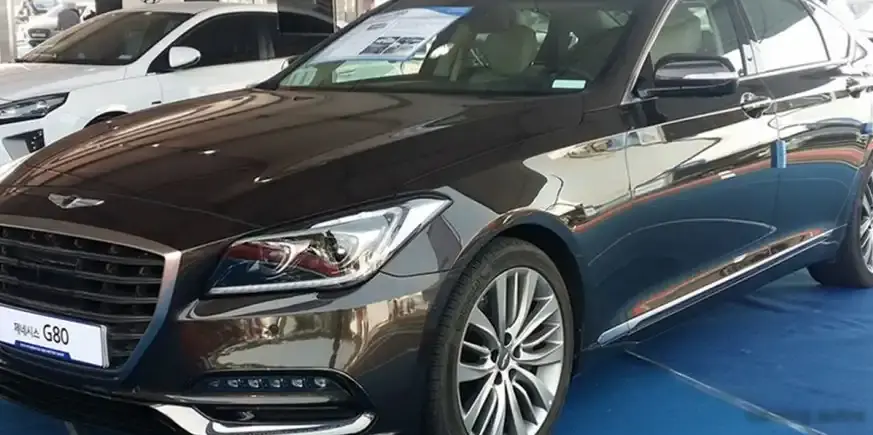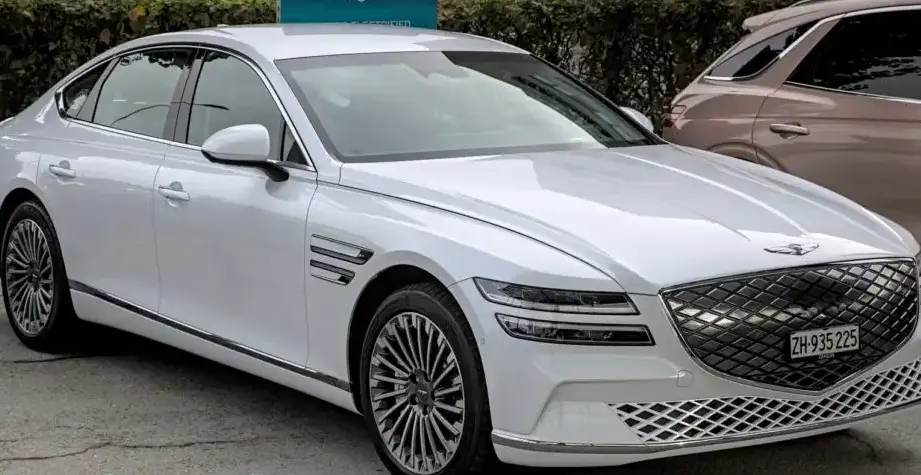
The Genesis G80 II 2.5 T-GDi AWD Automatic, produced from April 2020 through 2024, represents the entry point into the second generation of Genesis’s mid-size luxury sedan. Positioned below the 3.5 T-GDi model, this variant aimed to deliver a compelling blend of performance, luxury, and technology at a more accessible price point. It’s built on the M platform, shared with the Hyundai G90 and Kia Stinger, and serves as a key competitor to established European and Japanese luxury sedans in the North American market. This model marked a significant step forward for Genesis, establishing the brand as a serious contender in the luxury automotive segment.
Technical Specifications
| Brand | Genesis |
| Model | G80 |
| Generation | G80 II |
| Type (Engine) | 2.5 T-GDi (304 Hp) AWD Automatic |
| Start of production | April, 2020 |
| End of production | 2024 |
| Powertrain Architecture | Internal Combustion engine |
| Body type | Sedan |
| Seats | 5 |
| Doors | 4 |
| Fuel consumption at Low speed (WLTP) | 14.1-14.3 l/100 km (16.7 – 16.4 US mpg) |
| Fuel consumption at Medium speed (WLTP) | 9-9.3 l/100 km (26.1 – 25.3 US mpg) |
| Fuel consumption at high speed (WLTP) | 7.6-7.9 l/100 km (30.9 – 29.8 US mpg) |
| Fuel consumption at very high speed (WLTP) | 8.4-8.6 l/100 km (28 – 27.4 US mpg) |
| Combined fuel consumption (WLTP) | 9.1-9.3 l/100 km (25.8 – 25.3 US mpg) |
| CO2 emissions (WLTP) | 205-210 g/km |
| Fuel consumption (economy) – urban | 11.2-11.5 l/100 km (21 – 20.5 US mpg) |
| Fuel consumption (economy) – extra urban | 8.2-8.6 l/100 km (28.7 – 27.4 US mpg) |
| Fuel consumption (economy) – combined | 9.9-10.2 l/100 km (23.8 – 23.1 US mpg) |
| CO2 emissions | 167-174 g/km |
| Fuel Type | Petrol (Gasoline) |
| Acceleration 0 – 100 km/h | 6.3 sec |
| Acceleration 0 – 62 mph | 6.3 sec |
| Acceleration 0 – 60 mph | 6 sec |
| Maximum speed | 250 km/h (155.34 mph) |
| Weight-to-power ratio | 6.1 kg/Hp, 163.9 Hp/tonne |
| Weight-to-torque ratio | 4.4 kg/Nm, 227.5 Nm/tonne |
| Power | 304 Hp @ 5800 rpm |
| Torque | 422 Nm @ 1650-4000 rpm (311.25 lb.-ft. @ 1650-4000 rpm) |
| Engine layout | Front, Longitudinal |
| Engine Model/Code | Smartstream / G4KR |
| Engine displacement | 2497 cm3 (152.38 cu. in.) |
| Number of cylinders | 4 |
| Engine configuration | Inline |
| Cylinder Bore | 88.5 mm (3.48 in.) |
| Piston Stroke | 101.5 mm (4 in.) |
| Compression ratio | 10.5:1 |
| Number of valves per cylinder | 4 |
| Fuel injection system | Direct injection and Multi-port manifold injection |
| Engine aspiration | Turbocharger, Intercooler |
| Valvetrain | DOHC |
| Engine oil capacity | 6.2 l (6.55 US qt | 5.46 UK qt) |
| Coolant | 9.6 l (10.14 US qt | 8.45 UK qt) |
| Kerb Weight | 1855-1880 kg (4089.57 – 4144.69 lbs.) |
| Max. weight | 2450 kg (5401.33 lbs.) |
| Max load | 570-595 kg (1256.63 – 1311.75 lbs.) |
| Trunk (boot) space – minimum | 424 l (14.97 cu. ft.) |
| Fuel tank capacity | 65 l (17.17 US gal | 14.3 UK gal) |
| Max. roof load | 100 kg (220.46 lbs.) |
| Length | 4995 mm (196.65 in.) |
| Width | 1925 mm (75.79 in.) |
| Width with mirrors folded | 1970 mm (77.56 in.) |
| Width including mirrors | 2115 mm (83.27 in.) |
| Height | 1465 mm (57.68 in.) |
| Wheelbase | 3010 mm (118.5 in.) |
| Front track | 1627-1630 mm (64.06 – 64.17 in.) |
| Rear (Back) track | 1637-1659 mm (64.45 – 65.31 in.) |
| Front overhang | 845 mm (33.27 in.) |
| Rear overhang | 1140 mm (44.88 in.) |
| Ride height (ground clearance) | 140 mm (5.51 in.) |
| Drag coefficient (Cd) | 0.27 |
| Minimum turning circle (turning diameter) | 11.62 m (38.12 ft.) |
| Drivetrain Architecture | The Internal combustion engine (ICE) drives the rear wheels permanently, and the front wheels are driven through an electrically or mechanically operated clutch if necessary. |
| Drive wheel | All wheel drive (4×4) |
| Number of gears and type of gearbox | 8 gears, automatic transmission |
| Front suspension | Coil spring, Independent multi-link suspension, Transverse stabilizer |
| Rear suspension | Independent multi-link spring suspension with stabilizer |
| Front brakes | Ventilated discs, 360 mm |
| Rear brakes | Ventilated discs, 345 mm |
| Assisting systems | ABS (Anti-lock braking system) |
| Steering type | Steering rack and pinion |
| Power steering | Electric Steering |
| Tires size | Front wheel tires: 245/50 R18; 245/45 R19; 245/40 R20Rear wheel tires: 245/50 R18; 275/40 R19; 275/35 R20 |
| Wheel rims size | Front wheel rims: 8J x 18; 8.5J x 19; 8.5J x 20Rear wheel rims: 8J x 18; 9.5J x 19; 9.5J x 20 |
Powertrain & Engine Architecture
At the heart of the G80 II 2.5 T-GDi lies the Smartstream G4KR 2.5-liter turbocharged inline-four engine. This engine utilizes a combination of direct injection and multi-port fuel injection to optimize combustion efficiency and power delivery. The engine produces 304 horsepower at 5800 rpm and 311 lb-ft of torque between 1650 and 4000 rpm. The turbocharger, coupled with an intercooler, helps to minimize turbo lag and maintain consistent boost across the rev range. The engine features a dual overhead camshaft (DOHC) valvetrain with four valves per cylinder. The engine is longitudinally mounted, driving all four wheels through an eight-speed automatic transmission. This transmission is known for its smooth shifts and responsive behavior, contributing to a refined driving experience. The transmission is electronically controlled and adapts to driving conditions and driver input.
Driving Characteristics
The 2.5 T-GDi AWD configuration delivers a balanced driving experience. While not as overtly sporty as the 3.5 T-GDi, it provides ample power for everyday driving and confident highway passing. The eight-speed automatic transmission is well-tuned, offering smooth and timely gear changes. The all-wheel-drive system provides enhanced traction and stability, particularly in inclement weather. Compared to a hypothetical manual transmission version (not offered in this configuration), the automatic prioritizes comfort and ease of use over outright driver engagement. The gear ratios are optimized for both fuel efficiency and responsive acceleration. The steering is precise and well-weighted, providing a connected feel to the road.
Equipment & Trim Levels
The G80 II 2.5 T-GDi typically came standard with a generous array of features, including leather upholstery, a 12.3-inch infotainment touchscreen with navigation, a premium sound system, and a suite of advanced driver-assistance systems (ADAS) such as adaptive cruise control, lane-keeping assist, and automatic emergency braking. Available options included a panoramic sunroof, ventilated and heated seats, a head-up display, and a Lexicon premium audio system. Interior trim options varied, offering choices in wood, aluminum, and carbon fiber accents. The standard dashboard configuration featured a clean and modern design, emphasizing horizontal lines and a minimalist aesthetic.
Chassis & Braking
The G80 II utilizes a robust chassis with a multi-link suspension system at both the front and rear. This suspension setup provides a comfortable ride while maintaining good handling characteristics. The front suspension incorporates coil springs and a transverse stabilizer bar to reduce body roll. The rear suspension also features coil springs and a stabilizer bar. Braking duties are handled by ventilated disc brakes on all four wheels, providing ample stopping power. The G80 II is equipped with an anti-lock braking system (ABS) and electronic stability control (ESC) to enhance safety.
Market Reception & Comparison
Critics generally praised the G80 II 2.5 T-GDi for its refined ride, luxurious interior, and comprehensive suite of technology. The 2.5T engine was considered adequate for most drivers, although some reviewers noted that it lacked the outright punch of the 3.5T. Fuel economy was generally considered competitive for its class. Compared to the 3.5 T-GDi, the 2.5 T-GDi offered a more affordable entry point into the G80 lineup, appealing to buyers who prioritized value and efficiency over ultimate performance. Compared to rivals like the BMW 5 Series and Mercedes-Benz E-Class, the G80 II offered a compelling combination of features and price.
Legacy
The Genesis G80 II 2.5 T-GDi AWD Automatic has proven to be a reliable and well-regarded luxury sedan. The Smartstream engine, while relatively new, has demonstrated good long-term durability. The eight-speed automatic transmission is also known for its reliability. In the used car market, these models hold their value reasonably well, reflecting their reputation for quality and refinement. The G80 II 2.5 T-GDi played a crucial role in establishing Genesis as a legitimate competitor in the luxury automotive segment, paving the way for future models and continued brand growth.