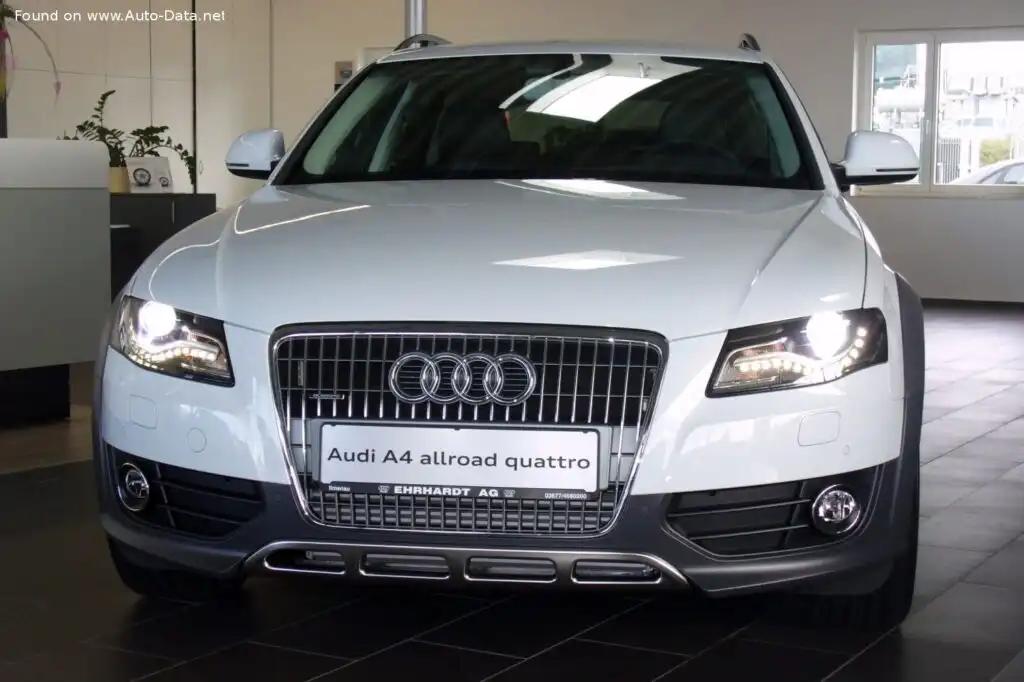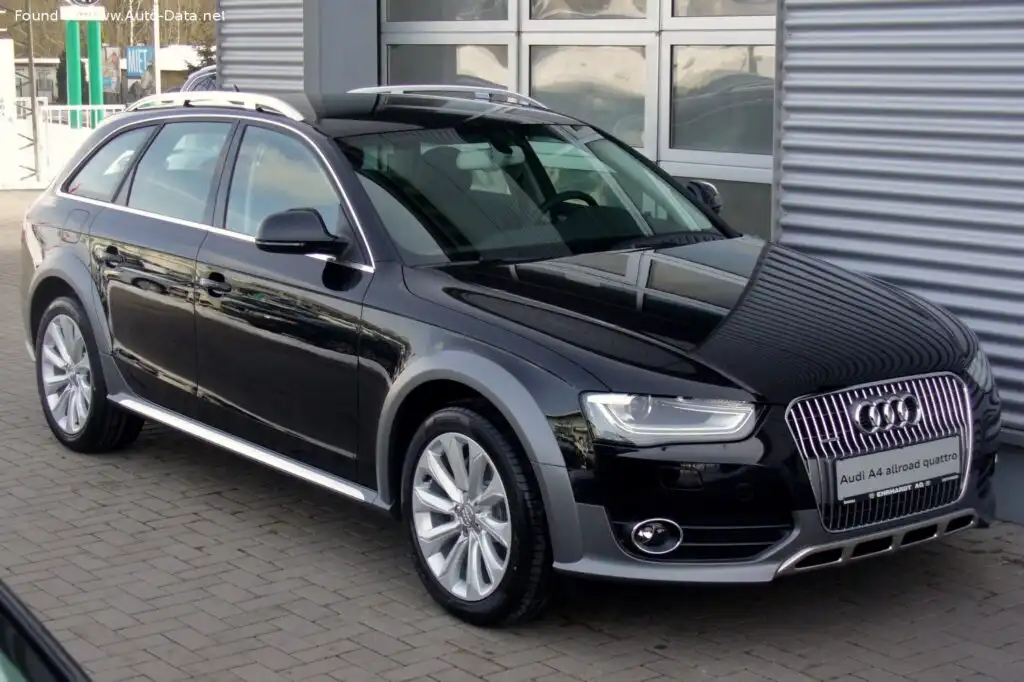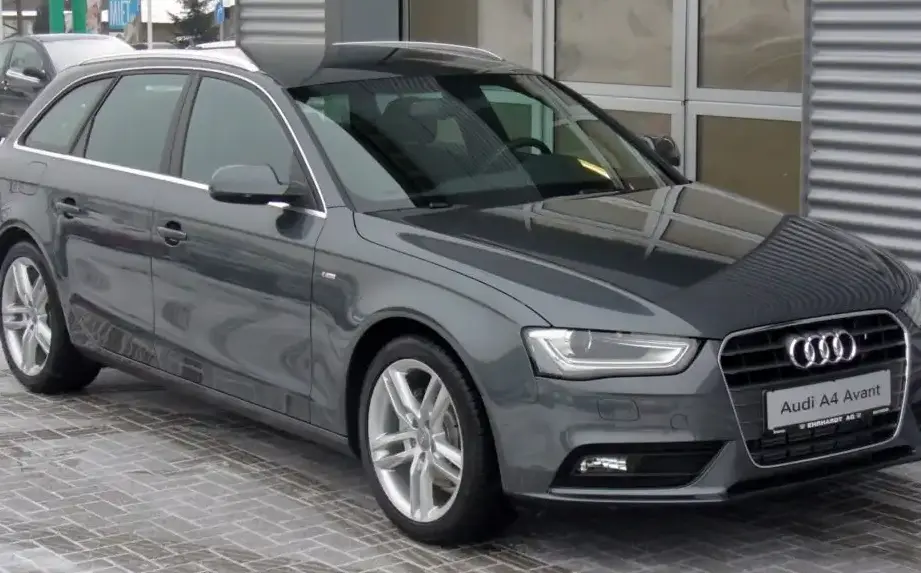
The Audi A4 Avant (B8 8K) facelift, produced from November 2011 to 2015, represented a significant update to Audi’s popular compact executive estate car. The 2.0 TDI variant, generating 177 horsepower, was a mainstay of the lineup, offering a balance of performance, fuel efficiency, and practicality. This model occupied a mid-range position within the B8 Avant series, slotting between the lower-powered TDI engines and the more potent petrol options like the 2.0 TFSI. It was primarily aimed at European markets where diesel engines and station wagons (known as ‘Avants’ in Audi terminology) held considerable popularity, offering a refined and technologically advanced option for families and business users alike.
Technical Specifications
| Brand | Audi |
| Model | A4 |
| Generation | A4 Avant (B8 8K, facelift 2011) |
| Type (Engine) | 2.0 TDI (177 Hp) DPF start/stop |
| Start of production | November, 2011 |
| End of production | 2015 |
| Powertrain Architecture | Internal Combustion engine |
| Body type | Station wagon (estate) |
| Seats | 5 |
| Doors | 5 |
| Fuel consumption (urban) | 5.7 l/100 km (41.3 US mpg, 49.6 UK mpg, 17.5 km/l) |
| Fuel consumption (extra urban) | 4.3 l/100 km (54.7 US mpg, 65.7 UK mpg, 23.3 km/l) |
| Fuel consumption (combined) | 4.8 l/100 km (49 US mpg, 58.9 UK mpg, 20.8 km/l) |
| CO2 emissions | 126 g/km |
| Fuel Type | Diesel |
| Acceleration 0 – 100 km/h | 8.4 sec |
| Acceleration 0 – 62 mph | 8.4 sec |
| Acceleration 0 – 60 mph | 8 sec (Calculated) |
| Maximum speed | 222 km/h (137.94 mph) |
| Emission standard | Euro 5 |
| Weight-to-power ratio | 8.7 kg/Hp, 115.3 Hp/tonne |
| Weight-to-torque ratio | 4 kg/Nm, 247.6 Nm/tonne |
| Power | 177 Hp @ 4200 rpm |
| Power per litre | 89.9 Hp/l |
| Torque | 380 Nm @ 1750-2500 rpm (280.27 lb.-ft. @ 1750-2500 rpm) |
| Engine layout | Front, Longitudinal |
| Engine Model/Code | CGLC, CMGB |
| Engine displacement | 1968 cm3 (120.09 cu. in.) |
| Number of cylinders | 4 |
| Engine configuration | Inline |
| Cylinder Bore | 81 mm (3.19 in.) |
| Piston Stroke | 95.5 mm (3.76 in.) |
| Compression ratio | 16.5:1 |
| Number of valves per cylinder | 4 |
| Fuel injection system | Diesel Commonrail |
| Engine aspiration | Turbocharger, Intercooler |
| Valvetrain | DOHC |
| Engine oil capacity | 5 l (5.28 US qt | 4.4 UK qt) |
| Kerb Weight | 1535 kg (3384.1 lbs.) |
| Max. weight | 2105 kg (4640.73 lbs.) |
| Max load | 570 kg (1256.63 lbs.) |
| Trunk (boot) space – minimum | 490 l (17.3 cu. ft.) |
| Trunk (boot) space – maximum | 1430 l (50.5 cu. ft.) |
| Fuel tank capacity | 63 l (16.64 US gal | 13.86 UK gal) |
| Max. roof load | 90 kg (198.42 lbs.) |
| Permitted trailer load with brakes (8%) | 1800 kg (3968.32 lbs.) |
| Permitted trailer load without brakes | 750 kg (1653.47 lbs.) |
| Length | 4699 mm (185 in.) |
| Width | 1826 mm (71.89 in.) |
| Height | 1436 mm (56.54 in.) |
| Wheelbase | 2808 mm (110.55 in.) |
| Front track | 1564 mm (61.57 in.) |
| Rear track | 1551 mm (61.06 in.) |
| Front overhang | 862 mm (33.94 in.) |
| Rear overhang | 1029 mm (40.51 in.) |
| Drag coefficient (Cd) | 0.32 |
| Minimum turning circle | 11.5 m (37.73 ft.) |
| Drivetrain Architecture | Front wheel drive |
| Number of gears | 6 gears, manual transmission |
| Front suspension | Independent multi-link suspension |
| Rear suspension | Independent on trapezoidal lever |
| Front brakes | Ventilated discs |
| Rear brakes | Disc |
| Assisting systems | ABS (Anti-lock braking system) |
| Steering type | Steering rack and pinion |
| Power steering | Electric Steering |
| Tires size | 225/55 R16 |
| Wheel rims size | 7.5J x 16 |
Powertrain & Engine Architecture
The heart of this A4 Avant was the 2.0-liter four-cylinder diesel engine, specifically the CGLC or CMGB engine code depending on the exact production date and market. These engines were part of Volkswagen Group’s modular engine family, known for their efficiency and reliability. The engine utilized a common rail direct injection system, delivering fuel at extremely high pressures for optimized combustion. A turbocharger with an intercooler was employed to boost power output, providing 177 horsepower and a substantial 380 Nm (280 lb-ft) of torque. The torque curve was relatively flat, peaking between 1750 and 2500 rpm, which contributed to strong in-gear acceleration. The engine also featured a Diesel Particulate Filter (DPF) to reduce emissions, and a Start/Stop system to further improve fuel economy in urban driving conditions. The engine was mounted longitudinally in the front of the vehicle, driving the front wheels through a six-speed manual transmission.
Driving Characteristics
The 2.0 TDI 177 hp variant offered a comfortable and capable driving experience. While not overtly sporty, the engine provided ample power for everyday driving and overtaking maneuvers. The six-speed manual transmission was well-matched to the engine’s characteristics, offering precise shifts and allowing the driver to keep the engine within its optimal torque band. Compared to the higher-output 2.0 TFSI petrol engine, the TDI offered superior fuel economy and more readily available low-end torque. However, it lacked the TFSI’s responsiveness and overall performance. Against other TDI variants, such as the 150 hp version, the 177 hp model provided a noticeable performance upgrade, making it a more suitable choice for drivers who frequently carried passengers or cargo, or who regularly undertook longer journeys.
Equipment & Trim Levels
The 2.0 TDI 177 hp Avant typically came equipped with a respectable level of standard features. These included air conditioning, a multi-function steering wheel, electric windows, and an Audi Concert radio system. Higher trim levels, such as SE or S-line, added features like alloy wheels, upgraded interior trim, parking sensors, and a more advanced infotainment system. Optional extras included leather upholstery, a sunroof, and a navigation system. The interior design was typically understated and functional, with a focus on build quality and ergonomics.
Chassis & Braking
The B8 A4 Avant featured a sophisticated chassis design. The front suspension utilized MacPherson struts, while the rear employed a multi-link setup, providing a good balance of ride comfort and handling. The 2.0 TDI models typically came equipped with ventilated front disc brakes and solid rear discs. Anti-lock Braking System (ABS) was standard, along with Electronic Stability Control (ESC). The suspension was tuned to provide a comfortable ride, but also offered decent body control in corners. Stabilizer bars were fitted front and rear to reduce body roll.
Market Reception & Comparison
The Audi A4 Avant 2.0 TDI 177 hp was generally well-received by automotive critics. It was praised for its fuel efficiency, comfortable ride, and refined interior. However, some critics noted that the engine could be somewhat noisy under hard acceleration. Compared to rivals like the BMW 3 Series Touring and the Mercedes-Benz C-Class Estate, the A4 Avant was often seen as offering a more balanced package, with a strong emphasis on practicality and technology. The TDI engine’s fuel economy was a key selling point, particularly in Europe, where diesel fuel was often cheaper than petrol.
Legacy
The 2.0 TDI engine, in its various iterations, proved to be a remarkably durable and reliable powertrain. While DPF issues could occasionally arise, particularly on vehicles used primarily for short journeys, the engine itself was generally robust. Today, well-maintained examples of the B8 A4 Avant 2.0 TDI 177 hp can still be found on the used car market, offering a practical and economical option for buyers seeking a comfortable and reliable estate car. Its reputation for fuel efficiency and relatively low running costs continues to make it a popular choice.