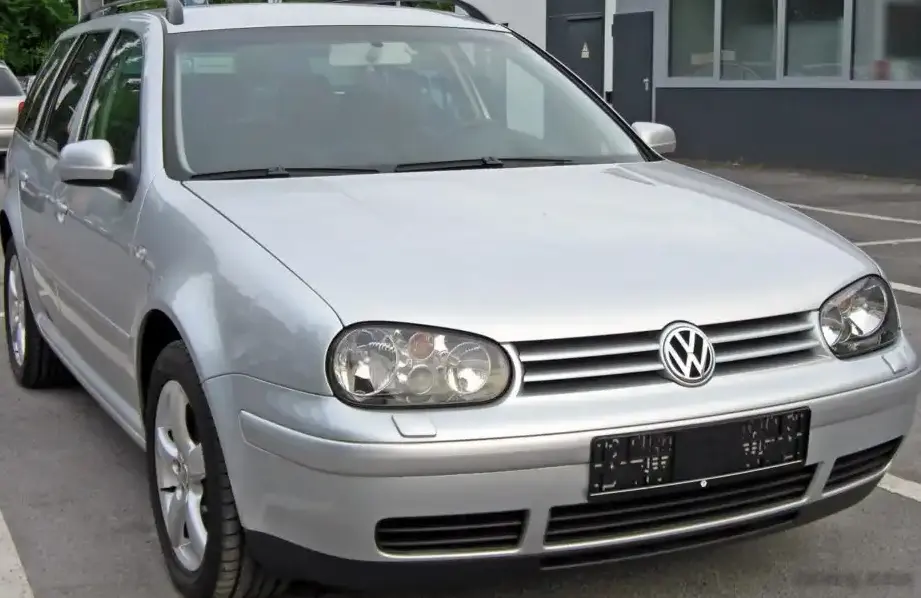
The Volkswagen Golf IV Variant 1.9 TDI with 101 horsepower and an automatic transmission was a popular configuration within the fourth generation Golf lineup, produced from February 2000 to April 2006. Positioned as a practical and fuel-efficient option, this variant catered to buyers seeking the versatility of a station wagon (estate) body style combined with the renowned reliability of Volkswagen’s diesel engines. It was a key offering in European markets where diesel station wagons held significant appeal, offering a balance between economy, space, and usability. This model sat in the mid-range of the Golf IV Variant offerings, below the more powerful petrol engines and the higher-output TDI variants, but above the base-level petrol models.
Technical Specifications
| Brand | Volkswagen |
| Model | Golf |
| Generation | Golf IV Variant |
| Type (Engine) | 1.9 TDI (101 Hp) Automatic |
| Start of production | February, 2000 |
| End of production | April, 2006 |
| Powertrain Architecture | Internal Combustion engine |
| Body type | Station wagon (estate) |
| Seats | 5 |
| Doors | 5 |
| Fuel consumption (urban) | 8.7 l/100 km (27 US mpg, 32.5 UK mpg, 11.5 km/l) |
| Fuel consumption (extra urban) | 5.2 l/100 km (45.2 US mpg, 54.3 UK mpg, 19.2 km/l) |
| Fuel consumption (combined) | 6.5 l/100 km (36.2 US mpg, 43.5 UK mpg, 15.4 km/l) |
| Fuel Type | Diesel |
| Acceleration 0 – 100 km/h | 13.9 sec |
| Acceleration 0 – 62 mph | 13.9 sec |
| Acceleration 0 – 60 mph | 13.2 sec |
| Maximum speed | 184 km/h (114.33 mph) |
| Weight-to-power ratio | 13.1 kg/Hp, 76.5 Hp/tonne |
| Weight-to-torque ratio | 5.5 kg/Nm, 181.7 Nm/tonne |
| Power | 101 Hp @ 4000 rpm |
| Power per litre | 53.3 Hp/l |
| Torque | 240 Nm @ 1800 rpm (177.01 lb.-ft. @ 1800 rpm) |
| Engine layout | Front, Longitudinal |
| Engine Model/Code | ATD, AXR |
| Engine displacement | 1896 cm3 (115.7 cu. in.) |
| Number of cylinders | 4 |
| Engine configuration | Inline |
| Cylinder Bore | 79.5 mm (3.13 in.) |
| Piston Stroke | 95.5 mm (3.76 in.) |
| Compression ratio | 19:1 |
| Number of valves per cylinder | 2 |
| Fuel injection system | Pump-nozzle (Unit Injector) |
| Engine aspiration | Turbocharger, Intercooler |
| Valvetrain | OHC |
| Engine oil capacity | 4.5 l (4.76 US qt | 3.96 UK qt) |
| Coolant | 6 l (6.34 US qt | 5.28 UK qt) |
| Kerb Weight | 1321 kg (2912.31 lbs.) |
| Max. weight | 1840 kg (4056.51 lbs.) |
| Max load | 519 kg (1144.2 lbs.) |
| Trunk (boot) space – minimum | 460 l (16.24 cu. ft.) |
| Trunk (boot) space – maximum | 1470 l (51.91 cu. ft.) |
| Fuel tank capacity | 55 l (14.53 US gal | 12.1 UK gal) |
| Length | 4397 mm (173.11 in.) |
| Width | 1735 mm (68.31 in.) |
| Height | 1485 mm (58.46 in.) |
| Wheelbase | 2515 mm (99.02 in.) |
| Front track | 1513 mm (59.57 in.) |
| Rear (Back) track | 1494 mm (58.82 in.) |
| Drivetrain Architecture | The Internal combustion engine (ICE) drives the front wheels of the vehicle. |
| Drive wheel | Front wheel drive |
| Number of gears and type of gearbox | 5 gears, automatic transmission |
| Front suspension | Spring Strut |
| Rear suspension | Coil spring |
| Front brakes | Ventilated discs |
| Rear brakes | Disc |
| Assisting systems | ABS (Anti-lock braking system) |
| Steering type | Steering rack and pinion |
| Power steering | Hydraulic Steering |
| Tires size | 195/65 R15 V |
| Wheel rims size | 15 |
Powertrain & Engine Architecture
The heart of this Golf IV Variant is the 1.9-liter inline-four cylinder diesel engine, specifically the ATD or AXR engine code depending on the production year and market. These engines are renowned for their durability and fuel efficiency. The 1.9 TDI utilizes a pump-nozzle (unit injector) fuel injection system, a technology that delivers highly precise fuel delivery directly into the combustion chamber. This system, while effective, is known for being more mechanically complex than common rail systems that would become prevalent in later diesel engines. The engine features an overhead camshaft (OHC) valvetrain with two valves per cylinder. A turbocharger with an intercooler is employed to boost power output and improve torque across the rev range. The automatic transmission is a conventional 5-speed unit, designed to provide smooth shifts and ease of driving, though it doesn’t offer the same level of driver engagement as a manual gearbox.
Driving Characteristics
The 101 horsepower and 240 Nm (177 lb-ft) of torque delivered by the 1.9 TDI automatic combination resulted in a practical, rather than sporty, driving experience. Acceleration from 0-60 mph took around 13.2 seconds, and top speed was approximately 114 mph. The automatic transmission, while convenient, did slightly diminish performance compared to the manual versions. Gear ratios were optimized for fuel economy and relaxed cruising, meaning the engine often felt a bit strained during hard acceleration. However, the ample low-end torque made it well-suited for everyday driving and hauling loads. Compared to the more powerful 1.8T petrol engine or the higher-output TDI variants (like the 130 hp version), this configuration prioritized fuel efficiency and affordability over outright performance.
Equipment & Trim Levels
The Golf IV Variant 1.9 TDI Automatic typically came with a reasonable level of standard equipment. This included central locking, power windows, power steering, and an ABS anti-lock braking system. Interior upholstery was usually cloth, with a functional, if somewhat basic, dashboard layout. Optional extras included alloy wheels, a sunroof, climate control, and a radio/CD player. Trim levels varied by market, but generally, this variant occupied a mid-range position, offering a good balance of features for the price. It wasn’t as lavishly equipped as the higher-spec models, but it provided a comfortable and practical driving environment.
Chassis & Braking
The Golf IV Variant’s chassis featured a MacPherson strut front suspension and a coil spring rear suspension. This setup provided a comfortable ride, although it wasn’t particularly sporty. The front brakes were ventilated discs, offering good stopping power, while the rear brakes were typically solid discs. The steering was a hydraulic power-assisted rack and pinion system, providing reasonable feedback and ease of use. Stabilizer bars were fitted to both the front and rear axles to reduce body roll during cornering. The weight distribution was fairly balanced, contributing to predictable handling.
Market Reception & Comparison
The Golf IV Variant 1.9 TDI Automatic was generally well-received by automotive critics as a practical and economical family car. Its fuel economy was a major selling point, particularly in Europe where diesel fuel was often cheaper than petrol. Reliability was also praised, although the pump-nozzle injection system could require more specialized maintenance than later common rail systems. Compared to the petrol-powered Golf IV Variants, the TDI offered significantly better fuel economy and more torque. Compared to the higher-output TDI variants, it was more affordable and offered a slightly smoother driving experience due to the less stressed engine.
Legacy
The 1.9 TDI engine, in various iterations, became legendary for its durability and longevity. The ATD and AXR engine codes used in this Golf IV Variant are still considered robust and capable of high mileage with proper maintenance. In the used car market today, these models are often sought after by buyers looking for a reliable and fuel-efficient vehicle. However, potential buyers should be aware of the potential maintenance costs associated with the pump-nozzle injection system and the age-related wear and tear common to vehicles of this era. Despite its age, the Golf IV Variant 1.9 TDI Automatic remains a testament to Volkswagen’s engineering prowess and a popular choice for those seeking a practical and dependable station wagon.