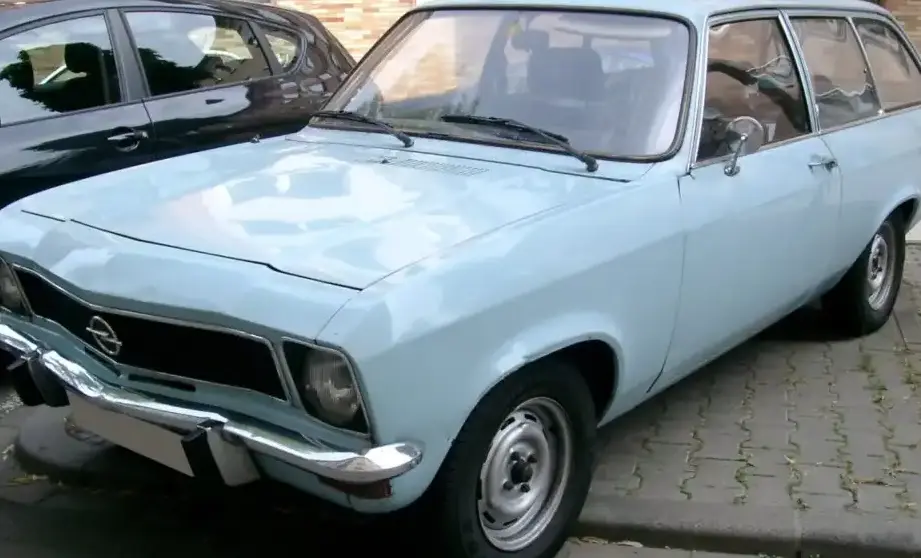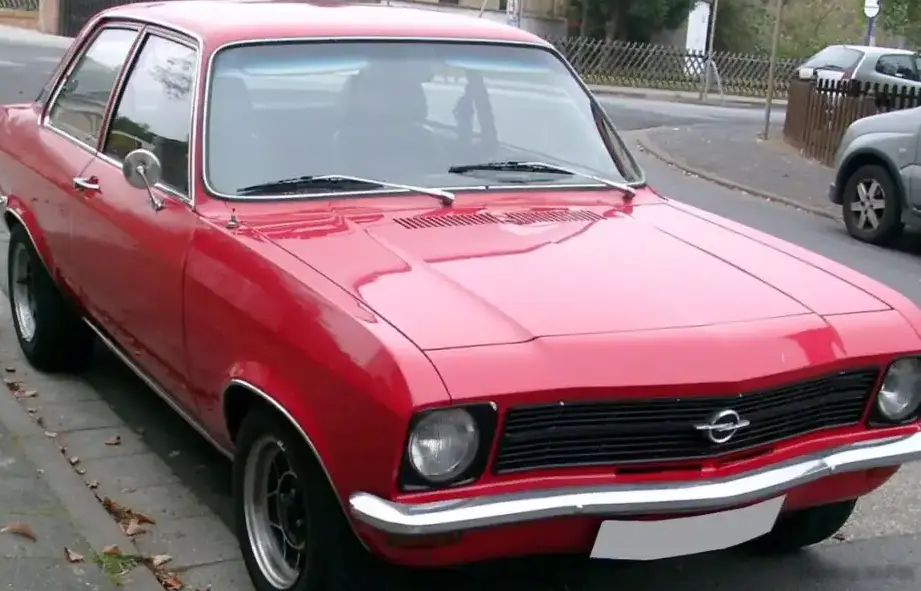
The Opel Ascona A 2-door 1.9 S, produced between August 1971 and December 1974, represented a significant offering in Opel’s mid-size lineup. Positioned as a sporty variant within the Ascona A range, it aimed to provide a balance between performance and practicality for the European market. The Ascona A, launched in 1970, was Opel’s replacement for the Rekord C, and was built on the GM H-platform, shared with other European Opel and Vauxhall models. The 1.9 S trim, with its 90 horsepower engine, occupied a middle ground in the Ascona A portfolio, offering more performance than the base models but remaining more accessible than the larger-engined variants.
Technical Specifications
| Brand | Opel |
| Model | Ascona |
| Generation | Ascona A 2-door |
| Type (Engine) | 1.9 S (90 Hp) |
| Start of production | August, 1971 |
| End of production | December, 1974 |
| Powertrain Architecture | Internal Combustion engine |
| Body type | Sedan |
| Seats | 5 |
| Doors | 2 |
| Fuel consumption (combined) | 9.7 l/100 km (24.2 US mpg, 29.1 UK mpg, 10.3 km/l) |
| Fuel Type | Petrol (Gasoline) |
| Acceleration 0 – 100 km/h | 13 sec |
| Acceleration 0 – 62 mph | 13 sec |
| Acceleration 0 – 60 mph | 12.4 sec |
| Maximum speed | 160 km/h (99.42 mph) |
| Weight-to-power ratio | 10.4 kg/Hp, 95.7 Hp/tonne |
| Weight-to-torque ratio | 6.3 kg/Nm, 158.5 Nm/tonne |
| Power | 90 Hp @ 5100 rpm |
| Power per litre | 47.4 Hp/l |
| Torque | 149 Nm @ 2500-3100 rpm (109.9 lb.-ft. @ 2500-3100 rpm) |
| Engine layout | Front, Longitudinal |
| Engine Model/Code | 19S |
| Engine displacement | 1897 cm3 (115.76 cu. in.) |
| Number of cylinders | 4 |
| Engine configuration | Inline |
| Cylinder Bore | 93 mm (3.66 in.) |
| Piston Stroke | 69.8 mm (2.75 in.) |
| Compression ratio | 9:1 |
| Number of valves per cylinder | 2 |
| Fuel injection system | Carburettor |
| Engine aspiration | Naturally aspirated engine |
| Valvetrain | CIH |
| Engine oil capacity | 3.8 l (4.02 US qt | 3.34 UK qt) |
| Coolant | 6.1 l (6.45 US qt | 5.37 UK qt) |
| Kerb Weight | 940 kg (2072.35 lbs.) |
| Max. weight | 1365 kg (3009.31 lbs.) |
| Max load | 425 kg (936.96 lbs.) |
| Trunk (boot) space – minimum | 307 l (10.84 cu. ft.) |
| Fuel tank capacity | 46 l (12.15 US gal | 10.12 UK gal) |
| Permitted trailer load with brakes (12%) | 1000 kg (2204.62 lbs.) |
| Permitted trailer load without brakes | 500 kg (1102.31 lbs.) |
| Length | 4124 mm (162.36 in.) |
| Width | 1626 mm (64.02 in.) |
| Height | 1385 mm (54.53 in.) |
| Wheelbase | 2430 mm (95.67 in.) |
| Front track | 1331 mm (52.4 in.) |
| Rear (Back) track | 1320 mm (51.97 in.) |
| Ride height (ground clearance) | 134 mm (5.28 in.) |
| Drag coefficient (Cd) | 0.48 |
| Minimum turning circle (turning diameter) | 9.76 m (32.02 ft.) |
| Drivetrain Architecture | The Internal combustion engine (ICE) drives the rear wheels of the vehicle. |
| Drive wheel | Rear wheel drive |
| Number of gears and type of gearbox | 4 gears, manual transmission |
| Front suspension | Double wishbone, Independent coil spring, Transverse stabilizer |
| Rear suspension | Rigid axle suspension, Transverse stabilizer, Trailing arm, Coil spring |
| Front brakes | Disc |
| Rear brakes | Drum |
| Steering type | Steering rack and pinion |
| Tires size | 165/80 R13; 185/70 R13 |
| Wheel rims size | 5J x 13; 5.5J x 13 |
Powertrain & Engine Architecture
The heart of the Ascona A 1.9 S was the 1897cc inline-four cylinder engine, designated the 19S. This engine was part of Opel’s CIH (Cylinder Head Integrated) family, known for its robust design and relatively simple maintenance. The ‘S’ designation indicated a higher compression ratio (9:1) and a larger carburetor compared to the standard 1.6-liter engine, resulting in the increased power output of 90 horsepower at 5100 rpm and 149 Nm (109.9 lb-ft) of torque between 2500-3100 rpm. The engine featured a two-valve per cylinder configuration and a naturally aspirated intake. Fuel delivery was handled by a single downdraft carburetor, a common setup for the era. The engine was mounted longitudinally in the front of the vehicle, driving the rear wheels.
The Ascona A 1.9 S was exclusively offered with a four-speed manual transmission. This transmission was a conventional setup, designed to provide reliable performance and relatively simple maintenance. The gear ratios were tuned to balance acceleration and fuel economy, though the 1.9 S was not intended to be a high-performance machine.
Driving Characteristics
The Ascona A 1.9 S offered a reasonably engaging driving experience for its time. Acceleration from 0 to 60 mph took around 12.4 seconds, and it could reach a top speed of 99.42 mph. While not particularly quick by modern standards, this performance was adequate for comfortable highway cruising and overtaking. The manual transmission allowed for a degree of driver control, but the relatively long throw and somewhat vague shift quality were typical of the era. The rear-wheel-drive layout provided a balanced feel, although the suspension setup – double wishbones at the front and a rigid axle at the rear – could result in some body roll during cornering. Compared to the base 1.6-liter Ascona, the 1.9 S offered noticeably more power and torque, making it feel more responsive and capable, especially when fully loaded or tackling inclines. However, it lacked the outright performance of the later Ascona models equipped with larger engines, such as the 2.0-liter or the more potent SR variants.
Equipment & Trim Levels
The Ascona A 1.9 S was positioned as a mid-range trim level. Standard equipment included cloth upholstery, basic instrumentation (speedometer, fuel gauge, temperature gauge), and a steering wheel. The interior was functional and relatively spartan, reflecting the car’s focus on practicality. Optional extras included a radio, upgraded upholstery, and a sunroof. The exterior trim was relatively understated, with chrome bumpers and brightwork providing a touch of elegance. The 2-door configuration offered a slightly sportier appearance compared to the 4-door sedan.
Chassis & Braking
The Ascona A featured a robust chassis with independent front suspension using double wishbones and coil springs, providing a comfortable ride. The rear suspension utilized a rigid axle with coil springs and a transverse stabilizer bar, contributing to stability. Braking was accomplished via disc brakes at the front and drum brakes at the rear. The braking system was adequate for the car’s weight and performance, but lacked the stopping power of more modern systems. Steering was via a rack and pinion system, providing reasonable precision.
Market Reception & Comparison
The Ascona A 1.9 S was generally well-received by automotive critics as a practical and reliable family car. It offered a good balance of performance, fuel economy (around 24.2 US mpg), and affordability. Compared to other cars in its class, such as the Ford Cortina and the Vauxhall Victor, the Ascona A 1.9 S was considered to be a competitive offering. The 1.6-liter Ascona offered better fuel economy but lacked the performance of the 1.9 S. Larger-engined Ascona variants provided more power but came at a higher price point.
Legacy
The Opel Ascona A 1.9 S, while not a particularly rare or collectible car today, remains a popular choice among classic car enthusiasts. The CIH engine is known for its durability and relatively simple maintenance, making it a reliable powerplant. Parts availability is generally good, although some components may be difficult to find. The Ascona A 1.9 S represents a significant chapter in Opel’s history, and it continues to be appreciated for its classic styling, robust engineering, and enjoyable driving experience. Well-maintained examples can still be found on the used car market, offering a nostalgic glimpse into the automotive landscape of the early 1970s.