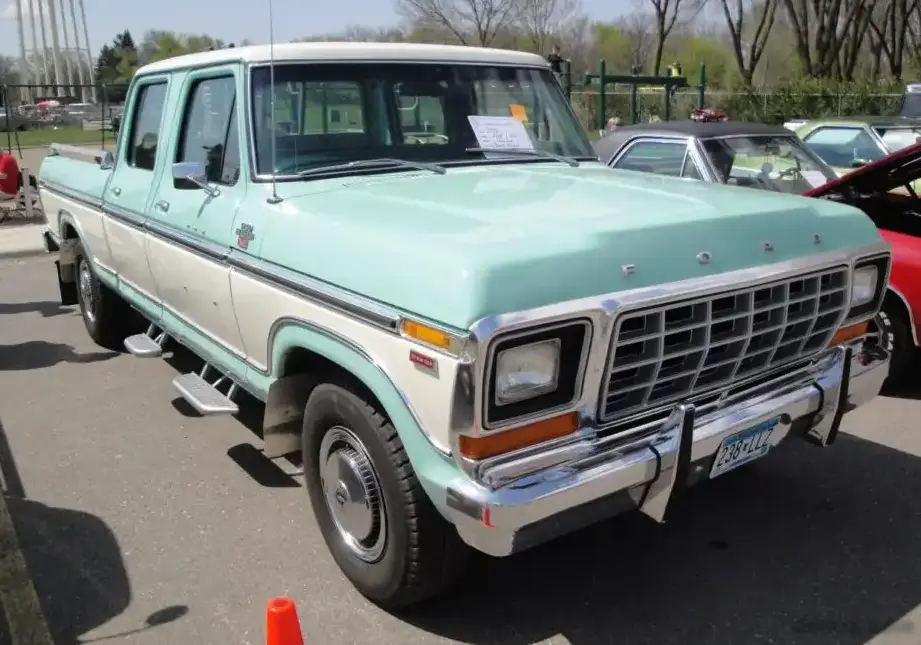
The Ford F-Series F-250 VI Crew Cab, equipped with the 7.5-liter 460 cubic inch V8 engine producing 245 horsepower, represents a significant iteration in Ford’s long-running and highly successful F-Series pickup truck line. Produced for a relatively short period between 1975 and 1976, this variant occupied a middle ground within the F-250 range, offering a balance between capability and comfort, particularly with the addition of the Crew Cab body style. It was part of the sixth generation (1973-1979) of the F-Series, a generation known for its increased size, improved comfort features, and a wider range of available options.
Technical Specifications
| Brand | Ford |
| Model | F-Series F-250 |
| Generation | F-Series F-250 VI Crew Cab |
| Type (Engine) | 7.5 460 V8 (245 Hp) |
| Start of production | 1975 |
| End of production | 1976 |
| Powertrain Architecture | Internal Combustion engine |
| Body type | Pick-up |
| Seats | 6 |
| Doors | 4 |
| Fuel Type | Petrol (Gasoline) |
| Power | 245 Hp |
| Power per litre | 32.5 Hp/l |
| Engine displacement | 7538 cm3 / 460 cu. in. |
| Number of cylinders | 8 |
| Engine configuration | V-engine |
| Piston Stroke | 97.79 mm / 3.85 in. |
| Number of valves per cylinder | 4 |
| Fuel injection system | Carburettor |
| Engine aspiration | Naturally aspirated engine |
| Max. weight | 3402 kg / 7500.13 lbs. |
| Trunk (boot) space – minimum | 1727 l / 60.99 cu. ft. |
| Length | 5652 mm / 222.52 in. |
| Wheelbase | 3810 mm / 150 in. |
| Wading depth | 673 mm / 26.5 in. |
| Drivetrain Architecture | The Internal combustion engine (ICE) drives the rear wheels of the vehicle. |
| Drive wheel | Rear wheel drive |
| Number of gears and type of gearbox | 3 gears, manual transmission |
| Front suspension | Independent coil spring |
| Rear suspension | Leaf spring |
| Front brakes | Disc |
| Rear brakes | Drum |
| Power steering | Electric Steering |
| Tires size | 215/85 R16.5 |
| Wheel rims size | 6J x 16.5 |
Powertrain & Engine Architecture
The heart of this F-250 variant is Ford’s 460 cubic inch (7.5-liter) V8 engine. This engine, a mainstay of Ford’s heavy-duty lineup for many years, is a robust, cast-iron block design with a 97.79mm (3.85 inch) bore and stroke. The 460 utilized a two-valve per cylinder configuration and was fed by a carburetor, typical for the era. While the 245 horsepower output might seem modest by modern standards, it provided substantial torque – a crucial characteristic for a heavy-duty pickup truck designed for work. The engine’s longitudinal front-engine layout was standard for the F-Series. The three-speed manual transmission was the standard offering, providing a direct connection between the engine and the rear wheels. While automatic transmissions were available on the F-250, the manual was often preferred by those prioritizing durability and direct control.
Driving Characteristics
The 1975-1976 F-250 with the 460 V8 and manual transmission delivered a driving experience focused on capability rather than outright speed. The 3-speed manual gearbox, while durable, had relatively wide gear ratios. First gear was geared for serious towing or off-road work, while third gear was intended for highway cruising. Acceleration was adequate, but the truck’s substantial weight (over 7,500 lbs) limited its responsiveness. The leaf spring rear suspension provided a firm ride, well-suited for hauling heavy loads, but less comfortable when unladen. Steering was accomplished through a power steering system, which helped manage the truck’s size and weight, but lacked the precision of more modern systems. Compared to the smaller engine options available in the F-250, the 460 V8 provided significantly more power and torque, making it the preferred choice for those regularly towing trailers or carrying heavy payloads.
Equipment & Trim Levels
The F-250 Crew Cab was positioned as a more comfortable and versatile option within the F-250 lineup. The Crew Cab configuration added extra rear doors and a larger rear seating area, increasing passenger capacity to six. Standard features included a basic interior with vinyl upholstery, a simple dashboard layout, and a functional, no-frills design. Options included upgraded interior trim, air conditioning, and a variety of accessories tailored to specific work needs, such as trailer towing packages and auxiliary lighting. The trim level of this specific variant was generally considered mid-range, offering a step up in comfort and convenience compared to the base models, but lacking the luxury features found in higher-end trims.
Chassis & Braking
The F-250’s chassis was a robust body-on-frame design, built to withstand the stresses of heavy-duty use. The front suspension utilized independent coil springs, providing a degree of ride comfort and improved handling compared to older solid-axle designs. The rear suspension employed leaf springs, a traditional choice for pickup trucks due to their load-carrying capacity. Braking duties were handled by disc brakes at the front and drum brakes at the rear. While adequate for the time, the braking system lacked the sophistication of modern anti-lock braking systems. The truck rode on 6J x 16.5 inch wheels, fitted with 215/85 R16.5 tires, chosen for their durability and load-carrying capacity.
Market Reception & Comparison
The 1975-1976 F-250 Crew Cab with the 460 V8 was generally well-received by buyers seeking a capable and comfortable heavy-duty pickup. Critics praised the truck’s robust construction, ample interior space (particularly in the Crew Cab configuration), and the power of the 460 V8 engine. However, some reviewers noted the truck’s relatively high price and its less-than-stellar fuel economy. Compared to other F-250 trims, the 460 V8 offered a significant performance advantage, but at the cost of increased fuel consumption. The smaller engine options, such as the 302 and 390 cubic inch V8s, were more fuel-efficient but lacked the towing and hauling capacity of the 460.
Legacy
The 1975-1976 Ford F-250 Crew Cab with the 460 V8 engine holds a respected place among classic Ford truck enthusiasts. The 460 V8, while known for its thirst for fuel, is considered a durable and reliable engine when properly maintained. Parts availability remains relatively good, making it easier to keep these trucks on the road. Today, these trucks are often sought after by collectors and those looking for a classic workhorse with a distinctive style. The Crew Cab configuration, in particular, is highly desirable due to its rarity and practicality. While not as technologically advanced as modern pickups, the F-250 represents a significant chapter in the history of the Ford F-Series, a truck that has remained a dominant force in the American pickup truck market for decades.