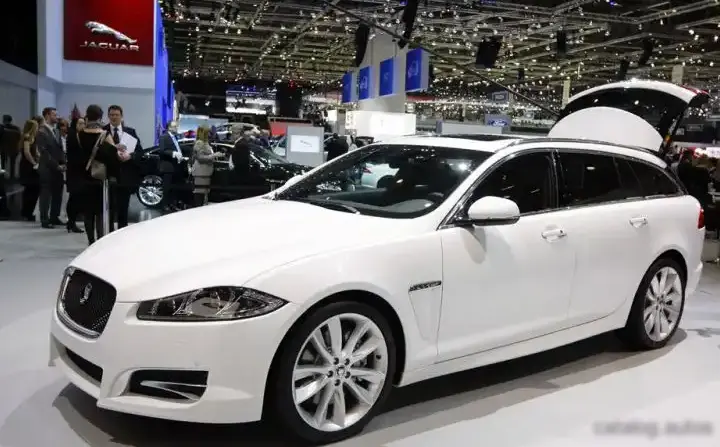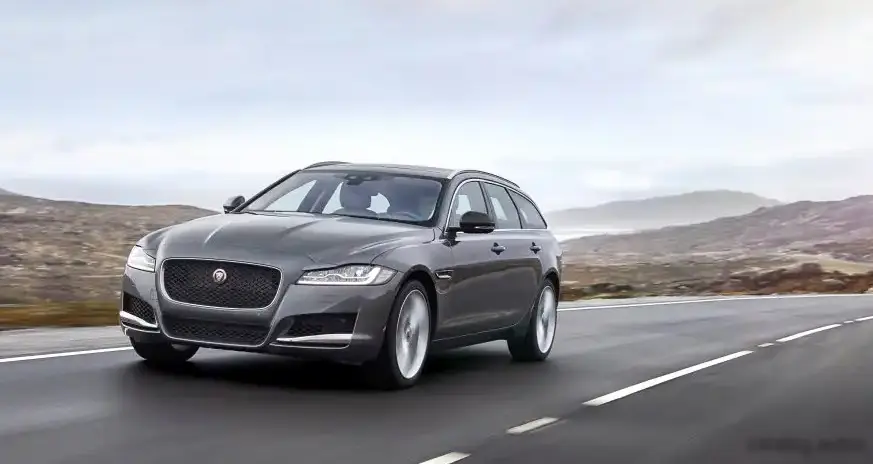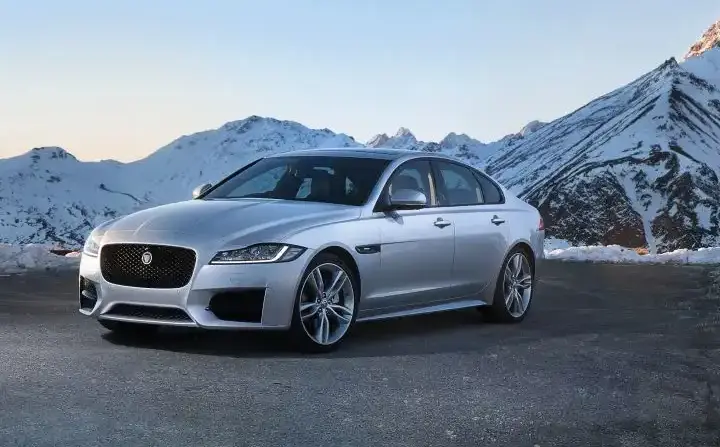
The Jaguar XF (X260) 20d, produced from 2019 to October 2020, represents a mid-cycle update to the second-generation XF. Positioned as an entry-level diesel offering within the X260 range, it aimed to provide a balance of luxury, efficiency, and performance. This variant utilized Jaguar Land Rover’s Ingenium engine family, specifically the 2.0-liter four-cylinder turbocharged diesel, producing 180 horsepower. It served as a more accessible alternative to the higher-powered six-cylinder models and the petrol-fueled options, targeting buyers prioritizing fuel economy and refinement in a premium executive sedan.
Technical Specifications
| Brand | Jaguar |
| Model | XF |
| Generation | XF (X260) |
| Type (Engine) | 20d (180 Hp) |
| Start of production | 2019 |
| End of production | October, 2020 |
| Powertrain Architecture | Internal Combustion engine |
| Body type | Sedan |
| Seats | 5 |
| Doors | 4 |
| Fuel consumption (urban) | 5.8-6.0 l/100 km (40.6 – 39.2 US mpg) |
| Fuel consumption (extra urban) | 4.1-4.3 l/100 km (57.4 – 54.7 US mpg) |
| Fuel consumption (combined) | 4.8-5.0 l/100 km (49 – 47 US mpg) |
| CO2 emissions | 126-131 g/km |
| Fuel Type | Diesel |
| Acceleration 0 – 100 km/h | 9.2 sec |
| Acceleration 0 – 62 mph | 9.2 sec |
| Acceleration 0 – 60 mph | 8.7 sec |
| Maximum speed | 230 km/h (142.92 mph) |
| Emission standard | Euro 6d-Temp |
| Weight-to-power ratio | 9.1 kg/Hp |
| Weight-to-torque ratio | 3.8 kg/Nm |
| Power | 180 Hp @ 4000 rpm |
| Torque | 430 Nm @ 1750-2500 rpm (317.15 lb.-ft. @ 1750-2500 rpm) |
| Engine layout | Front, Longitudinal |
| Engine Model/Code | Ingenium / 204DTH |
| Engine displacement | 1999 cm3 (121.99 cu. in.) |
| Number of cylinders | 4 |
| Engine configuration | Inline |
| Cylinder Bore | 83 mm (3.27 in.) |
| Piston Stroke | 92.4 mm (3.64 in.) |
| Compression ratio | 15.5:1 |
| Number of valves per cylinder | 4 |
| Fuel injection system | Diesel Commonrail |
| Engine aspiration | Turbocharger, Intercooler |
| Engine oil capacity | 6.5 l (6.87 US qt | 5.72 UK qt) |
| Kerb Weight | 1644 kg (3624.4 lbs.) |
| Max. weight | 2270 kg (5004.49 lbs.) |
| Max load | 626 kg (1380.09 lbs.) |
| Fuel tank capacity | 66 l (17.44 US gal | 14.52 UK gal) |
| Permitted trailer load with brakes (12%) | 1800 kg (3968.32 lbs.) |
| Permitted trailer load without brakes | 750 kg (1653.47 lbs.) |
| Length | 4954 mm (195.04 in.) |
| Width | 1987 mm (78.23 in.) |
| Width including mirrors | 2091 mm (82.32 in.) |
| Height | 1457 mm (57.36 in.) |
| Wheelbase | 2960 mm (116.54 in.) |
| Front track | 1605 mm (63.19 in.) |
| Rear track | 1594 mm (62.76 in.) |
| Ride height (ground clearance) | 116 mm (4.57 in.) |
| Minimum turning circle | 11.94 m (39.17 ft.) |
| Drivetrain Architecture | Rear wheel drive |
| Number of gears | 6 |
| Front brakes | Disc |
| Rear brakes | Disc |
| Tires size | 225/55 R17; 245/45R18 |
| Wheel rims size | 7.5J x 17; 8J x 18 |
Powertrain & Engine Architecture
The heart of the XF 20d is Jaguar Land Rover’s Ingenium engine family. The 204DTH, a 2.0-liter inline-four diesel, is a highly modular design intended for widespread use across the JLR product range. This engine features a cast aluminum block, a relatively high compression ratio of 15.5:1, and a single turbocharger with an intercooler. The fuel injection system is a common-rail direct injection system, delivering fuel at extremely high pressures for optimized combustion. The engine utilizes four valves per cylinder and a variable geometry turbocharger (VGT) to enhance both low-end torque and high-end power. The 20d was exclusively offered with an eight-speed automatic transmission, a ZF 8HP series unit known for its smooth shifts and efficiency. This transmission is electronically controlled and features a wide range of gear ratios to optimize performance and fuel economy.
Driving Characteristics
The 180 horsepower and 430 Nm (317 lb-ft) of torque provided by the 20d powertrain delivered respectable, though not exhilarating, performance. Acceleration from 0-60 mph took approximately 8.7 seconds, and the car had a top speed of 143 mph. The engine’s torque peak, available from 1750-2500 rpm, meant that the XF 20d felt responsive in everyday driving situations, offering ample power for overtaking and merging. Compared to the more powerful XF 30d (with its 300 horsepower six-cylinder engine), the 20d felt noticeably slower, particularly at higher speeds. However, the eight-speed automatic transmission helped to mitigate some of the power deficit by keeping the engine in its optimal power band. The transmission’s gear ratios were tuned for fuel efficiency, resulting in a comfortable and relaxed driving experience on the highway.
Equipment & Trim Levels
The XF 20d typically came well-equipped, reflecting Jaguar’s commitment to luxury. Standard features included leather upholstery, dual-zone climate control, a touchscreen infotainment system with navigation, and a suite of safety features such as autonomous emergency braking and lane departure warning. Higher trim levels, such as the Portfolio, added features like premium leather, upgraded audio systems, and adaptive LED headlights. Optional extras included a panoramic sunroof, heated and ventilated seats, and a head-up display. The interior design was characterized by a minimalist aesthetic, with high-quality materials and a focus on driver ergonomics.
Chassis & Braking
The XF 20d utilized a steel monocoque chassis with independent suspension all around. The front suspension featured double wishbones, while the rear suspension employed a multi-link setup. This configuration provided a comfortable ride and good handling characteristics. The braking system consisted of disc brakes on all four wheels, with ABS and electronic stability control as standard features. The XF 20d’s weight of approximately 3624 lbs was relatively moderate for a vehicle of its size, contributing to its balanced handling. The suspension tuning was geared towards comfort, but the car still offered a reasonably engaging driving experience.
Market Reception & Comparison
The XF 20d was generally well-received by automotive critics, who praised its fuel efficiency, refined ride, and luxurious interior. However, some reviewers noted that the 180 horsepower engine felt underpowered for a car of its size and weight. Compared to its rivals, such as the BMW 520d and the Audi A6 2.0 TDI, the XF 20d offered a competitive level of performance and equipment. Fuel economy was comparable to its competitors, with the XF 20d achieving around 49 mpg on the combined cycle. Reliability was generally good, although some owners reported minor issues with the infotainment system.
Legacy
The Jaguar XF 20d represents a significant step in Jaguar’s efforts to offer a more fuel-efficient and accessible luxury sedan. The Ingenium engine proved to be a reliable and versatile powerplant, and the XF 20d remains a popular choice on the used car market. While not the fastest or most dynamic version of the XF, the 20d offers a compelling combination of luxury, efficiency, and refinement, making it a practical and enjoyable vehicle for everyday use. Its long-term reliability appears solid, with many examples still providing dependable service today, though regular maintenance, particularly regarding the diesel particulate filter, is crucial.