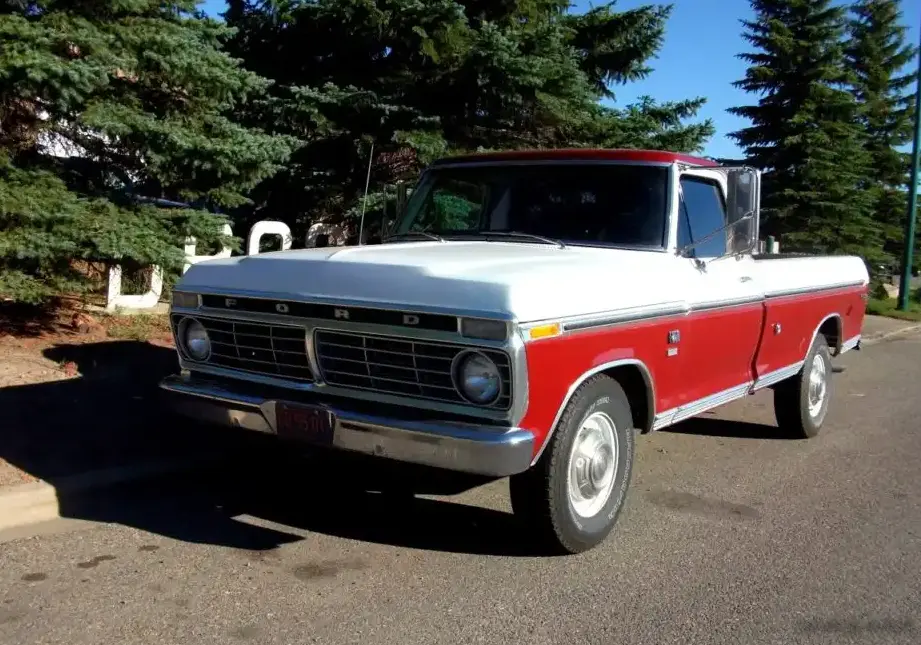
The Ford F-250 VI Regular Cab, specifically equipped with the 4.9-liter (300 cubic inch) inline-six engine producing 113 horsepower and a four-wheel-drive (4×4) drivetrain, represents a significant workhorse in the sixth generation of the Ford F-Series trucks. Produced from 1975 to 1976, this configuration occupied the entry-level position within the F-250 range, catering to buyers prioritizing durability and capability over outright performance. It was a period where Ford was solidifying its dominance in the American pickup truck market, and the 4.9L engine was a cornerstone of that success, known for its longevity and relatively simple maintenance.
Technical Specifications
| Brand | Ford |
| Model | F-Series F-250 |
| Generation | F-Series F-250 VI Regular Cab |
| Type (Engine) | 4.9 300 Six (113 Hp) 4×4 |
| Start of production | 1975 |
| End of production | 1976 |
| Powertrain Architecture | Internal Combustion engine |
| Body type | Pick-up |
| Seats | 3 |
| Doors | 2 |
| Fuel Type | Petrol (Gasoline) |
| Power | 113 Hp |
| Power per litre | 23 Hp/l |
| Engine displacement | 4916 cm3 |
| Engine displacement (cu. in.) | 299.99 cu. in. |
| Number of cylinders | 6 |
| Engine configuration | Inline |
| Cylinder Bore | 101.6 mm (4 in.) |
| Piston Stroke | 101.09 mm (3.98 in.) |
| Fuel injection system | Carburettor |
| Engine aspiration | Naturally aspirated engine |
| Max. weight | 3493 kg (7700.75 lbs.) |
| Trunk (boot) space – minimum | 1852-2084 l (65.4 – 73.6 cu. ft.) |
| Length | 5215 mm (205.31 in.) |
| Wheelbase | 3378 mm (132.99 in.) |
| Wading depth | 681 mm (26.81 in.) |
| Drivetrain Architecture | The Internal combustion engine (ICE) drives the rear wheels permanently, and the front wheels are driven through an electrically or mechanically operated clutch if necessary. |
| Drive wheel | All wheel drive (4×4) |
| Number of gears and type of gearbox | 4 gears, manual transmission |
| Front suspension | Independent coil spring |
| Rear suspension | Leaf spring |
| Front brakes | Disc |
| Rear brakes | Drum |
| Tires size | 215/85 R16.5 |
| Wheel rims size | 6J x 16.5 |
Powertrain & Engine Architecture
The heart of this F-250 variant is the 4.9-liter inline-six engine, often referred to as the “300 Six.” This engine, a long-stroke design, was renowned for its exceptional durability and low-end torque. It utilized a cast-iron block and head, and a two-barrel carburetor handled fuel delivery. The valvetrain employed a conventional pushrod configuration. While 113 horsepower might seem modest by modern standards, the engine produced a respectable 220 lb-ft of torque, making it well-suited for hauling and towing. The four-speed manual transmission was the standard offering, providing a direct connection to the engine’s power. The 4×4 system was typically a shift-on-the-fly setup, allowing the driver to engage four-wheel drive when needed for improved traction in challenging conditions. The simplicity of the design contributed significantly to its longevity and ease of maintenance, making it a favorite among those who preferred to perform their own repairs.
Driving Characteristics
The driving experience in the 1975-1976 F-250 with the 4.9L engine and manual transmission was characterized by its ruggedness and work-oriented nature. Acceleration was not a priority; instead, the focus was on providing consistent, usable power across a broad RPM range. The four-speed manual transmission required deliberate shifting, but it allowed the driver to maintain control and optimize engine performance for various tasks. Compared to the optional V8 engines available in the F-250 lineup, the 300 Six offered less peak power but a more manageable fuel consumption. The 4×4 system provided enhanced traction on loose surfaces, making it a capable off-road vehicle, although its solid axles and leaf spring suspension resulted in a somewhat firm ride on paved roads. The steering was typically non-power assisted, requiring more effort at lower speeds, but providing a direct feel for the road.
Equipment & Trim Levels
The F-250 VI Regular Cab with the 4.9L engine represented the base trim level. Standard equipment was relatively sparse, reflecting its intended use as a utilitarian work truck. Typically, it included a basic vinyl bench seat, a simple dashboard with essential gauges, and a functional steering wheel. Options were available, such as upgraded interior trim, a radio, and heavier-duty suspension components. However, the emphasis remained on providing a durable and affordable truck for commercial and agricultural applications. The exterior typically featured minimal chrome trim and a practical paint finish. Features like air conditioning and power steering were generally not standard and would have been added as optional extras, increasing the vehicle’s price point.
Chassis & Braking
The F-250 chassis was built for strength and durability. It featured a robust ladder frame construction and a solid front and rear axle. The front suspension utilized coil springs, while the rear suspension relied on leaf springs, providing a high load-carrying capacity. Braking duties were handled by disc brakes at the front and drum brakes at the rear. The 4×4 system added to the vehicle’s weight and complexity, but it significantly enhanced its off-road capability. Tire size was typically 215/85R16.5, chosen for its balance of durability and traction. The frame itself was heavily reinforced to withstand the stresses of regular heavy-duty use, and the overall design prioritized robustness over refinement.
Market Reception & Comparison
The 1975-1976 Ford F-250 with the 4.9L engine and 4×4 drivetrain was well-received by buyers who prioritized reliability and affordability. Critics acknowledged the engine’s durability and low-end torque, but noted its lack of refinement and relatively low horsepower output. Compared to the V8-powered F-250 models, the 4.9L version offered better fuel economy and lower maintenance costs, making it an attractive option for those who didn’t require maximum towing or hauling capacity. It was often favored by farmers, ranchers, and tradespeople who needed a dependable truck for everyday work. The lower initial cost also made it accessible to a wider range of buyers, particularly those on a budget.
Legacy
The 4.9-liter inline-six engine continued in production for decades, becoming a legendary powerplant in Ford trucks and vans. Its simplicity and durability made it a favorite among mechanics and owners alike. Even today, well-maintained examples of the 1975-1976 F-250 with the 300 Six command a loyal following among classic truck enthusiasts. The powertrain is known for its longevity, and many examples remain on the road, a testament to its robust design. In the used car market, these trucks are valued for their simplicity, affordability, and classic American charm. They represent a bygone era of truck design, where durability and functionality were paramount. The engine’s reputation for reliability has ensured its continued desirability among those seeking a straightforward and dependable vehicle, and parts availability remains relatively good even today.