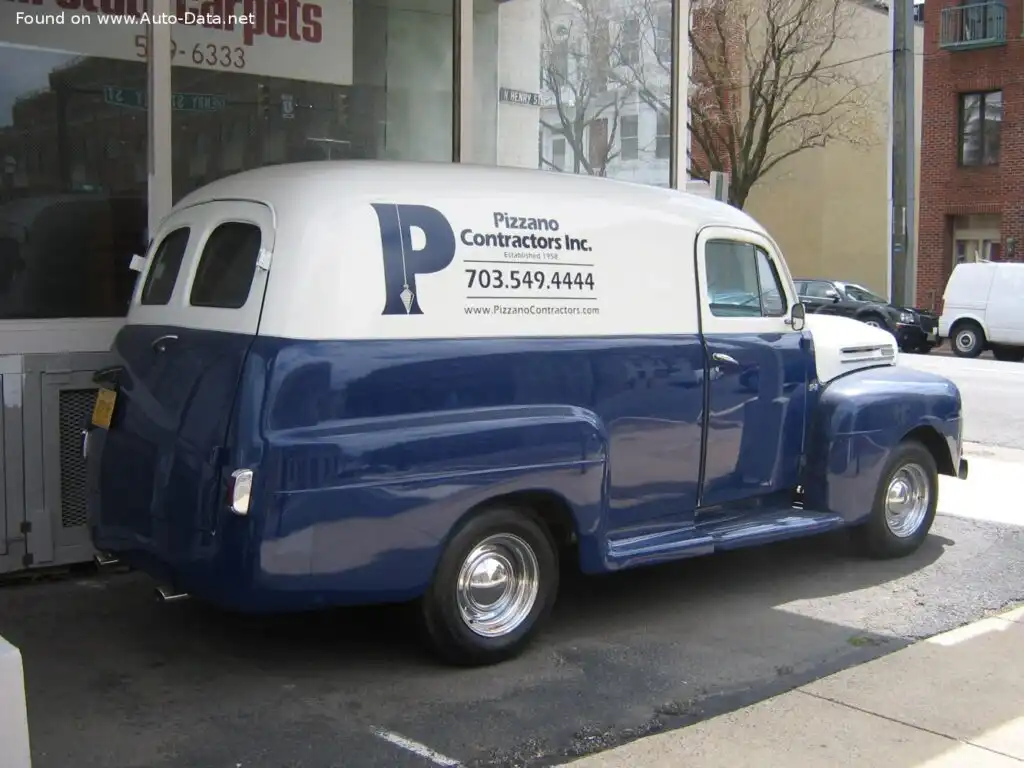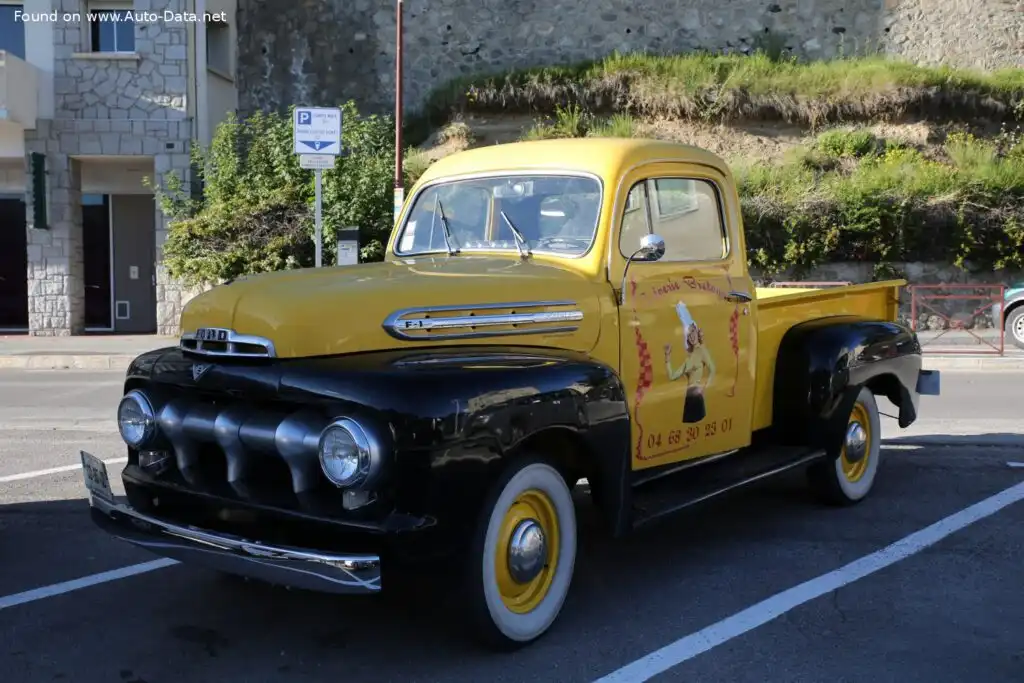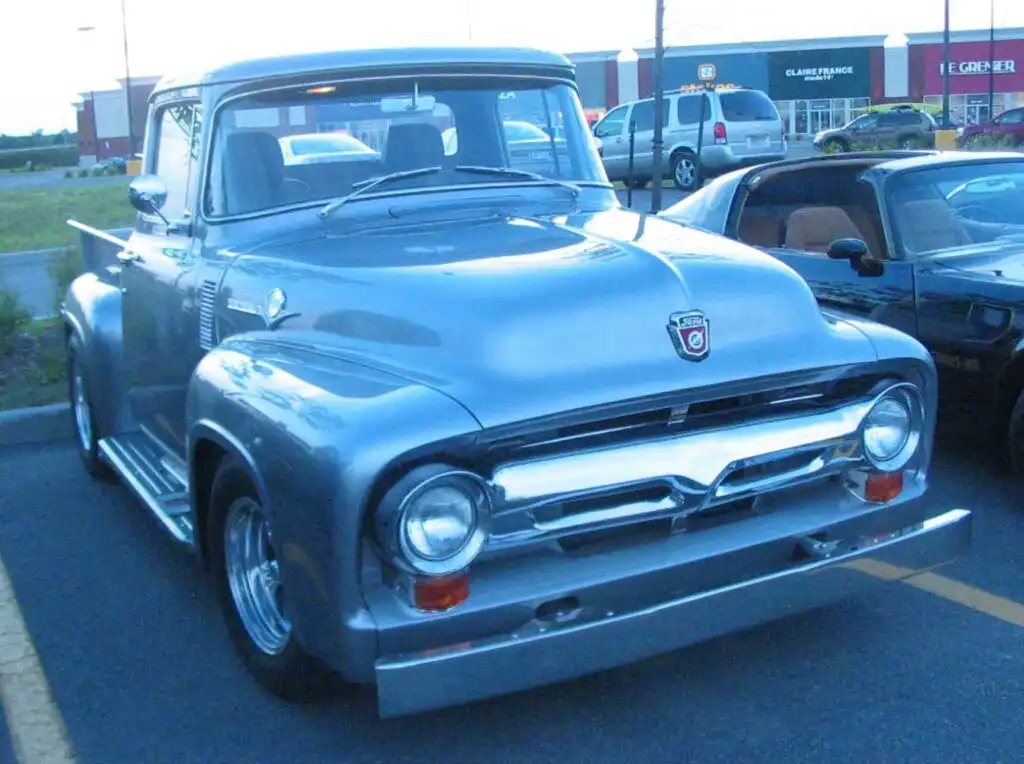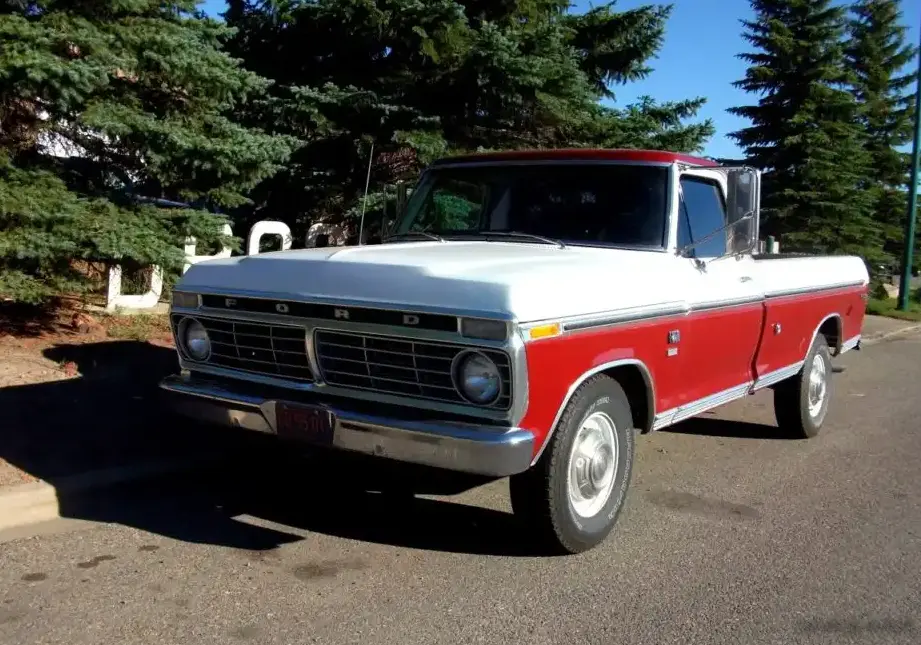
The Ford F-250 VI Regular Cab, equipped with the 4.9-liter (300 cubic inch) inline-six engine and a three-speed Cruise-O-Matic automatic transmission, represented a work-focused configuration within the sixth generation of the Ford F-Series trucks produced between 1973 and 1979. This particular variant, manufactured from 1975 to 1979, served as an entry-level offering for buyers needing a heavy-duty pickup without the expense of the larger V8 engines. It was primarily aimed at farmers, ranchers, and tradesmen who prioritized durability and low running costs over outright performance.
Technical Specifications
| Brand | Ford |
| Model | F-Series F-250 |
| Generation | F-Series F-250 VI Regular Cab |
| Type (Engine) | 4.9 300 Six (113 Hp) Automatic |
| Start of production | 1975 |
| End of production | 1979 |
| Powertrain Architecture | Internal Combustion engine |
| Body type | Pick-up |
| Seats | 3 |
| Doors | 2 |
| Fuel Type | Petrol (Gasoline) |
| Power | 113 Hp |
| Power per litre | 23 Hp/l |
| Engine displacement | 4916 cm3 / 299.99 cu. in. |
| Number of cylinders | 6 |
| Engine configuration | Inline |
| Cylinder Bore | 101.6 mm / 4 in. |
| Piston Stroke | 101.09 mm / 3.98 in. |
| Fuel injection system | Carburettor |
| Engine aspiration | Naturally aspirated engine |
| Max. weight | 3674 kg / 8099.78 lbs. |
| Trunk (boot) space – minimum | 1852-2084 l / 65.4 – 73.6 cu. ft. |
| Length | 5215 mm / 205.31 in. |
| Wheelbase | 3378 mm / 132.99 in. |
| Wading depth | 681 mm / 26.81 in. |
| Drivetrain Architecture | The Internal combustion engine (ICE) drives the rear wheels of the vehicle. |
| Drive wheel | Rear wheel drive |
| Number of gears and type of gearbox | automatic transmission Cruise-O-Matic |
| Front suspension | Independent coil spring |
| Rear suspension | Leaf spring |
| Front brakes | Disc |
| Rear brakes | Drum |
| Tires size | 215/85 R16.5 |
| Wheel rims size | 6J x 16.5 |
Powertrain & Engine Architecture
The heart of this F-250 was the 4.9-liter (299 cubic inch) inline-six cylinder engine, commonly known as the “300 Six.” This engine, a member of Ford’s durable and long-lived 300 cubic inch family, was renowned for its simplicity, reliability, and low-end torque. It featured a cast-iron block and cylinder head, a two-barrel carburetor, and a relatively low 8.0:1 compression ratio. The engine produced 113 horsepower at 3,600 rpm and 185 lb-ft of torque at 1,800 rpm. The Cruise-O-Matic transmission was a three-speed automatic, known for its robustness but not for particularly quick shifts. It was a common pairing with the 300 Six, providing a balance of usability and durability. The transmission’s gear ratios were geared towards maximizing torque for hauling and towing, rather than achieving high speeds.
Driving Characteristics
The 113 horsepower and 185 lb-ft of torque delivered by the 300 Six and Cruise-O-Matic combination resulted in a work-oriented driving experience. Acceleration was modest, and passing maneuvers required careful planning. However, the engine’s strong low-end torque made it well-suited for hauling heavy loads and navigating challenging terrain. The automatic transmission, while not sporty, provided smooth and predictable shifts. Compared to the available V8 engines (360 and 460 cubic inch), this configuration offered significantly less power, but it also provided better fuel economy and lower maintenance costs. Drivers accustomed to the V8s would find the 300 Six noticeably slower, especially when fully loaded. The gear ratios of the Cruise-O-Matic were optimized for towing and hauling, meaning the engine would operate at higher RPMs during highway cruising.
Equipment & Trim Levels
The F-250 with the 300 Six and automatic transmission typically represented the base trim level. Standard features included a basic vinyl bench seat, a simple dashboard with essential gauges (speedometer, fuel gauge, temperature gauge), and a manually operated two-speed windshield wiper. Options were available, including upgraded interior trim, a radio, and a heater/defroster. Power steering and power brakes were often added as options, enhancing the driving experience. The exterior typically featured minimal brightwork, reflecting its work-truck focus. The bed was usually equipped with a basic wooden floor, and a tailgate chain was standard.
Chassis & Braking
The F-250 chassis was a robust body-on-frame design, built to withstand heavy use. The front suspension utilized independent coil springs, providing a relatively comfortable ride for a heavy-duty truck. The rear suspension employed leaf springs, designed to handle substantial loads. The braking system featured disc brakes on the front wheels and drum brakes on the rear. The drum brakes on the rear were a cost-saving measure, common on base-model trucks. The tires were typically 215/85R16.5 size, chosen for their durability and load-carrying capacity. Stabilizer bars were not typically included on the base F-250 models.
Market Reception & Comparison
The 4.9-liter F-250 automatic was generally well-received by buyers who prioritized affordability and reliability over performance. Critics acknowledged the engine’s durability and low operating costs, but noted its lack of power compared to the V8 options. Fuel economy, while not exceptional, was better than the V8s, making it an attractive option for those who drove long distances or frequently hauled loads. Compared to the 360 and 460 cubic inch V8s, the 300 Six automatic was significantly less expensive to purchase and maintain. However, it lacked the towing capacity and overall performance of the larger engines. The 300 Six was often favored by those who needed a dependable truck for everyday tasks and occasional heavy hauling.
Legacy
The Ford 300 Six engine has earned a legendary reputation for its longevity and reliability. Many examples remain on the road today, often with hundreds of thousands of miles on the odometer. The combination of the 300 Six and the Cruise-O-Matic transmission, while not known for its speed or sophistication, proved to be a durable and dependable powertrain. In the used car market, F-250s equipped with this powertrain are often sought after by those looking for a simple, rugged, and affordable truck. Parts availability remains good, and the engine’s simplicity makes it relatively easy to repair. While not a collector’s item in the same vein as some of the higher-performance F-Series models, the 4.9-liter F-250 represents a significant chapter in Ford’s truck history, embodying the values of durability, reliability, and affordability.