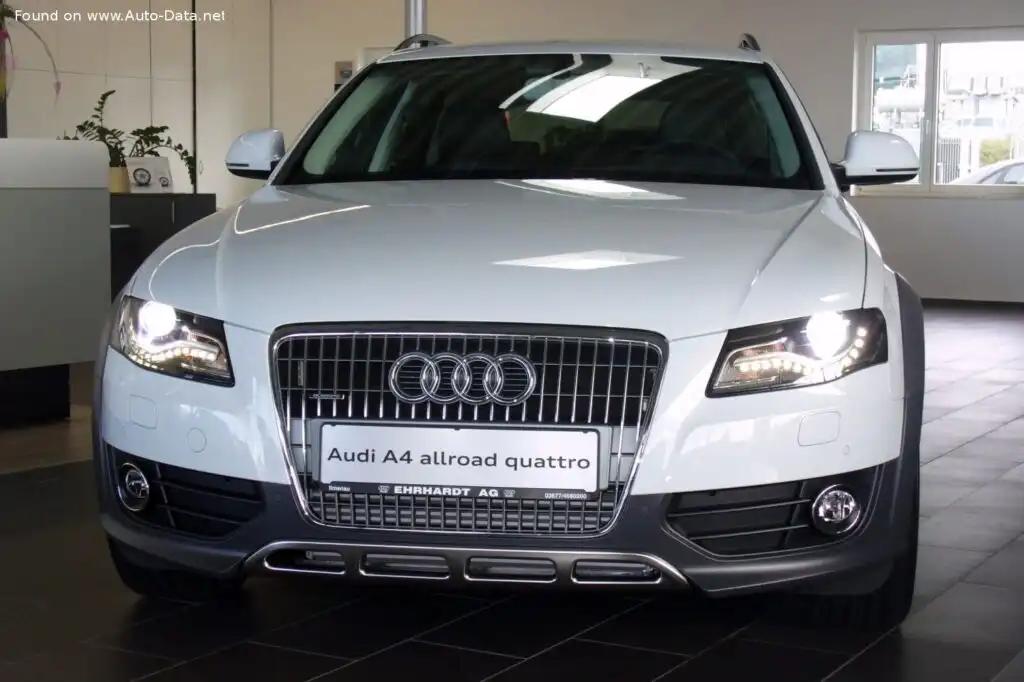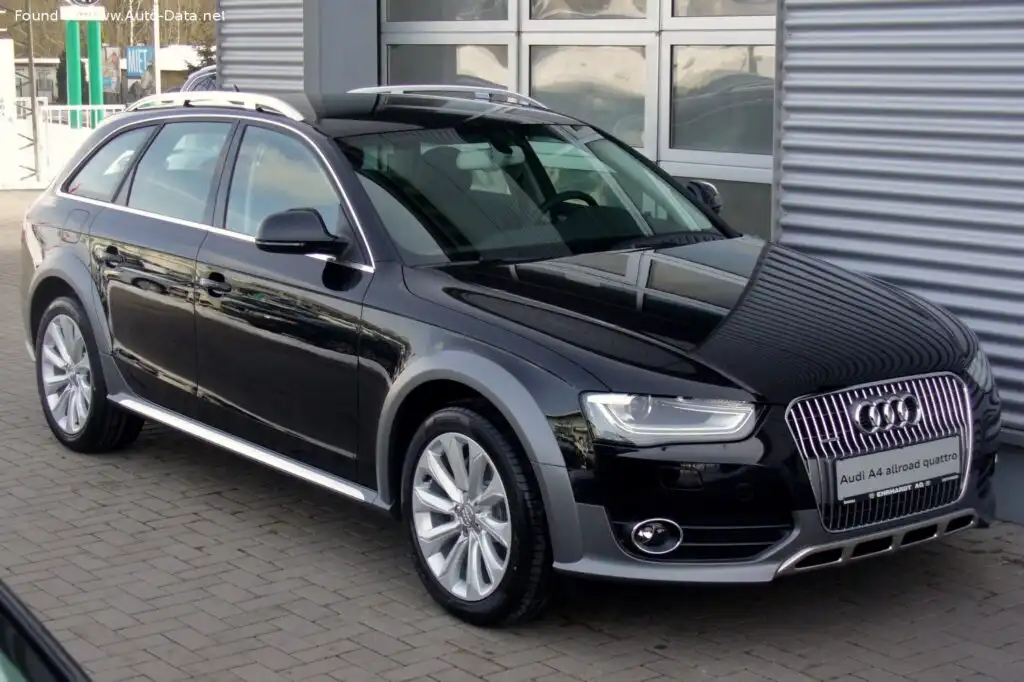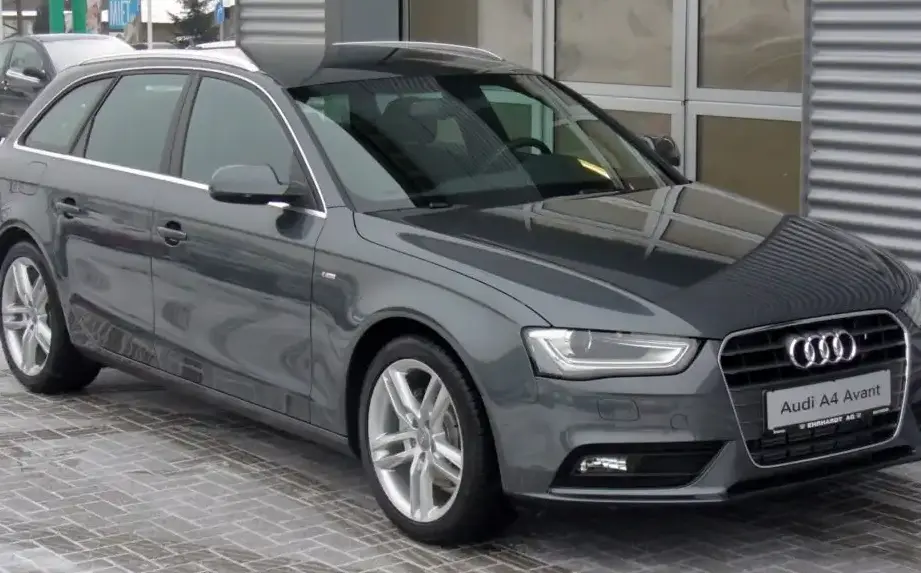
The Audi A4 Avant (B8 8K) facelift, produced from 2011 to 2013, represented a significant refinement of Audi’s popular compact executive wagon. The 2.0 TFSI variant, generating 211 horsepower and paired with Audi’s Multitronic continuously variable transmission (CVT) and featuring a start/stop system, occupied a sweet spot in the A4 Avant lineup, offering a blend of performance, efficiency, and practicality. This model year saw updates to the exterior styling, interior technology, and engine options, solidifying the B8’s position as a competitive offering in the European and increasingly, North American, markets.
Technical Specifications
| Brand | Audi |
| Model | A4 |
| Generation | A4 Avant (B8 8K, facelift 2011) |
| Type (Engine) | 2.0 TFSI (211 Hp) Multitronic start/stop |
| Start of production | January, 2012 |
| End of production | 2013 |
| Powertrain Architecture | Internal Combustion engine |
| Body type | Station wagon (estate) |
| Seats | 5 |
| Doors | 5 |
| Fuel consumption (urban) | 7.7 l/100 km (30.5 US mpg, 36.7 UK mpg, 13 km/l) |
| Fuel consumption (extra urban) | 5.4 l/100 km (43.6 US mpg, 52.3 UK mpg, 18.5 km/l) |
| Fuel consumption (combined) | 6.2 l/100 km (37.9 US mpg, 45.6 UK mpg, 16.1 km/l) |
| CO2 emissions | 144 g/km |
| Fuel Type | Petrol (Gasoline) |
| Acceleration 0 – 100 km/h | 7.2 sec |
| Acceleration 0 – 62 mph | 7.2 sec |
| Acceleration 0 – 60 mph | 6.8 sec |
| Maximum speed | 232 km/h (144.16 mph) |
| Emission standard | Euro 5 |
| Weight-to-power ratio | 7.3 kg/Hp, 137 Hp/tonne |
| Weight-to-torque ratio | 4.4 kg/Nm, 227.3 Nm/tonne |
| Power | 211 Hp @ 4300-6000 rpm |
| Power per litre | 106.4 Hp/l |
| Torque | 350 Nm @ 1500-4200 rpm (258.15 lb.-ft. @ 1500-4200 rpm) |
| Engine layout | Front, Longitudinal |
| Engine Model/Code | CAEB, CDNC, CPMA |
| Engine displacement | 1984 cm3 (121.07 cu. in.) |
| Number of cylinders | 4 |
| Engine configuration | Inline |
| Cylinder Bore | 82.5 mm (3.25 in.) |
| Piston Stroke | 92.8 mm (3.65 in.) |
| Compression ratio | 9.6:1 |
| Number of valves per cylinder | 4 |
| Fuel injection system | Direct injection |
| Engine aspiration | Turbocharger, Intercooler |
| Valvetrain | DOHC |
| Engine oil capacity | 4.6 l (4.86 US qt | 4.05 UK qt) |
| Kerb Weight | 1540 kg (3395.12 lbs.) |
| Max. weight | 2110 kg (4651.75 lbs.) |
| Max load | 570 kg (1256.63 lbs.) |
| Trunk (boot) space – minimum | 490 l (17.3 cu. ft.) |
| Trunk (boot) space – maximum | 1430 l (50.5 cu. ft.) |
| Fuel tank capacity | 63 l (16.64 US gal | 13.86 UK gal) |
| Max. roof load | 90 kg (198.42 lbs.) |
| Permitted trailer load with brakes (8%) | 1700 kg (3747.86 lbs.) |
| Permitted trailer load without brakes | 750 kg (1653.47 lbs.) |
| Permitted towbar download | 80 kg (176.37 lbs.) |
| Length | 4699 mm (185 in.) |
| Width | 1826 mm (71.89 in.) |
| Width including mirrors | 2040 mm (80.31 in.) |
| Height | 1436 mm (56.54 in.) |
| Wheelbase | 2808 mm (110.55 in.) |
| Front track | 1564 mm (61.57 in.) |
| Rear (Back) track | 1551 mm (61.06 in.) |
| Front overhang | 862 mm (33.94 in.) |
| Rear overhang | 1029 mm (40.51 in.) |
| Drag coefficient (Cd) | 0.32 |
| Minimum turning circle (turning diameter) | 11.5 m (37.73 ft.) |
| Drivetrain Architecture | The Internal combustion engine (ICE) drives the front wheels of the vehicle. |
| Drive wheel | Front wheel drive |
| Number of gears and type of gearbox | automatic transmission Multitronic |
| Front suspension | Independent multi-link suspension |
| Rear suspension | Independent on trapezoidal lever |
| Assisting systems | ABS (Anti-lock braking system) |
| Steering type | Steering rack and pinion |
| Power steering | Electric Steering |
| Tires size | 225/55 R16 |
| Wheel rims size | 7.5J x 16 |
INTRODUCTION
The Audi A4 Avant (B8 8K) facelift, launched in 2011, continued the A4’s legacy as a premium compact executive wagon. The 2.0 TFSI 211 hp Multitronic variant, introduced in January 2012, was a key offering in Audi’s lineup. Positioned as a mid-range option, it bridged the gap between the more economical 1.8 TFSI models and the performance-oriented 3.0 TFSI variants. The facelift brought revised styling, including updated headlights and grilles, along with improvements to the interior and engine technology. This version of the A4 Avant was primarily aimed at the European market, where wagons remain highly popular, but also saw increasing sales in North America as buyers sought a more practical alternative to traditional sedans.
Powertrain & Engine Architecture
At the heart of this A4 Avant lies the 2.0-liter inline-four cylinder engine, designated as part of the EA888 family. Engine codes such as CAEB, CDNC, and CPMA were commonly found in this model. This engine utilizes direct fuel injection (FSI) and a single turbocharger with an intercooler to deliver a balance of power and efficiency. The turbocharger provides increased air intake, boosting horsepower and torque. The engine’s valvetrain features a dual overhead camshaft (DOHC) design with four valves per cylinder, optimizing airflow for improved performance. The Multitronic transmission, a continuously variable transmission (CVT), is a key component of this variant. Unlike traditional automatic transmissions with fixed gear ratios, the Multitronic uses a chain-driven system to provide a virtually infinite number of gear ratios, resulting in smooth acceleration and optimized fuel efficiency. The start/stop system further enhances fuel economy by automatically shutting off the engine when the vehicle is stationary, such as at traffic lights.
Driving Characteristics
The 2.0 TFSI 211 hp/Multitronic combination delivers a refined and comfortable driving experience. While not as overtly sporty as the higher-output variants, it provides ample power for everyday driving and highway cruising. Acceleration from 0-60 mph takes approximately 6.8 seconds, making it a competitive performer in its class. The Multitronic transmission contributes to smooth, seamless acceleration, eliminating the shift shock often associated with traditional automatics. However, some drivers may find the CVT’s lack of distinct gear changes less engaging than a traditional automatic or manual transmission. The engine delivers strong torque from low RPMs, making it easy to navigate city traffic and overtake slower vehicles. Compared to the 1.8 TFSI, the 2.0 TFSI offers noticeably more power and responsiveness. Compared to the 3.0 TFSI, it sacrifices some outright performance but gains in fuel efficiency.
Equipment & Trim Levels
The 2.0 TFSI Multitronic A4 Avant typically came well-equipped, reflecting Audi’s premium positioning. Standard features often included leather upholstery, tri-zone automatic climate control, a multi-function steering wheel, and Audi’s MMI infotainment system with a color display. Optional extras included navigation, a premium sound system (often Bang & Olufsen), parking sensors, and advanced driver-assistance systems such as adaptive cruise control and lane departure warning. Interior trim levels varied, with options for different wood or aluminum inlays. Exterior options included various wheel designs and metallic paint finishes.
Chassis & Braking
The B8 A4 Avant features a sophisticated chassis designed for both comfort and handling. The front suspension utilizes an independent multi-link setup, while the rear suspension employs an independent trapezoidal link design. This configuration provides excellent ride quality and precise handling. The 2.0 TFSI models typically came equipped with disc brakes on all four wheels, providing ample stopping power. Anti-lock braking system (ABS) and electronic stability control (ESC) were standard safety features. Stabilizer bars were fitted to both the front and rear axles to reduce body roll during cornering.
Market Reception & Comparison
The Audi A4 Avant 2.0 TFSI Multitronic was generally well-received by automotive critics. It was praised for its refined engine, smooth transmission, comfortable ride, and practical wagon body style. Critics noted that the Multitronic transmission, while efficient, lacked the engagement of a traditional automatic or manual gearbox. Fuel economy was considered competitive for its class, and the A4 Avant offered a good balance between performance and efficiency. Compared to rivals such as the BMW 3 Series Touring and Mercedes-Benz C-Class Estate, the A4 Avant was often seen as offering a more modern and technologically advanced interior.
Legacy
The 2.0 TFSI engine, in various iterations, has proven to be a reliable and durable powerplant. The Multitronic transmission, however, has been known to require more frequent maintenance than traditional automatic transmissions, particularly regarding fluid changes. In the used car market, the A4 Avant 2.0 TFSI Multitronic remains a popular choice, offering a blend of practicality, performance, and prestige. Well-maintained examples continue to command reasonable prices, and the A4 Avant’s reputation for quality and reliability ensures continued demand.