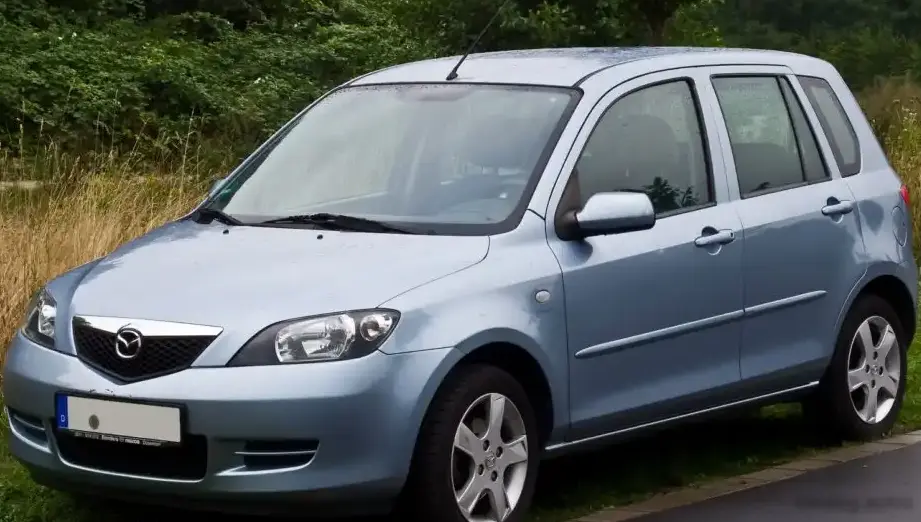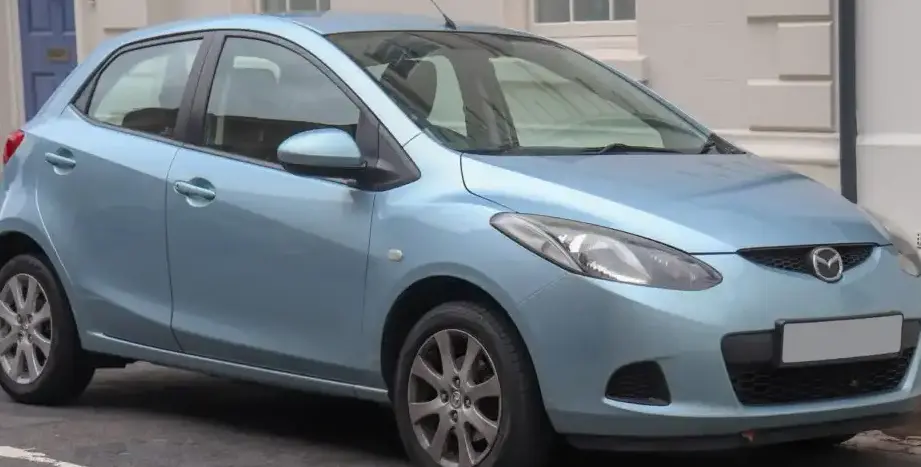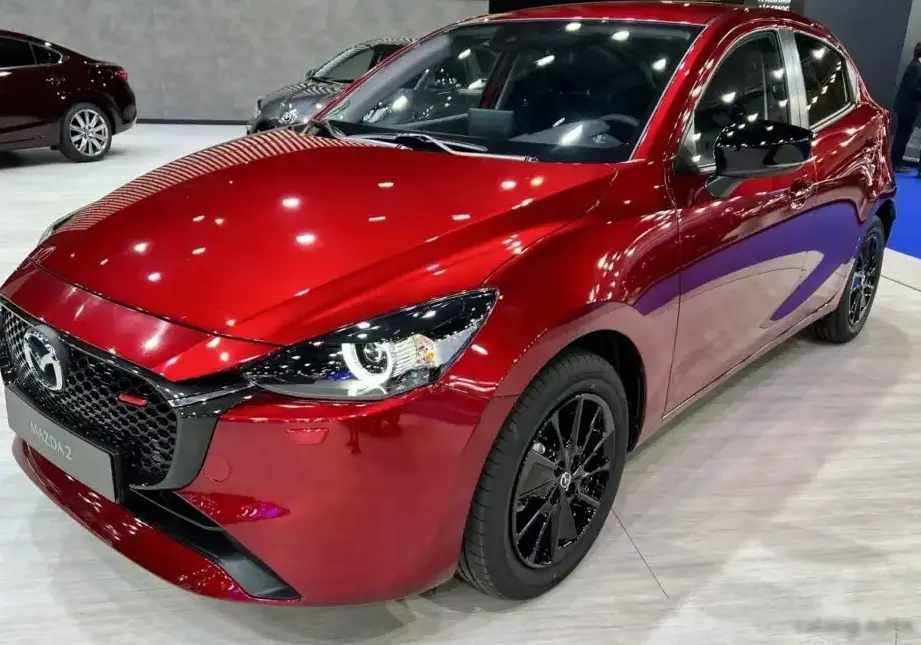
The Mazda 2 III (DJ), particularly the facelifted version introduced in July 2019 and continuing through March 2022, represented Mazda’s entry into the subcompact hatchback segment. This generation, built on the DF platform, aimed to balance fuel efficiency, nimble handling, and a surprisingly refined interior for its class. The 1.5 Skyactiv-G variant, producing 90 horsepower, served as a core offering within the range, positioned as an accessible and economical choice for urban commuters and first-time car buyers. It was primarily sold in European and Asian markets, where the demand for small, efficient hatchbacks is high.
Technical Specifications
| Brand | Mazda |
| Model | 2 |
| Generation | 2 III (DJ, facelift 2019) |
| Type (Engine) | 1.5 Skyactiv-G (90 Hp) |
| Start of production | July, 2019 |
| End of production | March, 2022 |
| Powertrain Architecture | Internal Combustion engine |
| Body type | Hatchback |
| Seats | 5 |
| Doors | 5 |
| Fuel consumption (combined) | 5.3 l/100 km (44.4 US mpg, 53.3 UK mpg, 18.9 km/l) |
| CO2 emissions | 94-95 g/km |
| Fuel Type | Petrol (Gasoline) |
| Acceleration 0 – 100 km/h | 9.7 sec |
| Acceleration 0 – 62 mph | 9.7 sec |
| Acceleration 0 – 60 mph | 9.2 sec |
| Maximum speed | 183 km/h (113.71 mph) |
| Emission standard | Euro 6d |
| Weight-to-power ratio | 11.8 kg/Hp, 84.4 Hp/tonne |
| Weight-to-torque ratio | 7.2 kg/Nm, 138.8 Nm/tonne |
| Power | 90 Hp @ 6000 rpm |
| Power per litre | 60.2 Hp/l |
| Torque | 148 Nm @ 4000 rpm (109.16 lb.-ft. @ 4000 rpm) |
| Engine layout | Front, Transverse |
| Engine displacement | 1496 cm3 (91.29 cu. in.) |
| Number of cylinders | 4 |
| Engine configuration | Inline |
| Cylinder Bore | 74.5 mm (2.93 in.) |
| Piston Stroke | 85.8 mm (3.38 in.) |
| Compression ratio | 13:1 |
| Number of valves per cylinder | 4 |
| Fuel injection system | Direct injection |
| Engine aspiration | Naturally aspirated engine |
| Engine oil capacity | 4.2 l (4.44 US qt | 3.7 UK qt) |
| Coolant | 5.4 l (5.71 US qt | 4.75 UK qt) |
| Kerb Weight | 1066 kg (2350.13 lbs.) |
| Max. weight | 1536 kg (3386.3 lbs.) |
| Max load | 470 kg (1036.17 lbs.) |
| Trunk (boot) space – minimum | 280 l (9.89 cu. ft.) |
| Trunk (boot) space – maximum | 950 l (33.55 cu. ft.) |
| Fuel tank capacity | 44 l (11.62 US gal | 9.68 UK gal) |
| Max. roof load | 50 kg (110.23 lbs.) |
| Permitted trailer load with brakes (12%) | 900 kg (1984.16 lbs.) |
| Length | 4070 mm (160.24 in.) |
| Width | 1695 mm (66.73 in.) |
| Height | 1515 mm (59.65 in.) |
| Wheelbase | 2570 mm (101.18 in.) |
| Front track | 1495 mm (58.86 in.) |
| Rear (Back) track | 1485 mm (58.46 in.) |
| Ride height (ground clearance) | 143 mm (5.63 in.) |
| Drivetrain Architecture | The Internal combustion engine (ICE) drives the front wheels of the vehicle. |
| Drive wheel | Front wheel drive |
| Number of gears and type of gearbox | 6 gears, manual transmission |
| Front suspension | Independent type McPherson |
| Rear suspension | Torsion |
| Assisting systems | ABS (Anti-lock braking system) |
| Steering type | Steering rack and pinion |
| Power steering | Electric Steering |
| Tires size | 185/65 R15; 185/60 R16 |
| Wheel rims size | 15; 16 |
Powertrain & Engine Architecture
At the heart of the Mazda 2 1.5 Skyactiv-G (90 Hp) lies the PE-VPH engine, a 1.5-liter naturally aspirated inline-four cylinder gasoline engine. This engine is a key component of Mazda’s Skyactiv technology, designed to maximize combustion efficiency. It features direct injection, a high compression ratio of 13:1, and optimized intake and exhaust systems. The engine code is PE-VPH. The direct injection system allows for precise fuel delivery, contributing to improved fuel economy and reduced emissions. The valvetrain utilizes dual overhead camshafts (DOHC) and four valves per cylinder, enhancing volumetric efficiency. This particular variant was exclusively offered with a six-speed manual transmission, prioritizing driver engagement and fuel efficiency over the convenience of an automatic.
Driving Characteristics
The 90 horsepower output, coupled with the six-speed manual gearbox, provides a reasonably engaging driving experience. While not particularly quick – 0-60 mph takes around 9.2 seconds – the engine is responsive and willing to rev. The gear ratios are well-matched, allowing the driver to keep the engine in its optimal power band. Compared to higher-output versions of the Mazda 2, such as those with the 1.5-liter engine producing 115 hp, this variant feels less urgent in acceleration. However, it offers a more relaxed and fuel-efficient driving experience, making it well-suited for city driving and longer commutes. The relatively light weight of the vehicle (around 1066 kg) helps to mitigate the lower power output, providing a decent level of agility.
Equipment & Trim Levels
The 1.5 Skyactiv-G (90 Hp) trim typically served as the entry point to the Mazda 2 range. Standard equipment generally included air conditioning, power windows, power door locks, a basic audio system with USB connectivity, and ABS brakes. Safety features such as multiple airbags and stability control were also standard. Higher trim levels added features like alloy wheels, a touchscreen infotainment system, automatic climate control, and advanced safety technologies like lane departure warning and smart city brake support. Interior upholstery was typically cloth, with a functional and durable design. Optional extras included metallic paint, a sunroof, and upgraded audio systems.
Chassis & Braking
The Mazda 2 utilizes a McPherson strut front suspension and a torsion beam rear suspension. This setup provides a good balance between ride comfort and handling. The torsion beam rear suspension is a cost-effective solution that minimizes weight and complexity. Braking duties are handled by disc brakes on the front wheels and drum brakes on the rear wheels. This configuration is typical for vehicles in this weight class. Electric power steering provides light and precise steering feel. The chassis is relatively lightweight, contributing to the car’s nimble handling characteristics.
Market Reception & Comparison
The Mazda 2 1.5 Skyactiv-G (90 Hp) was generally well-received by automotive critics for its fuel efficiency, handling, and surprisingly refined interior. However, some reviewers noted that the engine could feel underpowered, particularly when fully loaded or driving uphill. Compared to other subcompact hatchbacks in its class, such as the Volkswagen Polo or the Ford Fiesta, the Mazda 2 offered a more engaging driving experience and a more premium interior feel. Fuel economy was competitive, typically achieving around 5.3 l/100 km (44.4 US mpg) in combined driving. Reliability was generally good, with few reported issues with the engine or transmission.
Legacy
The 1.5 Skyactiv-G engine has proven to be a reliable and durable powertrain. The PE-VPH engine, in particular, has a good reputation for longevity, provided it is properly maintained. In the used car market, the Mazda 2 1.5 Skyactiv-G (90 Hp) represents a good value proposition, offering a well-equipped and fuel-efficient hatchback at an affordable price. Its nimble handling and refined interior continue to appeal to buyers looking for a small car that is enjoyable to drive. While not the fastest version of the Mazda 2, its simplicity and reliability make it a popular choice for those seeking a practical and economical vehicle.