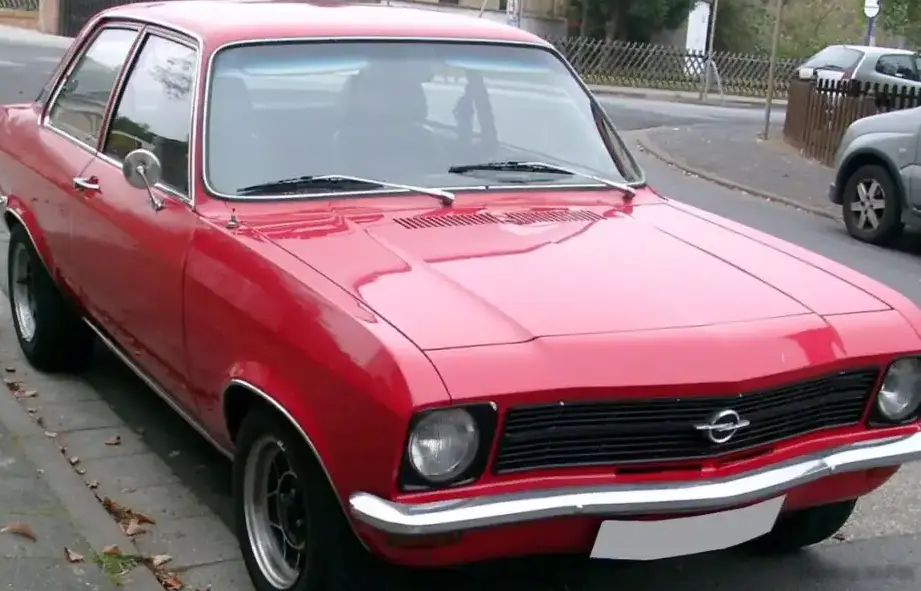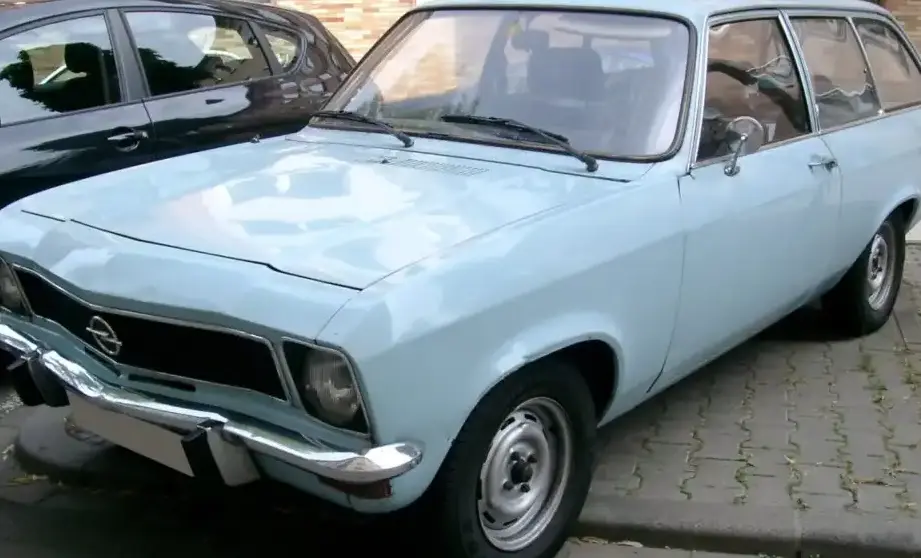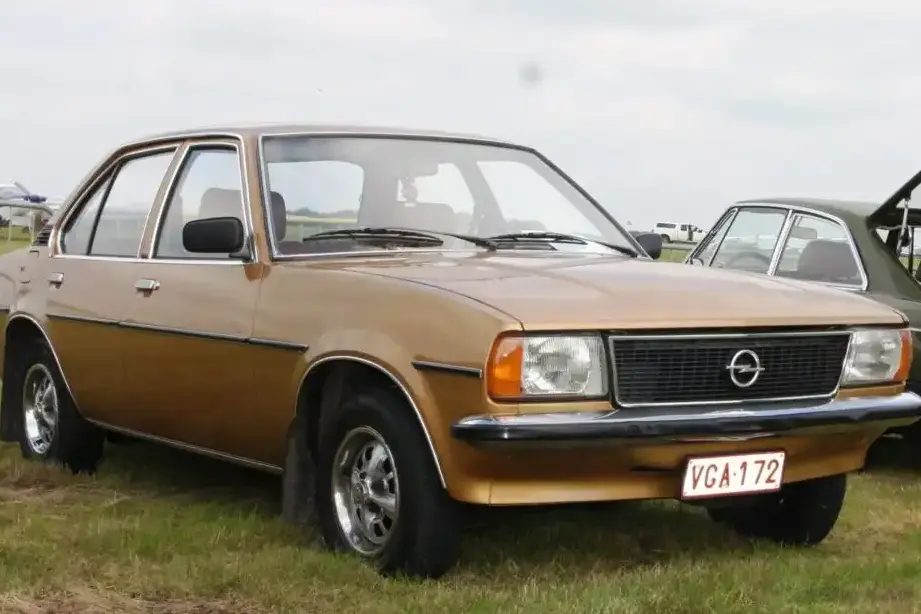
The Opel Ascona B 1.9 S, producing 90 horsepower, was a key variant within the Ascona B range manufactured between 1975 and 1979. Positioned as a mid-range offering, it aimed to balance performance with affordability, appealing to buyers seeking a practical and reasonably spirited family saloon. The Ascona B itself was a significant model for Opel, representing a move towards more modern styling and engineering compared to its predecessor, the Ascona A. It shared its platform (the 1HX0/A3) with other General Motors products of the era, including the Isuzu Gemini and, after Opel’s acquisition, the Vauxhall Cavalier in the United Kingdom.
Technical Specifications
| Brand | Opel |
| Model | Ascona |
| Generation | Ascona B |
| Type (Engine) | 1.9 S (90 Hp) |
| Start of production | 1975 |
| End of production | 1979 |
| Powertrain Architecture | Internal Combustion engine |
| Body type | Sedan |
| Seats | 5 |
| Doors | 2-4 |
| Fuel Type | Petrol (Gasoline) |
| Acceleration 0 – 100 km/h | 11.5 sec |
| Acceleration 0 – 62 mph | 11.5 sec |
| Acceleration 0 – 60 mph | 10.9 sec |
| Maximum speed | 167 km/h (103.77 mph) |
| Weight-to-power ratio | 10.9 kg/Hp, 91.8 Hp/tonne |
| Weight-to-torque ratio | 6.7 kg/Nm, 150 Nm/tonne |
| Power | 90 Hp @ 4800 rpm |
| Power per litre | 47.4 Hp/l |
| Torque | 147 Nm @ 2600-3800 rpm (108.42 lb.-ft. @ 2600-3800 rpm) |
| Engine Model/Code | 19S |
| Engine displacement | 1897 cm3 (115.76 cu. in.) |
| Number of cylinders | 4 |
| Engine configuration | Inline |
| Cylinder Bore | 93 mm (3.66 in.) |
| Piston Stroke | 69.8 mm (2.75 in.) |
| Compression ratio | 8.8:1 |
| Number of valves per cylinder | 2 |
| Fuel injection system | Carburettor |
| Engine aspiration | Naturally aspirated engine |
| Valvetrain | SOHC |
| Engine oil capacity | 3.8 l (4.02 US qt | 3.34 UK qt) |
| Coolant | 6.1 l (6.45 US qt | 5.37 UK qt) |
| Kerb Weight | 980 kg (2160.53 lbs.) |
| Max. weight | 1420 kg (3130.56 lbs.) |
| Max load | 440 kg (970.03 lbs.) |
| Trunk (boot) space – minimum | 380 l (13.42 cu. ft.) |
| Fuel tank capacity | 50 l (13.21 US gal | 11 UK gal) |
| Permitted trailer load with brakes (12%) | 1300 kg (2866.01 lbs.) |
| Permitted trailer load without brakes | 500 kg (1102.31 lbs.) |
| Length | 4321 mm (170.12 in.) |
| Width | 1670 mm (65.75 in.) |
| Height | 1380 mm (54.33 in.) |
| Wheelbase | 2518 mm (99.13 in.) |
| Front track | 1374 mm (54.09 in.) |
| Rear (Back) track | 1374 mm (54.09 in.) |
| Ride height (ground clearance) | 130 mm (5.12 in.) |
| Drag coefficient (Cd) | 0.46 |
| Minimum turning circle (turning diameter) | 10.1 m (33.14 ft.) |
| Drivetrain Architecture | The Internal combustion engine (ICE) drives the rear wheels of the vehicle. |
| Drive wheel | Rear wheel drive |
| Number of gears and type of gearbox | 4 gears, manual transmission |
| Front brakes | Disc |
| Rear brakes | Drum |
Powertrain & Engine Architecture
The 1.9 S variant was powered by Opel’s 19S engine, a 1,897 cc (115.76 cubic inches) inline-four cylinder unit. This engine featured a single overhead camshaft (SOHC) valvetrain with two valves per cylinder. Fuel delivery was handled by a carburetor, a common setup for the time, though less efficient than fuel injection. The engine produced 90 horsepower at 4,800 rpm and 147 Nm (108.42 lb-ft) of torque between 2,600 and 3,800 rpm. The 19S engine was known for its relative simplicity and durability, making it a reasonably reliable powerplant. The Ascona B 1.9 S was typically equipped with a four-speed manual transmission, although a three-speed automatic transmission was also available, albeit less common. The automatic option, while offering convenience, noticeably impacted acceleration and fuel economy.
Driving Characteristics
The 1.9 S with the manual transmission provided adequate performance for everyday driving. Acceleration to 60 mph took around 10.9 seconds, and the top speed was approximately 103.77 mph. The engine felt reasonably responsive in the mid-range, making it suitable for overtaking maneuvers on open roads. However, it lacked the outright punch of the larger 2.0-liter engines offered in other Ascona B models. The automatic transmission version suffered from slower acceleration and a less engaging driving experience. The gear ratios were optimized for fuel efficiency rather than performance, resulting in a somewhat sluggish feel. The rear-wheel-drive layout provided a balanced handling characteristic, although it wasn’t particularly sporty.
Equipment & Trim Levels
The 1.9 S trim level generally included features such as cloth upholstery, basic instrumentation (speedometer, fuel gauge, temperature gauge), and a four-spoke steering wheel. Optional extras included a vinyl roof, upgraded audio systems, and power-assisted steering. The interior was functional and relatively spacious for its time, though the materials were not particularly luxurious. The dashboard layout was straightforward and easy to use. The 1.9 S occupied a middle ground in the Ascona B lineup, offering more features than the base models but lacking the premium appointments of the higher-spec variants.
Chassis & Braking
The Ascona B featured a conventional chassis design with independent front suspension and a live axle rear suspension. The front suspension utilized MacPherson struts, while the rear suspension employed leaf springs. The 1.9 S typically came equipped with disc brakes on the front wheels and drum brakes on the rear. The braking system was adequate for normal driving conditions, but it lacked the stopping power of more modern braking systems. Stabilizer bars were often included to reduce body roll during cornering, improving handling stability.
Market Reception & Comparison
The Ascona B 1.9 S was generally well-received by automotive critics as a practical and affordable family saloon. It was praised for its comfortable ride, decent fuel economy, and reliable engine. However, some critics noted that the engine lacked power compared to its rivals, and the interior was somewhat basic. Compared to the higher-spec Ascona B models, such as the 2.0 E, the 1.9 S offered less performance but at a lower price point. The 1.9 TDI diesel variant, introduced later in the Ascona B’s production run, provided superior fuel economy but significantly less power. The 1.9 S appealed to buyers who prioritized practicality and affordability over outright performance.
Legacy
The Opel Ascona B 1.9 S remains a popular classic car among enthusiasts. The 19S engine is known for its durability and relative ease of maintenance. Parts availability is generally good, although some components may be difficult to find. The Ascona B 1.9 S is often seen as a good entry point into classic car ownership, offering a blend of affordability, reliability, and classic styling. While not a particularly rare or valuable model, well-maintained examples are increasingly sought after by collectors and enthusiasts. The car represents a significant era in Opel’s history, showcasing the company’s commitment to producing practical and well-engineered vehicles.