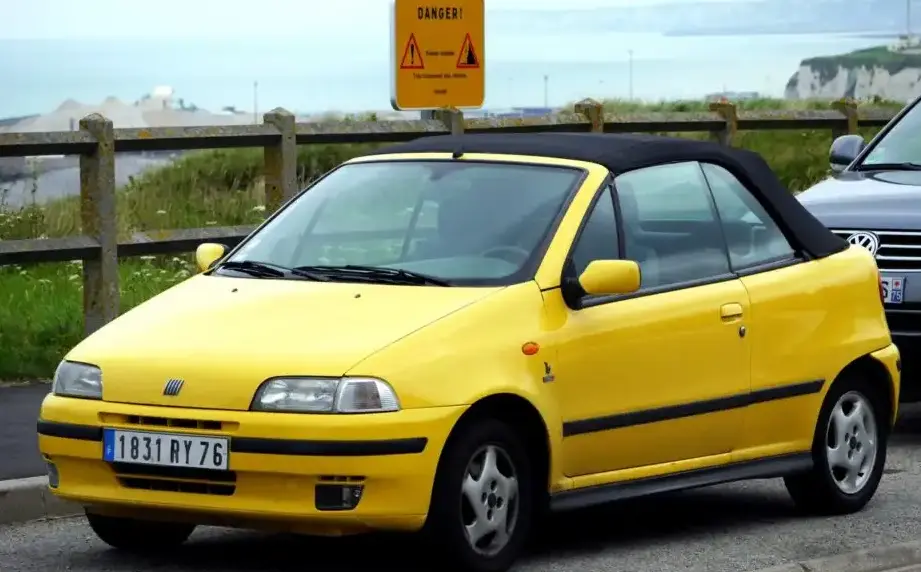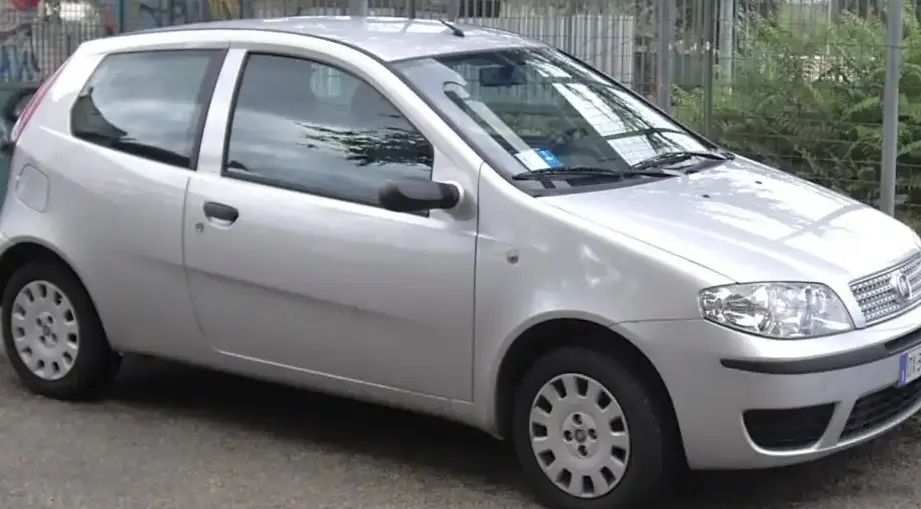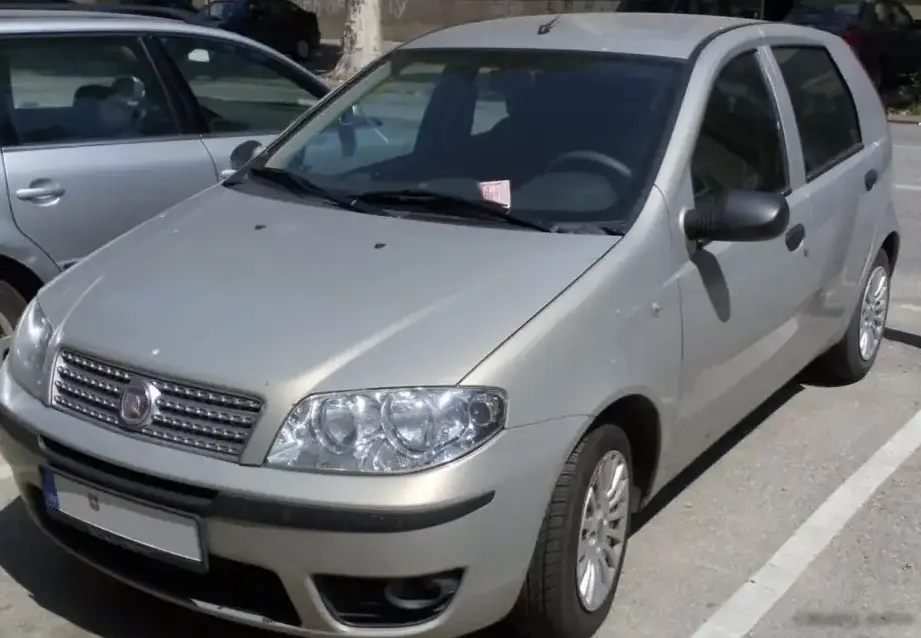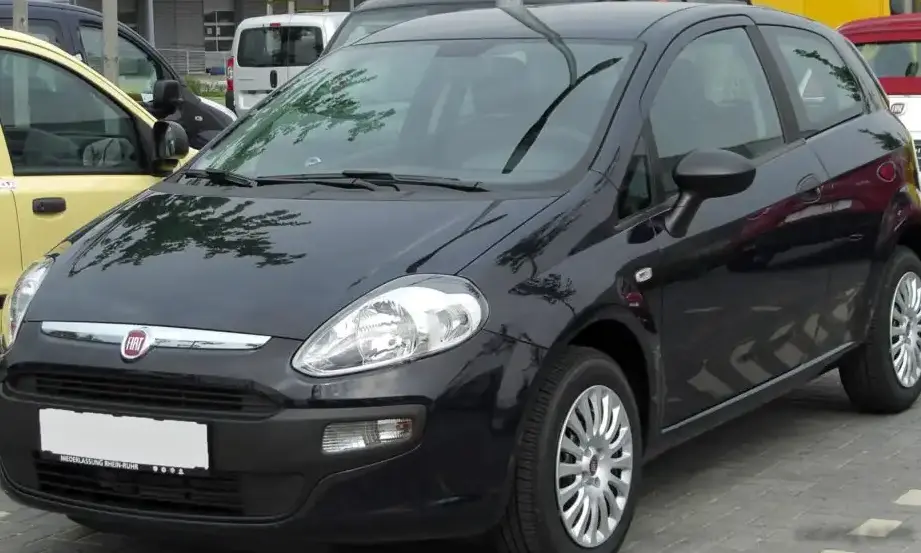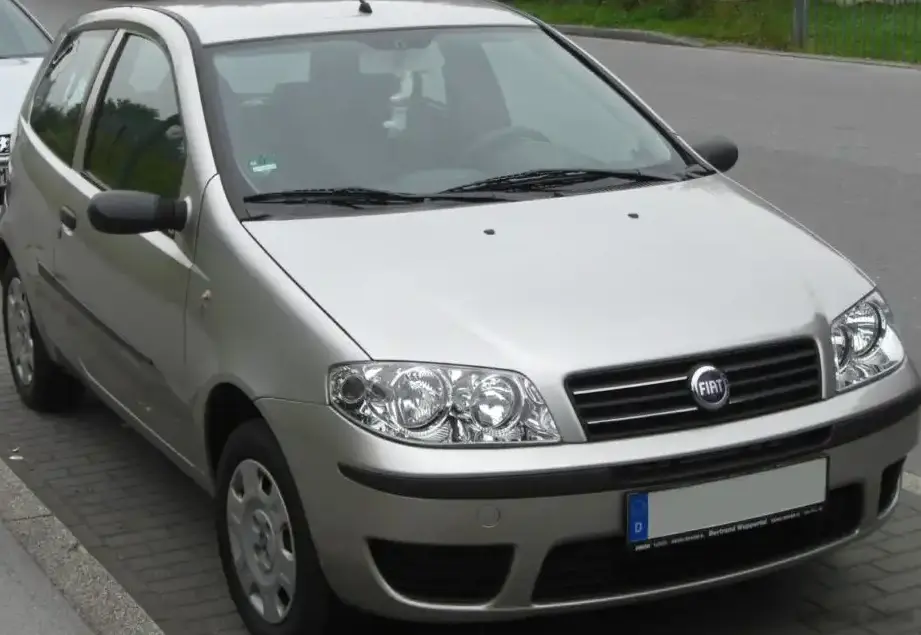
The Fiat Punto II, specifically the 3-door hatchback variant equipped with the 1.2-liter 80 horsepower engine and Continuously Variable Transmission (CVT), was produced from 2003 to 2007. This version represented an entry-level offering within the facelifted 188 series of the Punto II, positioned as an economical and practical choice for urban drivers. It sat below the more powerful 1.4-liter and sporting Abarth versions in the lineup, and offered a more accessible price point than models with traditional manual transmissions.
Technical Specifications
| Brand | Fiat |
| Model | Punto |
| Generation | Punto II (188, facelift 2003) 3dr |
| Type (Engine) | 1.2 (80 Hp) CVT |
| Start of production | 2003 |
| End of production | 2007 |
| Powertrain Architecture | Internal Combustion engine |
| Body type | Hatchback |
| Seats | 5 |
| Doors | 3 |
| Fuel consumption (urban) | 8.4 l/100 km (28 US mpg, 33.6 UK mpg, 11.9 km/l) |
| Fuel consumption (extra urban) | 5.5 l/100 km (42.8 US mpg, 51.4 UK mpg, 18.2 km/l) |
| Fuel consumption (combined) | 6.5 l/100 km (36.2 US mpg, 43.5 UK mpg, 15.4 km/l) |
| Fuel Type | Petrol (Gasoline) |
| Acceleration 0 – 100 km/h | 12.6 sec |
| Acceleration 0 – 62 mph | 12.6 sec |
| Acceleration 0 – 60 mph | 12 sec |
| Maximum speed | 165 km/h (102.53 mph) |
| Emission standard | Euro 4 |
| Weight-to-power ratio | 12 kg/Hp, 83.3 Hp/tonne |
| Weight-to-torque ratio | 8.4 kg/Nm, 118.8 Nm/tonne |
| Power | 80 Hp @ 5000 rpm |
| Power per litre | 64.4 Hp/l |
| Torque | 114 Nm @ 4000 rpm (84.08 lb.-ft. @ 4000 rpm) |
| Engine layout | Front, Transverse |
| Engine Model/Code | 188A5000 |
| Engine displacement | 1242 cm3 (75.79 cu. in.) |
| Number of cylinders | 4 |
| Engine configuration | Inline |
| Cylinder Bore | 70.8 mm (2.79 in.) |
| Piston Stroke | 78.9 mm (3.11 in.) |
| Compression ratio | 10.6:1 |
| Number of valves per cylinder | 4 |
| Fuel injection system | Multi-port manifold injection |
| Engine aspiration | Naturally aspirated engine |
| Engine oil capacity | 2.8 l (2.96 US qt | 2.46 UK qt) |
| Coolant | 4.2 l (4.44 US qt | 3.7 UK qt) |
| Kerb Weight | 960 kg (2116.44 lbs.) |
| Max. weight | 1470 kg (3240.8 lbs.) |
| Max load | 510 kg (1124.36 lbs.) |
| Trunk (boot) space – minimum | 264 l (9.32 cu. ft.) |
| Trunk (boot) space – maximum | 1080 l (38.14 cu. ft.) |
| Fuel tank capacity | 47 l (12.42 US gal | 10.34 UK gal) |
| Length | 3840 mm (151.18 in.) |
| Width | 1660 mm (65.35 in.) |
| Height | 1480 mm (58.27 in.) |
| Wheelbase | 2460 mm (96.85 in.) |
| Front track | 1398 mm (55.04 in.) |
| Rear (Back) track | 1392 mm (54.8 in.) |
| Drag coefficient (Cd) | 0.32 |
| Minimum turning circle | 10.5 m (34.45 ft.) |
| Drivetrain Architecture | Front wheel drive |
| Number of gears and type of gearbox | automatic transmission CVT (6) |
| Front suspension | Spring Strut |
| Rear suspension | Torsion |
| Front brakes | Disc |
| Rear brakes | Drum |
| Assisting systems | ABS (Anti-lock braking system) |
| Steering type | Steering rack and pinion |
| Power steering | Electric Steering |
| Tires size | 165/70 R14 |
INTRODUCTION
The 2003-2007 Fiat Punto II 1.2 CVT 3-door was a key model in Fiat’s European lineup, designed to appeal to buyers seeking an affordable, practical, and easy-to-drive city car. The facelifted Punto II (188 series) brought updated styling and improved features compared to the original launch version. The introduction of the CVT transmission with the 1.2-liter engine aimed to broaden the Punto’s appeal by offering a smoother, more convenient driving experience, particularly in congested urban environments. This variant was primarily marketed in Europe, where small, fuel-efficient hatchbacks are highly popular.
Powertrain & Engine Architecture
At the heart of this Punto variant lies the 188A5000 1.2-liter inline-four cylinder engine. This engine is a naturally aspirated unit featuring multi-point fuel injection and four valves per cylinder. The engine produces 80 horsepower at 5000 rpm and 114 Nm (84 lb-ft) of torque at 4000 rpm. The engine’s design prioritized fuel efficiency and low emissions, aligning with European market demands. The engine utilizes a timing belt, requiring periodic replacement as part of scheduled maintenance. Paired with this engine is a six-speed Continuously Variable Transmission (CVT). Unlike traditional automatic transmissions with fixed gear ratios, a CVT provides a seamless and stepless change in gear ratios, optimizing engine speed for efficiency or power as needed. This particular CVT was sourced from a Japanese supplier and was known for its relatively smooth operation, though it lacked the sporty responsiveness of some dual-clutch transmissions.
Driving Characteristics
The 1.2L CVT Punto offers a comfortable, if not particularly exhilarating, driving experience. The CVT transmission eliminates the shift shock associated with traditional automatics, resulting in smooth acceleration. However, the engine’s 80 horsepower and the CVT’s characteristics mean that acceleration is modest, taking approximately 12.6 seconds to reach 62 mph (100 km/h). The CVT tends to hold the engine at a relatively constant rpm during acceleration, which can result in a somewhat droning engine note. Compared to the manual transmission versions of the 1.2, the CVT offers greater ease of use in city traffic, but sacrifices some responsiveness. The higher-output 1.4-liter models and the sporty Abarth versions provide significantly more performance, but at a higher price point and with increased running costs.
Equipment & Trim Levels
The 1.2 CVT 3-door Punto typically came equipped with a reasonable level of standard features for its price point. These included power steering, central locking, electric front windows, and an ABS anti-lock braking system. Interior upholstery was typically cloth, with a functional, if somewhat basic, dashboard layout. Optional extras included air conditioning, alloy wheels, a radio/CD player, and upgraded interior trim. The 3-door configuration emphasized a slightly sportier aesthetic compared to the 5-door model, appealing to younger buyers or those prioritizing a more compact footprint.
Chassis & Braking
The Punto II utilized a front-wheel-drive layout with a simple yet effective chassis design. The front suspension employed a MacPherson strut setup, while the rear suspension featured a torsion beam. This configuration provided a good balance between ride comfort and handling. Braking duties were handled by disc brakes at the front and drum brakes at the rear. The ABS system helped to maintain steering control during emergency braking situations. The relatively lightweight nature of the vehicle (around 960 kg or 2116 lbs) contributed to its manageable handling characteristics.
Market Reception & Comparison
The 1.2 CVT Punto was generally well-received as an affordable and practical city car. Critics praised its fuel efficiency and ease of driving, particularly in urban environments. However, some reviewers noted the engine’s lack of outright power and the CVT’s somewhat uninspiring driving experience. Compared to other small hatchbacks of the time, such as the Renault Clio and Peugeot 206, the Punto offered a competitive price and a decent level of equipment. The 1.4-liter Punto offered a noticeable performance upgrade, but at a higher cost. The manual transmission versions of the 1.2 were generally considered more engaging to drive, but required more driver effort in stop-and-go traffic.
Legacy
The Fiat Punto II 1.2 CVT has proven to be a relatively reliable vehicle, particularly when well-maintained. The 1.2-liter engine is known for its durability, and the CVT transmission, while not without its quirks, has generally held up well over time. In the used car market, these Puntos are often sought after as affordable and economical transportation. Common issues include wear and tear on suspension components and occasional problems with the electrical system. However, parts availability is generally good, and repair costs are relatively low. The Punto II, in its various forms, remains a popular choice for budget-conscious buyers seeking a practical and reliable small hatchback.