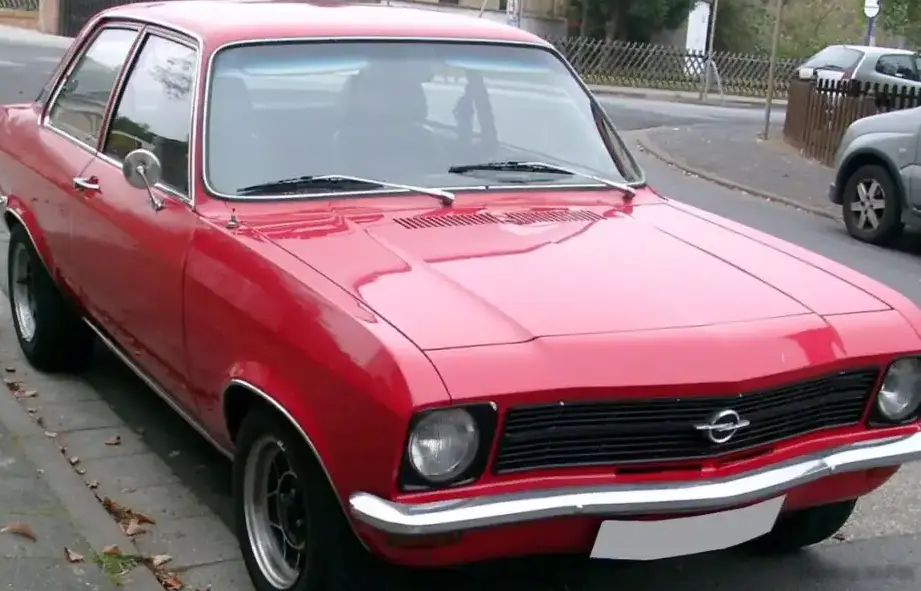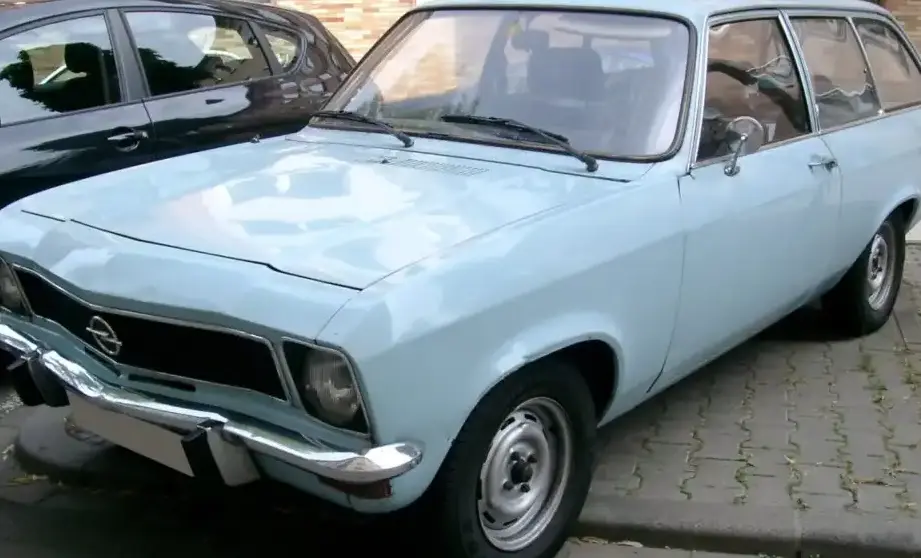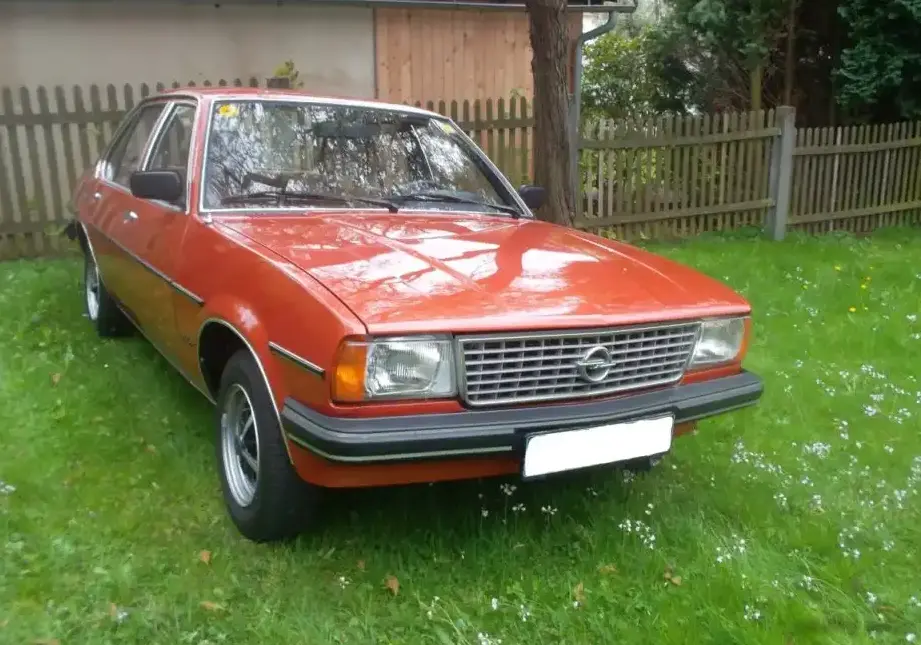
The Opel Ascona B, specifically the 1.3 N variant produced from 1979 to 1981, represented the entry point into the Ascona B range. Positioned as an affordable and practical family sedan, it played a significant role in Opel’s European market share during a period of increasing fuel costs and a demand for economical transportation. The Ascona B itself was a facelift of the original Ascona, offering updated styling and minor mechanical improvements. This 1.3 N model, with its modest 60 horsepower, was designed for buyers prioritizing fuel efficiency and basic transportation over outright performance. It was available in both two-door and four-door body styles, catering to a broad range of customer needs.
Technical Specifications
| Brand | Opel |
| Model | Ascona |
| Generation | Ascona B (facelift 1979) |
| Type (Engine) | 1.3 N (60 Hp) |
| Start of production | 1979 |
| End of production | 1981 |
| Powertrain Architecture | Internal Combustion engine |
| Body type | Sedan |
| Seats | 5 |
| Doors | 2-4 |
| Fuel Type | Petrol (Gasoline) |
| Acceleration 0 – 100 km/h | 18 sec |
| Acceleration 0 – 62 mph | 18 sec |
| Acceleration 0 – 60 mph | 17.1 sec |
| Maximum speed | 145 km/h (90.1 mph) |
| Weight-to-power ratio | 15.1 kg/Hp, 66.3 Hp/tonne |
| Weight-to-torque ratio | 9.6 kg/Nm, 103.9 Nm/tonne |
| Power | 60 Hp @ 5800 rpm |
| Power per litre | 46.3 Hp/l |
| Torque | 94 Nm @ 3800 rpm (69.33 lb.-ft. @ 3800 rpm) |
| Engine Model/Code | 13N, 13NB |
| Engine displacement | 1297 cm3 (79.15 cu. in.) |
| Number of cylinders | 4 |
| Engine configuration | Inline |
| Cylinder Bore | 75 mm (2.95 in.) |
| Piston Stroke | 73.4 mm (2.89 in.) |
| Compression ratio | 8.2:1 |
| Number of valves per cylinder | 2 |
| Fuel injection system | Carburettor |
| Engine aspiration | Naturally aspirated engine |
| Valvetrain | SOHC |
| Engine oil capacity | 2.5 l (2.64 US qt | 2.2 UK qt) |
| Coolant | 5.8 l (6.13 US qt | 5.1 UK qt) |
| Kerb Weight | 905 kg (1995.18 lbs.) |
| Max. weight | 1365 kg (3009.31 lbs.) |
| Max load | 460 kg (1014.13 lbs.) |
| Trunk (boot) space – minimum | 380 l (13.42 cu. ft.) |
| Fuel tank capacity | 50 l (13.21 US gal | 11 UK gal) |
| Permitted trailer load with brakes (12%) | 1000 kg (2204.62 lbs.) |
| Permitted trailer load without brakes | 485 kg (1069.24 lbs.) |
| Length | 4321 mm (170.12 in.) |
| Width | 1670 mm (65.75 in.) |
| Height | 1380 mm (54.33 in.) |
| Wheelbase | 2518 mm (99.13 in.) |
| Front track | 1380 mm (54.33 in.) |
| Rear (Back) track | 1375 mm (54.13 in.) |
| Ride height (ground clearance) | 130 mm (5.12 in.) |
| Drag coefficient (Cd) | 0.46 |
| Minimum turning circle (turning diameter) | 10.1 m (33.14 ft.) |
| Drivetrain Architecture | The Internal combustion engine (ICE) drives the rear wheels of the vehicle. |
| Drive wheel | Rear wheel drive |
| Number of gears and type of gearbox | 4 gears, manual transmission |
| Front brakes | Disc |
| Rear brakes | Drum |
Powertrain & Engine Architecture
The heart of the Ascona B 1.3 N was the 1297cc (79.15 cubic inches) inline-four cylinder engine, designated as either 13N or 13NB depending on minor variations. This engine featured a single overhead camshaft (SOHC) valvetrain with two valves per cylinder. Fuel delivery was handled by a carburetor, a common setup for vehicles of this era aiming for affordability. The engine produced 60 horsepower at 5800 rpm and 94 Nm (69.33 lb-ft) of torque at 3800 rpm. The relatively low compression ratio of 8.2:1 was a factor in its ability to run on lower octane fuel, common in many European markets. The engine was mated to a four-speed manual transmission, which was the standard offering for this trim level. While an automatic transmission was available on higher-spec Ascona B models, it was not offered with the 1.3 N engine.
Driving Characteristics
The 1.3 N Ascona B offered modest performance. Acceleration from 0 to 100 km/h (0-62 mph) took approximately 18 seconds, and top speed was around 145 km/h (90 mph). Compared to the more powerful Ascona variants, such as those equipped with the 1.6 or 2.0-liter engines, the 1.3 N felt noticeably slower. The four-speed manual transmission was geared for economy, with relatively tall ratios. This meant that frequent downshifting was required for overtaking or climbing hills. However, the engine was reasonably smooth and willing, and the rear-wheel-drive layout provided a balanced driving experience. The lighter weight of the 1.3 N compared to its larger-engined siblings did contribute to slightly better handling and fuel economy.
Equipment & Trim Levels
The 1.3 N Ascona B was typically equipped with basic amenities. Standard features included cloth upholstery, vinyl floor covering, and a simple dashboard layout. Power steering and central locking were not typically included, reflecting its position as the entry-level model. Optional extras included a radio, upgraded upholstery, and a sunroof. The exterior trim was also fairly basic, with steel wheels and minimal chrome accents. The focus was on providing a functional and affordable vehicle rather than luxury or extensive features.
Chassis & Braking
The Ascona B utilized a conventional rear-wheel-drive chassis with independent front suspension and a live axle rear suspension. The front suspension featured coil springs and anti-roll bar, while the rear suspension used leaf springs. Braking was accomplished with disc brakes on the front wheels and drum brakes on the rear. The braking system was adequate for the vehicle’s weight and performance, but lacked the stopping power of more modern systems. The suspension setup provided a comfortable ride, but handling was not particularly sporty. Stabilizer bar thickness was relatively modest, contributing to a slight degree of body roll in corners.
Market Reception & Comparison
The Ascona B 1.3 N was generally well-received as an affordable and reliable family car. Critics praised its fuel efficiency and practicality, but noted its lack of performance. Compared to other vehicles in its class, such as the Ford Cortina and Volkswagen Passat, the Ascona B 1.3 N offered a competitive price point and a reasonable level of equipment. The 1.6-liter and 2.0-liter Ascona variants offered significantly more performance, but at a higher cost. The 1.3 N appealed to buyers who prioritized economy and practicality over driving excitement. The diesel variants, while less common, offered even better fuel economy but sacrificed performance further.
Legacy
The Opel Ascona B 1.3 N, while not a particularly exciting vehicle, proved to be a durable and reliable workhorse. The 13N engine, while simple in design, was known for its longevity. Today, these cars are relatively rare, and well-maintained examples are sought after by classic car enthusiasts. The 1.3 N powertrain is generally considered to be reliable, although age and maintenance history are crucial factors. Parts availability can be a challenge, but many components are still available through specialist suppliers. The Ascona B 1.3 N represents a significant piece of automotive history, embodying the practical and affordable family cars of the late 1970s and early 1980s.