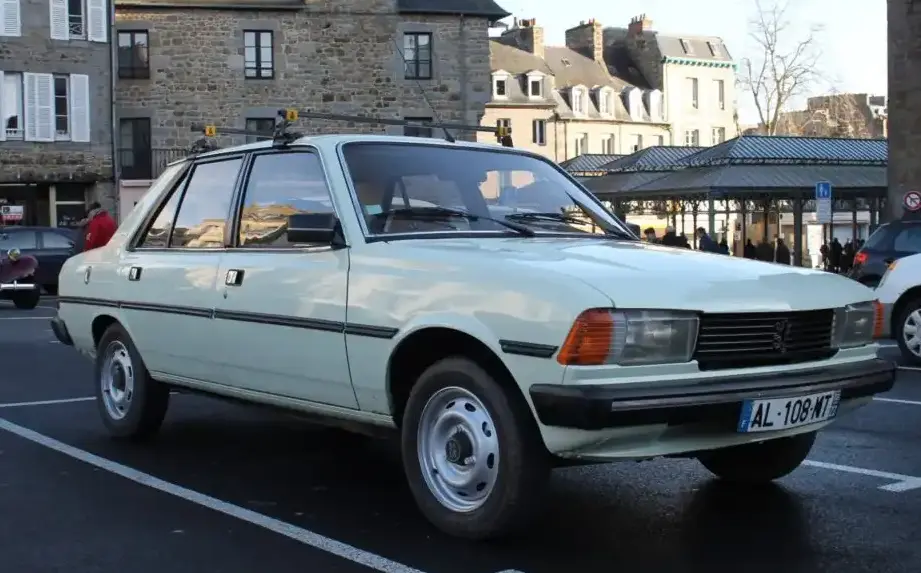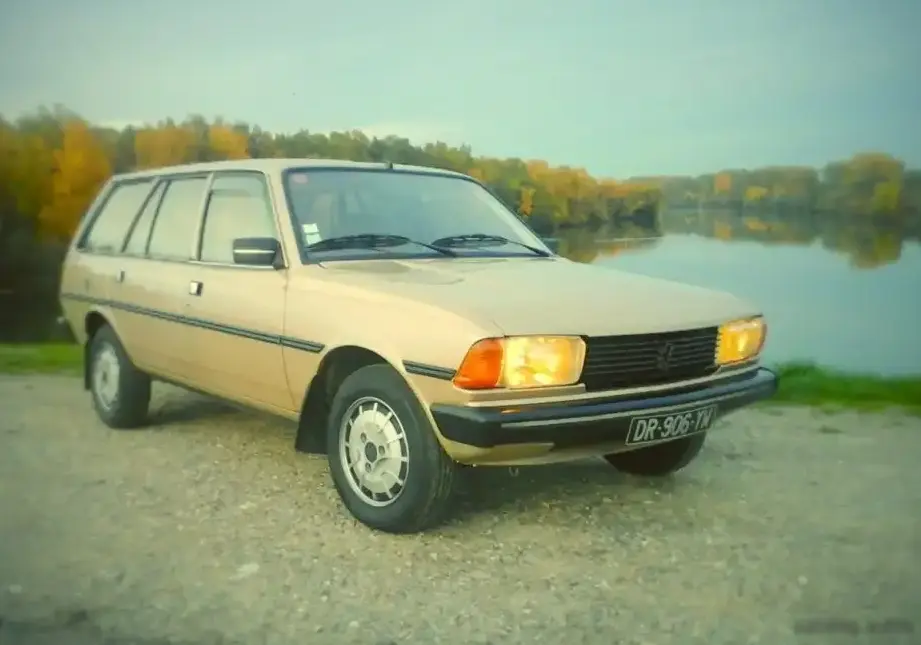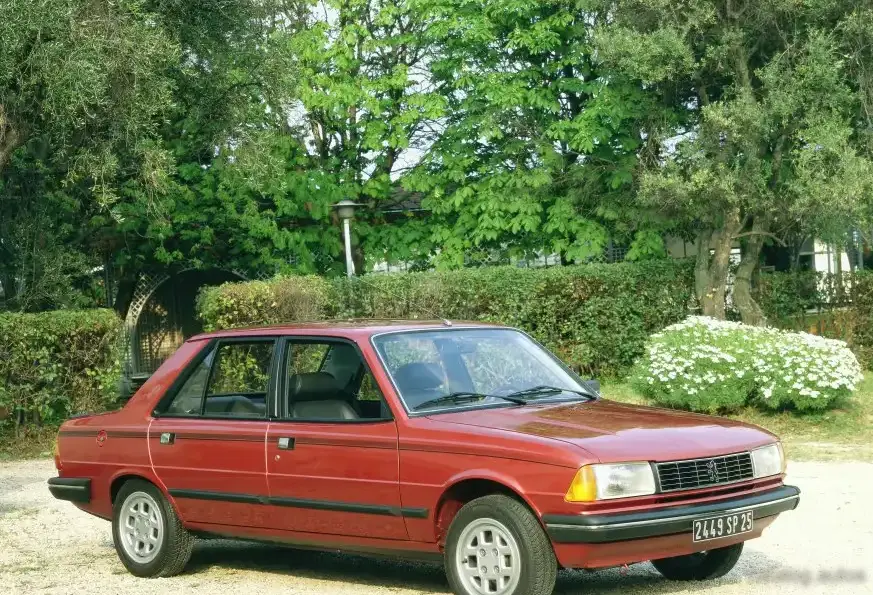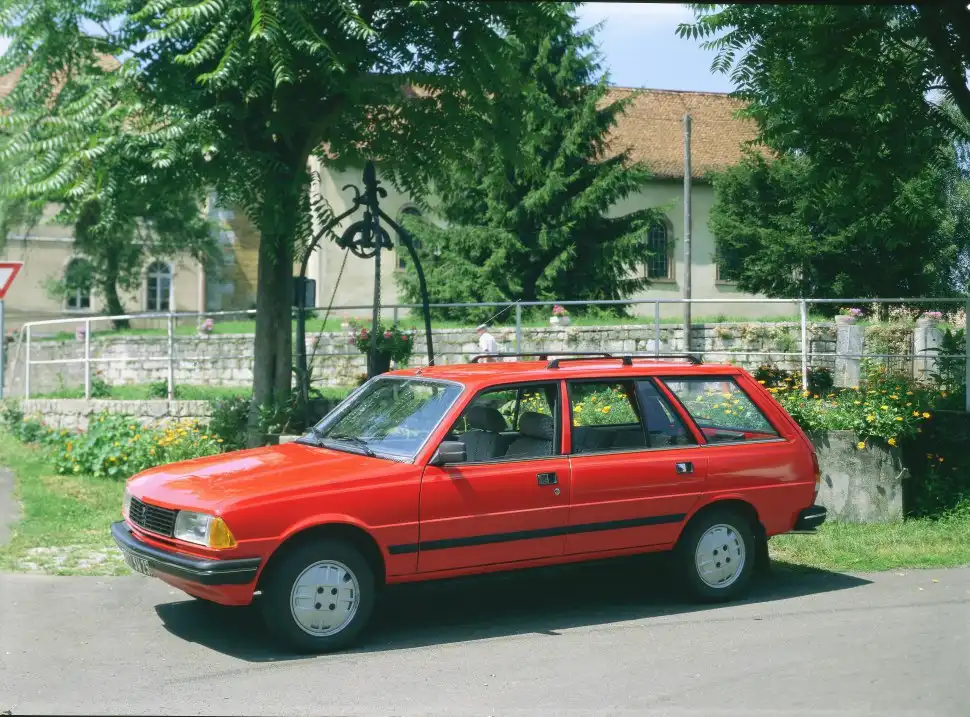
The Peugeot 305 II Break (581E) 1.6, produced between 1986 and 1988, represents a practical and economical variant within the second generation of the Peugeot 305 family. Positioned as a mainstream offering in the European market, this station wagon (estate) body style, powered by the BAZ XU5CP 1.6-liter engine producing 73 horsepower, aimed at families and individuals prioritizing cargo space and fuel efficiency over outright performance. It served as a workhorse vehicle, offering a balance between affordability and Peugeot’s reputation for build quality. The 305 II Break competed directly with other European estates like the Renault 19 Estate, Citroën BX Break, and Ford Sierra Estate.
Technical Specifications
| Brand | Peugeot |
| Model | 305 |
| Generation | 305 II Break (581E) |
| Type (Engine) | 1.6 (73 Hp) |
| Start of production | 1986 |
| End of production | 1988 |
| Powertrain Architecture | Internal Combustion engine |
| Body type | Station wagon (estate) |
| Fuel Type | Petrol (Gasoline) |
| Power | 73 Hp |
| Engine Model/Code | BAZ XU5CP |
| Engine aspiration | Naturally aspirated engine |
| Engine oil capacity | 5 l (5.28 US qt | 4.4 UK qt) |
| Coolant capacity | 6.5 l (6.87 US qt | 5.72 UK qt) |
Powertrain & Engine Architecture
The heart of the 305 II Break 1.6 is the BAZ XU5CP engine, a 1.580-liter (96.2 cubic inches) inline-four cylinder petrol engine. This engine is a naturally aspirated unit, meaning it doesn’t employ a turbocharger or supercharger. It features a single overhead camshaft (SOHC) valvetrain operating two valves per cylinder. Fuel delivery is managed by a Solex carburetor, a common setup for European vehicles of this era, prioritizing simplicity and cost-effectiveness over the precision of fuel injection. The XU5CP engine is known for its relative durability and ease of maintenance, though it lacks the refinement and power of more modern designs. The engine’s modest output of 73 horsepower at approximately 5,800 rpm and 99 lb-ft of torque at 3,500 rpm is geared towards fuel economy and everyday usability rather than spirited driving. The transmission paired with this engine is typically a four-speed automatic gearbox, designed to provide smooth, if not particularly quick, shifts. This automatic transmission was chosen to appeal to a broader audience seeking convenience, particularly in urban environments.
Driving Characteristics
The 305 II Break 1.6 with the automatic transmission delivers a driving experience focused on comfort and practicality. Acceleration is modest, with a 0-60 mph time estimated around 14-16 seconds. The four-speed automatic transmission, while providing ease of use, contributes to this leisurely pace. Gear ratios are optimized for fuel efficiency and smooth cruising, rather than rapid acceleration. Compared to the manual transmission versions of the 305 1.6, the automatic suffers a slight performance penalty due to the inherent power loss within the torque converter. Higher-output versions of the 305, such as those equipped with the 1.9-liter engine or the diesel variants, offered significantly more performance, but at the expense of fuel economy. The suspension, tuned for comfort, provides a relatively soft ride, absorbing bumps and imperfections in the road well. However, this softness also results in noticeable body roll during cornering. Steering is light and easy, making it manageable in city traffic, but lacking in feedback at higher speeds.
Equipment & Trim Levels
The 305 II Break 1.6 typically came equipped with a fairly basic level of standard features, reflecting its position as a mainstream model. Interior upholstery was generally cloth, with a durable and practical design. The dashboard layout is functional, with clearly labeled controls. Standard equipment usually included a basic radio, manual windows, and central locking. Optional extras, depending on the market and year, could include a sunroof, upgraded stereo systems, and more comfortable seating. The trim level for the 1.6 automatic was generally considered the base or mid-range offering within the 305 Break lineup. Higher trim levels, often associated with the larger-displacement engines, featured more luxurious interior appointments, such as velour upholstery, power windows, and more sophisticated audio systems.
Chassis & Braking
The 305 II Break utilizes a relatively simple chassis design. The front suspension consists of independent MacPherson struts, while the rear suspension employs a twist-beam axle. This setup prioritizes cost-effectiveness and simplicity over outright handling performance. Braking on the 305 II Break 1.6 typically consists of disc brakes on the front wheels and drum brakes on the rear wheels. This configuration was common for vehicles in this price range during the 1980s. The braking system is adequate for normal driving conditions, but lacks the stopping power and fade resistance of more advanced systems. Stabilizer bars (anti-roll bars) were often included as standard equipment, helping to reduce body roll during cornering. The thickness of these bars varied depending on the specific trim level and market.
Market Reception & Comparison
The Peugeot 305 II Break 1.6 automatic received generally positive reviews for its practicality, fuel efficiency, and comfortable ride. Critics praised its spacious interior and large cargo area, making it well-suited for families. However, the engine’s modest power output and the automatic transmission’s lack of responsiveness were often cited as drawbacks. Compared to other trims in the 305 lineup, the 1.6 automatic offered the lowest performance but the best fuel economy. The diesel variants, while slower, provided even better fuel efficiency, while the 1.9-liter petrol engine offered a significant performance boost. Against its competitors, the 305 II Break 1.6 held its own in terms of practicality and build quality, but lacked the sporting pretensions of some rivals like the Ford Sierra. Fuel economy was competitive for the era, typically achieving around 28-32 mpg on the combined cycle.
Legacy
The Peugeot 305 II Break 1.6, while not a particularly exciting vehicle, proved to be a reliable and durable workhorse for many owners. The XU5CP engine, despite its simplicity, is known for its longevity, and many examples are still on the road today. The automatic transmission, while not the most sophisticated, is generally reliable if properly maintained. In the used car market, the 305 II Break 1.6 is often sought after by enthusiasts looking for a classic European estate car that is relatively affordable to maintain. Parts availability can be a challenge, but many components are still available through specialist suppliers. The 305 II Break represents a significant chapter in Peugeot’s history, showcasing the company’s commitment to building practical and reliable vehicles for the masses. It remains a popular choice for those seeking a classic French car with a unique charm and character.