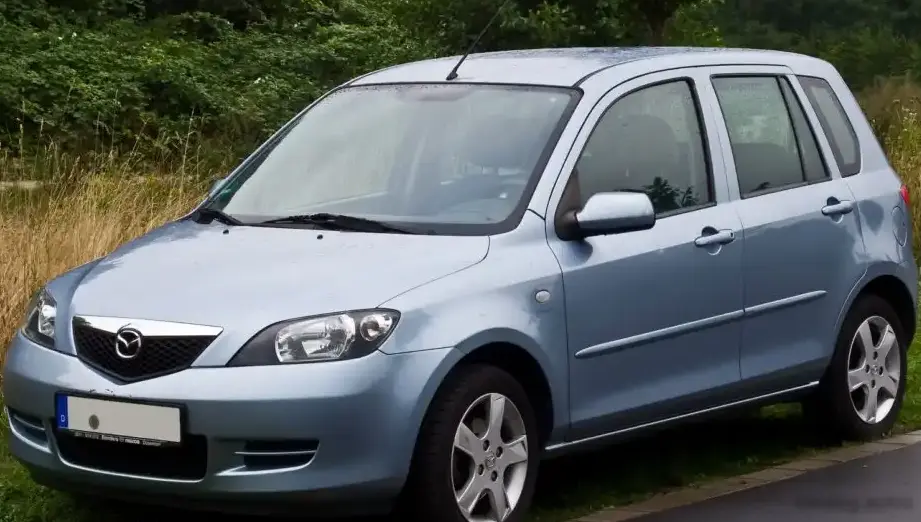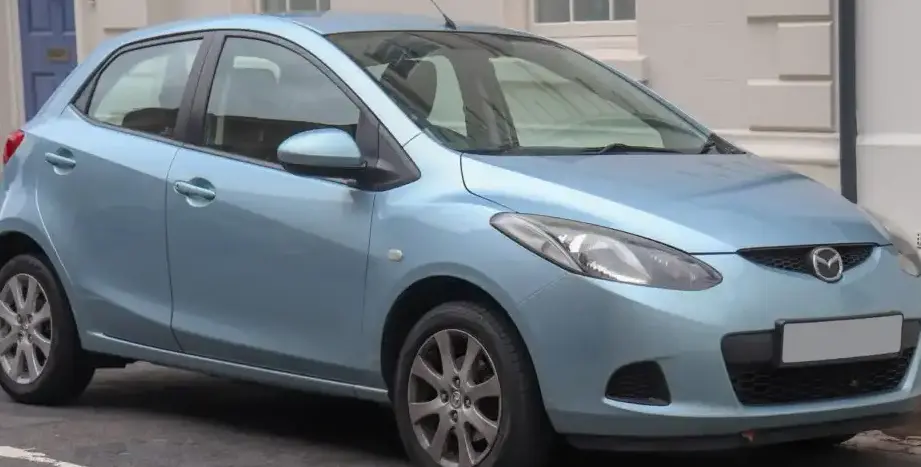
The Mazda 2 III Sedan (DL), specifically the facelift model introduced in 2019 with the 1.5-liter Skyactiv-G engine producing 112 horsepower paired with an Activematic automatic transmission, represented a key offering in Mazda’s subcompact sedan lineup. Production of this variant ran from 2019 until March 2022. This model was primarily targeted towards markets outside of North America, where Mazda focused on larger vehicles. The DL facelift brought styling updates and refinements to the already well-regarded third generation of the Mazda 2, aiming to enhance its appeal to buyers seeking a fuel-efficient, reliable, and relatively upscale small car.
Technical Specifications
| Brand | Mazda |
| Model | 2 |
| Generation | III Sedan (DL, facelift 2019) |
| Type (Engine) | 1.5 Skyactiv-G (112 Hp) Activematic |
| Start of production | 2019 |
| End of production | March, 2022 |
| Powertrain Architecture | Internal Combustion engine |
| Body type | Sedan |
| Seats | 5 |
| Doors | 4 |
| Fuel consumption (urban) | 6.5 l/100 km (36.2 US mpg, 43.5 UK mpg, 15.4 km/l) |
| Fuel consumption (extra urban) | 4.6 l/100 km (51.1 US mpg, 61.4 UK mpg, 21.7 km/l) |
| Fuel consumption (combined) | 5.3 l/100 km (44.4 US mpg, 53.3 UK mpg, 18.9 km/l) |
| Fuel Type | Petrol (Gasoline) |
| Weight-to-power ratio | 9.7 kg/Hp, 102.8 Hp/tonne |
| Weight-to-torque ratio | 7.6 kg/Nm, 132.1 Nm/tonne |
| Power | 112 Hp @ 6000 rpm |
| Power per litre | 74.9 Hp/l |
| Torque | 144 Nm @ 4000 rpm (106.21 lb.-ft. @ 4000 rpm) |
| Engine layout | Front, Transverse |
| Engine displacement | 1496 cm3 (91.29 cu. in.) |
| Number of cylinders | 4 |
| Engine configuration | Inline |
| Cylinder Bore | 74.5 mm (2.93 in.) |
| Piston Stroke | 85.8 mm (3.38 in.) |
| Compression ratio | 13:1 |
| Number of valves per cylinder | 4 |
| Fuel injection system | Direct injection |
| Engine aspiration | Naturally aspirated engine |
| Valvetrain | DOHC, S-VT |
| Engine oil capacity | 4.2 l (4.44 US qt | 3.7 UK qt) |
| Coolant capacity | 5.6 l (5.92 US qt | 4.93 UK qt) |
| Kerb Weight | 1090 kg (2403.04 lbs.) |
| Trunk (boot) space (minimum) | 440 l (15.54 cu. ft.) |
| Fuel tank capacity | 44 l (11.62 US gal | 9.68 UK gal) |
| Length | 4340 mm (170.87 in.) |
| Width | 1695 mm (66.73 in.) |
| Height | 1470 mm (57.87 in.) |
| Wheelbase | 2570 mm (101.18 in.) |
| Front track | 1495 mm (58.86 in.) |
| Rear track | 1485 mm (58.46 in.) |
| Ride height (ground clearance) | 140 mm (5.51 in.) |
| Minimum turning circle | 9.4 m (30.84 ft.) |
| Drivetrain Architecture | Front wheel drive |
| Number of gears and type of gearbox | 6 gears, automatic transmission Activematic |
| Front suspension | Independent type McPherson |
| Rear suspension | Torsion |
| Front brakes | Ventilated discs, 258 mm |
| Rear brakes | Drum, 200 mm |
| Assisting systems | ABS (Anti-lock braking system) |
| Steering type | Steering rack and pinion |
| Power steering | Electric Steering |
| Tires size | 185/65 R15; 185/60 R16 |
| Wheel rims size | 5.5J x 15; 5.5J x 16 |
Powertrain & Engine Architecture
At the heart of the 2019-2022 Mazda 2 Sedan 1.5 Skyactiv-G Activematic lies the PE-VPH engine, a 1.5-liter inline-four cylinder gasoline engine. This engine is a key component of Mazda’s Skyactiv technology, designed to maximize efficiency and deliver a responsive driving experience. The engine utilizes direct injection, a high compression ratio of 13:1, and a lightweight design to reduce friction and improve fuel economy. The S-VT (Sequential Valve Timing) system optimizes valve overlap for enhanced performance across the rev range. The Activematic transmission is a six-speed automatic, utilizing a torque converter and electronically controlled shifts. It’s designed to provide smooth and efficient gear changes, prioritizing fuel economy over outright performance. This transmission differs from a traditional automatic in its programming, often holding gears longer to maintain optimal engine efficiency.
Driving Characteristics
The 112 horsepower and 106 lb-ft of torque produced by this powertrain configuration resulted in a comfortable, but not particularly sporty, driving experience. Acceleration was adequate for everyday driving, but overtaking maneuvers required planning. The Activematic transmission, while smooth, wasn’t known for its quick shifts. Compared to the manual transmission versions of the 1.5L engine, the automatic offered less driver engagement and slightly reduced fuel economy. Higher-output versions, though not commonly available in the sedan body style, provided significantly more spirited performance. The gear ratios were tuned for fuel efficiency, meaning the engine often operated at higher RPMs during acceleration, contributing to a noticeable engine note.
Equipment & Trim Levels
The 1.5 Skyactiv-G Activematic trim typically sat in the mid-range of the Mazda 2 Sedan lineup. Standard equipment generally included air conditioning, power windows and locks, a basic audio system with USB connectivity, and ABS brakes. Safety features like airbags were also standard. Higher trim levels added features such as alloy wheels, a touchscreen infotainment system, and advanced safety technologies like lane departure warning. Interior upholstery was typically cloth, with options for upgraded materials on higher trims. The dashboard layout was functional and well-designed, reflecting Mazda’s focus on creating a driver-centric environment.
Chassis & Braking
The Mazda 2 Sedan utilized a front-engine, front-wheel-drive layout. The front suspension employed an independent McPherson strut setup, providing a comfortable ride and decent handling. The rear suspension utilized a torsion beam, a cost-effective and space-saving design. Braking duties were handled by ventilated discs at the front and drum brakes at the rear. While adequate for the vehicle’s weight and performance, the rear drum brakes were a cost-saving measure compared to the all-disc setups found on some higher-spec models. The steering was electrically assisted, providing light and precise control.
Market Reception & Comparison
The Mazda 2 Sedan 1.5 Skyactiv-G Activematic was generally well-received by automotive critics for its fuel efficiency, reliability, and overall value. However, some reviewers noted the lack of outright performance and the somewhat unrefined nature of the Activematic transmission. Compared to other subcompact sedans in its class, the Mazda 2 offered a more premium feel and a more engaging driving experience, albeit at a slightly higher price point. Fuel economy figures were competitive, consistently achieving around 44 US mpg in combined driving conditions. Reliability was a strong point, with the Skyactiv engine proving to be durable and long-lasting.
Legacy
The 1.5 Skyactiv-G engine and Activematic transmission combination proved to be a reliable and fuel-efficient powertrain. In the used car market, these models are often sought after for their affordability and low running costs. While not known for blistering performance, the powertrain’s durability and efficiency make it a practical choice for daily commuting and general transportation. Maintenance is relatively straightforward, and parts availability is generally good. The Mazda 2 Sedan, in this configuration, continues to represent a solid value proposition for buyers seeking a dependable and economical small car.