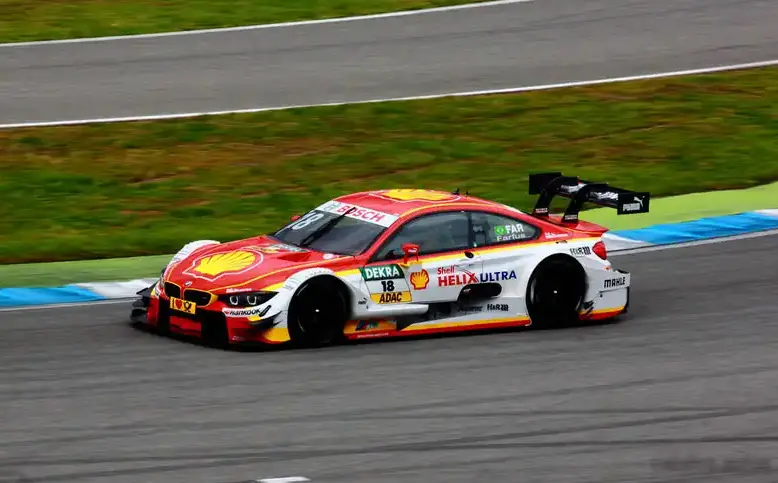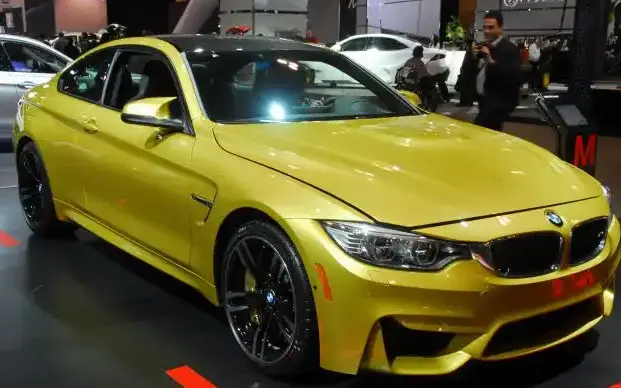
The BMW M4 GTS (F82) represents a limited-production, track-focused variant of the F82 M4 coupe, produced between 2016 and 2017. Built as a homologation special for the M4 DTM race car, the GTS aimed to deliver a more visceral and performance-oriented driving experience than the standard M4. Only 803 units were produced globally, with 300 allocated to the United States. The GTS distinguished itself through significant engine upgrades, weight reduction, and track-optimized components, making it a highly sought-after model among enthusiasts.
Technical Specifications
| Brand | BMW |
| Model | M4 |
| Generation | M4 (F82) |
| Type (Engine) | GTS 3.0 (500 Hp) DCT |
| Start of production | 2016 |
| End of production | 2017 |
| Powertrain Architecture | Internal Combustion engine |
| Body type | Coupe |
| Seats | 2 |
| Doors | 2 |
| Fuel consumption (economy) – urban | 11.2 l/100 km (21 US mpg, 25.2 UK mpg, 8.9 km/l) |
| Fuel consumption (economy) – extra urban | 7 l/100 km (33.6 US mpg, 40.4 UK mpg, 14.3 km/l) |
| Fuel consumption (economy) – combined | 8.5 l/100 km (27.7 US mpg, 33.2 UK mpg, 11.8 km/l) |
| CO2 emissions | 199 g/km |
| Fuel Type | Petrol (Gasoline) |
| Acceleration 0 – 100 km/h | 3.8 sec |
| Acceleration 0 – 62 mph | 3.8 sec |
| Acceleration 0 – 60 mph | 3.6 sec |
| Maximum speed | 305 km/h (189.52 mph) |
| Emission standard | Euro 6 |
| Weight-to-power ratio | 3 kg/Hp, 331.1 Hp/tonne |
| Weight-to-torque ratio | 2.5 kg/Nm, 397.4 Nm/tonne |
| Power | 500 Hp @ 6250 rpm |
| Power per litre | 167.8 Hp/l |
| Torque | 600 Nm @ 4000-5500 rpm (442.54 lb.-ft. @ 4000-5500 rpm) |
| Engine layout | Front, Longitudinal |
| Engine Model/Code | S55B30 |
| Engine displacement | 2979 cm3 (181.79 cu. in.) |
| Number of cylinders | 6 |
| Engine configuration | Inline |
| Cylinder Bore | 84 mm (3.31 in.) |
| Piston Stroke | 89.6 mm (3.53 in.) |
| Compression ratio | 10.2:1 |
| Number of valves per cylinder | 4 |
| Fuel injection system | Direct injection |
| Engine aspiration | Twin-power turbo, Intercooler |
| Engine oil capacity | 6.5 l (6.87 US qt | 5.72 UK qt) |
| Coolant | 13.9 l (14.69 US qt | 12.23 UK qt) |
| Kerb Weight | 1510 kg (3328.98 lbs.) |
| Max. weight | 1900 kg (4188.78 lbs.) |
| Max load | 390 kg (859.8 lbs.) |
| Trunk (boot) space – minimum | 445 l (15.72 cu. ft.) |
| Fuel tank capacity | 60 l (15.85 US gal | 13.2 UK gal) |
| Length | 4689 mm (184.61 in.) |
| Width | 1870 mm (73.62 in.) |
| Height | 1383 mm (54.45 in.) |
| Wheelbase | 2812 mm (110.71 in.) |
| Front track | 1596 mm (62.83 in.) |
| Rear (Back) track | 1604 mm (63.15 in.) |
| Ride height (ground clearance) | 108 mm (4.25 in.) |
| Drag coefficient (Cd) | 0.34 |
| Minimum turning circle (turning diameter) | 12.2 m (40.03 ft.) |
| Drivetrain Architecture | The Internal combustion engine (ICE) drives the rear wheels of the vehicle. |
| Drive wheel | Rear wheel drive |
| Number of gears and type of gearbox | 7 gears, automatic transmission DCT |
| Front suspension | Independent multi-link suspension |
| Rear suspension | Independent multi-link suspension |
| Front brakes | Ventilated discs |
| Rear brakes | Ventilated discs |
| Assisting systems | ABS (Anti-lock braking system) |
| Steering type | Steering rack and pinion |
| Power steering | Electric Steering |
| Tires size | 265/35 ZR19 98Y; 285/30 ZR20 99Y |
| Wheel rims size | 9.5J x 19; 10.5J x 20 |
Powertrain & Engine Architecture
At the heart of the M4 GTS lies the S55B30 engine, a 3.0-liter inline-six cylinder powerplant. This engine is a heavily modified version of the S55 found in the standard M4, but with significant upgrades to enhance performance. Key modifications included a unique crankshaft and connecting rods derived from the M4 DTM race car, increasing engine responsiveness and durability. The engine utilizes direct injection and a twin-turbocharger setup, delivering a substantial 500 horsepower at 6,250 rpm and 600 Nm (442 lb-ft) of torque between 4,000 and 5,500 rpm. The engine’s water injection system, a first for a production BMW, sprayed a fine mist of water into the intake manifold to cool the intake air, allowing for higher boost pressures and reduced knock. The GTS exclusively used a 7-speed dual-clutch transmission (DCT) with revised programming for faster shifts and more aggressive launch control.
Driving Characteristics
The M4 GTS offered a dramatically different driving experience compared to the standard M4. The increased power output, combined with the weight reduction achieved through the use of carbon fiber reinforced plastic (CFRP) for the roof and other components, resulted in significantly improved acceleration and handling. The DCT transmission provided lightning-fast gear changes, and the water injection system allowed for consistent power delivery even under demanding conditions. While the standard M4 was already a capable performance car, the GTS felt noticeably more raw and focused, with a stiffer suspension and more direct steering. The GTS was not designed for everyday comfort; its firm ride and aggressive exhaust note made it clear that this was a car intended for the track.
Equipment & Trim Levels
The M4 GTS came standard with a comprehensive list of performance-oriented features. Interior appointments included M sports seats upholstered in Alcantara and leather, a CFRP center console, and unique GTS badging. Standard exterior features included a distinctive CFRP front splitter, rear wing, and diffuser, along with OLED taillights. Optional extras included a Club Sport Package, which added a roll bar, six-point racing harnesses, and a fire extinguisher, further emphasizing the car’s track-focused nature. The interior was minimalist, prioritizing functionality over luxury. The color palette was limited, with only select exterior and interior color combinations available.
Chassis & Braking
The M4 GTS benefited from a number of chassis and braking upgrades. The suspension was significantly stiffer than the standard M4, with adjustable dampers and springs. The car featured larger front brakes with six-piston calipers and larger rear brakes for improved stopping power. The GTS also utilized a lightweight exhaust system and a carbon fiber roof to reduce weight and lower the center of gravity. The steering was recalibrated for more direct feedback, enhancing driver confidence. The car rode on Michelin Pilot Sport Cup 2 tires, specifically developed for track use, providing exceptional grip in dry conditions.
Market Reception & Comparison
The M4 GTS was widely praised by automotive journalists for its exceptional performance and track capabilities. Critics lauded the engine’s power and responsiveness, as well as the car’s handling and braking. However, some reviewers noted the car’s firm ride and limited practicality. Compared to the standard M4, the GTS offered a significant performance upgrade, but at a substantial price premium. Compared to other high-performance coupes of the time, such as the Porsche 911 GT3, the M4 GTS offered a compelling combination of performance and value. The limited production run and high demand quickly made the GTS a collector’s item.
Legacy
The M4 GTS has become a highly sought-after model in the used car market, with prices continuing to rise. The S55 engine, while known for its performance, has demonstrated reasonable long-term reliability when properly maintained. The water injection system requires periodic refilling with distilled water, and regular oil changes are crucial to ensure engine longevity. The GTS represents a significant milestone in BMW M’s history, showcasing the brand’s commitment to delivering high-performance, track-focused vehicles. Its influence can be seen in subsequent M models, which have incorporated similar technologies and design elements.