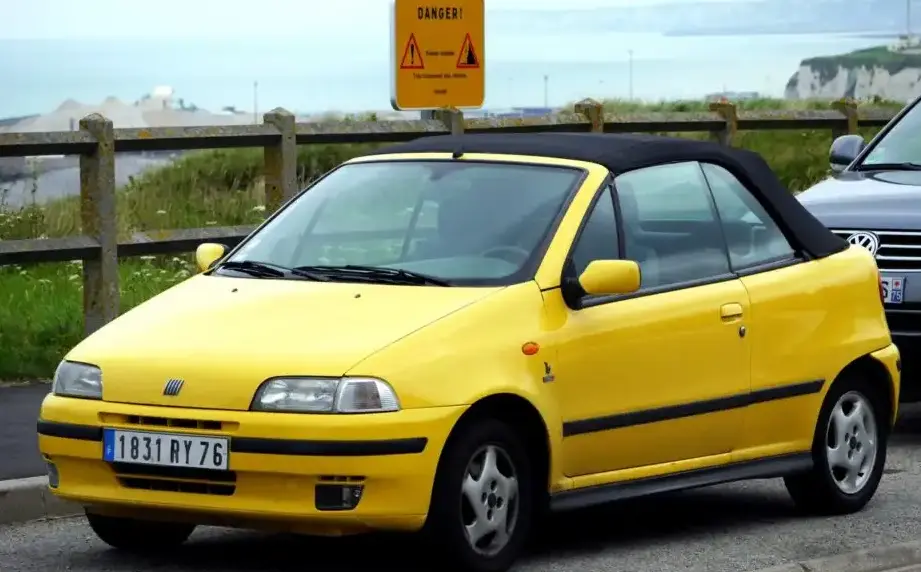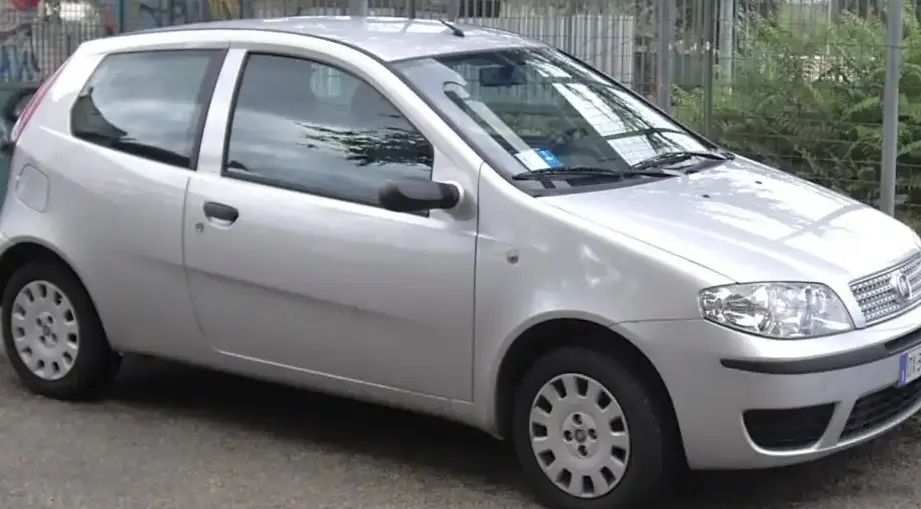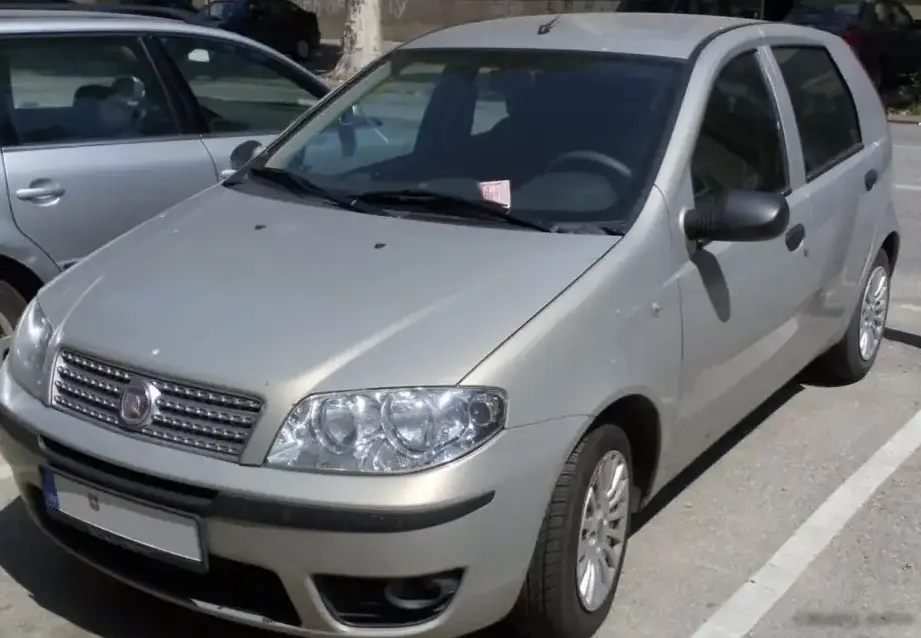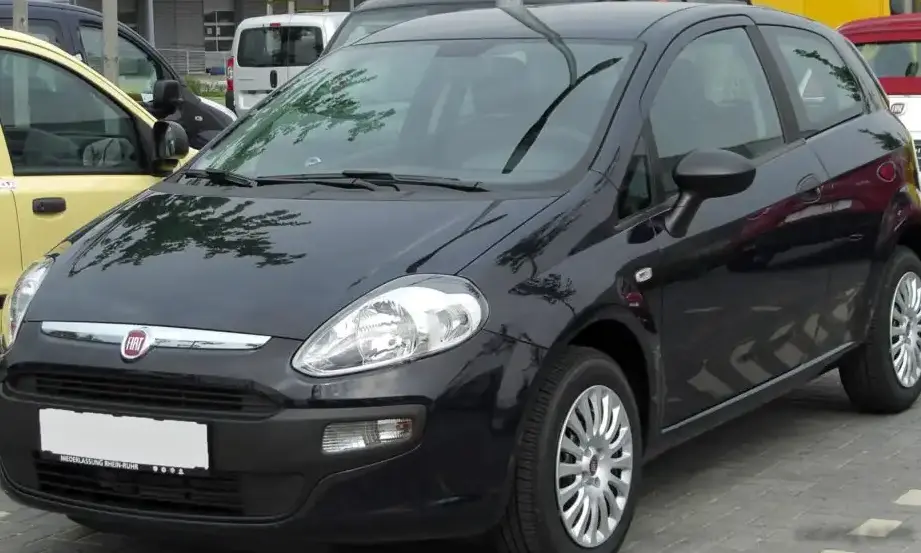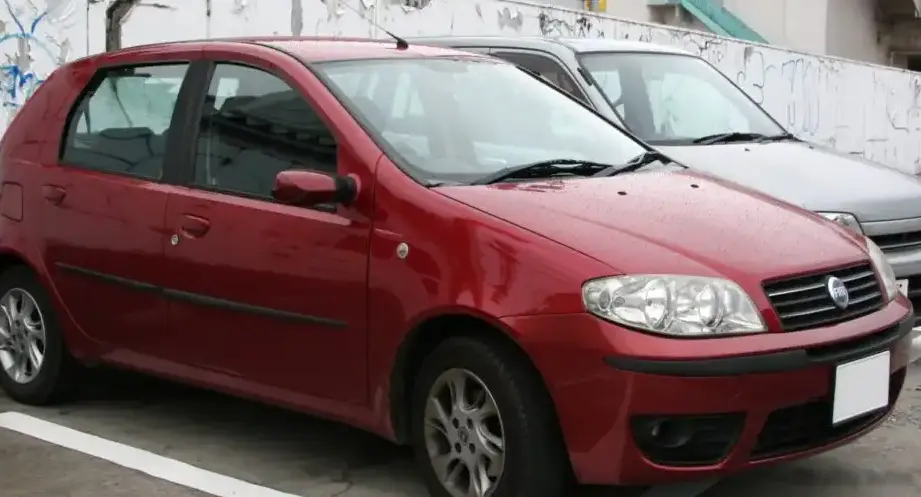
The Fiat Punto II (188 series), specifically the facelifted version introduced in 2003, represented a significant update to Fiat’s popular supermini. The 5-door hatchback configuration with the 1.3 Multijet 70 horsepower diesel engine was a common sight in European markets from 2003 to 2007. This variant occupied the lower-mid range of the Punto II lineup, positioned as an economical and practical choice for urban commuters and small families. It aimed to balance fuel efficiency with acceptable performance, making it a popular alternative to gasoline-powered models.
Technical Specifications
| Brand | Fiat |
| Model | Punto |
| Generation | Punto II (188, facelift 2003) 5dr |
| Type (Engine) | 1.3 Multijet (70 Hp) |
| Start of production | 2003 |
| End of production | 2007 |
| Powertrain Architecture | Internal Combustion engine |
| Body type | Hatchback |
| Seats | 5 |
| Doors | 5 |
| Fuel consumption (urban) | 5.6 l/100 km (42 US mpg, 50.4 UK mpg, 17.9 km/l) |
| Fuel consumption (extra urban) | 3.9 l/100 km (60.3 US mpg, 72.4 UK mpg, 25.6 km/l) |
| Fuel consumption (combined) | 4.5 l/100 km (52.3 US mpg, 62.8 UK mpg, 22.2 km/l) |
| Fuel Type | Diesel |
| Acceleration 0 – 100 km/h | 13.4 sec |
| Acceleration 0 – 62 mph | 13.4 sec |
| Acceleration 0 – 60 mph | 12.7 sec |
| Maximum speed | 164 km/h (101.9 mph) |
| Emission standard | Euro 4 |
| Weight-to-power ratio | 14 kg/Hp, 71.4 Hp/tonne |
| Weight-to-torque ratio | 5.4 kg/Nm, 183.7 Nm/tonne |
| Power | 70 Hp @ 4000 rpm |
| Power per litre | 56.1 Hp/l |
| Torque | 180 Nm @ 1750 rpm (132.76 lb.-ft. @ 1750 rpm) |
| Engine layout | Front, Transverse |
| Engine Model/Code | 188A9000 |
| Engine displacement | 1248 cm3 (76.16 cu. in.) |
| Number of cylinders | 4 |
| Engine configuration | Inline |
| Cylinder Bore | 69.6 mm (2.74 in.) |
| Piston Stroke | 82 mm (3.23 in.) |
| Compression ratio | 18:1 |
| Number of valves per cylinder | 4 |
| Fuel injection system | Diesel Commonrail |
| Engine aspiration | Turbocharger, Intercooler |
| Valvetrain | DOHC |
| Engine oil capacity | 3 l (3.17 US qt | 2.64 UK qt) |
| Coolant | 6 l (6.34 US qt | 5.28 UK qt) |
| Kerb Weight | 980 kg (2160.53 lbs.) |
| Max. weight | 1490 kg (3284.89 lbs.) |
| Max load | 510 kg (1124.36 lbs.) |
| Trunk (boot) space – minimum | 297 l (10.49 cu. ft.) |
| Trunk (boot) space – maximum | 1080 l (38.14 cu. ft.) |
| Fuel tank capacity | 49 l (12.94 US gal | 10.78 UK gal) |
| Length | 3865 mm (152.17 in.) |
| Width | 1660 mm (65.35 in.) |
| Height | 1480 mm (58.27 in.) |
| Wheelbase | 2460 mm (96.85 in.) |
| Front track | 1398 mm (55.04 in.) |
| Rear (Back) track | 1392 mm (54.8 in.) |
| Drag coefficient (Cd) | 0.32 |
| Minimum turning circle | 10.5 m (34.45 ft.) |
| Drivetrain Architecture | The Internal combustion engine (ICE) drives the front wheels of the vehicle. |
| Drive wheel | Front wheel drive |
| Number of gears and type of gearbox | 5 gears, manual transmission |
| Front suspension | Spring Strut |
| Rear suspension | Torsion |
| Front brakes | Ventilated discs |
| Rear brakes | Disc |
| Assisting systems | ABS (Anti-lock braking system) |
| Steering type | Steering rack and pinion |
| Power steering | Electric Steering |
| Tires size | 165/70 R14 |
Powertrain & Engine Architecture
The heart of this Punto variant is the 1.3 Multijet diesel engine, specifically the 188A9000 code. This engine is a member of Fiat’s second-generation JTD (Jet Diesel Technology) family, known for its efficiency and relatively refined operation for a diesel. It’s a four-cylinder, inline engine with a displacement of 1248cc. The engine utilizes a common rail direct injection system, delivering fuel at extremely high pressure for optimized combustion. A turbocharger with an intercooler is employed to boost power output and improve torque across a wider rev range. The engine features a double overhead camshaft (DOHC) valvetrain with four valves per cylinder, contributing to its breathing efficiency. The 5-speed manual transmission was the standard offering, chosen for its simplicity and contribution to fuel economy. The transmission’s gear ratios were tuned for maximizing fuel efficiency and providing adequate acceleration for everyday driving.
Driving Characteristics
The 1.3 Multijet 70 hp Punto offered a practical, if not exhilarating, driving experience. Acceleration from 0-60 mph took around 12.7 seconds, and top speed was approximately 102 mph. The engine’s 180 Nm (133 lb-ft) of torque, available from a low 1750 rpm, provided decent responsiveness in urban environments and made overtaking at highway speeds manageable, though it required downshifting. Compared to the more powerful 1.4-liter gasoline engine or the higher-output Multijet variants, this version felt noticeably slower. However, the trade-off was significantly improved fuel economy. The manual transmission, while not sporty, was light and easy to operate. The steering was light and precise, making it easy to maneuver in tight spaces.
Equipment & Trim Levels
The 1.3 Multijet 70 hp Punto typically came with a fairly basic level of equipment, reflecting its position as an entry-level to mid-range model. Standard features generally included power steering, central locking, front airbags, and an adjustable steering column. Interior upholstery was typically cloth, and the dashboard featured a simple, functional design. Optional extras included air conditioning, electric windows, and a radio/CD player. Higher trim levels, such as the Dynamic or HLX, added features like alloy wheels, fog lights, and upgraded interior trim.
Chassis & Braking
The Punto II utilized a relatively simple chassis design. Front suspension consisted of MacPherson struts, while the rear employed a torsion beam setup. This configuration provided a comfortable ride quality, although it wasn’t particularly sporty. The front brakes were ventilated discs, providing adequate stopping power, while the rear brakes were solid discs. Anti-lock Braking System (ABS) was standard, enhancing safety. The suspension was tuned for comfort and practicality, prioritizing ride quality over handling precision.
Market Reception & Comparison
The 1.3 Multijet Punto was well-received in European markets as an economical and reliable city car. Critics praised its fuel efficiency and low running costs. Compared to the gasoline-powered Punto variants, the Multijet offered significantly better fuel economy, making it a popular choice for drivers covering high mileages. However, it was often criticized for its relatively low power output and somewhat noisy engine operation. Compared to other diesel-powered superminis of the time, such as the Renault Clio dCi or the Peugeot 206 HDi, the Punto offered a competitive package in terms of price and fuel economy.
Legacy
The 1.3 Multijet engine proved to be a robust and reliable unit, and many examples are still on the road today. While not known for exceptional performance, its durability and fuel efficiency have made it a popular choice in the used car market. Maintenance costs are generally low, and parts availability is good. However, as with any older diesel engine, it’s important to ensure regular servicing and address any potential issues promptly. The Punto II 1.3 Multijet remains a practical and affordable option for those seeking a small, economical hatchback.