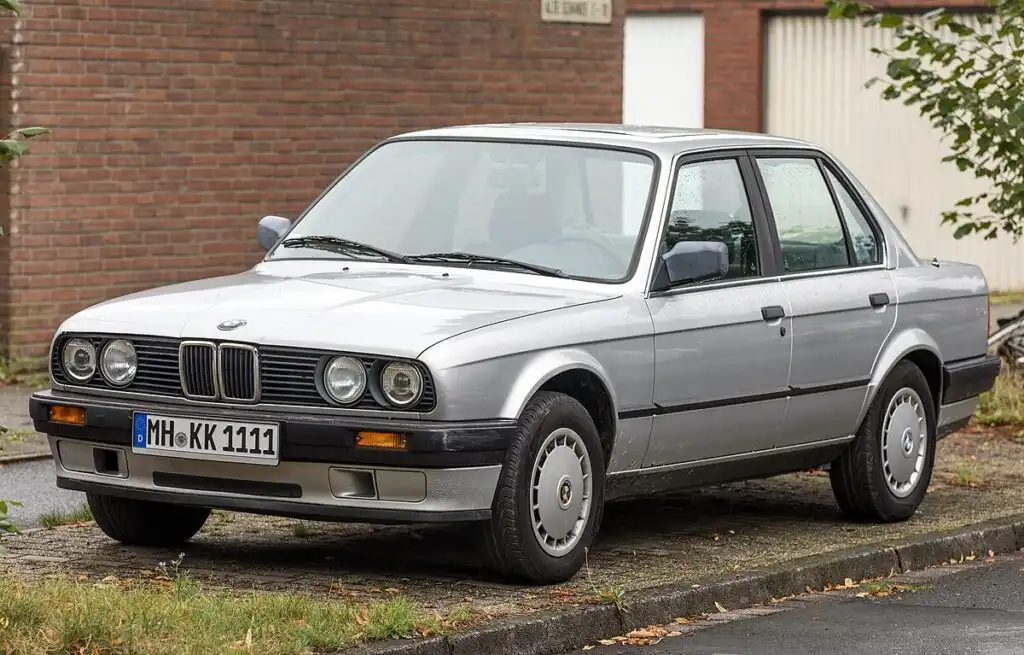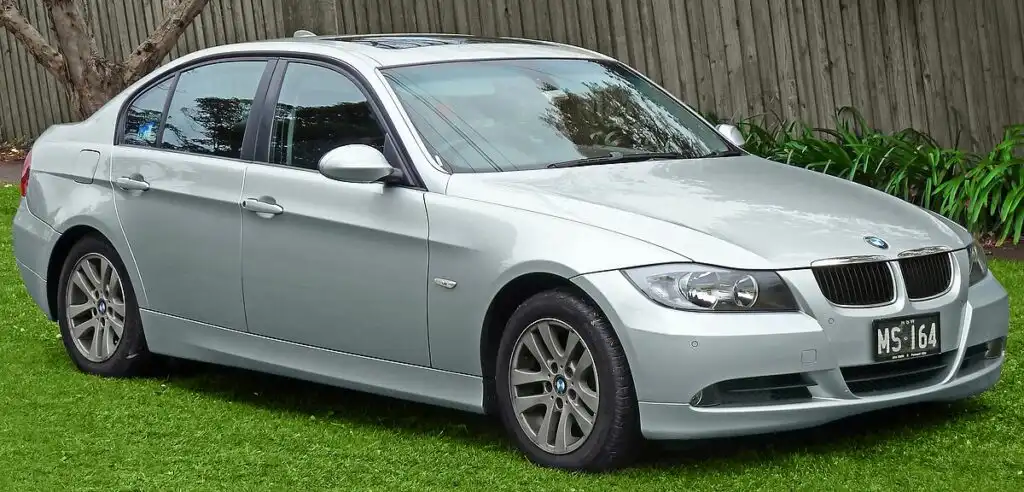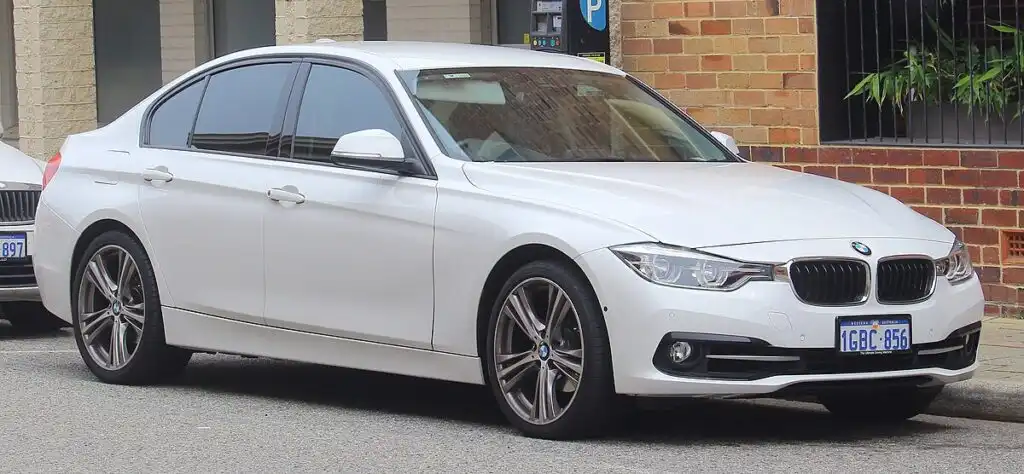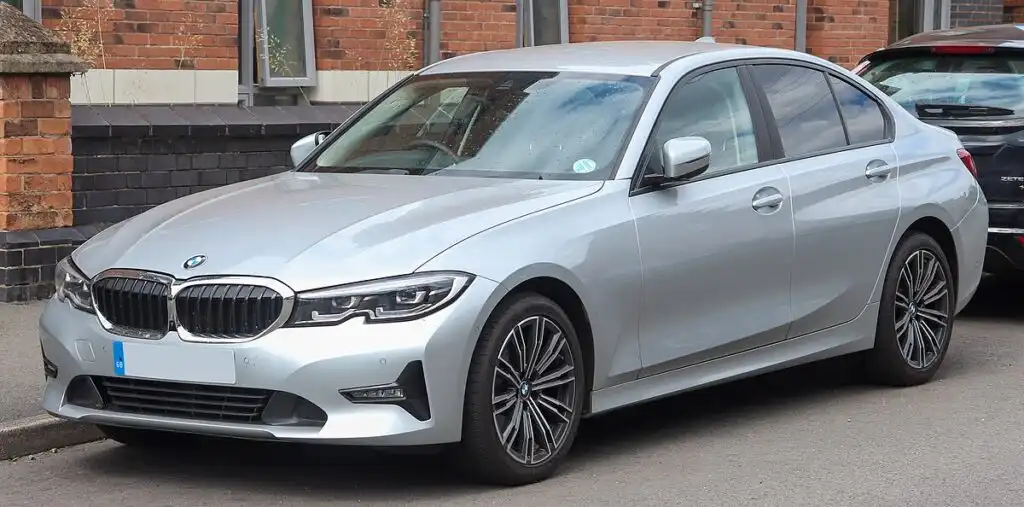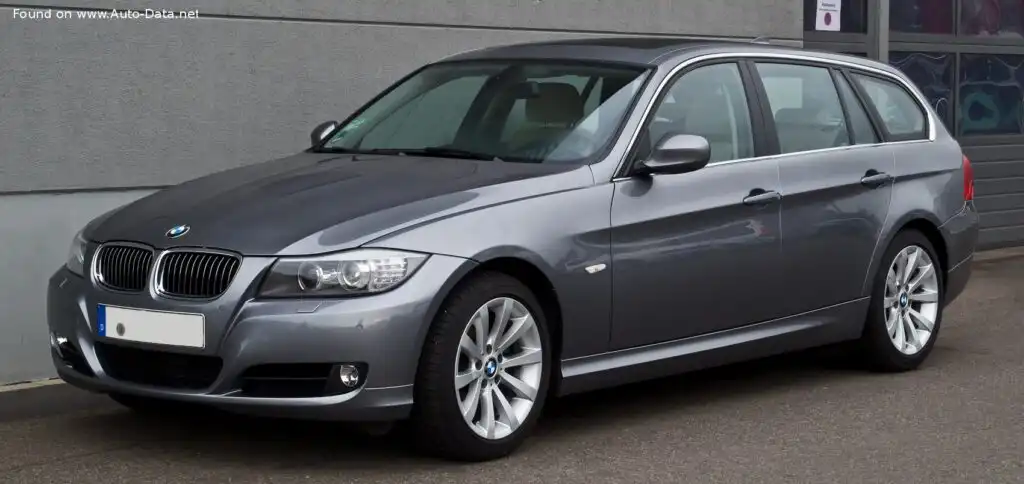
The BMW 3 Series Touring (E91) with the LCI (Life Cycle Impulse) facelift introduced in 2008, represented BMW’s continued commitment to the practical sports wagon segment. The 320d variant, powered by a 2.0-liter turbocharged diesel engine producing 177 horsepower and paired with a six-speed Steptronic automatic transmission, was a popular choice in European markets. Production of this specific configuration ran from 2008 to 2010, fitting within the broader E91 lifecycle which spanned from 2005 to 2012. This model aimed to balance fuel efficiency, reasonable performance, and the versatility expected of a touring (wagon) body style.
Technical Specifications
| Brand | BMW |
| Model | 3 Series |
| Generation | 3 Series Touring (E91 LCI, facelift 2008) |
| Type (Engine) | 320d (177 Hp) Steptronic |
| Start of production | 2008 |
| End of production | 2010 |
| Powertrain Architecture | Internal Combustion engine |
| Body type | Station wagon (estate) |
| Seats | 5 |
| Doors | 5 |
| Fuel consumption (economy) – urban (NEDC) | 7.5 l/100 km (31.4 US mpg, 37.7 UK mpg, 13.3 km/l) |
| Fuel consumption (economy) – extra urban (NEDC) | 4.8 l/100 km (49 US mpg, 58.9 UK mpg, 20.8 km/l) |
| Fuel consumption (economy) – combined (NEDC) | 5.8 l/100 km (40.6 US mpg, 48.7 UK mpg, 17.2 km/l) |
| CO2 emissions (NEDC) | 150 g/km |
| Fuel Type | Diesel |
| Acceleration 0 – 100 km/h | 8.3 sec |
| Acceleration 0 – 62 mph | 8.3 sec |
| Acceleration 0 – 60 mph | 7.9 sec |
| Maximum speed | 226 km/h (140.43 mph) |
| Emission standard | Euro 5 |
| Weight-to-power ratio | 8.6 kg/Hp, 116.4 Hp/tonne |
| Weight-to-torque ratio | 4.3 kg/Nm, 230.3 Nm/tonne |
| Power | 177 Hp @ 4000 rpm |
| Power per litre | 88.7 Hp/l |
| Torque | 350 Nm @ 1750-5000 rpm (258.15 lb.-ft. @ 1750-5000 rpm) |
| Engine layout | Front, Longitudinal |
| Engine Model/Code | N47D20C |
| Engine displacement | 1995 cm3 (121.74 cu. in.) |
| Number of cylinders | 4 |
| Engine configuration | Inline |
| Cylinder Bore | 84 mm (3.31 in.) |
| Piston Stroke | 90 mm (3.54 in.) |
| Compression ratio | 16:1 |
| Number of valves per cylinder | 4 |
| Fuel injection system | Diesel Commonrail |
| Engine aspiration | Turbocharger, Intercooler |
| Valvetrain | DOHC |
| Engine oil capacity | 5.2 l (5.49 US qt | 4.58 UK qt) |
| Coolant | 7.9 l (8.35 US qt | 6.95 UK qt) |
| Kerb Weight | 1520 kg (3351.03 lbs.) |
| Max. weight | 2060 kg (4541.52 lbs.) |
| Max load | 540 kg (1190.5 lbs.) |
| Trunk (boot) space – minimum | 460 l (16.24 cu. ft.) |
| Trunk (boot) space – maximum | 1385 l (48.91 cu. ft.) |
| Fuel tank capacity | 61 l (16.11 US gal | 13.42 UK gal) |
| Max. roof load | 75 kg (165.35 lbs.) |
| Permitted trailer load with brakes (12%) | 1600 kg (3527.4 lbs.) |
| Permitted trailer load without brakes | 745 kg (1642.44 lbs.) |
| Permitted towbar download | 75 kg (165.35 lbs.) |
| Length | 4527 mm (178.23 in.) |
| Width | 1817 mm (71.54 in.) |
| Width including mirrors | 1989 mm (78.31 in.) |
| Height | 1418 mm (55.83 in.) |
| Wheelbase | 2760 mm (108.66 in.) |
| Front track | 1506 mm (59.29 in.) |
| Rear (Back) track | 1535 mm (60.43 in.) |
| Ride height (ground clearance) | 141 mm (5.55 in.) |
| Drag coefficient (Cd) | 0.28 |
| Minimum turning circle (turning diameter) | 11 m (36.09 ft.) |
| Drivetrain Architecture | The Internal combustion engine (ICE) drives the rear wheels of the vehicle. |
| Drive wheel | Rear wheel drive |
| Number of gears and type of gearbox | 6 gears, automatic transmission Steptronic |
| Front suspension | Spring Strut, Transverse stabilizer |
| Rear suspension | Independent multi-link spring suspension with stabilizer |
| Front brakes | Ventilated discs, 312×24 mm |
| Rear brakes | Ventilated discs, 300×24 mm |
| Assisting systems | ABS (Anti-lock braking system) |
| Steering type | Steering rack and pinion |
| Power steering | Electric Steering |
| Tires size | Front wheel tires: 205/55 R16; 225/45 R17; 225/40 R18Rear wheel tires: 205/55 R16; 225/45 R17; 255/40 R17; 255/35 R18 |
| Wheel rims size | Front wheel rims: 7J x 16; 8J x 17; 8J x 18Rear wheel rims: 7J x 16; 8J x 17; 8.5J x 17; 8.5J x 18 |
INTRODUCTION
The E91 320d Steptronic occupied a middle ground within the 3 Series Touring lineup. It wasn’t the entry-level option, nor did it represent the performance peak. Instead, it targeted buyers who prioritized fuel economy and practicality without sacrificing the BMW driving experience. The LCI facelift brought subtle styling updates, improved interior materials, and crucially, the introduction of the N47D20C engine, a second-generation common-rail diesel that improved refinement and efficiency over its predecessor. This variant was particularly popular in Europe, where diesel engines held a significant market share due to favorable taxation and fuel costs.
Powertrain & Engine Architecture
The heart of the 320d Touring was the N47D20C, a 2.0-liter inline-four cylinder diesel engine. This engine featured a single turbocharger with variable geometry turbine (VGT) technology, an intercooler, and a second-generation common rail direct injection system operating at 1600 bar. The high-pressure injection contributed to improved combustion efficiency and reduced particulate emissions. The engine utilized a double overhead camshaft (DOHC) valvetrain with four valves per cylinder. The six-speed Steptronic automatic transmission was a conventional torque-converter automatic, offering smooth shifts and a focus on comfort rather than outright performance. It featured adaptive shift programs that adjusted shift points based on driving style and road conditions.
Driving Characteristics
The 320d Steptronic offered a comfortable and refined driving experience. While not overtly sporty, the 177 horsepower and 350 Nm (258 lb-ft) of torque provided adequate performance for everyday driving and even longer journeys. Acceleration from 0-60 mph took around 7.9 seconds, which was respectable for a diesel wagon. The Steptronic transmission, while smooth, wasn’t as quick to respond as modern dual-clutch transmissions. The gear ratios were tuned for fuel efficiency, meaning the engine often operated at lower RPMs during cruising. Compared to the more powerful 335i models, the 320d lacked the exhilarating acceleration and dynamic handling. However, it offered significantly better fuel economy and lower running costs. Compared to the manual transmission version of the 320d, the Steptronic sacrificed some driver engagement but provided greater convenience, especially in urban traffic.
Equipment & Trim Levels
The 320d Steptronic typically came standard with features such as automatic climate control, power windows, power mirrors, a multi-function steering wheel, and a basic audio system. Upholstery was usually cloth, but leather options were available. Common optional extras included a sunroof, navigation system, upgraded audio system, parking sensors, and heated seats. The LCI facelift brought improvements to interior trim quality and the availability of BMW’s iDrive infotainment system with a larger display screen. Trim levels varied by market, but generally, the 320d could be upgraded with Sport or Luxury packages that added cosmetic enhancements and additional features.
Chassis & Braking
The E91 320d Touring featured a MacPherson strut front suspension with a transverse stabilizer bar and an independent multi-link rear suspension, also with a stabilizer bar. This setup provided a good balance between ride comfort and handling. The braking system consisted of ventilated disc brakes on all four wheels, providing adequate stopping power. Anti-lock braking system (ABS) was standard. The 320d’s weight of around 3351 lbs was relatively moderate for a wagon, contributing to its manageable handling characteristics. The rear suspension geometry was tuned to accommodate the increased weight and cargo capacity of the touring body style.
Market Reception & Comparison
The 320d Steptronic was well-received by automotive critics as a practical and efficient option within the 3 Series range. It was praised for its fuel economy, comfortable ride, and spacious interior. However, some critics noted that the Steptronic transmission could feel sluggish at times and that the engine lacked the outright performance of its gasoline counterparts. Compared to the 320i, the 320d offered significantly better fuel economy but less horsepower. The 335i provided a more engaging driving experience but at a higher price point and with increased fuel consumption. In terms of reliability, the N47 engine was known to have some potential issues with the timing chain tensioner, which could lead to engine damage if not addressed.
Legacy
The E91 320d Steptronic remains a popular choice in the used car market, particularly in Europe. Its combination of practicality, fuel efficiency, and the BMW badge continues to appeal to buyers. While the N47 engine’s timing chain issue is a known concern, regular maintenance and preventative checks can mitigate the risk. The E91 Touring, in general, is regarded as a well-built and durable vehicle, and the 320d variant offers a good balance of cost and capability for those seeking a versatile and economical wagon.