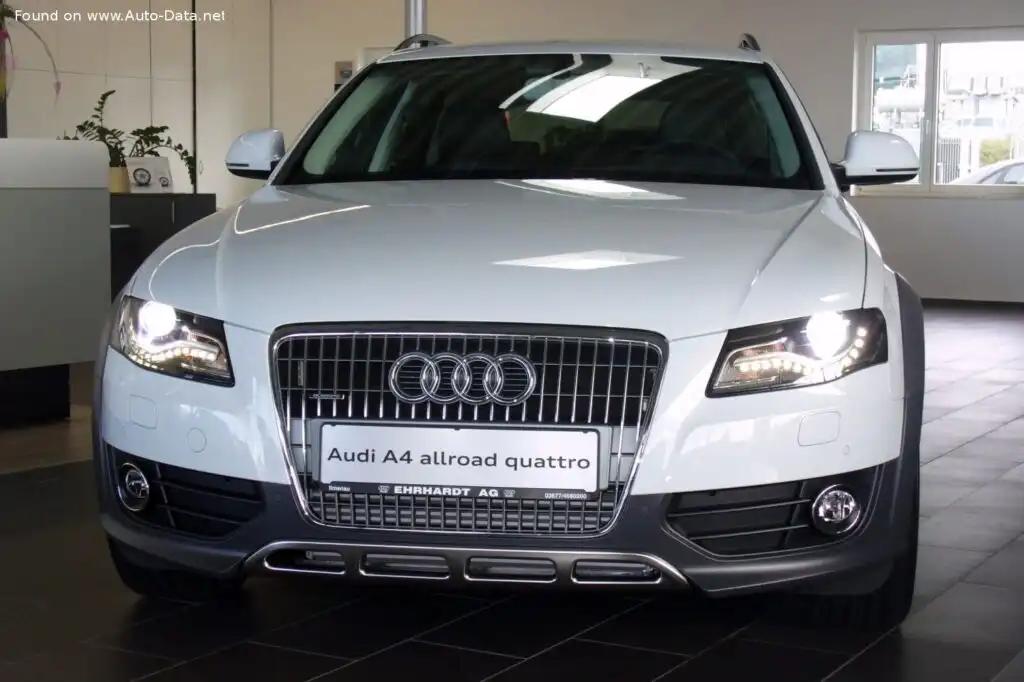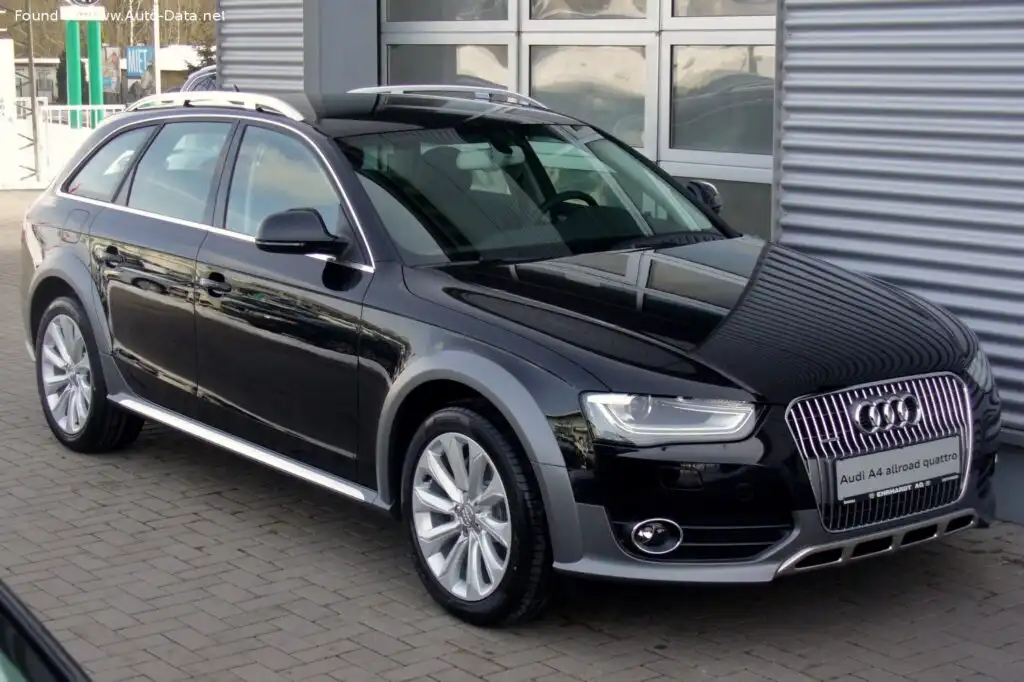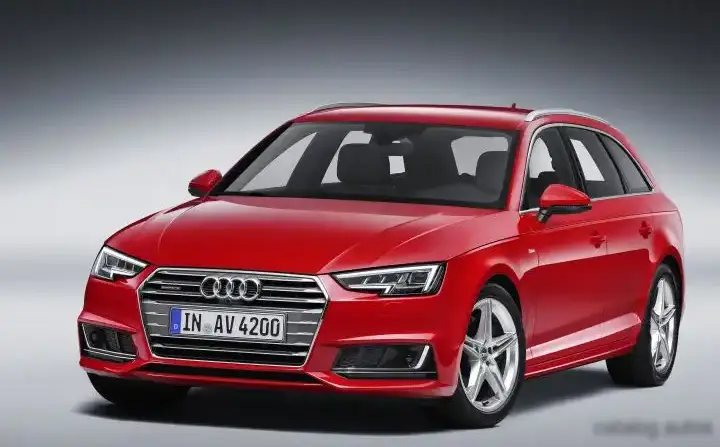
The Audi A4 Avant (B9 8W) 2.0 TDI 122 hp variant, produced between 2016 and 2018, represents a significant offering within the fifth generation (B9) of Audi’s popular A4 series. Positioned as a fuel-efficient and practical option, this model catered to buyers prioritizing economy and usability within the compact executive estate (wagon) segment. It’s built on the Volkswagen Group’s MLB Evo platform, shared with other Audi models like the A5 and Q5, as well as various Volkswagen, Skoda, and SEAT vehicles. This particular configuration – the 2.0-liter TDI engine paired with a six-speed manual transmission – aimed to balance performance with optimal fuel consumption, making it a common sight on European roads.
Technical Specifications
| Brand | Audi |
| Model | A4 |
| Generation | A4 Avant (B9 8W) |
| Type (Engine) | 2.0 TDI (122 Hp) |
| Start of production | 2016 |
| End of production | 2018 |
| Powertrain Architecture | Internal Combustion engine |
| Body type | Station wagon (estate) |
| Seats | 5 |
| Doors | 5 |
| Fuel consumption (urban) | 4.6-5.0 l/100 km (51.1 – 47 US mpg) |
| Fuel consumption (extra urban) | 3.5-4.0 l/100 km (67.2 – 58.8 US mpg) |
| Fuel consumption (combined) | 3.9-4.3 l/100 km (60.3 – 54.7 US mpg) |
| CO2 emissions | 102-115 g/km |
| Fuel Type | Diesel |
| Acceleration 0 – 100 km/h | 10.9 sec |
| Acceleration 0 – 62 mph | 10.9 sec |
| Acceleration 0 – 60 mph | 10.4 sec |
| Maximum speed | 200 km/h (124.27 mph) |
| Emission standard | Euro 6 |
| Weight-to-power ratio | 12.1 kg/Hp |
| Weight-to-torque ratio | 5.5 kg/Nm |
| Power | 122 Hp @ 3500-4000 rpm |
| Torque | 270 Nm @ 1500-3000 rpm (199.14 lb.-ft.) |
| Engine layout | Front, Longitudinal |
| Engine Model/Code | DEUC |
| Engine displacement | 1968 cm3 (120.09 cu. in.) |
| Number of cylinders | 4 |
| Engine configuration | Inline |
| Cylinder Bore | 81 mm (3.19 in.) |
| Piston Stroke | 95.5 mm (3.76 in.) |
| Compression ratio | 16.2:1 |
| Number of valves per cylinder | 4 |
| Fuel injection system | Diesel Commonrail |
| Engine aspiration | Turbocharger, Intercooler |
| Valvetrain | DOHC |
| Engine oil capacity | 4.7 l (4.97 US qt | 4.14 UK qt) |
| Kerb Weight | 1475 kg (3251.82 lbs.) |
| Max. weight | 2095 kg (4618.68 lbs.) |
| Max load | 620 kg (1366.87 lbs.) |
| Trunk (boot) space – minimum | 505 l (17.83 cu. ft.) |
| Trunk (boot) space – maximum | 1510 l (53.33 cu. ft.) |
| Fuel tank capacity | 40 l (10.57 US gal | 8.8 UK gal) |
| Max. roof load | 90 kg (198.42 lbs.) |
| Permitted trailer load with brakes (8%) | 1500 kg (3306.93 lbs.) |
| Permitted trailer load with brakes (12%) | 1300 kg (2866.01 lbs.) |
| Permitted trailer load without brakes | 750 kg (1653.47 lbs.) |
| Permitted towbar download | 80 kg (176.37 lbs.) |
| Length | 4725 mm (186.02 in.) |
| Width | 1842 mm (72.52 in.) |
| Width including mirrors | 2022 mm (79.61 in.) |
| Height | 1434 mm (56.46 in.) |
| Wheelbase | 2820 mm (111.02 in.) |
| Front track | 1572 mm (61.89 in.) |
| Rear track | 1555 mm (61.22 in.) |
| Front overhang | 880 mm (34.65 in.) |
| Rear overhang | 1025 mm (40.35 in.) |
| Drag coefficient (Cd) | 0.30 |
| Minimum turning circle | 11.6 m (38.06 ft.) |
| Drivetrain Architecture | Front wheel drive |
| Number of gears | 6 |
| Type of gearbox | Manual transmission |
| Front suspension | Independent multi-link suspension |
| Rear suspension | Independent multi-link suspension |
| Front brakes | Ventilated discs |
| Rear brakes | Ventilated discs |
| Assisting systems | ABS (Anti-lock braking system) |
| Steering type | Steering rack and pinion |
| Power steering | Electric Steering |
| Tires size | 205/60 R 16 |
| Wheel rims size | 7J x 16 |
INTRODUCTION
The Audi A4 Avant (B9 8W) 2.0 TDI 122 hp, launched in 2016, was a key variant in Audi’s strategy to offer a broad range of options within the A4 lineup. The B9 generation represented a significant evolution in design and technology, moving away from the more rounded aesthetics of the B8 series towards a sharper, more angular appearance. This particular Avant (estate) model, powered by the 2.0-liter TDI engine, was primarily aimed at the European market, where diesel engines and wagons remain highly popular. It served as an entry point into the A4 Avant range, offering a balance of practicality, fuel efficiency, and the premium Audi experience.
Powertrain & Engine Architecture
At the heart of this A4 Avant lies the Volkswagen Group’s DEUC engine, a 2.0-liter four-cylinder turbocharged diesel. This engine is part of the modular engine family, known for its robust construction and efficiency. The 122 hp output is achieved through a carefully calibrated turbocharger and a common rail direct injection system. The engine utilizes a DOHC (Double Overhead Camshaft) valvetrain with four valves per cylinder, optimizing gas flow for improved performance and efficiency. The engine’s intercooler helps to cool the intake air, further enhancing power output. Paired with this engine is a six-speed manual transmission, chosen for its efficiency and driver engagement. The transmission features well-defined gear ratios designed to maximize fuel economy while providing adequate acceleration. The engine code ‘DEUC’ signifies a specific calibration for this power output, differing from higher-output versions of the 2.0 TDI.
Driving Characteristics
The 2.0 TDI 122 hp A4 Avant delivers a composed and refined driving experience. While not overtly sporty, the engine provides sufficient torque (270 Nm / 199 lb-ft) for everyday driving and overtaking maneuvers. Acceleration from 0-60 mph takes around 10.4 seconds, which is respectable for a diesel estate. The six-speed manual transmission allows for precise gear selection, and the engine is relatively responsive across its rev range. Compared to the more powerful 150 hp or 190 hp TDI variants, this version feels less urgent in its acceleration, but it compensates with superior fuel economy. The manual gearbox also provides a more engaging driving experience than the optional S tronic dual-clutch transmission. The long gearing contributes to relaxed cruising on highways, while the engine’s torque makes it easy to maintain speed even when fully loaded.
Equipment & Trim Levels
The 2.0 TDI 122 hp A4 Avant typically came equipped with a solid base level of features. Standard equipment often included Audi’s MMI (Multi Media Interface) infotainment system with a 7-inch display, Bluetooth connectivity, air conditioning, and alloy wheels. Safety features such as ABS, ESC (Electronic Stability Control), and multiple airbags were also standard. Interior upholstery was typically cloth, with options for leather upgrades. Common optional extras included a larger MMI display, navigation system, parking sensors, heated seats, and a panoramic sunroof. Trim levels varied slightly depending on the specific market, but generally, this variant represented the entry-level offering within the A4 Avant range.
Chassis & Braking
The B9 A4 Avant features a sophisticated chassis design, utilizing independent multi-link suspension on both the front and rear axles. This setup provides a comfortable ride quality while maintaining good handling characteristics. The front suspension geometry is optimized for steering precision, while the rear suspension ensures stability and control. Braking duties are handled by ventilated discs on all four wheels, providing ample stopping power. ABS (Anti-lock Braking System) and ESC (Electronic Stability Control) are standard features, enhancing safety and stability in various driving conditions. The weight distribution is well-balanced, contributing to the car’s neutral handling characteristics.
Market Reception & Comparison
The Audi A4 Avant 2.0 TDI 122 hp was generally well-received by automotive critics. It was praised for its fuel efficiency, comfortable ride, and refined interior. However, some reviewers noted that the engine lacked the outright performance of its more powerful siblings. Compared to the 150 hp TDI variant, the 122 hp model offered a noticeable improvement in fuel economy but at the expense of acceleration. Against competitors like the BMW 3 Series Touring and Mercedes-Benz C-Class Estate, the A4 Avant 2.0 TDI 122 hp held its own in terms of practicality, refinement, and fuel efficiency. Its diesel engine also provided a significant advantage in terms of long-distance cruising range.
Legacy
The 2.0 TDI engine, in its various iterations, has proven to be a reliable and durable powertrain. While early diesel engines from the Volkswagen Group faced scrutiny regarding emissions, the DEUC engine, particularly in later iterations, benefited from improvements in emissions control technology. Today, used examples of the A4 Avant 2.0 TDI 122 hp represent a good value proposition for buyers seeking a practical, fuel-efficient, and well-built estate car. Regular maintenance, including timely oil changes and filter replacements, is crucial for ensuring the long-term reliability of this powertrain. The availability of spare parts is generally good, and the engine’s relatively simple design makes it relatively easy to maintain.