
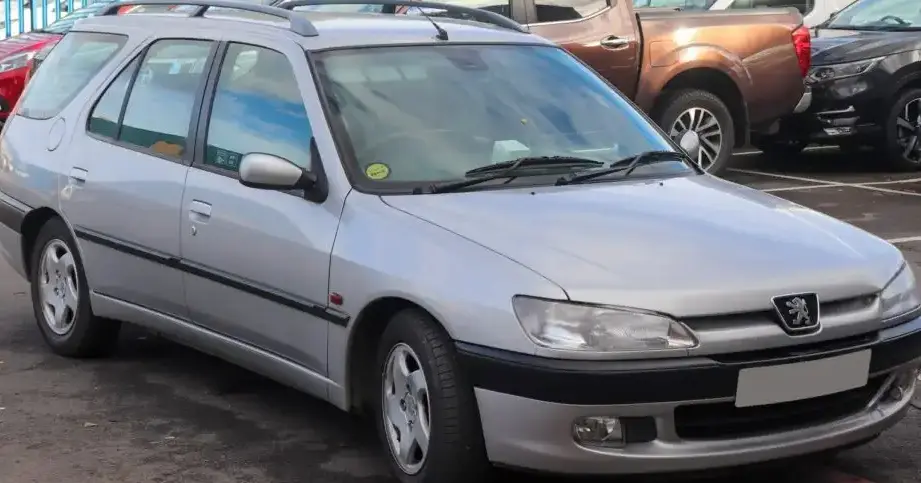
The Peugeot 306 Break 1.6i, produced between 1997 and 2002, represents a practical and affordable entry point into the popular 306 series of compact family cars. As a station wagon (estate) variant – designated the 7E – it offered increased cargo capacity compared to the hatchback, appealing to families and those requiring versatile load-lugging capabilities. This particular 1.6i model, equipped with an 89 horsepower engine, was positioned as the base engine option within the Break lineup, prioritizing fuel economy and lower running costs over outright performance. It was a common sight on European roads, serving as a dependable and economical vehicle for everyday use.
Technical Specifications
| Brand | Peugeot |
| Model | 306 |
| Generation | 306 Break (7E) |
| Type (Engine) | 1.6i (89 Hp) |
| Start of production | 1997 |
| End of production | 2002 |
| Powertrain Architecture | Internal Combustion engine |
| Body type | Station wagon (estate) |
| Seats | 5 |
| Doors | 5 |
| Fuel consumption (urban) | 10.4 l/100 km (22.6 US mpg, 27.2 UK mpg, 9.6 km/l) |
| Fuel consumption (extra urban) | 6.2 l/100 km (37.9 US mpg, 45.6 UK mpg, 16.1 km/l) |
| Fuel Type | Petrol (Gasoline) |
| Acceleration 0 – 100 km/h | 14.1 sec |
| Acceleration 0 – 62 mph | 14.1 sec |
| Acceleration 0 – 60 mph | 13.4 sec |
| Maximum speed | 180 km/h (111.85 mph) |
| Weight-to-power ratio | 12.6 kg/Hp, 79.5 Hp/tonne |
| Weight-to-torque ratio | 8.3 kg/Nm, 120.5 Nm/tonne |
| Power | 89 Hp @ 5600 rpm |
| Power per litre | 56.1 Hp/l |
| Torque | 135 Nm @ 3000 rpm (99.57 lb.-ft. @ 3000 rpm) |
| Engine layout | Front, Transverse |
| Engine Model/Code | NFZ TU5JP |
| Engine displacement | 1587 cm3 (96.84 cu. in.) |
| Number of cylinders | 4 |
| Engine configuration | Inline |
| Cylinder Bore | 78.5 mm (3.09 in.) |
| Piston Stroke | 82 mm (3.23 in.) |
| Compression ratio | 10:1 |
| Number of valves per cylinder | 2 |
| Fuel injection system | Multi-port manifold injection |
| Engine aspiration | Naturally aspirated engine |
| Valvetrain | OHC |
| Engine oil capacity | 3.2 l (3.38 US qt | 2.82 UK qt) |
| Coolant capacity | 7 l (7.4 US qt | 6.16 UK qt) |
| Kerb Weight | 1120 kg (2469.18 lbs.) |
| Max. weight | 1605 kg (3538.42 lbs.) |
| Max load | 485 kg (1069.24 lbs.) |
| Trunk (boot) space – minimum | 440 l (15.54 cu. ft.) |
| Trunk (boot) space – maximum | 1510 l (53.33 cu. ft.) |
| Fuel tank capacity | 60 l (15.85 US gal | 13.2 UK gal) |
| Length | 4338 mm (170.79 in.) |
| Width | 1680 mm (66.14 in.) |
| Height | 1415 mm (55.71 in.) |
| Wheelbase | 2580 mm (101.57 in.) |
| Front track | 1423-1433 mm (56.02 – 56.42 in.) |
| Rear track | 1424-1432 mm (56.06 – 56.38 in.) |
| Front overhang | 815 mm (32.09 in.) |
| Rear overhang | 943 mm (37.13 in.) |
| Drivetrain Architecture | Front wheel drive |
| Number of gears | 5 |
| Gearbox type | Manual transmission |
| Front suspension | Wishbone |
| Rear suspension | Trailing arm |
| Front brakes | Disc |
| Rear brakes | Drum |
| Assisting systems | ABS (Anti-lock braking system) |
| Steering type | Steering rack and pinion |
| Power steering | Hydraulic |
| Tires size | 185/65 R14 |
Powertrain & Engine Architecture
The heart of the 306 Break 1.6i is the NFZ (also known as TU5JP) engine, a 1.6-liter inline-four cylinder petrol engine. This engine was a mainstay of Peugeot and Citroën vehicles throughout the 1990s and early 2000s, known for its relative simplicity and durability. It features a single overhead camshaft (OHC) operating two valves per cylinder. Fuel delivery is managed by a multi-port fuel injection system, providing adequate, though not exceptional, performance. The engine’s 89 horsepower output at 5600 rpm and 135 Nm (99.57 lb-ft) of torque at 3000 rpm were typical for this class of vehicle at the time. The engine’s design prioritized fuel efficiency and low emissions, making it suitable for the European market where fuel costs were relatively high. The 5-speed manual transmission was the standard offering, providing a reasonable spread of gears for both urban and highway driving.
Driving Characteristics
The 1.6i engine, paired with the manual transmission, provided adequate, but not exhilarating, performance. Acceleration from 0-60 mph took around 13.4 seconds, and top speed was approximately 112 mph. The engine felt somewhat strained when fully loaded or climbing hills, requiring frequent downshifts to maintain momentum. Compared to the more powerful 2.0-liter versions of the 306, the 1.6i lacked the punch for quick overtaking maneuvers. However, the 5-speed gearbox allowed for relatively relaxed cruising on the highway. The gear ratios were tuned for economy, resulting in a lower engine speed at cruising speeds. The steering was light and precise, making the car easy to maneuver in urban environments. Overall, the driving experience was comfortable and predictable, prioritizing practicality over sporty handling.
Equipment & Trim Levels
The 306 Break 1.6i typically came with a modest level of standard equipment. Interior features generally included cloth upholstery, a basic dashboard layout, and manual windows and door locks. Air conditioning was often an optional extra, as were features like power steering and a radio/cassette player. Higher trim levels, such as the GLX, offered additional features like electric windows, central locking, and upgraded interior trim. Safety features were relatively basic for the era, typically including a driver’s airbag and ABS anti-lock brakes. The Break’s defining feature was its spacious interior and large cargo area, accessible through a rear tailgate. The rear seats could be folded down to create a larger, flat load space.
Chassis & Braking
The 306 Break featured a front-wheel-drive layout with independent wishbone suspension at the front and a trailing arm suspension at the rear. This suspension setup provided a comfortable ride quality, absorbing bumps and imperfections in the road surface effectively. The front brakes were disc brakes, providing adequate stopping power, while the rear brakes were drum brakes, a cost-saving measure common in this segment. ABS anti-lock brakes were often included as standard equipment, enhancing safety by preventing wheel lockup during hard braking. The steering was a rack and pinion system with hydraulic power assistance, making it easy to maneuver at low speeds.
Market Reception & Comparison
The Peugeot 306 Break 1.6i was generally well-received as a practical and affordable family car. Critics praised its spacious interior, comfortable ride, and fuel efficiency. However, the 1.6i engine was often criticized for its lack of power, particularly when compared to the more potent 2.0-liter versions. The 1.6i offered a more economical alternative to the higher-spec models, appealing to buyers who prioritized value for money over performance. Compared to rivals like the Ford Focus Estate and Renault Mégane Estate, the 306 Break offered a similar level of practicality and affordability. Fuel economy was competitive, and reliability was generally good, although some owners reported issues with the electrical system.
Legacy
The Peugeot 306 Break 1.6i remains a relatively common sight on European roads today, testament to its durability and affordability. The NFZ engine is known for its robustness, and with regular maintenance, it can provide many years of reliable service. Used examples are typically inexpensive to purchase and maintain, making them a popular choice for first-time car buyers or those seeking a practical and economical vehicle. While not a performance icon, the 306 Break 1.6i holds a place in automotive history as a dependable and versatile family car that served a generation of drivers well.
