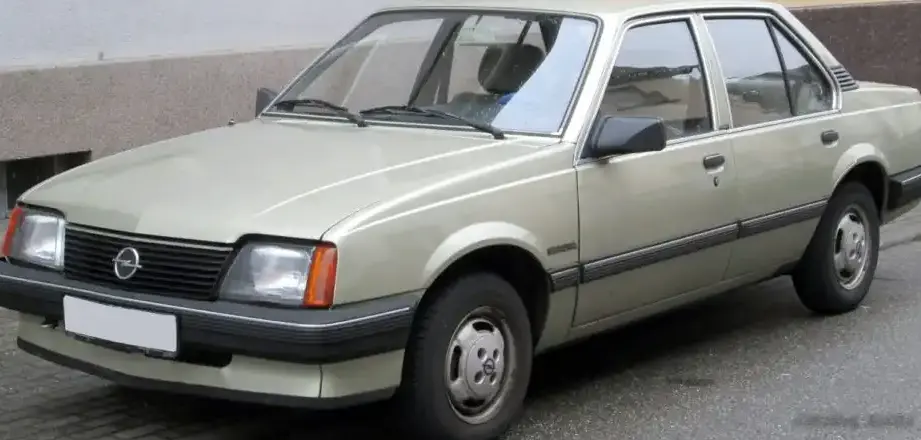
The Opel Ascona C 1.8i, produced between 1982 and 1986, represented a significant evolution in Opel’s mid-size offerings. Part of the Ascona C generation (1981-1988), this variant occupied a middle ground in the lineup, offering a balance between performance and affordability. It was primarily marketed in Europe as a practical and reliable family sedan, competing with vehicles like the Ford Taunus and Volkswagen Passat. The Ascona C was built on the GM T-platform, shared with other European Opel/Vauxhall models like the Manta and Cavalier, and later the American Buick Skylark and Oldsmobile Ciera. The 1.8i model aimed to provide a more refined driving experience than the base models, while remaining accessible to a wider customer base.
Technical Specifications
| Brand | Opel |
| Model | Ascona |
| Generation | Ascona C |
| Type (Engine) | 1.8i (115 Hp) |
| Start of production | 1982 |
| End of production | 1986 |
| Powertrain Architecture | Internal Combustion engine |
| Body type | Sedan |
| Seats | 5 |
| Doors | 4 |
| Fuel Type | Petrol (Gasoline) |
| Acceleration 0 – 100 km/h | 10.5 sec |
| Acceleration 0 – 62 mph | 10.5 sec |
| Acceleration 0 – 60 mph | 10 sec |
| Maximum speed | 187 km/h (116.2 mph) |
| Weight-to-power ratio | 8.8 kg/Hp, 113.9 Hp/tonne |
| Weight-to-torque ratio | 6.7 kg/Nm, 149.5 Nm/tonne |
| Power | 115 Hp @ 5800 rpm |
| Power per litre | 64 Hp/l |
| Torque | 151 Nm @ 4800 rpm (111.37 lb.-ft. @ 4800 rpm) |
| Engine layout | Front, Transverse |
| Engine Model/Code | 18E |
| Engine displacement | 1796 cm3 (109.6 cu. in.) |
| Number of cylinders | 4 |
| Engine configuration | Inline |
| Cylinder Bore | 84.8 mm (3.34 in.) |
| Piston Stroke | 79.5 mm (3.13 in.) |
| Compression ratio | 9.2:1 |
| Number of valves per cylinder | 2 |
| Fuel injection system | Multi-port manifold injection |
| Engine aspiration | Naturally aspirated engine |
| Valvetrain | SOHC |
| Engine oil capacity | 3.25 l (3.43 US qt | 2.86 UK qt) |
| Coolant | 7.6 l (8.03 US qt | 6.69 UK qt) |
| Kerb Weight | 1010 kg (2226.67 lbs.) |
| Max. weight | 1495 kg (3295.91 lbs.) |
| Max load | 485 kg (1069.24 lbs.) |
| Trunk (boot) space – maximum | 510 l (18.01 cu. ft.) |
| Fuel tank capacity | 61 l (16.11 US gal | 13.42 UK gal) |
| Permitted trailer load with brakes (12%) | 1300 kg (2866.01 lbs.) |
| Permitted trailer load without brakes | 500 kg (1102.31 lbs.) |
| Length | 4366 mm (171.89 in.) |
| Width | 1668 mm (65.67 in.) |
| Height | 1395 mm (54.92 in.) |
| Wheelbase | 2574 mm (101.34 in.) |
| Front track | 1406 mm (55.35 in.) |
| Rear (Back) track | 1406 mm (55.35 in.) |
| Ride height (ground clearance) | 148 mm (5.83 in.) |
| Drag coefficient (Cd) | 0.39 |
| Minimum turning circle (turning diameter) | 10.95 m (35.93 ft.) |
| Drivetrain Architecture | The Internal combustion engine (ICE) drives the front wheels of the vehicle. |
| Drive wheel | Front wheel drive |
| Number of gears and type of gearbox | 5 gears, manual transmission |
| Front suspension | Independent type McPherson |
| Front brakes | Disc |
| Rear brakes | Drum |
Powertrain & Engine Architecture
The heart of the Ascona C 1.8i was the Opel 18E engine, a 1796cc inline-four cylinder unit. This engine featured a single overhead camshaft (SOHC) valvetrain with two valves per cylinder. It utilized Bosch multi-port fuel injection, a significant upgrade over the carburetors found in earlier Ascona models, contributing to improved fuel efficiency and smoother power delivery. The 18E engine was known for its relative simplicity and durability. The engine’s 9.2:1 compression ratio was a compromise between performance and the fuel quality available in European markets. The engine was transversely mounted, driving the front wheels. The five-speed manual transmission was the standard offering, providing a reasonable spread of gears for both city driving and highway cruising.
Driving Characteristics
The 1.8i version of the Ascona C offered a respectable, if not exhilarating, driving experience. With 115 horsepower, acceleration to 60 mph took around 10 seconds, and it reached a top speed of approximately 116 mph. While not a sports car, the 1.8i provided sufficient power for everyday driving and overtaking maneuvers. Compared to the lower-powered 1.6-liter versions, the 1.8i felt noticeably more responsive. However, it lacked the punch of the larger 2.0-liter engines or the more performance-oriented Manta models. The five-speed manual transmission allowed drivers to keep the engine in its optimal power band, while the front-wheel-drive layout provided predictable handling. The suspension, while comfortable, wasn’t particularly sporty, resulting in some body roll during cornering.
Equipment & Trim Levels
The Ascona C 1.8i typically came with a fairly comprehensive level of standard equipment for its time. This included features like a four-speed heater/defroster, cloth upholstery, and basic instrumentation. Higher trim levels, often denoted by suffixes like “GL” or “SR”, added features such as upgraded interior trim, a sunroof, power windows, and central locking. Optional extras included a radio, upgraded sound system, and alloy wheels. The interior design was functional and straightforward, prioritizing practicality over luxury. The dashboard layout was typical of early 1980s European cars, with clearly labeled controls and a relatively uncluttered appearance.
Chassis & Braking
The Ascona C utilized a McPherson strut independent suspension at the front, providing a comfortable ride and reasonable handling. The rear suspension employed a solid axle with trailing arms and coil springs. Braking duties were handled by disc brakes at the front and drum brakes at the rear. While adequate for normal driving conditions, the drum brakes on the rear wheels were a limitation compared to the all-disc setups found on some of its competitors. The steering was a rack-and-pinion system, offering precise control and a reasonable turning circle. Stabilizer bars were fitted to both the front and rear axles to reduce body roll.
Market Reception & Comparison
The Ascona C 1.8i was generally well-received by automotive critics as a practical and reliable family car. It was praised for its comfortable ride, decent fuel economy, and relatively spacious interior. However, some critics noted that its styling was somewhat conservative and that its performance wasn’t particularly exciting. Compared to the 1.6-liter versions, the 1.8i offered a noticeable improvement in performance, making it a more appealing option for drivers who frequently traveled on highways or carried passengers. The 1.8i was also more affordable than the higher-powered 2.0-liter models, making it a good value for money. Fuel economy was respectable for the era, averaging around 30-35 mpg in mixed driving conditions.
Legacy
The Opel Ascona C 1.8i, while not a particularly rare or collectible car today, remains a popular choice among classic car enthusiasts. The 18E engine is known for its durability and relative ease of maintenance. Parts availability is generally good, although some specific trim pieces can be difficult to find. The Ascona C’s simple mechanical design makes it a relatively easy car to work on for DIY mechanics. Well-maintained examples of the 1.8i can still provide reliable transportation and a nostalgic driving experience. The Ascona C represents a significant chapter in Opel’s history, showcasing the company’s commitment to building practical and affordable family cars.