
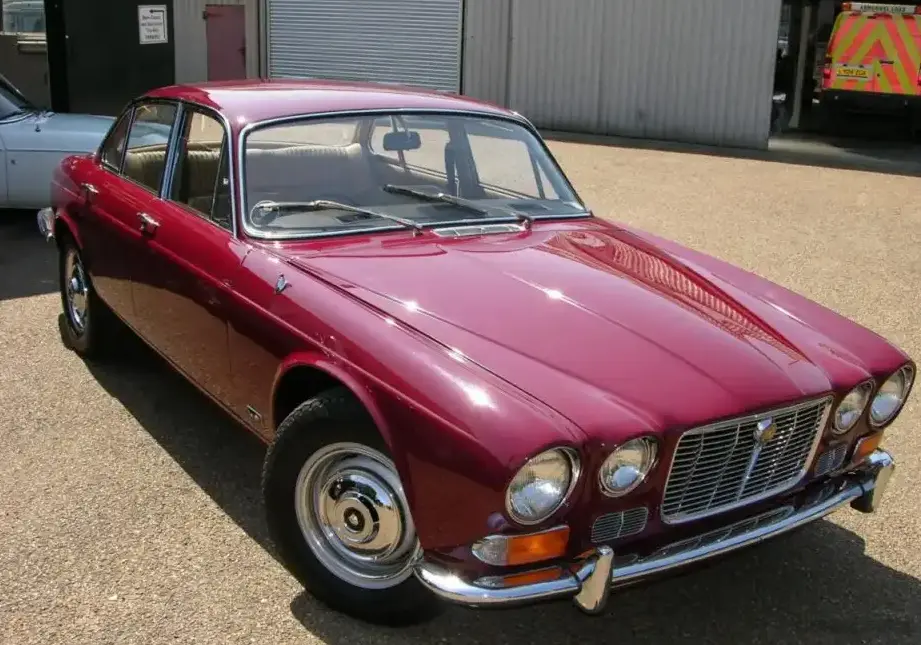
The Jaguar XJ 6 4.2, produced between 1975 and 1979, represents a significant iteration of the XJ series, Jaguar’s flagship sedan. Falling within the second generation of the XJ (Series II), this variant offered a blend of luxury, performance, and British engineering. It occupied a position within the XJ lineup as a higher-performance option, sitting above the 4.2-liter non-V12 models but below the range-topping V12 versions. The Series II XJ, launched in 1973, addressed some of the criticisms leveled at the original XJ, primarily concerning its styling and practicality, while retaining the core qualities that made the XJ a desirable luxury vehicle. This 4.2-liter model aimed to provide a more accessible entry point into the XJ experience for buyers seeking a powerful and refined sedan without the significantly higher cost of the V12.
Technical Specifications
| Brand | Jaguar |
| Model | XJ |
| Generation | XJ (Series II) |
| Type (Engine) | 6 4.2 (169 Hp) |
| Start of production | 1975 |
| End of production | 1979 |
| Powertrain Architecture | Internal Combustion engine |
| Body type | Sedan |
| Seats | 5 |
| Doors | 4 |
| Fuel Type | Petrol (Gasoline) |
| Power | 169 Hp |
| Engine aspiration | Naturally aspirated engine |
Powertrain & Engine Architecture
The heart of the XJ 6 4.2 is its inline-six cylinder engine, displacing 4.2 liters (4235 cc). This engine, designated the XK6, is a naturally aspirated, dual overhead camshaft (DOHC) design. It features a cast iron block and an aluminum cylinder head, a configuration common for Jaguar engines of this era. The engine utilizes a Lucas fuel injection system, a significant upgrade over the carburetors used in earlier XJ models, contributing to improved fuel efficiency and smoother power delivery. The XK6 engine is known for its robust construction and relatively simple design, making it reasonably reliable when properly maintained. The engine produces 169 horsepower at approximately 5,500 rpm, and 240 lb-ft of torque at 4,000 rpm. The transmission paired with this engine was typically a three-speed automatic, although a four-speed manual transmission was available as an option, though less common. The automatic transmission, a Borg-Warner unit, was chosen for its smoothness and suitability for the luxury market segment.
Driving Characteristics
The XJ 6 4.2 offered a distinctly grand touring experience. While not possessing the outright acceleration of the V12 models, the 4.2-liter engine provided ample power for comfortable cruising and confident overtaking. The automatic transmission, while smooth, did contribute to some power loss compared to the manual version. The gear ratios were optimized for relaxed highway driving, with a focus on providing effortless acceleration rather than maximizing fuel economy. The car’s substantial weight (approximately 3,800 lbs) meant that it wasn’t particularly nimble, but the well-tuned suspension – independent front suspension with double wishbones and a live axle rear suspension – provided a comfortable and controlled ride. Steering was power-assisted, contributing to ease of maneuverability, although it lacked the precision of more modern steering systems. Compared to the V12, the 4.2 felt more manageable and less demanding to drive, making it a popular choice for those who wanted a powerful Jaguar without the complexity of the twelve-cylinder engine.
Equipment & Trim Levels
The XJ 6 4.2 was well-equipped for its time, reflecting Jaguar’s commitment to luxury. Standard features included power steering, power-assisted brakes, leather upholstery, walnut wood veneer trim, and electric windows. Air conditioning was a common option, as were a sunroof and a premium sound system. The interior was designed with comfort and elegance in mind, featuring plush carpeting, comfortable seating, and a generally refined ambiance. Trim levels varied depending on the market, but generally, the XJ 6 4.2 offered a higher level of standard equipment than the base XJ 6 models. Optional extras allowed buyers to personalize their vehicles, with choices ranging from upgraded audio systems to bespoke interior trim options. The dashboard layout was classic Jaguar, featuring a comprehensive array of gauges and controls, all presented in a stylish and functional manner.
Chassis & Braking
The XJ 6 4.2 utilized a robust chassis construction, featuring a separate body-on-frame design. This provided a solid and durable platform for the car, contributing to its longevity. The suspension system, as mentioned previously, consisted of independent front suspension with double wishbones and a live axle rear suspension with trailing arms. Braking was initially provided by disc brakes on all four wheels, although some earlier models may have featured drum brakes on the rear. Power-assisted braking was standard, providing ample stopping power for the car’s weight. The steering system was a recirculating ball system with power assistance, offering a comfortable driving experience but lacking the direct feel of more modern steering technologies. Stabilizer bars were fitted to both the front and rear axles to reduce body roll during cornering.
Market Reception & Comparison
The XJ 6 4.2 was generally well-received by automotive critics. It was praised for its smooth engine, comfortable ride, and luxurious interior. However, some critics noted that the automatic transmission could feel sluggish at times, and the car’s weight limited its handling agility. Compared to the V12 models, the 4.2 was seen as a more sensible and practical choice, offering a good balance of performance and affordability. It also compared favorably to its rivals, such as the Mercedes-Benz S-Class and the BMW 7 Series, in terms of luxury and refinement. Fuel economy, however, was not a strong point, typical for a large luxury sedan of the 1970s. Reliability was generally good, although the Lucas fuel injection system could be prone to occasional issues.
Legacy
The Jaguar XJ 6 4.2 remains a desirable classic car today. The XK6 engine is known for its durability and relatively straightforward maintenance, making it a popular choice among enthusiasts. While parts availability can be a challenge, a dedicated network of Jaguar specialists and parts suppliers exists to support these vehicles. The XJ 6 4.2 represents a high point in Jaguar’s engineering and design, offering a unique blend of British luxury and performance. In the used car market, well-maintained examples command respectable prices, reflecting their enduring appeal and historical significance. The Series II XJ, and particularly the 4.2 variant, is considered by many to be the most aesthetically pleasing and mechanically sound of the early XJ models, solidifying its place as a classic of the era.
