
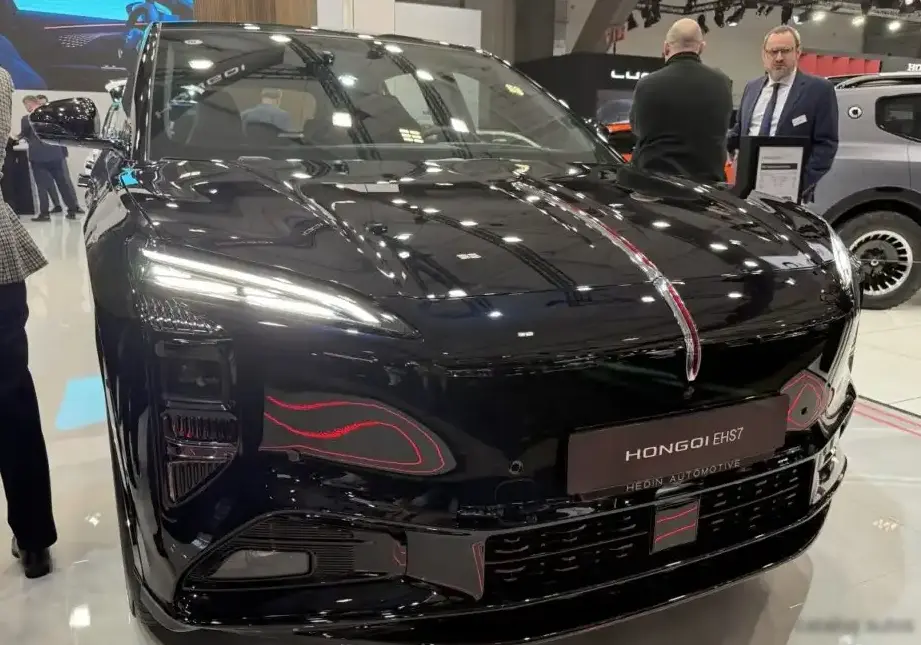
The Hongqi EHS7 85 kWh is a fully electric mid-size SUV produced by the Chinese automotive manufacturer Hongqi, beginning in October 2024. Representing a significant step in Hongqi’s expansion into the new energy vehicle (NEV) market, the EHS7 is positioned as a technologically advanced and luxurious offering within the rapidly growing electric SUV segment. It is built upon a dedicated electric vehicle platform and aims to compete with both domestic and international brands in the premium SUV space. The 85 kWh variant, producing 344 horsepower, represents a key configuration within the EHS7 lineup, balancing performance with range and efficiency.
Technical Specifications
| Brand | Hongqi |
| Model | EHS7 |
| Generation | EHS7 |
| Type (Engine) | 85 kWh (344 Hp) |
| Start of production | October, 2024 |
| Powertrain Architecture | BEV (Electric Vehicle) |
| Body type | SUV |
| Seats | 5 |
| Doors | 5 |
| Fuel Type | Electricity |
| Acceleration 0 – 100 km/h | 6.5 sec |
| Acceleration 0 – 62 mph | 6.5 sec |
| Acceleration 0 – 60 mph | 6.2 sec |
| Maximum speed | 200 km/h (124.27 mph) |
| Weight-to-power ratio | 6.9 kg/Hp, 145.2 Hp/tonne |
| Weight-to-torque ratio | 5.3 kg/Nm, 190 Nm/tonne |
| Gross battery capacity | 85 kWh |
| Net (usable) battery capacity | 81.6 kWh |
| Battery voltage | 400 V |
| Battery technology | Lithium iron phosphate (LiFePO4) |
| Battery location | Below the floor |
| All-electric range (WLTP) | 475 km (295.15 mi) |
| Average Energy consumption (WLTP) | 17.9 kWh/100 km (28.81 kWh/100 mi) |
| Average Energy consumption (MPGe) | 117 MPGe |
| Average Energy consumption (km/kWh) | 5.6 km/kWh |
| Average Energy consumption (mi/kWh) | 3.5 mi/kWh |
| Electric motor power | 344 Hp |
| Electric motor Torque | 450 Nm (331.9 lb.-ft.) |
| Electric motor location | Rear axle, Transverse |
| Electric motor type | Synchronous |
| System power | 344 Hp |
| System torque | 450 Nm (331.9 lb.-ft.) |
| Kerb Weight | 2369 kg (5222.75 lbs.) |
| Max. weight | 2819 kg (6214.83 lbs.) |
| Max load | 450 kg (992.08 lbs.) |
| Trunk (boot) space – minimum | 456 l (16.1 cu. ft.) |
| Trunk (boot) space – maximum | 1709 l (60.35 cu. ft.) |
| Max. roof load | 75 kg (165.35 lbs.) |
| Permitted trailer load with brakes (12%) | 1500 kg (3306.93 lbs.) |
| Permitted trailer load without brakes | 750 kg (1653.47 lbs.) |
| Length | 4925 mm (193.9 in.) |
| Width | 1950 mm (76.77 in.) |
| Height | 1680 mm (66.14 in.) |
| Wheelbase | 3000 mm (118.11 in.) |
| Drag coefficient (Cd) | 0.315 |
| Drivetrain Architecture | One electric motor drives the rear wheels. |
| Drive wheel | Rear wheel drive |
| Number of gears and type of gearbox | 1 gears, automatic transmission |
| Front suspension | Double wishbone |
| Rear suspension | Independent multi-link suspension |
| Assisting systems | ABS (Anti-lock braking system) |
| Steering type | Steering rack and pinion |
| Power steering | Electric Steering |
| Tires size | Front wheel tires: 255/45 R21Rear wheel tires: 275/40 R21 |
| Wheel rims size | 21 |
Powertrain & Engine Architecture
The Hongqi EHS7 85 kWh utilizes a single rear-mounted synchronous electric motor, delivering 344 horsepower and 450 Nm (331.9 lb.-ft.) of torque. The powertrain is built around an 85 kWh Lithium Iron Phosphate (LiFePO4) battery pack, providing a WLTP-rated range of 475 kilometers (295.15 miles). LiFePO4 chemistry is favored for its enhanced thermal stability and longer cycle life compared to Nickel Manganese Cobalt (NMC) batteries, though it typically offers slightly lower energy density. The 400V architecture is a common voltage for current EV systems, balancing charging speed and cost. The single-speed automatic transmission is inherent to electric vehicle drivetrains, providing seamless acceleration without the need for multiple gears. The motor’s transverse mounting optimizes space within the rear subframe.
Driving Characteristics
The rear-wheel-drive configuration of the EHS7 85 kWh contributes to a balanced driving experience. Acceleration from 0 to 100 km/h (0-62 mph) is achieved in 6.5 seconds, making it competitive within its class. While not as rapid as dual-motor, all-wheel-drive variants, the 85 kWh model offers sufficient performance for everyday driving and highway cruising. The single-speed transmission provides instant torque delivery, characteristic of electric motors. The relatively high curb weight of 2369 kg (5222.75 lbs) is noticeable, but the low center of gravity afforded by the underfloor battery pack enhances stability. Compared to potential future higher-performance versions, the 85 kWh prioritizes efficiency and range over outright speed.
Equipment & Trim Levels
The EHS7 85 kWh typically comes standard with a comprehensive suite of features, reflecting its positioning as a premium SUV. These include a large touchscreen infotainment system, a digital instrument cluster, leather upholstery, power-adjustable front seats, and a panoramic sunroof. Advanced driver-assistance systems (ADAS) such as adaptive cruise control, lane keeping assist, and automatic emergency braking are also commonly included. Optional extras may include upgraded audio systems, ventilated seats, and a head-up display. Interior trim levels vary, with higher grades offering more luxurious materials and finishes.
Chassis & Braking
The EHS7 utilizes a double wishbone suspension setup at the front and an independent multi-link suspension at the rear, designed to provide a comfortable ride and responsive handling. The suspension is tuned to balance ride quality with body control, considering the vehicle’s weight. The braking system features disc brakes on all four wheels, coupled with an Anti-lock Braking System (ABS) and Electronic Stability Control (ESC). Tire sizes are 255/45 R21 for the front and 275/40 R21 for the rear, providing ample grip and contributing to the vehicle’s overall stability.
Market Reception & Comparison
The Hongqi EHS7 has been generally well-received in the Chinese market, where it competes with established domestic brands like NIO and Xpeng, as well as international players such as Tesla and BMW. Critics have praised its spacious interior, luxurious features, and competitive range. The 85 kWh variant is often seen as a sweet spot in the lineup, offering a good balance between performance, range, and price. Fuel economy, expressed as energy consumption, is rated at 17.9 kWh/100 km (28.81 kWh/100 mi), translating to 117 MPGe. Compared to other trims, the 85 kWh model offers a slightly longer range than lower-capacity battery options, while being more affordable than higher-performance, dual-motor variants.
Legacy
As a relatively new model, the long-term reliability of the Hongqi EHS7 85 kWh is still being established. However, the use of LiFePO4 battery technology suggests good longevity and thermal stability. The vehicle’s electric powertrain is expected to require less maintenance than a traditional internal combustion engine. In the used car market, the EHS7 is likely to appeal to buyers seeking a technologically advanced and spacious electric SUV with a premium feel. Its success will depend on Hongqi’s ability to maintain quality control and provide adequate after-sales support.
